
Side-by-Side Cognitive Profiles
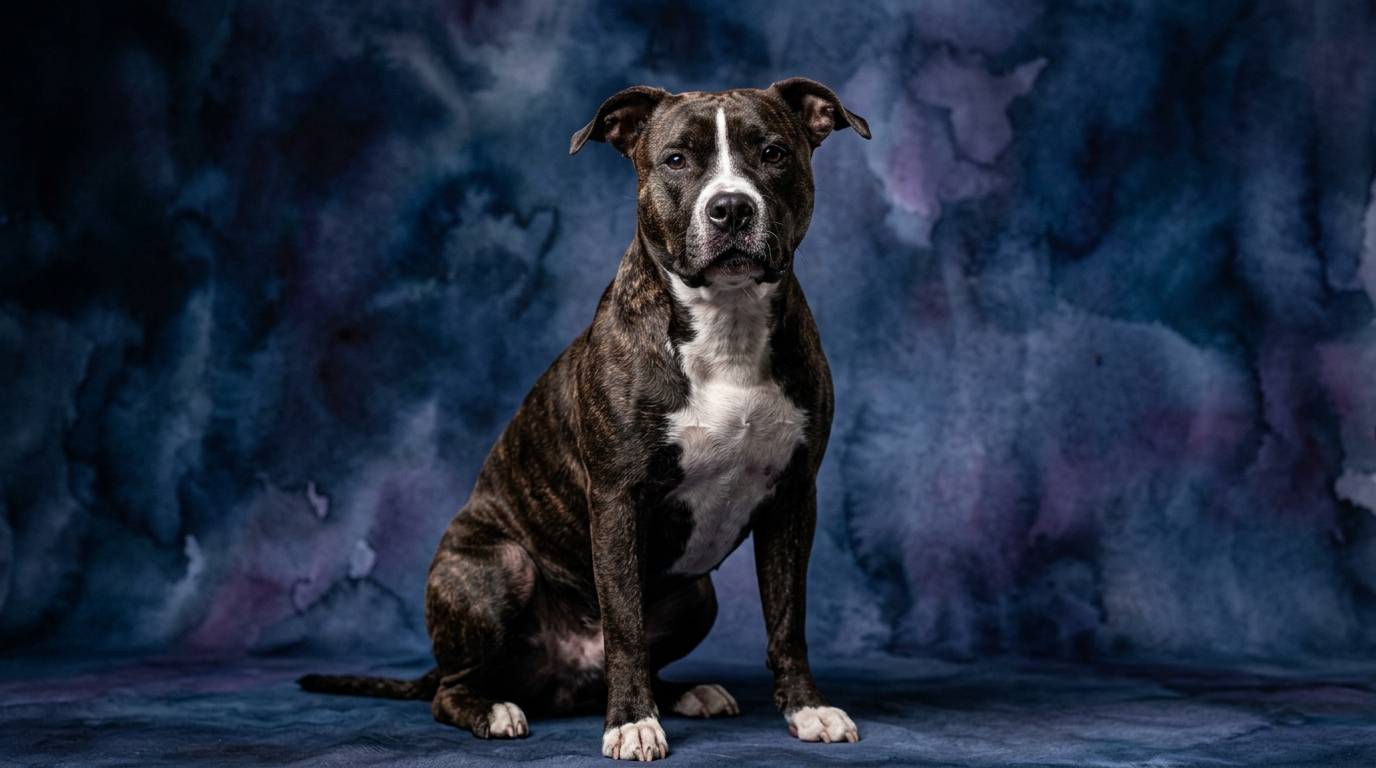
The American Staffordshire Terrier, a breed with a Coren rank of #48, demonstrates a solid foundation for learning and responsiveness, placing them in the 'Average Working/Obedience Intelligence' category. Their Problem Solving is rated 3/5, indicating a practical, hands-on approach to challenges, often leveraging persistence to navigate obstacles rather than intricate planning. Training Speed for AmStaffs is 3/5; they respond well to consistent, positive reinforcement, and once a command is understood, it tends to be retained effectively. Social Intelligence, also 3/5, means they form deep bonds and are attentive to their family's cues, integrating well into their household. Their Instinctive Drive, at 3/5, reflects their terrier heritage with a moderate desire to chase or dig, which can be channeled into structured activities. A standout trait is their Memory at 4/5, signifying a robust ability to retain learned commands, routines, and experiences over long periods, invaluable for advanced training and reliability.
The Brussels Griffon, not Coren-ranked, showcases cognitive strengths primarily geared towards social interaction and adapting to a domestic environment. Their Problem Solving is 3/5, often manifested in charming persistence to gain attention or navigate their home, rather than complex tasks. Training Speed for Griffons is 3/5; they learn at a steady pace, especially with positive motivation, though their independent streak requires patience and engaging, short sessions. Social Intelligence, rated 3/5, is a core strength, making them highly attuned to their owners' emotions and desires, thriving on close bonds. Their Instinctive Drive is 3/5, typically channeled into curiosity and a strong desire for closeness, with less intensity than larger working breeds. Finally, their Memory is 3/5, a solid capacity for routines, favored people, and learned associations, perfectly adequate for a happy life as a cherished household member.
Where the American Staffordshire Terrier Wins Cognitively
The American Staffordshire Terrier’s cognitive profile shows distinct advantages, particularly in areas that demand sustained retention and structured application of learning. Their memory score of 4/5 is a clear differentiator, allowing them to internalize and consistently execute a broader range of commands and complex sequences over time. This makes them exceptional candidates for advanced obedience, intricate agility courses, or roles requiring consistent recall and adherence to multi-step tasks. Coupled with their Coren rank of #48, which signifies a reliable capacity for obedience, AmStaffs demonstrate a profound ability to integrate training into their daily lives, becoming highly dependable partners. Their problem-solving, while rated 3/5, is often backed by a robust physical and mental resilience, enabling them to work through challenges with determination, a trait particularly useful in real-world applications where persistence is key. This combination of strong memory and an ingrained work ethic allows them to master and retain sophisticated behavioral repertoires, standing out in environments that value precision and long-term learning.
Where the Brussels Griffon Wins Cognitively
While the Brussels Griffon's raw scores might appear similar or slightly lower in certain aspects, their cognitive strengths lie in their nuanced application within a companion-focused lifestyle. Their social intelligence (3/5), combined with their overall cognitive makeup, allows them to excel as highly sensitive and adaptive household members. They possess a remarkable ability to read and respond to human emotions, making them exceptionally empathetic and intuitive companions. Their problem-solving (3/5), though not geared towards complex tasks, is finely tuned for navigating the domestic sphere, often involving clever strategies to elicit attention or comfort. This manifests as a delightful charm and a capacity to subtly influence their environment through their presence and personality. The Brussels Griffon's consistent 3/5 across most dimensions signifies a balanced and predictable cognitive profile perfectly suited for intimate human partnership, where their primary 'job' is to bond and interact. They effectively leverage their cognitive abilities to foster deep emotional connections, making them masters of companion-oriented intelligence.
Which is Easier to Train and Why
Determining which breed is 'easier' to train is nuanced, as it depends heavily on the owner's goals and training style. The American Staffordshire Terrier, with its 4/5 memory and Coren ranking, often presents a more straightforward path to mastering complex obedience. Once an AmStaff grasps a command, their superior retention means less refresher work is needed, and they can build upon learned behaviors more effectively. Their instinctive drive (3/5) and physical capabilities mean they thrive with structured training that challenges them mentally and physically, channeling their natural tenacity into productive learning. However, their strong will and inherent drive require a consistent, confident trainer who can establish clear boundaries and provide engaging motivation. The Brussels Griffon, with its 3/5 training speed and 3/5 memory, is certainly trainable for basic manners and house rules. Their social intelligence makes them eager to please their beloved owner, which can be a strong motivator. However, their toy breed characteristics, such as a potentially shorter attention span for repetitive drills and an independent streak, mean training sessions need to be kept short, positive, and varied. They respond best to gentle encouragement and reward-based methods, and may require more patience to achieve the same level of precision in advanced obedience as an AmStaff. For a family seeking a reliable, highly obedient dog capable of advanced tasks, the AmStaff might prove 'easier' in the long run due to its retention. For an owner prioritizing a charming, well-mannered companion without competitive aspirations, the Brussels Griffon's trainability is perfectly adequate with the right approach.
Which Suits Active Owners vs. Relaxed Owners
The cognitive and physical makeup of these two breeds naturally aligns them with different owner lifestyles. The American Staffordshire Terrier, with its robust instinctive drive (3/5) and strong physique, thrives with active owners who can provide consistent physical exercise and mental engagement. Their problem-solving and memory capabilities are best utilized when challenged with activities like structured walks, jogging, hiking, dog sports such as agility or weight pull, or even advanced obedience training. Owners who enjoy dedicating time to training and channeling a dog's natural energy into productive outlets will find the AmStaff a rewarding and enthusiastic partner. A relaxed owner who cannot meet these needs might find an AmStaff developing undesirable behaviors due to boredom or unspent energy. Conversely, the Brussels Griffon is a natural fit for more relaxed owners or those living in smaller spaces. While they enjoy play and short walks, their instinctive drive (3/5) is less demanding, and their cognitive efforts are largely directed towards social interaction and observation within the home. Their high social intelligence means they are content to be close companions, participating in daily life from the comfort of a lap or nearby cushion. Owners who appreciate a constant, charming presence and are happy with moderate indoor play and shorter outdoor excursions will find the Brussels Griffon perfectly suited to their pace of life, leveraging its cognitive focus on companionship.
The Verdict
Choose an American Staffordshire Terrier if you are an active, consistent owner eager to engage in structured training and outdoor activities, valuing a dog with exceptional memory for complex tasks.
Choose a Brussels Griffon if you seek a devoted, charming companion for a more relaxed lifestyle, appreciating a dog whose cognitive strengths shine in close social interaction and domestic harmony.
🧠 Find Your Pet's IQ Score
Our Pet IQ Lab assessment covers 25+ tests across 5 cognitive dimensions — personalized to your breed.
Take the Full IQ Test →Frequently Asked Questions
Do American Staffordshire Terriers get along with other pets?
American Staffordshire Terriers, with their 3/5 social intelligence, can coexist peacefully with other pets, especially when raised together or properly socialized from a young age. Their instinctive drive means introductions should be managed carefully, but with consistent guidance, they often integrate well into multi-pet households.
Are Brussels Griffons good for first-time dog owners?
Brussels Griffons can be suitable for first-time owners who are prepared for their unique personality and training needs. Their social intelligence makes them very responsive to their human family, but their independent streak requires patience and positive reinforcement, rather than harsh methods.
How much mental stimulation do these breeds need daily?
American Staffordshire Terriers benefit significantly from daily mental challenges like puzzle toys, training sessions, or scent work to engage their 4/5 memory and problem-solving. Brussels Griffons, while enjoying interactive play, primarily derive mental stimulation from social interaction and observing their environment, thriving on consistent companionship rather than rigorous tasks.