Side-by-Side Cognitive Profile: Border Collie vs. American Staffordshire Terrier
At The Cosmic Pet Pet IQ Lab, we evaluate canine intelligence across five key dimensions to provide a nuanced understanding of each breed's cognitive strengths. These dimensions illuminate how dogs process information, learn, and interact with their environment and humans. Let's examine the distinct profiles of the Border Collie and the American Staffordshire Terrier.
Problem Solving: This dimension assesses a dog's ability to analyze novel situations and devise effective strategies to overcome obstacles or achieve goals, reflecting their capacity for independent thought and adaptation. Training Speed: This measures how quickly a dog grasps and consistently executes new commands or behaviors, indicating their receptiveness, retention, and a willingness to engage in learning. Social Intelligence: This refers to a dog's capacity to understand and respond appropriately to human cues, emotions, and social structures, fostering effective communication and partnership. Instinctive Drive: This evaluates the inherent predisposition to perform breed-specific behaviors, such as herding, guarding, or retrieving, reflecting deep-seated motivations. Memory: This dimension quantifies the ability to recall past experiences, learned commands, and spatial information, crucial for consistent performance and long-term behavioral retention.
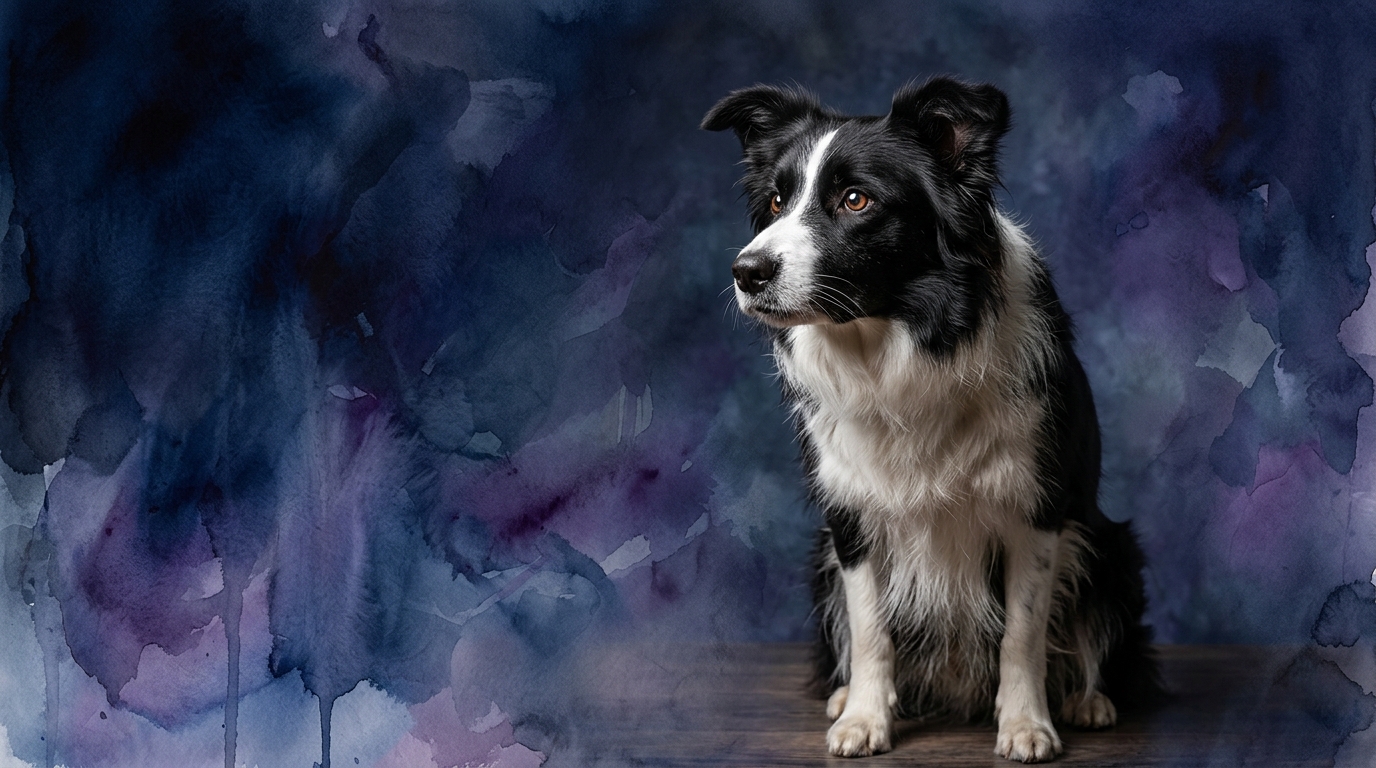
The Border Collie, a Herding breed, holds a Coren rank of #1, signifying an exceptional aptitude across multiple cognitive domains. Their Problem Solving is rated 5/5, indicating an ability to rapidly assess complex scenarios, often anticipating outcomes and formulating solutions independently. Training Speed is also 5/5, showing an almost immediate grasp of new commands, requiring minimal repetition to achieve mastery. Their Social Intelligence is 4/5, making them highly attuned to human intentions and subtle cues, capable of complex communication and partnership. Instinctive Drive stands at 5/5, reflecting a powerful, innate urge to herd, organize, and control movement, requiring significant outlets. Finally, their Memory is 5/5, exhibiting exceptional retention of intricate sequences, commands, and spatial layouts over extended periods.
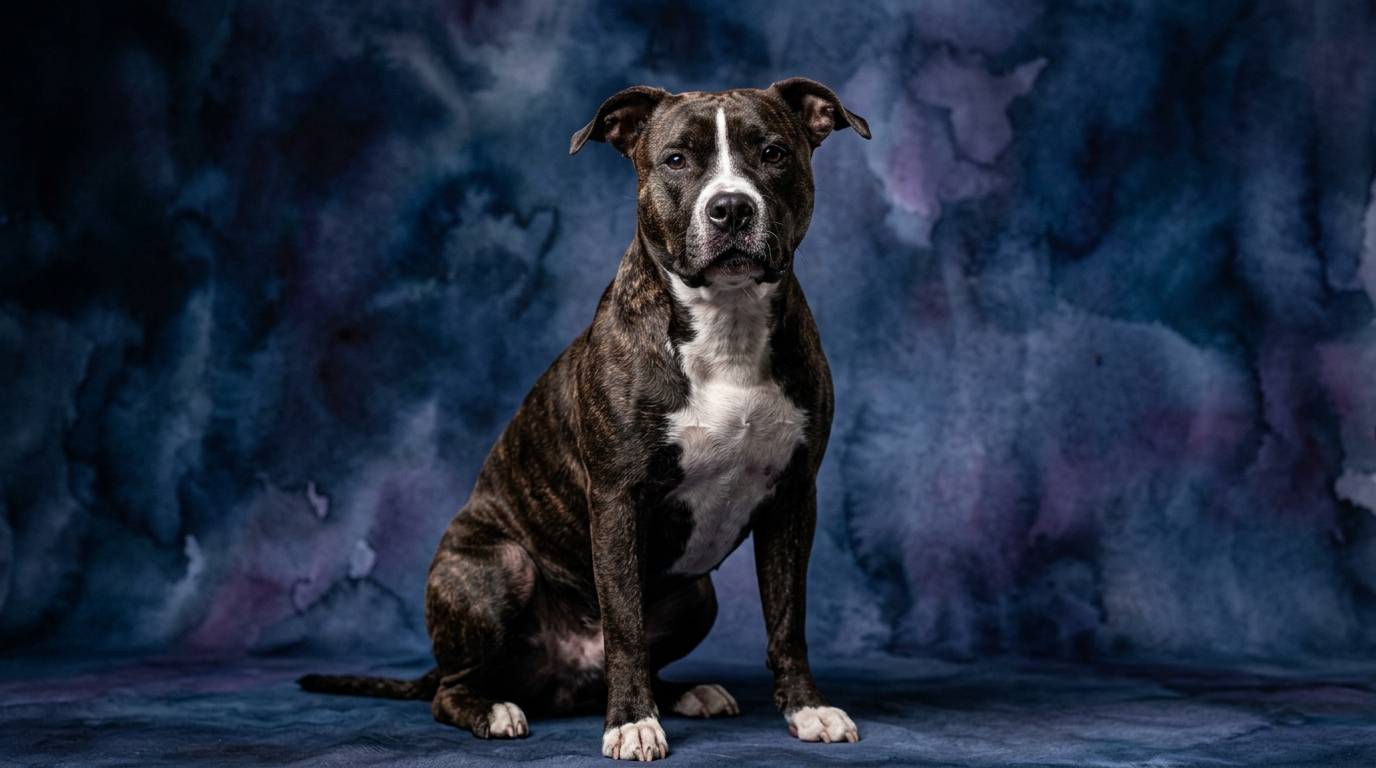
In contrast, the American Staffordshire Terrier, a Terrier breed, holds a Coren rank of #48. Their Problem Solving is rated 3/5, meaning they are capable of solving puzzles, though they may require more consistent guidance and repetition to grasp novel solutions. Training Speed is 3/5, indicating they learn new commands steadily with clear, consistent instruction, but may not show the same rapid uptake as some breeds. Social Intelligence is 3/5, as they form strong, focused bonds with their immediate human family, understanding social dynamics primarily within that core group. Their Instinctive Drive is 3/5, possessing a moderate, focused drive often expressed as tenacity in play or specific tasks, rather than broad control. Their Memory, however, is a strong 4/5, demonstrating a good ability to recall learned behaviors and routines, contributing to consistent performance once established.
Where the Border Collie Excels Cognitively
The Border Collie's cognitive profile showcases a remarkable blend of attributes that make them adept at complex tasks and partnerships. Their 5/5 Problem Solving capacity allows them to not only follow commands but also to independently analyze situations, making decisions in real-time to achieve a goal, a trait invaluable in herding or advanced dog sports. This breed can navigate intricate agility courses, solve elaborate puzzle toys, or even learn to operate simple mechanisms with minimal prior exposure, demonstrating a profound understanding of cause and effect. Their 5/5 Training Speed means they absorb new information with astonishing rapidity, often requiring only a handful of repetitions to ingrain a new behavior, enabling them to master extensive vocabularies of commands and execute them with precision.
Coupled with a 4/5 Social Intelligence, Border Collies form exceptionally nuanced working partnerships. They are acutely sensitive to subtle human body language, vocal inflections, and emotional states, allowing for a level of communication that often appears telepathic. This deep understanding facilitates their role in tasks where anticipating handler cues is crucial. Their 5/5 Memory further solidifies these strengths, enabling them to retain vast repertoires of commands, sequences, and spatial information, making them consistent and reliable performers in highly structured activities. The powerful 5/5 Instinctive Drive fuels this cognitive prowess, providing the motivation and focus to channel their mental energy into purposeful, directed work, whether it's managing livestock or excelling in competitive dog sports.
Where the American Staffordshire Terrier Excels Cognitively
While the American Staffordshire Terrier's cognitive scores are generally lower than the Border Collie's, their specific profile highlights distinct strengths that make them exceptional companions and capable learners in their own right. Their 4/5 Memory is a significant asset; once a behavior or command is thoroughly learned through consistent practice, it is retained reliably, making them consistent and dependable performers in established routines. This strong recall contributes to their reputation for steadfastness and predictability once trained.
The AmStaff's 3/5 Problem Solving, while not as spontaneous as some breeds, is often complemented by their characteristic tenacity, a hallmark of the terrier group. This means they approach challenges with focused determination, often persevering where other breeds might give up if the solution isn't immediately obvious. This steadfastness can translate into a cognitive advantage for specific, repetitive tasks requiring sustained effort, such as mastering a particular obstacle course sequence or excelling in focused scent work, where perseverance is valued over instantaneous, broad analysis. Their 3/5 Social Intelligence manifests as a deep, focused bond with their immediate human family, allowing them to be highly attuned to the emotional states and needs of their core human group. This specific, intense attachment is a cognitive strength in fostering secure, loyal family units. Their 3/5 Instinctive Drive, while moderate, means they can channel their energy with intensity into specific, engaging activities like fetch, tug, or weight pull, where their physical and mental strength can be effectively utilized without the broad, all-encompassing demands of a herding breed.
Training Ease and Behavioral Differences
When considering ease of training, the differences between these two breeds become quite apparent, rooted in their distinct cognitive profiles. The Border Collie, with its 5/5 Training Speed and 5/5 Problem Solving, absorbs new information with remarkable speed, often understanding a command after only a few repetitions. Their analytical minds allow them to generalize learned behaviors to new contexts and even figure out solutions independently when faced with novel tasks. This makes them exceptionally responsive to positive reinforcement and capable of learning vast repertoires of commands and intricate tricks. A Border Collie thrives on mental engagement, and their cognitive flexibility means they can adapt quickly to new training methods or complex multi-step instructions. However, this ease of training comes with a significant caveat: their active minds require constant, engaging mental stimulation to prevent boredom-driven behaviors like excessive barking, digging, or destructive chewing.
The American Staffordshire Terrier, with a 3/5 Training Speed and 3/5 Problem Solving, is trainable, but requires a more patient, consistent, and clear approach. Repetition is key, as they may take longer to fully grasp and reliably execute new commands. Their problem-solving isn't as spontaneous, meaning they benefit from guided learning steps rather than being expected to derive complex solutions on their own. However, their 4/5 Memory ensures that once a behavior is thoroughly ingrained through consistent practice, it tends to stick reliably. Training an AmStaff effectively involves leveraging their strong bond with their handler and using motivating rewards to channel their focused drive. They respond best to positive reinforcement delivered with confidence and consistency, building on established routines rather than constantly introducing novel, abstract challenges. Their tenacity means they will persist, but they rely more on clear direction than independent deduction.
Matching Breeds to Owner Lifestyles: Active vs. Relaxed
The cognitive and instinctive drives of these breeds dictate very different ideal owner lifestyles. For the Border Collie, an owner who is prepared for substantial daily engagement, both physical and mental, is essential. Their 5/5 Instinctive Drive for activity and a 5/5 need for Problem Solving means they require consistent, challenging outlets like advanced obedience, agility, flyball, competitive canine freestyle, or actual herding work. These dogs are not content with simple walks and backyard play; their minds demand complex tasks to prevent boredom and channel their intense focus. An active owner for a Border Collie is someone who sees dog ownership as a partnership in mental and physical challenges, dedicating significant time to training, sports, and brain games. A relaxed owner, unable to meet these profound cognitive and physical demands, risks having a bored, potentially destructive, or overly anxious Border Collie whose unchanneled cognitive capacity leads to undesirable behaviors.
In contrast, the American Staffordshire Terrier, with its 3/5 Instinctive Drive and 3/5 Problem Solving, is generally better suited for owners who enjoy consistent, moderate activity rather than intense, complex daily mental work. They appreciate structured play, regular walks, and focused training sessions that reinforce their strong 4/5 memory for routines. While they certainly benefit from mental challenges, they don't demand the relentless, intricate cognitive engagement of a Border Collie. An AmStaff thrives on being an integral part of the family, enjoying consistent companionship and involvement in household activities. A relaxed owner for an AmStaff is someone who values a loyal, steadfast companion, enjoys daily walks and play, and is committed to consistent, positive training that builds on established behaviors and strengthens their focused bond, without needing to constantly invent new, high-level cognitive puzzles.
The Verdict
Choose a Border Collie if you are an experienced, dedicated owner ready to provide daily, intensive mental and physical challenges, thriving on a true working partnership built on their exceptional cognitive flexibility.
Opt for an American Staffordshire Terrier if you value a loyal, steadfast companion who enjoys consistent activity and focused training within a close family unit, appreciating their tenacity and strong memory for routines.
🧠 Find Your Pet's IQ Score
Our Pet IQ Lab assessment covers 25+ tests across 5 cognitive dimensions — personalized to your breed.
Take the Full IQ Test →Frequently Asked Questions
Do Border Collies get bored easily?
Yes, with a problem-solving and instinctive drive of 5/5, Border Collies require constant mental engagement. Lack of sufficient mental and physical stimulation can lead to boredom and the development of undesirable coping behaviors, such as excessive barking or destructiveness.
Can American Staffordshire Terriers learn complex tricks?
American Staffordshire Terriers, with a 4/5 memory, can certainly learn complex tricks and routines, though they may require more consistent repetition and patience during the initial learning phase compared to some breeds. Their tenacity aids in reliable retention once a trick is mastered.
How do these breeds compare in adaptability to new environments?
Border Collies often adapt quickly to new environments due to their high problem-solving and social intelligence, rapidly assessing and adjusting to novel situations. American Staffordshire Terriers, with strong family bonds, tend to adapt best when their core human unit provides consistency and security in new settings, as their social comfort is tied to their familiar people.