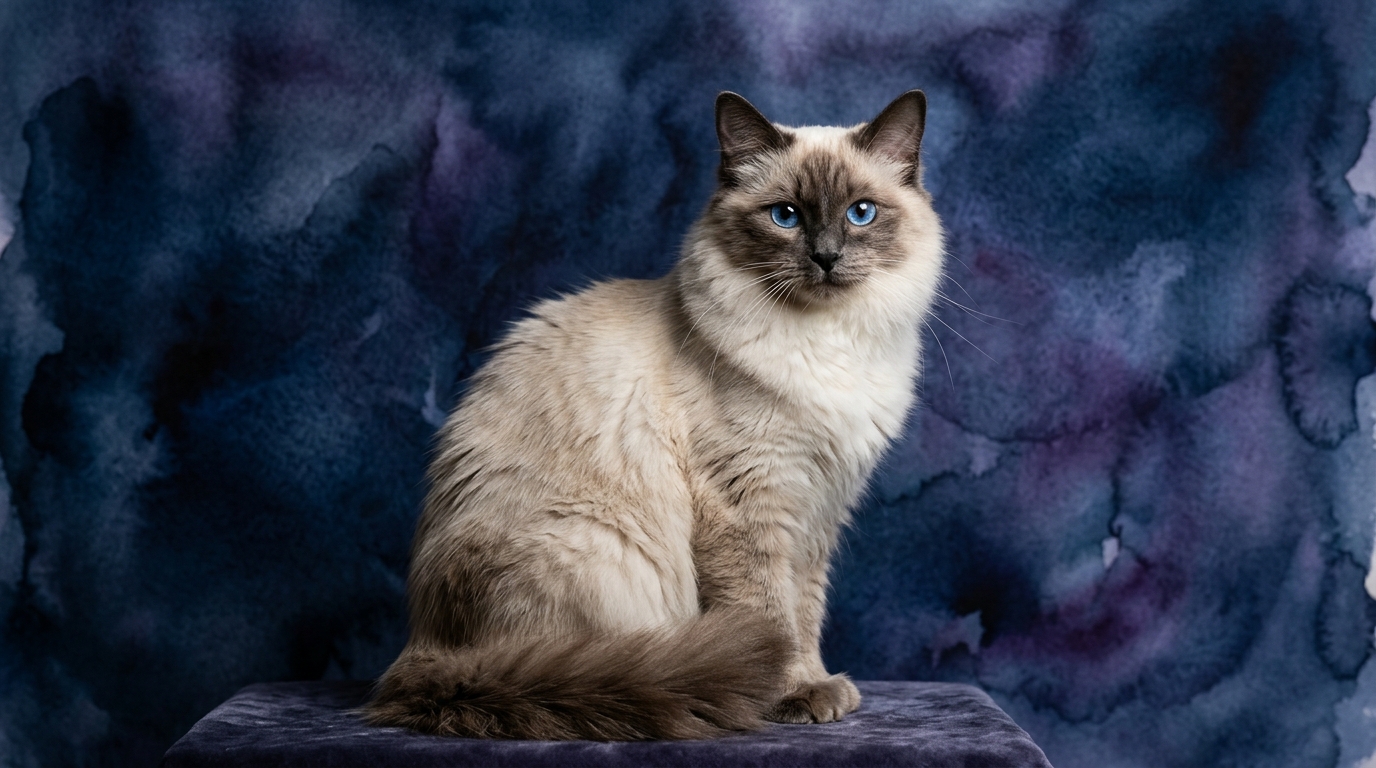
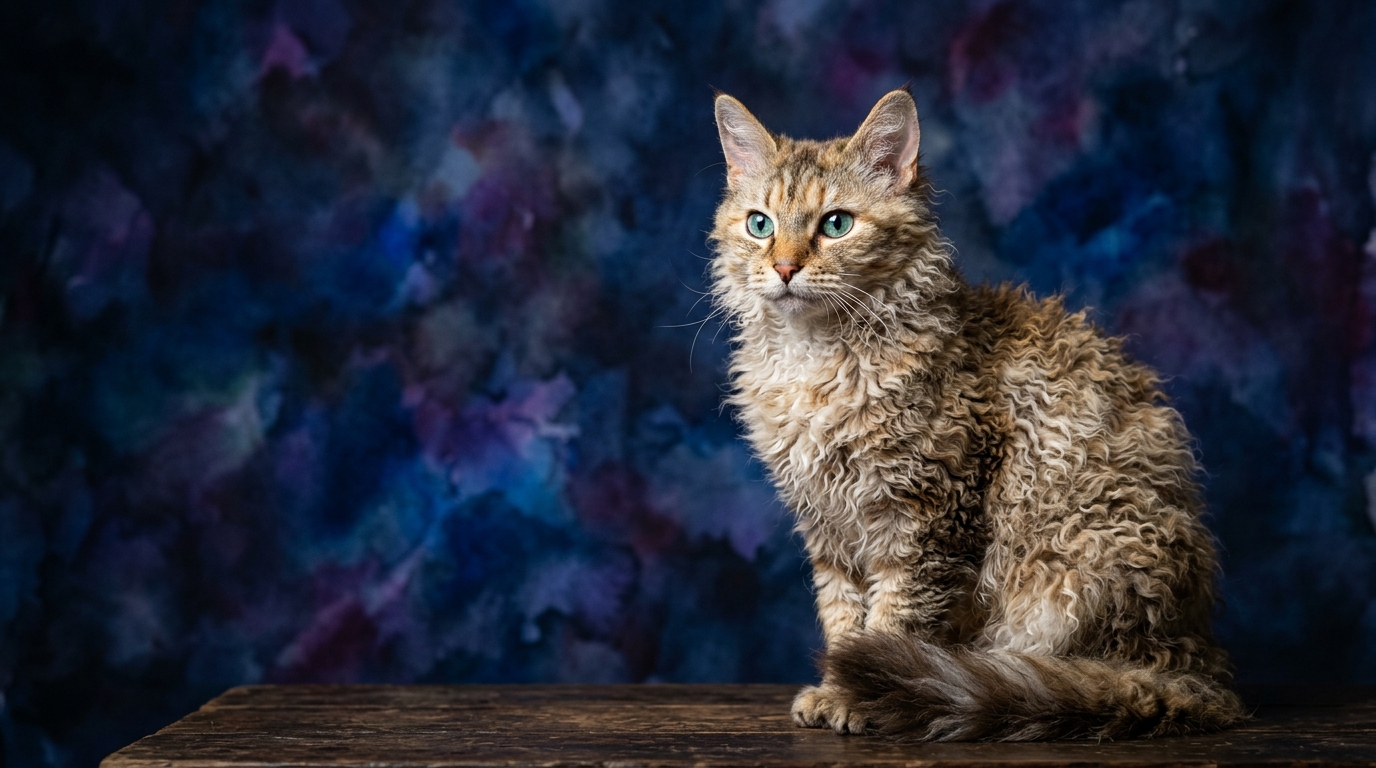
Side-by-Side Cognitive Profile: Balinese vs. LaPerm
The Cosmic Pet Pet IQ Lab provides a nuanced look into feline cognition, breaking down intelligence into five distinct dimensions. For the Balinese, their Problem Solving is rated 4/5, indicating a strong capacity for figuring out novel challenges, like manipulating puzzle feeders or opening simple latches. They often approach obstacles with a thoughtful, trial-and-error strategy. Their Training Speed is an impressive 5/5, exhibiting exceptional readiness to learn new commands and routines, often grasping concepts after just a few repetitions, making them highly amenable to clicker training and trick instruction. Social Intelligence for the Balinese also scores 5/5, demonstrating a profound understanding of human cues and emotions, often seeking interaction and forming deep bonds; they are adept at communicating their needs and responding to social feedback. Their Instinctive Drive is 3/5, possessing a moderate level of innate hunting and exploratory behaviors; while they enjoy play, their drive is channeled more towards interactive games with humans than solitary pursuit. Lastly, their Memory is 4/5, retaining learned information and experiences effectively, remembering routines, people, and locations with remarkable accuracy over time, which contributes to their consistent behavior and adaptability within familiar environments.
In contrast, the LaPerm presents a more balanced profile across the board. Their Problem Solving is 3/5, displaying a moderate ability to navigate new challenges, often requiring more guidance or repetition to master complex tasks; they might prefer simpler puzzles or direct instruction rather than elaborate self-discovery. Training Speed for the LaPerm is also 3/5, indicating they learn new behaviors at a steady pace, benefiting from consistent reinforcement and patience; while not as rapid as some breeds, they are certainly trainable and responsive to positive methods. Social Intelligence scores 3/5, meaning they connect well with humans, showing affection and enjoying companionship, though perhaps less overtly expressive or attuned to subtle emotional shifts than other breeds; they appreciate stable social environments. Their Instinctive Drive matches the Balinese at 3/5, sharing a similar moderate level of natural instincts, enjoying play and exploration without being overly driven by prey impulses; they are content with a balance of activity and relaxation. Finally, their Memory is 3/5, holding onto information adequately, remembering familiar faces and routines; they thrive on predictable schedules and environments, which aids their recall.
Where the Balinese Excels Cognitively
The Balinese cat stands out for its superior cognitive agility across several key dimensions. Their Problem Solving score of 4/5 suggests a more inventive and persistent approach to novel situations, making them adept at navigating complex environments or figuring out how to access hidden treats. This contrasts with the LaPerm's 3/5, indicating the Balinese might independently devise solutions more readily. Furthermore, the Balinese's Training Speed of 5/5 is truly remarkable; they absorb new commands and routines with impressive swiftness, often requiring minimal repetition. This rapid acquisition of skills positions them as highly receptive students compared to the LaPerm's steady but less immediate 3/5. Socially, the Balinese shines with a 5/5, demonstrating an exceptional capacity to interpret human moods and intentions, fostering profound, communicative bonds. This heightened social awareness means they often seem to "understand" their human companions on a deeper level than the LaPerm (3/5). Lastly, their Memory score of 4/5 ensures they retain complex routines, learned boundaries, and social interactions over extended periods, contributing to their consistent and adaptable behavior, a step above the LaPerm's 3/5.
Where the LaPerm’s Cognitive Profile Shines
While the Balinese presents a more pronounced profile in several cognitive areas, the LaPerm's balanced intelligence offers its own unique advantages, especially for owners seeking a different dynamic. With an Instinctive Drive score of 3/5, matching the Balinese, the LaPerm demonstrates a healthy, but not overwhelming, interest in exploration and play. This means they are engaged and enjoy interactive games without necessarily exhibiting the intense focus on hunting or high-energy pursuits that might characterize breeds with higher scores. Their moderate Problem Solving (3/5), Training Speed (3/5), Social Intelligence (3/5), and Memory (3/5) scores indicate a cat that is perfectly capable and trainable, yet perhaps less demanding in terms of constant mental stimulation. This balanced profile suggests a cat that is generally content with a comfortable routine and appreciates consistent, clear communication, without necessarily pushing boundaries or requiring constant intellectual challenges. For owners who value a steady, affectionate companion, the LaPerm's cognitive blueprint provides a harmonious and less intensely 'driven' interaction, where their learning and social needs are met without requiring an advanced degree in feline psychology.
Trainability: Balinese vs. LaPerm
Based on their respective IQ profiles, the Balinese cat is demonstrably easier to train than the LaPerm. The Balinese's exceptional Training Speed of 5/5 means they grasp new commands and concepts with remarkable efficiency. This isn't just about repetition; it's about their inherent receptiveness and quick association of actions with outcomes. For instance, a Balinese might learn to fetch or walk on a leash after only a handful of dedicated sessions, whereas a LaPerm, with its 3/5 Training Speed, would require more consistent reinforcement and patience over a longer period. This ease of training is further amplified by the Balinese's 5/5 Social Intelligence. Their deep attunement to human cues allows them to interpret intentions and respond to subtle feedback, making the training process feel more like a collaborative dialogue. A Balinese is more likely to actively engage with the trainer, seeking to understand and please, while a LaPerm, though affectionate, might approach training with a more independent, less overtly 'people-pleasing' disposition, requiring the owner to be more proactive in maintaining engagement.
Matching Cognitive Profiles to Lifestyles
For active owners who thrive on engagement and relish a mentally stimulating companion, the Balinese cat is an ideal match. Their 4/5 Problem Solving means they will eagerly tackle puzzle toys, learn complex tricks, and even enjoy interactive games that require strategic thinking. Their 5/5 Social Intelligence means they actively seek out interaction, often initiating play or conversation, making them a constant, engaging presence. An active owner would appreciate their zest for learning and their capacity for deep, communicative bonds, easily incorporating them into a dynamic lifestyle that includes regular training sessions and varied enrichment. In contrast, the LaPerm, with its more balanced 3/5 across most cognitive dimensions, is well-suited for relaxed owners who appreciate a steady, affectionate, and less intensely demanding companion. While they enjoy play and interaction, their needs for constant intellectual challenges are moderate. A relaxed owner might find the LaPerm's contentedness with a comfortable routine and predictable interactions to be a perfect fit, providing companionship without the constant pressure to invent new mental exercises. They are happy to curl up for a quiet evening but will still engage enthusiastically in a play session when offered.
The Verdict
Choose a Balinese if you seek an exceptionally responsive, communicative, and intellectually curious feline partner eager to learn complex tricks and engage in deep social interaction. They thrive with owners who can provide consistent mental stimulation and appreciate a highly interactive companion.
Opt for a LaPerm if you desire a steady, affectionate companion who enjoys a comfortable routine and moderate play, offering warmth and presence without demanding constant advanced mental engagement. They are ideal for owners seeking a harmonious balance of independence and companionship.
🧠 Find Your Pet's IQ Score
Our Pet IQ Lab assessment covers 25+ tests across 5 cognitive dimensions — personalized to your breed.
Take the Full IQ Test →Frequently Asked Questions
Are Balinese cats prone to being overly demanding due to their high social intelligence?
Balinese cats, with their 5/5 social intelligence, certainly seek significant interaction and can be vocal in communicating their needs. While they thrive on attention, this is more about a desire for deep connection rather than being "demanding" in a negative sense; they simply require an owner who appreciates and reciprocates their communicative nature.
Does the LaPerm's moderate problem-solving ability mean they aren't playful or engaging?
Not at all. A LaPerm's 3/5 problem-solving score indicates they might prefer simpler games or require more guidance with complex puzzles, but they are still playful and enjoy interaction. Their moderate instinctive drive means they appreciate a good game of chase or a feather wand session, just without the intense, relentless drive some other breeds might exhibit.
How does the memory difference impact daily life for these breeds?
The Balinese's 4/5 memory allows them to quickly recall complex routines, boundaries, and even specific training cues, making them highly consistent. The LaPerm's 3/5 memory is perfectly adequate for remembering daily schedules and family members, but they might take slightly longer to solidify new routines or remember less frequent interactions.