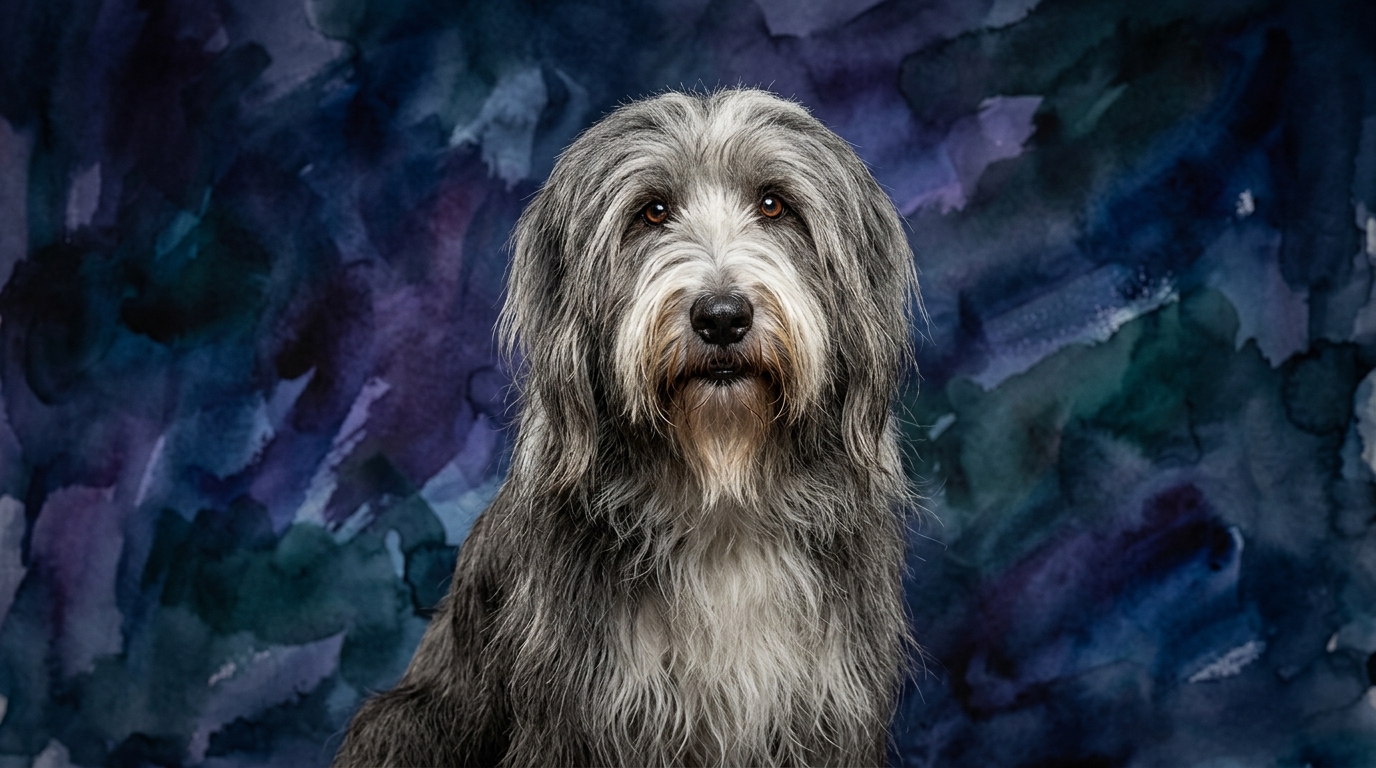

Side-by-Side IQ Profile: Herding Wit vs. Terrier Grit
The Cosmic Pet Pet IQ Lab employs a multi-dimensional approach to assess canine intelligence, moving beyond simple obedience to encompass problem-solving, training speed, social intelligence, instinctive drive, and memory. For the Bearded Collie, ranked #34 by Coren, its IQ profile reveals a Problem Solving score of 4/5, indicative of its capacity for strategic thought in managing livestock and anticipating movement. Its Training Speed also stands at 4/5, reflecting its responsiveness and eagerness to learn complex commands essential for herding. Social Intelligence is rated 3/5, demonstrating an ability to attune to handler cues and cooperate in group tasks, while its Instinctive Drive is 3/5, clearly rooted in its strong herding impulse to gather and control. Finally, a Memory score of 4/5 highlights its ability to retain sequences of commands and recall patterns in its environment, crucial for effective flock management.
The Border Terrier, with a Coren rank of #30, presents an almost identical set of scores, yet their application differs significantly due to its Terrier heritage. Its Problem Solving score of 4/5 speaks to its resourceful nature in navigating complex environments, outsmarting small prey, and devising solutions to physical obstacles. The Training Speed of 4/5 shows quick learning, though this is often tempered by its independent streak, requiring engaging and consistent methods. Social Intelligence, at 3/5, suggests an aptitude for reading human intentions for cooperative tasks, but can be selective in its canine interactions. Its Instinctive Drive of 3/5 is distinctly a strong prey drive, manifesting as persistence in pursuit and a keen digging instinct. A Memory score of 4/5 reflects its capacity to recall locations of burrows, scent trails, and learned routes, vital for its original purpose.
Where the Bearded Collie Wins Cognitively
The Bearded Collie's cognitive strengths are deeply intertwined with its herding lineage, giving it an edge in specific scenarios. One area of distinct advantage is strategic planning and foresight in dynamic, open environments. Unlike the Border Terrier's focus on confined spaces, the Bearded Collie excels at anticipating the movement of multiple, independent agents (like a flock of sheep) and devising complex, multi-step actions to guide them. This involves not just reacting to individual animals, but understanding the flow of the entire group and blocking potential escape routes.
Another cognitive win for the Bearded Collie lies in its proficiency with cooperative problem-solving, particularly in tandem with a human handler. Their herding work demands a fluid, responsive partnership, where they process subtle human signals while simultaneously managing their charges. This ability to integrate human direction into their innate problem-solving framework, often involving split-second decisions that impact multiple moving parts, showcases a different kind of cognitive agility than the more independent problem-solving characteristic of terriers. Their superior spatial awareness over larger, more open terrains, understanding the lay of the land to effectively move a flock, also distinguishes their cognitive application.
Where the Border Terrier Wins Cognitively
The Border Terrier's cognitive prowess shines in areas demanding independent resourcefulness and tenacity, a direct reflection of its historical role. A key cognitive advantage is its unparalleled ability for independent problem-solving in challenging, confined spaces. While a Bearded Collie might strategize across a field, a Border Terrier excels at navigating a complex tunnel system, figuring out how to squeeze through tight spots, overcome blockages, or outmaneuver prey in a subterranean environment without direct human guidance. This requires a different type of spatial reasoning and ingenuity.
Furthermore, the Border Terrier demonstrates a superior cognitive tenacity and persistence, particularly when driven by its powerful instinctive drive. Once focused on a scent or a task, their unwavering determination to see it through, often involving repetitive digging or relentless tracking, showcases a mental fortitude that can surpass the Bearded Collie's more cooperative and handler-dependent approach. Their acute sensory focus, particularly on scent and subtle sounds for hunting, also represents a specialized cognitive strength, allowing them to process and interpret environmental cues with remarkable precision for their specific working purpose.
Which is Easier to Train and Why
Both breeds boast a Training Speed score of 4/5, indicating their capacity to learn quickly, but the practical ease of training diverges due to their inherent behavioral differences. The Bearded Collie generally proves easier to train for obedience and complex tasks because of its strong desire to cooperate and please its handler, a trait honed by centuries of working in close partnership with humans. They thrive on positive reinforcement and clear directives, readily engaging in structured learning activities that mimic their herding inclination for order and direction. Their cooperative nature means they are often more consistently attentive to human cues, making them generally more tractable in a typical training class setting.
The Border Terrier, while learning commands with similar speed, presents a different training challenge due to its independent nature and robust prey drive. They possess a 'what's in it for me?' attitude, and if a squirrel or an interesting scent presents itself, their focus can quickly shift from the handler. Training a Border Terrier requires consistent engagement, creativity, and a deep understanding of their terrier instincts, often needing to channel their drive into acceptable outlets like earth dog trials or scent work. While they are capable of high levels of obedience, achieving it demands more patience, perseverance, and a willingness from the trainer to make learning exceptionally rewarding and varied to overcome their inherent independence and selective hearing.
Which Suits Active Owners vs. Relaxed Owners
Neither the Bearded Collie nor the Border Terrier is suited for truly relaxed or sedentary owners; both require significant engagement, but their activity profiles differ. The Bearded Collie is undeniably a dog for active owners who can provide consistent, vigorous physical exercise and ample mental stimulation. Their herding drive necessitates a 'job,' whether it's participating in dog sports like agility, herding trials, advanced obedience, or enjoying long, engaging hikes. Owners who appreciate a dog that thrives on working alongside them, engaging in extended, complex activities, will find a perfect match. A Bearded Collie left without sufficient outlets for its energy and intelligence can become bored and potentially destructive, making them unsuitable for owners seeking a low-maintenance companion.
The Border Terrier, while also active, offers a slightly more adaptable energy profile, making them suitable for active owners who appreciate variety. They require daily exercise, often in bursts, and thrive on opportunities for exploration, scent work, and challenging games that tap into their natural hunting instincts. They can adapt to apartment living if their daily needs for physical activity and mental stimulation are met through walks, runs, and engaging play sessions. Owners who enjoy varied outdoor pursuits, earth dog sports, or simply exploring different environments will appreciate their tenacious and adventurous spirit. While they can settle down indoors, they are not content to be couch potatoes and require owners who are committed to providing consistent outlets for their inquisitive minds and energetic bodies, making them a poor choice for genuinely relaxed owners.
The Verdict: When to Choose Each Intelligent Companion
The Verdict
Choose the Bearded Collie if you seek a highly cooperative, intelligent companion eager to work alongside you in dog sports, herding, or complex obedience, and you're prepared for their significant grooming and exercise needs.
Choose the Border Terrier if you appreciate a tenacious, resourceful, and independent companion who excels in problem-solving within varied environments, and you can provide consistent, engaging training and outlets for their strong terrier instincts.
🧠 Find Your Pet's IQ Score
Our Pet IQ Lab assessment covers 25+ tests across 5 cognitive dimensions — personalized to your breed.
Take the Full IQ Test →Frequently Asked Questions
Are Bearded Collies good family dogs?
Yes, Bearded Collies are generally affectionate and playful with their families, thriving on interaction and companionship. However, their innate herding instincts might lead them to 'herd' children or other pets, requiring early socialization and consistent training to manage this behavior.
Do Border Terriers bark a lot?
Border Terriers can be vocal, often using their bark to alert to perceived intruders, express excitement, or demand attention. Consistent training from a young age can help manage excessive barking, but their natural guarding instinct means they will likely remain effective watchdogs.
Which breed is better for first-time dog owners?
Neither breed is typically recommended for absolute first-time owners without a strong commitment to understanding their specific needs, training, and exercise. However, the Bearded Collie's eagerness to please might make them slightly more forgiving and easier to guide through basic obedience than the independent and sometimes stubborn Border Terrier.