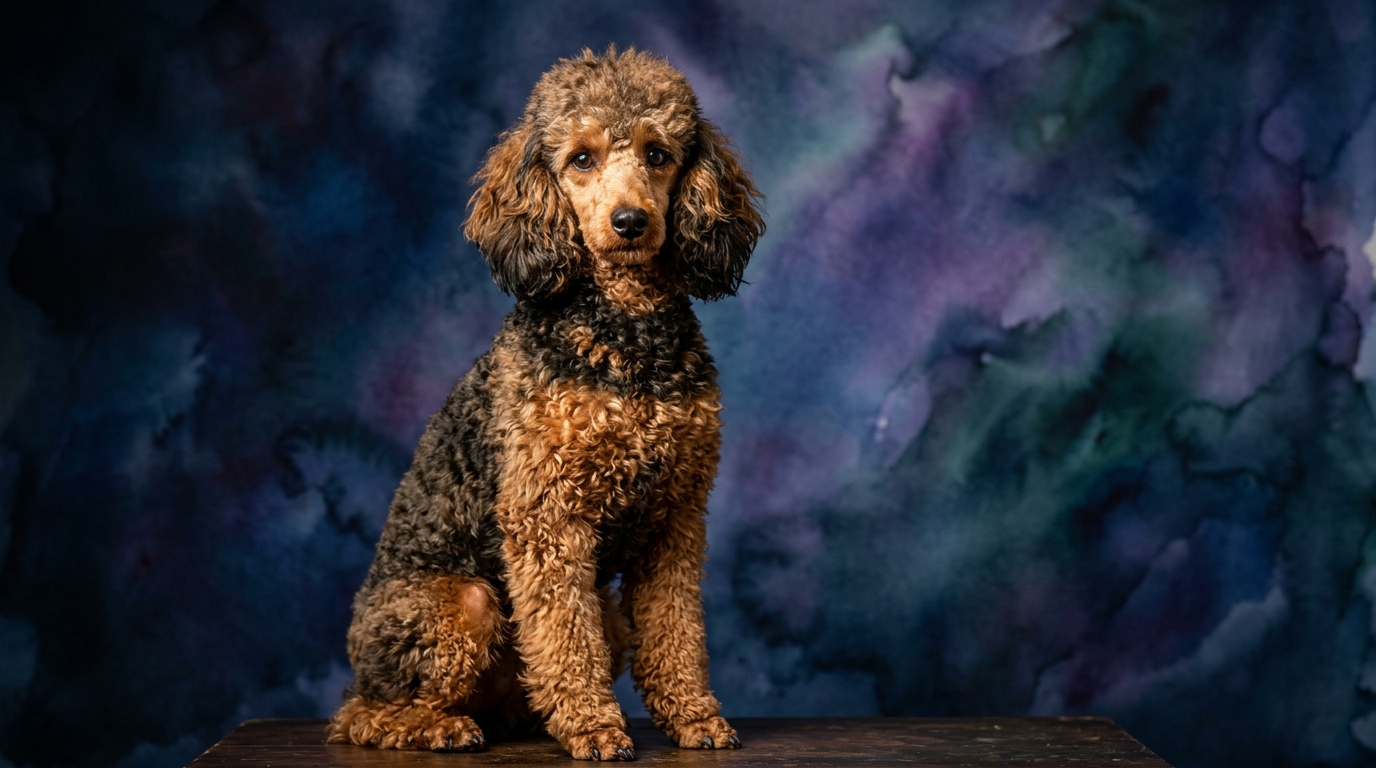
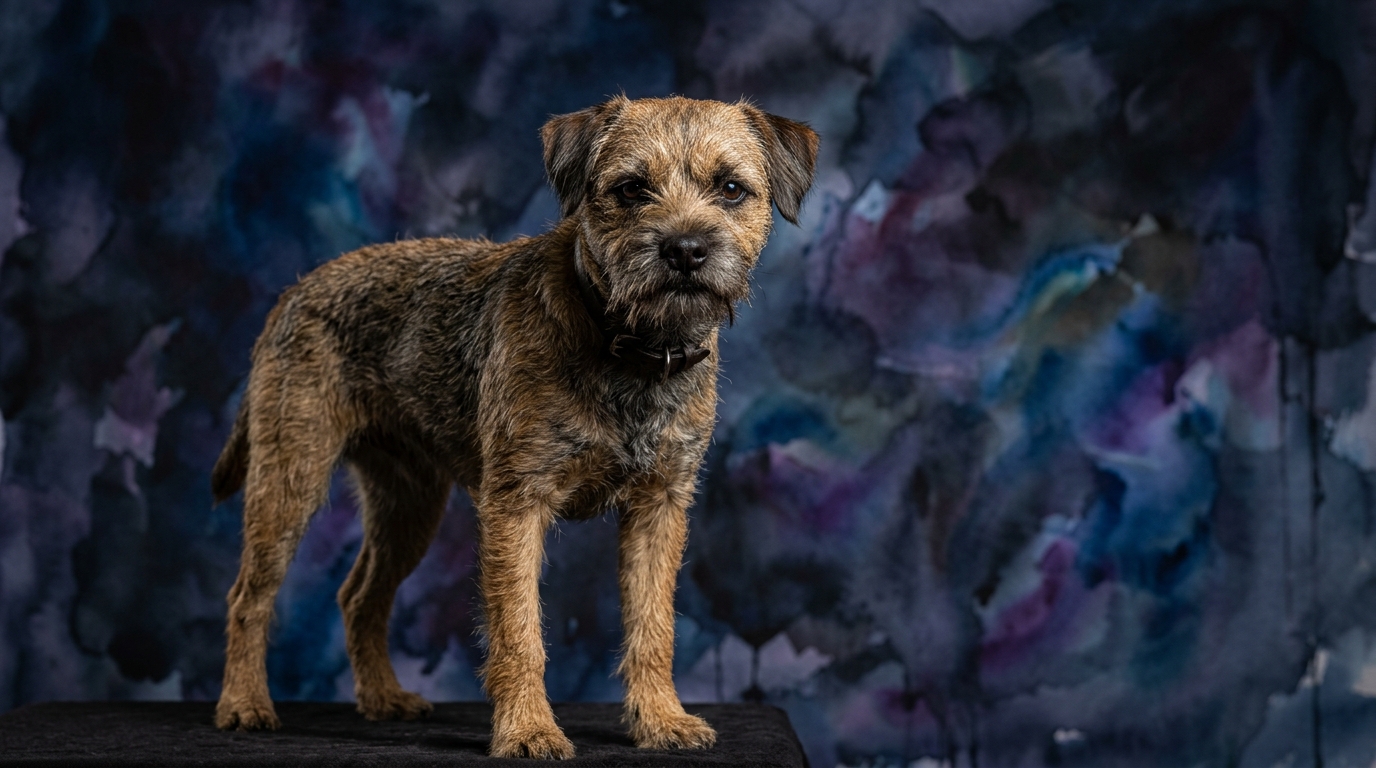
Side-by-Side IQ Profile: Poodle (Standard) vs Border Terrier
The Cosmic Pet Pet IQ Lab provides a comprehensive look at canine cognition, evaluating five key dimensions. For the Standard Poodle, we observe a Coren rank of #2, indicating exceptional working and obedience intelligence, while the Border Terrier holds a respectable Coren rank of #30, reflecting a capable yet distinct cognitive makeup.
The Standard Poodle's Problem Solving is rated 5/5, signifying their exceptional ability to devise novel solutions to obstacles and grasp complex cause-and-effect relationships quickly. Their Training Speed also scores 5/5, meaning new commands are often acquired with remarkable swiftness, typically after only a few repetitions. Social Intelligence is likewise 5/5, demonstrating a profound capacity for reading human emotions and intentions, adapting behavior to social contexts. Their Instinctive Drive is 4/5, reflecting a pronounced drive for work and purpose, stemming from their water retrieving heritage. Finally, their Memory is 5/5, indicating robust retention of learned information and experiences over long periods.
In contrast, the Border Terrier shows a Problem Solving score of 4/5, exhibiting practical ingenuity and persistence in overcoming challenges, particularly those related to their prey drive. Their Training Speed is 4/5, meaning they learn commands competently, though their independent nature may require varied approaches to maintain focus. Social Intelligence is 3/5; while affectionate with their families, their social awareness is more focused on their immediate pack, sometimes demonstrating a selective approach to new interactions. Their Instinctive Drive is 3/5, rooted in their terrier heritage, manifesting as persistent curiosity and a determination to pursue scents or small prey. Their Memory is 4/5, allowing for good recall of routines, learned behaviors, and spatial awareness.
Where the Standard Poodle Wins Cognitively
The Standard Poodle consistently outperforms the Border Terrier in areas requiring abstract thought, rapid generalization, and nuanced social interpretation. Their Problem Solving at 5/5 means they are more likely to quickly figure out complex puzzles or multi-step tasks by understanding the underlying logic, rather than relying on trial-and-error. For instance, they might quickly discern how to manipulate a series of latches to open a gate after minimal observation.
Their 5/5 Training Speed translates into a significantly faster acquisition of new skills and commands. A Standard Poodle can master intricate obedience routines or advanced tricks in a fraction of the time, often needing fewer repetitions and demonstrating a greater eagerness to connect actions with desired outcomes. This makes them exceptional candidates for competitive dog sports requiring extensive learning.
With a Social Intelligence score of 5/5, Standard Poodles display a more profound understanding of human non-verbal cues and emotional states. They are highly attuned companions, often anticipating needs or reacting sensitively to subtle shifts in owner mood, offering comfort or adjusting their behavior in social settings more readily than the more self-focused Border Terrier.
Their 5/5 Memory ensures they retain vast vocabularies and intricate sequences of behaviors over extended periods. A Standard Poodle can recall specific toy names or complex agility course layouts even after months without practice, demonstrating a level of consistent, encyclopedic recall that sets them apart.
Where the Border Terrier Wins Cognitively
While the Border Terrier's raw scores might be lower, its cognitive strengths lie in its tenacious and independent application of its faculties, particularly in scenarios demanding self-reliance and focused persistence. Their Problem Solving (4/5) combined with their Instinctive Drive (3/5) allows them to excel at tasks requiring grit and determination where a Poodle might seek human guidance or give up if the solution isn't immediately apparent. For example, a Border Terrier is more likely to independently track a complex scent trail for extended periods, using its wits to navigate obstacles and maintain focus on the objective.
Their selective Social Intelligence (3/5) fosters a pragmatic independence; they are less prone to separation anxiety or over-reliance on human cues for motivation in certain working contexts. This makes them highly effective partners for tasks requiring a degree of self-sufficiency, such as navigating challenging outdoor environments or engaging in vermin control where human intervention is limited. They excel in situations where focused determination and a degree of independent decision-making are paramount, often preferring to work through a challenge themselves rather than waiting for explicit handler instruction.
Which is Easier to Train and Why
The Standard Poodle is generally easier to train due to its exceptional combination of Training Speed (5/5) and Social Intelligence (5/5). They quickly understand what is being asked of them and are highly motivated by a desire to cooperate and please their human companions. Their social intelligence helps them interpret subtle cues from their trainer, making the learning process flow smoothly and allowing them to generalize commands readily to new contexts.
The Border Terrier, with a Training Speed of 4/5 and Social Intelligence of 3/5, is capable of learning, but their training experience often requires more patience and creativity. Their independent nature, rooted in their terrier drive, means they might prioritize an interesting scent or perceived 'job' over immediate compliance. Training a Border Terrier often involves finding ways to make the desired behavior more rewarding than their innate inclinations, employing positive reinforcement and varied methods to maintain their attention and overcome their self-directed motivation.
Which Suits Active Owners vs. Relaxed Owners
With an Instinctive Drive of 4/5 and high scores across all cognitive dimensions, Standard Poodles thrive with active owners who can provide consistent mental and physical engagement. Their need for intellectual stimulation means they excel in dog sports like agility, obedience, or even scent work. A relaxed owner might find their Poodle resorting to self-entertaining behaviors if their sharp mind isn't regularly challenged, as their problem-solving skills can be redirected towards undesirable activities if bored.
The Border Terrier, with an Instinctive Drive of 3/5 and a terrier heritage, also requires an active lifestyle, though perhaps with a different focus. They need outlets for their inherent desire to explore, dig, and chase. Owners who enjoy long walks, hiking, or even urban exploration will find a willing companion. While they don't demand the same level of complex intellectual stimulation as a Poodle, they need consistent physical activity and opportunities to use their nose and independent problem-solving skills to prevent boredom-induced behaviors like digging or escape attempts.
The Verdict
Opt for a Standard Poodle if you seek a highly cooperative companion eager to learn complex tasks, thrive on social interaction, and engage in advanced mental challenges and dog sports.
Select a Border Terrier if you value a tenacious, independent thinker for active outdoor pursuits, who enjoys exploring and tackling practical challenges with focused determination.
🧠 Find Your Pet's IQ Score
Our Pet IQ Lab assessment covers 25+ tests across 5 cognitive dimensions — personalized to your breed.
Take the Full IQ Test →Frequently Asked Questions
Are Standard Poodles prone to separation anxiety due to their high social intelligence?
Standard Poodles, with their 5/5 social intelligence, form deep bonds and can be sensitive to perceived abandonment. While not inherently prone, their strong attachment means they benefit from early training to foster independence and a consistent routine to manage alone time effectively.
Can a Border Terrier be trained for complex obedience or dog sports?
Absolutely, Border Terriers (Training Speed 4/5) are capable of excelling in various dog sports and obedience. Their training might require more creativity and persistence due to their independent streak, but their determination allows them to master challenging skills with a committed owner.
How does the 'Instinctive Drive' score impact daily life for these breeds?
The Poodle's 4/5 drive manifests as a need for purposeful engagement, often enjoying tasks that involve focus or retrieving. The Border Terrier's 3/5 drive, rooted in its working heritage, translates to a persistent desire to investigate, chase, and explore, requiring secure environments and outlets for these natural inclinations.