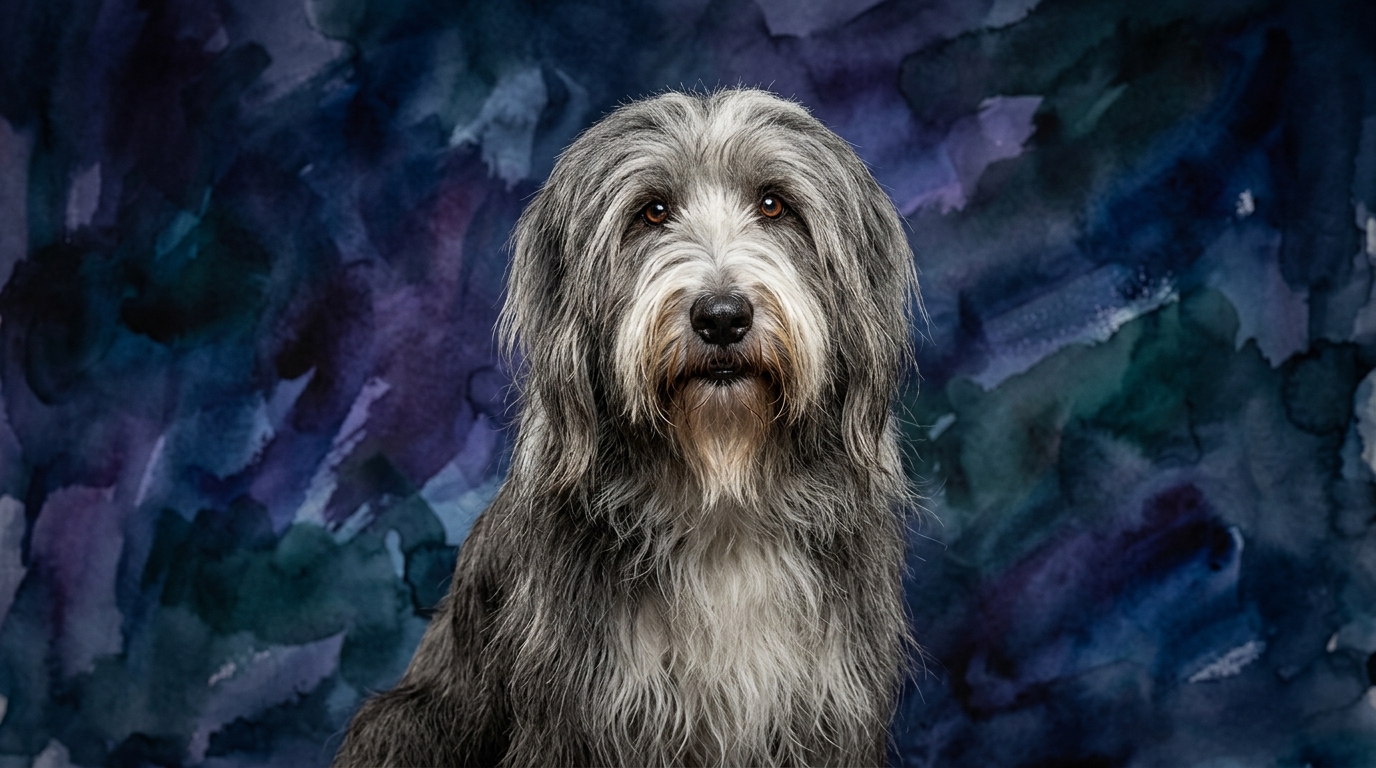

Side-by-Side IQ Profile: Bearded Collie vs. Manchester Terrier
The Bearded Collie, a member of the Herding Group, presents a robust cognitive makeup, reflected in its Coren rank of #34, indicating a strong capacity for understanding and executing commands. Its Problem Solving score of 4/5 points to an aptitude for navigating complex situations and devising solutions, a trait crucial for managing livestock. Training Speed also sits at an impressive 4/5, suggesting a quick grasp of new commands and routines. Social Intelligence, at 3/5, indicates a balanced awareness of social cues and interactions, while Instinctive Drive, also 3/5, highlights a moderate but purposeful inclination towards its ancestral tasks. Finally, its Memory score of 4/5 underscores an excellent ability to retain learned information and recall specific experiences over time.
The Manchester Terrier, a member of the Terrier Group and not Coren-ranked, presents a distinct set of cognitive strengths tailored to its heritage. Its Problem Solving ability scores 3/5, demonstrating a competent capacity to tackle challenges, often with a determined and independent approach. Training Speed is rated 3/5, indicating a solid ability to learn, though perhaps requiring more consistent motivation than some other breeds. Social Intelligence matches the Bearded Collie at 3/5, reflecting a similar level of understanding and responding to social dynamics. Instinctive Drive also scores 3/5, highlighting a focused, often high-prey-drive nature characteristic of terriers. Its Memory, at 3/5, suggests a reliable ability to recall information, albeit potentially less expansive than the Bearded Collie’s.
Where the Bearded Collie Excels Cognitively
The Bearded Collie’s cognitive profile shines brightly in areas demanding quick uptake, complex thought, and excellent recall, direct reflections of its herding origins. Its superior Problem Solving (4/5) means it's adept at figuring out novel situations, such as navigating an obstacle course or understanding multi-step commands without explicit instruction for each step. This isn't just about following rules; it’s about adapting and innovating. Coupled with a Training Speed of 4/5, the Bearded Collie absorbs new concepts and cues with remarkable alacrity, making advanced obedience or intricate dog sports a natural fit. Owners often report that these dogs seem to anticipate the next command, having learned patterns and sequences rapidly.
Furthermore, its Memory score of 4/5 ensures that these learned behaviors and solutions aren't fleeting; a Bearded Collie will remember complex routines, the layout of familiar environments, and even specific interactions with individuals over long periods. This capacity for retention allows for building an extensive repertoire of skills and a deep understanding of household dynamics, making it a highly responsive and adaptable companion. Their cognitive architecture is built for processing information quickly and applying it flexibly in dynamic environments.
Where the Manchester Terrier's Cognitive Profile Shines Distinctly
While the Manchester Terrier's individual scores might not numerically surpass the Bearded Collie's in every category, its cognitive profile represents a distinct advantage in specific contexts, particularly those requiring tenacity, sharp focus, and independent action. Its 3/5 score in Problem Solving, while not top-tier, is applied with a terrier's characteristic determination; a Manchester Terrier encountering a challenge might not devise the most elaborate solution, but it will persist with admirable resolve until the problem is conquered, often through sheer will and focused effort. This breed's Instinctive Drive, also 3/5, is channeled with an intense purpose, making it exceptionally effective in tasks requiring a keen nose and unwavering pursuit, such as scent work or vermin control simulations.
Where the Bearded Collie might analyze and strategize, the Manchester Terrier often acts with immediate, decisive, and focused intent. This distinct cognitive application, prioritizing direct action and sustained effort over complex, multi-layered planning, allows the Manchester Terrier to excel in roles where singular focus and a robust work ethic are paramount. Its cognitive strength lies in its ability to concentrate intensely on a given task, undeterred by distractions, until its objective is met, a true testament to its terrier spirit.
Which is Easier to Train and Why
When evaluating ease of training, the Bearded Collie generally presents a more straightforward experience for most owners, largely due to its superior scores in Training Speed (4/5), Problem Solving (4/5), and Memory (4/5). These combined attributes mean the Bearded Collie not only picks up new commands quickly but also understands the underlying concepts behind them and retains this knowledge readily. They are often eager to please and thrive on mental engagement, making them highly receptive to positive reinforcement methods. Their herding background predisposes them to working collaboratively with a handler, paying close attention to cues and responding with precision, embodying a natural inclination to cooperate.
In contrast, the Manchester Terrier, with 3/5 in Training Speed, Problem Solving, and Memory, requires a more nuanced approach. While perfectly capable of learning, their terrier nature imbues them with a strong independent streak and a focused, often singular, drive. This means they might not be as inherently inclined to perform repetitive tasks purely for the sake of pleasing an owner. Training a Manchester Terrier demands consistency, engaging methods that tap into their natural prey drive or determination, and a deep understanding of their motivational triggers. They are less likely to offer behaviors without clear incentive or purpose, and their problem-solving might manifest as finding ways around a command if not properly motivated, rather than seeking to understand and comply. Real behavioral differences include the Bearded Collie's often soft mouth and natural gathering instinct versus the Manchester Terrier's keen pursuit and independent decision-making, which can translate into a need for more creative and persistent training strategies to channel their specific energies effectively.
Suiting Active vs. Relaxed Owners: Cognitive Needs in Practice
The cognitive and inherent breed traits of both dogs provide clear indicators for owner suitability. The Bearded Collie, with its herding lineage and high scores in problem-solving and memory, thrives with active owners who can provide ample physical exercise alongside significant mental stimulation. These dogs require more than just a walk; they need engaging activities like agility, obedience trials, or herding games that challenge their intellect and allow them to utilize their natural problem-solving and quick learning abilities. A relaxed owner who cannot commit to daily mental and physical engagement might find a Bearded Collie becoming bored, potentially leading to undesirable behaviors stemming from an underutilized mind.
Conversely, while the Manchester Terrier also benefits from activity, its cognitive profile, characterized by focused drive and independent problem-solving, makes it suitable for owners who appreciate a dog with purpose. They require consistent, stimulating outings that allow them to explore and engage their senses, whether through scent work, brisk walks, or interactive play that taps into their prey drive. A 'relaxed' owner who provides minimal engagement might find the Manchester Terrier's determination and intelligence channeled into less desirable independent pursuits within the home. However, an owner who is 'relaxed' in the sense of preferring a less overtly clingy dog but is still dedicated to providing structured physical and mental outlets for their terrier's specific drives could find a wonderful match. Neither breed is truly suited for a sedentary lifestyle; both require owners committed to understanding and fulfilling their unique cognitive and physical needs to prevent boredom and foster a well-adjusted companion.
The Verdict
Choose a Bearded Collie if you seek a highly trainable, mentally agile companion eager to engage in complex learning and collaborative activities, thriving with an owner committed to extensive mental and physical stimulation.
Opt for a Manchester Terrier if you appreciate an independent, tenacious spirit that excels with focused tasks, and you are prepared for consistent, engaging training that channels its distinct drive and problem-solving determination.
🧠 Find Your Pet's IQ Score
Our Pet IQ Lab assessment covers 25+ tests across 5 cognitive dimensions — personalized to your breed.
Take the Full IQ Test →Frequently Asked Questions
Are Bearded Collies good family dogs, considering their social intelligence?
With a social intelligence score of 3/5, Bearded Collies are generally affectionate and good with families, especially when properly socialized from a young age. Their herding instincts might lead them to 'herd' children, so supervision and training are essential to ensure positive interactions and respectful boundaries.
How does the Manchester Terrier's instinctive drive impact its behavior around other pets?
The Manchester Terrier's 3/5 instinctive drive, rooted in its terrier heritage, often manifests as a strong prey drive, which can impact interactions with smaller pets. Early and consistent socialization is crucial for them to learn appropriate behavior around other animals, though some individuals may always retain a strong chase instinct that requires careful management.
What kind of mental exercise is best for each breed, given their problem-solving scores?
For the Bearded Collie (4/5 problem solving), complex puzzle toys, advanced obedience, agility, or even learning multi-step tricks are excellent for their adaptable minds. For the Manchester Terrier (3/5 problem solving), scent work, focused retrieve games, or structured 'digging' pits can satisfy their determined intellect and specific drives, channeling their natural tenacity.