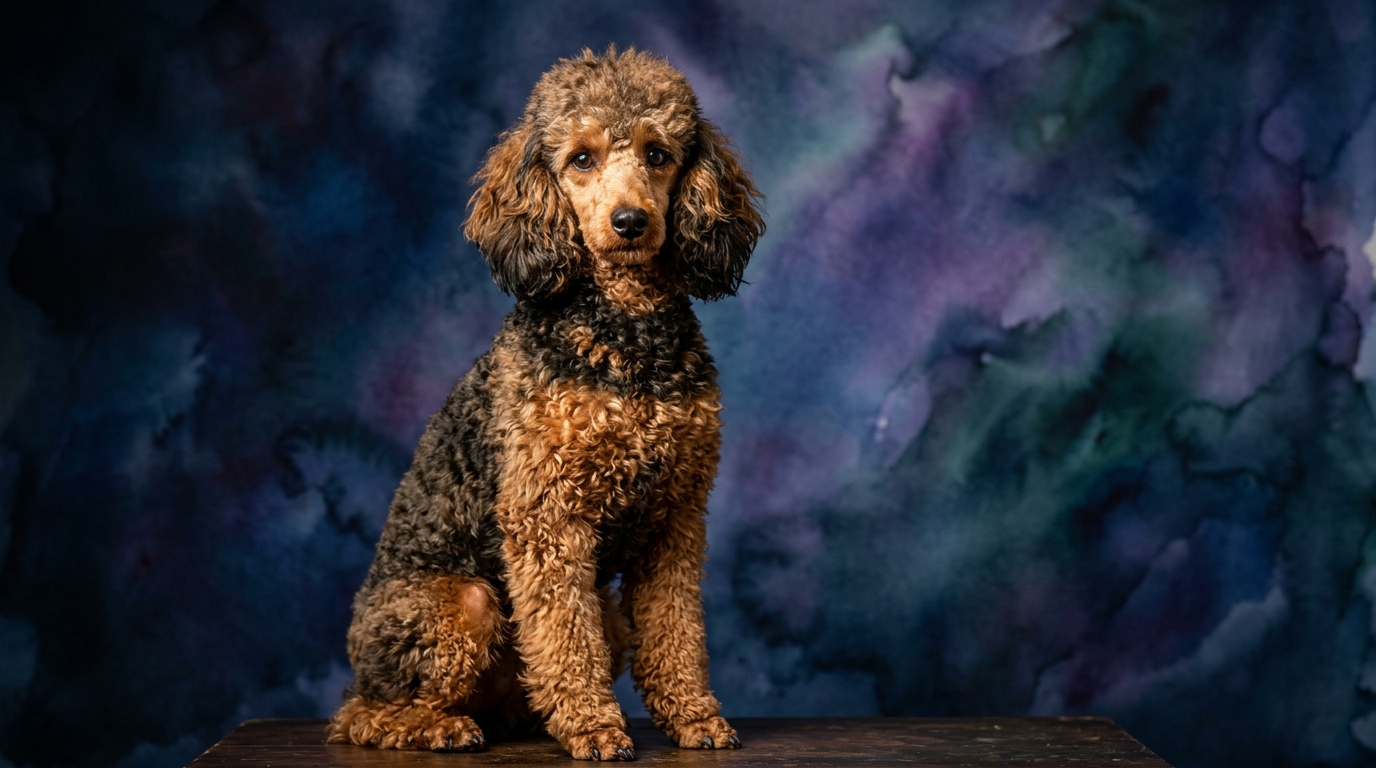

Side-by-Side Cognitive Profiles: Standard Poodle vs. Manchester Terrier
The Cosmic Pet Pet IQ Lab employs a five-dimensional framework to assess canine intelligence, offering a nuanced view beyond simple rankings. For the Standard Poodle, we observe an exceptional cognitive architecture, while the Manchester Terrier presents a distinct set of strengths.
The Standard Poodle’s Problem Solving is rated 5/5, indicating an extraordinary capacity to navigate complex situations, understand abstract concepts, and devise novel solutions to challenges. This breed doesn't merely follow commands; it often grasps the underlying intent and can adapt its approach. Its Training Speed, also 5/5, reflects a rapid absorption of new information and commands, frequently requiring minimal repetitions for mastery. This swift learning is underpinned by a profound eagerness to connect actions with desired outcomes. Social Intelligence, at 5/5, highlights the Poodle’s deep attunement to human emotions, subtle social cues, and intricate group dynamics. They often anticipate owner moods and respond with nuanced, empathetic behaviors. Their Instinctive Drive scores 4/5, signifying a strong, yet typically manageable, inclination towards activities like retrieving and water work, which can be readily channeled into structured play or specialized tasks. Finally, their Memory, a perfect 5/5, demonstrates outstanding retention of learned behaviors, commands, and past experiences over extended periods, making consistent training efforts highly cumulative.
In contrast, the Manchester Terrier presents a different, yet equally valid, cognitive profile. Their Problem Solving is rated 3/5, indicating a capability for learning routines and solving straightforward, practical problems. They may, however, take longer to generalize solutions to entirely new contexts, often preferring familiar patterns over highly abstract challenges. Training Speed for the Manchester Terrier is 3/5; they learn at a moderate pace, benefiting significantly from consistent repetition, clear instruction, and engaging, positive reinforcement methods. While capable learners, they typically require more patience and structured guidance than their Poodle counterparts. Social Intelligence, at 3/5, suggests they are responsive to their immediate human companions and aware of social interactions, though perhaps less inclined to interpret the most subtle emotional shifts. They form strong, loyal bonds but tend to express their social connections more directly. Their Instinctive Drive is also 3/5, characteristic of the terrier group, encompassing a moderate prey drive and an inclination for exploration and vigilance. This drive is manageable but requires consistent redirection and appropriate outlets. Their Memory, rated 3/5, indicates a functional capacity for retaining commands and routines, especially with regular reinforcement. They recall information effectively, but perhaps with less granular detail or over as long a timeframe as breeds with higher scores.
Where the Standard Poodle Excels Cognitively
The Standard Poodle’s exceptional scores across problem-solving, training speed, social intelligence, and memory coalesce into a dog with profound cognitive flexibility and a remarkable capacity for intricate learning. Their 5/5 problem-solving means they excel at tasks requiring abstract thought, such as learning complex multi-step routines in dog sports like agility or obedience, where they must not only perform actions but also understand sequences and adapt to changing environments. They can figure out how to open gates, retrieve specific items on command, or even learn to differentiate between numerous objects by name. This cognitive depth allows them to engage with their environment not just reactively, but proactively, often anticipating next steps in a game or training session.
Their superior training speed and memory combine to make them highly amenable to advanced instruction. A Standard Poodle can master an extensive vocabulary of commands, perform intricate trick sequences, and transition seamlessly between different tasks without losing focus. This makes them outstanding candidates for service dog roles, therapy work, or competitive dog sports where precision and rapid learning are paramount. Furthermore, their 5/5 social intelligence enables them to form deep, empathetic connections with their human companions. They can often sense subtle shifts in mood, offering comfort or companionship precisely when needed, showcasing an emotional attunement that goes beyond mere responsiveness. This profound understanding of human social dynamics makes them incredibly perceptive and adaptable family members, capable of navigating complex household interactions with grace and understanding.
Where the Manchester Terrier Offers Unique Cognitive Strengths
While the Manchester Terrier's cognitive profile differs from the Standard Poodle, it possesses a distinct array of strengths rooted in its terrier heritage. Their 3/5 instinctive drive, while moderate, is a defining characteristic that translates into valuable traits like alertness, vigilance, and a focused determination. This drive makes them excellent watchdogs, keenly aware of their surroundings and quick to alert their families to novel stimuli. Unlike some breeds that might overthink a situation, the Manchester Terrier's practical problem-solving (3/5) means they are less prone to becoming anxious by overly complex demands. They are resourceful in their own right, focused on immediate, tangible tasks, such as scent work or engaging in games that simulate their natural hunting instincts.
Their social intelligence (3/5) fosters a direct, loyal, and affectionate bond with their inner circle. They may not interpret every subtle human nuance, but their devotion is unwavering and expressed clearly, often through playful antics or close companionship. This directness can be a refreshing quality for owners who appreciate a dog that is self-assured and less dependent on constant external validation. The Manchester Terrier's cognitive makeup supports a self-reliant temperament. They are capable of entertaining themselves and finding satisfaction in independent exploration, provided their basic needs for exercise and engagement are met. This allows them to be content without constant, intense intellectual stimulation, fostering a balanced companionship where they bring their own spirited personality to the family dynamic. Their tenacity, a hallmark of the terrier group, means they approach challenges with a determined spirit, even if it takes them more repetitions to master a skill, they often exhibit a persistent drive to succeed once motivated.
Training Dynamics: Poodle (Standard) vs. Manchester Terrier
When considering ease of training, the Standard Poodle and Manchester Terrier present markedly different experiences for their owners, largely due to their distinct cognitive profiles. The Standard Poodle, with its 5/5 Training Speed and 5/5 Memory, is generally considered exceptionally amenable to training. They quickly connect cause and effect, rapidly internalize commands, and retain lessons over long periods. This means owners can progress swiftly through basic and advanced obedience, tackle complex tricks, and even prepare for specialized roles like therapy or service work with relative ease. Their high social intelligence further enhances trainability, as they are acutely responsive to human feedback, eager to please, and deeply motivated by positive interaction and praise. Behavioral nuances are often quickly understood and modified, making them highly adaptable companions in various training scenarios.
The Manchester Terrier, conversely, requires a more nuanced approach to training, reflecting its 3/5 scores in Training Speed and Memory, coupled with its moderate instinctive drive. They certainly are trainable, but the process demands greater patience, consistency, and creativity from their owners. Their learning pace is moderate, meaning more repetitions and shorter, highly engaging sessions are often more effective to maintain their focus. Their instinctive drive (3/5), which includes a natural prey drive, means they can be more easily distracted by environmental stimuli, requiring owners to work harder on maintaining attention and recall in varied settings. While they respond well to positive reinforcement, owners may need to utilize higher-value rewards to overcome their independent terrier streak and strong-willed nature. Learned behaviors, while retained, benefit from regular reinforcement to prevent decay, especially if not practiced frequently. Understanding the Manchester Terrier's spirited independence and channeling it through consistent, motivating training is key to success, rather than expecting the rapid, almost effortless learning seen in a Standard Poodle.
Lifestyle Suitability: Active vs. Relaxed Owners
The cognitive profiles of the Standard Poodle and Manchester Terrier suggest different ideal matches for owner lifestyles, particularly concerning activity levels and engagement preferences. The Standard Poodle, with its exceptional cognitive abilities across the board, thrives with owners who enjoy providing consistent mental stimulation and structured activities. They are ideal for active owners who are keen on engaging in dog sports such as agility, competitive obedience, rally, or even dock diving, where their problem-solving skills, rapid training speed, and instinctive drive for retrieving can be fully utilized. Furthermore, their profound social intelligence and memory make them excellent candidates for therapy work, service dog roles, or simply for owners who appreciate a companion capable of deep emotional connection and intricate interaction. While they enjoy physical activity, their primary need is for mental engagement; a Poodle can adapt to a more relaxed physical routine if their minds are consistently challenged through training, puzzle toys, and interactive play.
The Manchester Terrier suits owners who appreciate a spirited, loyal companion for regular, yet perhaps less formally structured, activities. Their moderate instinctive drive (3/5) means they enjoy engaging in scent games, chasing toys, and exploring their surroundings on walks or hikes. They are well-suited to owners who lead active lives but may not necessarily be seeking a dog for advanced competitive sports, preferring instead a keen and energetic partner for daily adventures. While they enjoy activity, their cognitive profile suggests they might be content with less intensely structured mental work than a Standard Poodle, often preferring independent exploration or short bursts of focused play. They can adapt to a relaxed home life, provided their physical and instinctive needs are met through consistent exercise and appropriate outlets for their terrier traits, such as secure yards for supervised digging or engaging puzzle toys. Owners who enjoy a dog with a distinct personality and a degree of self-reliance will find a Manchester Terrier a rewarding companion.
The Verdict
Choose the Standard Poodle for a companion capable of advanced learning, deep emotional connection, and who thrives on complex mental engagement and structured activities. They are ideal for owners seeking a highly adaptable and profoundly interactive canine partner.
Opt for the Manchester Terrier if you desire a spirited, loyal companion who offers direct affection, enjoys independent exploration, and thrives with consistent, engaging, but perhaps less intensely intellectual, interaction.
🧠 Find Your Pet's IQ Score
Our Pet IQ Lab assessment covers 25+ tests across 5 cognitive dimensions — personalized to your breed.
Take the Full IQ Test →Frequently Asked Questions
Do Manchester Terriers make good family pets despite their moderate IQ scores?
Yes, absolutely. Their IQ scores describe *how* they learn and interact, not their capacity for affection or loyalty. Manchester Terriers form strong bonds with their families, are playful, and can be wonderful companions for those who understand their terrier nature and provide consistent training and appropriate outlets for their energy and instincts.
Can a Manchester Terrier learn complex tricks like a Standard Poodle?
While a Manchester Terrier might not pick up complex sequences as rapidly or generalize them as broadly as a Standard Poodle, they are certainly capable of learning a wide array of tricks. The process will likely require more patience, repetition, and highly motivating rewards, but with dedication and consistent training, they can achieve impressive feats.
How does the "Instinctive Drive" score impact daily life for these breeds?
For the Standard Poodle (4/5), their drive is often channeled into retrieving or water activities, making them enthusiastic participants in games. For the Manchester Terrier (3/5), their drive manifests as a keen interest in chasing small animals or exploring scents, requiring secure leashes and consistent recall training to manage these natural instincts safely and effectively.