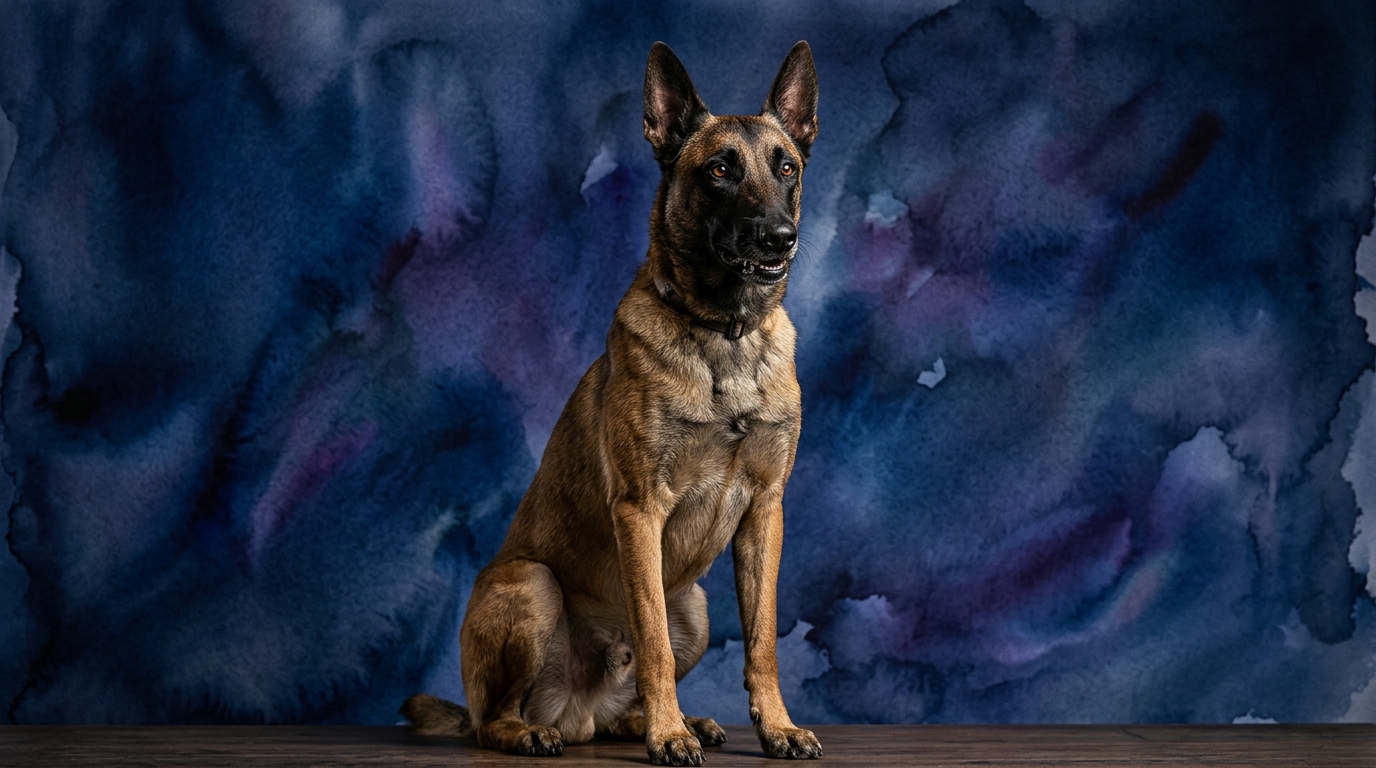
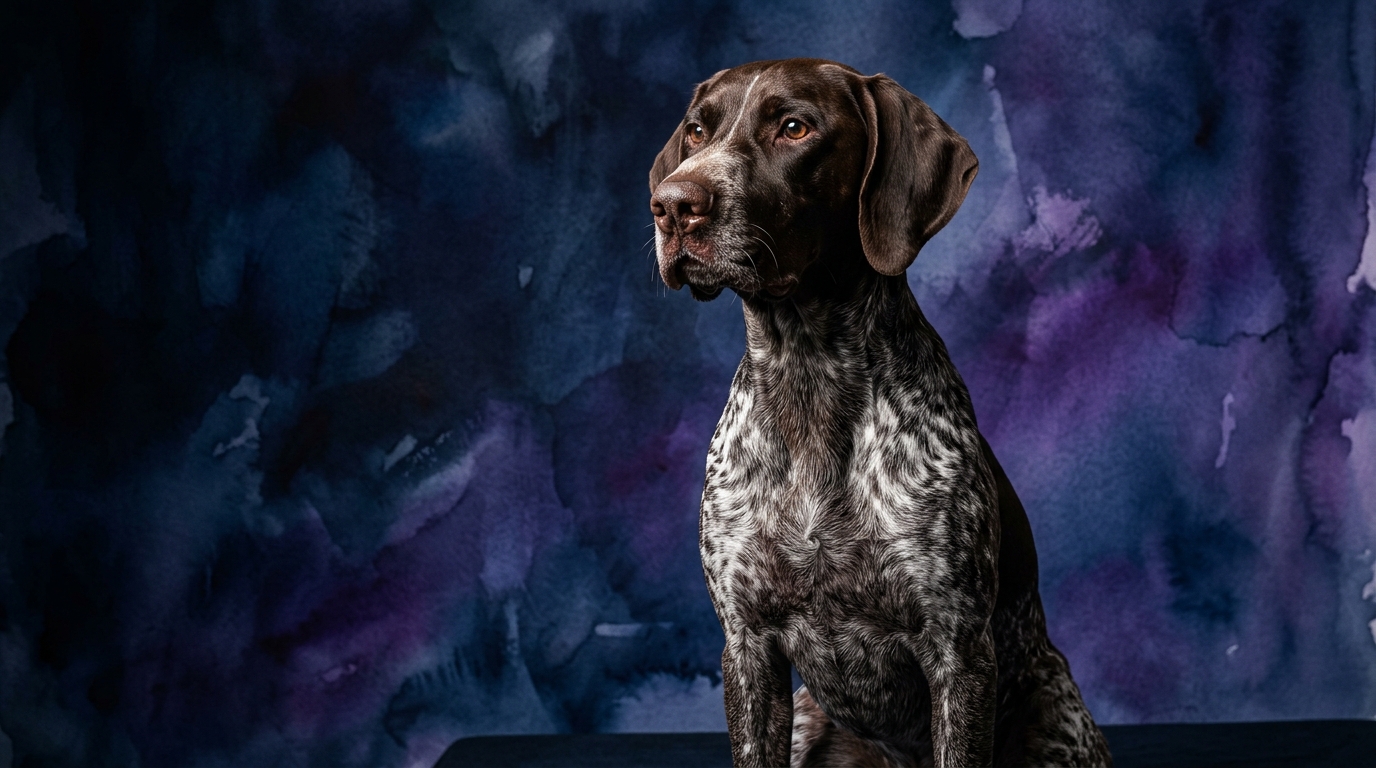
Side-by-Side IQ Profile: Belgian Malinois vs. German Shorthaired Pointer
The Cosmic Pet Pet IQ Lab employs five key dimensions to evaluate canine intelligence, offering a granular view beyond general perceptions. Let's examine how the Belgian Malinois (Coren Rank #22) and the German Shorthaired Pointer (Coren Rank #17) measure up across these specific cognitive markers.
For the **Belgian Malinois**, a breed renowned for its demanding working roles, the scores are consistently high. Their **Problem Solving** is rated 5/5, indicating an exceptional capacity for independent thought and strategic thinking when faced with novel challenges. **Training Speed** also achieves a perfect 5/5, highlighting their swift acquisition of new commands and routines with minimal repetition. Their **Social Intelligence** stands at 4/5, reflecting their adeptness at understanding and responding to human cues, particularly within a structured working relationship. A formidable **Instinctive Drive** scores 5/5, underscoring their profound innate motivation for tasks like herding, protection, and detection. Finally, their **Memory** is rated 5/5, signifying an outstanding ability to retain learned behaviors, complex sequences, and environmental details over extended periods.
The **German Shorthaired Pointer**, a versatile sporting dog, also demonstrates impressive cognitive abilities, albeit with slightly different strengths. Their **Problem Solving** matches the Malinois at 5/5, showcasing excellent ingenuity, especially in navigating complex hunting scenarios to locate and retrieve game. **Training Speed** is a strong 4/5, indicating rapid learning, particularly for tasks aligned with their natural sporting instincts, though perhaps requiring slightly more reinforcement for abstract concepts. Their **Social Intelligence** is also 4/5, revealing good comprehension of human intentions and a cooperative spirit within family and working dynamics. An intense **Instinctive Drive** earns a 5/5, reflecting their unwavering motivation for scenting, pointing, and retrieving, which defines their purpose. Their **Memory** is rated 4/5, representing solid recall of commands and hunting locations, providing consistent performance in the field.
Where the Belgian Malinois Wins Cognitively
The Belgian Malinois’s cognitive edge is most apparent in its unparalleled combination of Training Speed and Memory, both scoring a perfect 5/5. This allows them to absorb and retain intricate, multi-step commands and lengthy routines with remarkable efficiency and precision. For example, in competitive obedience or specialized roles such as bomb detection, a Malinois can learn and execute a complex chain of behaviors, then recall them perfectly months later, often without a single error. Their 5/5 Problem Solving, when coupled with their powerful Instinctive Drive, empowers them to adapt tactics instantaneously in dynamic, high-stakes environments. They excel at deciphering subtle environmental shifts and formulating a calculated response, whether tracking a nuanced scent trail across varied terrain or making split-second decisions to neutralize a perceived threat, often requiring minimal human prompting once the task's parameters are established. This breed’s mental architecture is geared towards sustained, high-level cognitive work that demands both rapid learning and flawless retention across diverse scenarios.
Where the German Shorthaired Pointer Wins Cognitively
The German Shorthaired Pointer’s cognitive brilliance shines brightly within its domain as a sophisticated hunting partner. Their 5/5 Problem Solving and 5/5 Instinctive Drive converge to create a master strategist in the field. Their mental superiority lies in their ability to independently plan and execute complex search patterns, using their keen olfactory senses to pinpoint game birds and make swift, intelligent decisions about approach and retrieve. This isn't merely instinct; it's a refined application of their sensory input, memory, and spatial reasoning to navigate challenging landscapes and achieve their objective. Their 4/5 Social Intelligence plays a crucial role here, enabling them to work in seamless partnership with a handler, interpreting subtle hand signals and vocal cues even amidst the distractions of a vibrant hunting environment. A GSP’s cognitive strength is in its integrated approach to field work, where a deep understanding of their environment, their prey, and their human partner allows for highly effective and cooperative performance, often demonstrating impressive ingenuity in overcoming obstacles to a successful hunt.
Which is Easier to Train and Why
When comparing ease of training, the Belgian Malinois generally possesses an advantage in terms of raw acquisition speed and the capacity for layering highly complex behaviors. Their 5/5 Training Speed means fewer repetitions are typically needed for a new command to become ingrained, and their 5/5 Memory ensures that these lessons are retained with exceptional reliability. This makes them particularly suitable for intricate obedience routines, protection sports, or specialized detection work where precision and rapid learning are paramount. Their drive is often intrinsically linked to pleasing their handler through task completion.
The German Shorthaired Pointer, with a strong 4/5 Training Speed, still learns quickly, especially when tasks align with their potent natural hunting instincts. They excel at field commands, retrieving, and pointing. However, for abstract or highly precise obedience tasks that fall outside their core drives, a GSP might require slightly more consistent reinforcement and patience to achieve the same level of robotic perfection that a Malinois can demonstrate. The GSP's intense instinctive drive, while a tremendous asset for hunting, can sometimes manifest as a more independent, 'what's in it for me' attitude if not effectively channeled, potentially requiring a more persuasive and engaging training approach compared to the Malinois's often singular focus on handler-directed tasks.
Which Suits Active Owners vs. Relaxed Owners
It's important to clarify that neither the Belgian Malinois nor the German Shorthaired Pointer are breeds suited for truly relaxed owners. Both demand significant physical activity and consistent mental engagement to thrive. The Malinois is an ideal match for owners who embrace a structured, high-intensity lifestyle, often involving competitive dog sports, advanced obedience, or protection work. Their relentless drive and profound need for purpose mean that a 'relaxed' day for a Malinois might still involve multiple hours of focused training, problem-solving games, or intense physical exertion. They require an owner who can consistently provide an intellectual challenge that matches their 5/5 Problem Solving and Instinctive Drive, preventing boredom and potential destructive behaviors.
The German Shorthaired Pointer, while equally energetic, is better suited for owners who enjoy an active outdoor lifestyle centered around exploration, running, hiking, and especially field sports. Their energy is primarily directed towards covering ground, scenting, and retrieving. They need ample space and consistent opportunities to burn off physical energy and satisfy their 5/5 Instinctive Drive for hunting-related activities. This makes them excellent companions for an owner who leads an outdoors-oriented life and can incorporate their dog into daily adventures, providing consistent physical outlets rather than solely precision-focused, structured work.
The Verdict
Opt for a Belgian Malinois if you are an experienced handler seeking a canine partner for advanced obedience, protection work, or competitive dog sports, able to provide intense mental and physical structure and consistent purpose.
Select a German Shorthaired Pointer if you lead an active outdoor lifestyle, value a keen hunting companion, and can provide ample opportunities for physical exertion and fulfilling their strong retrieving and scenting instincts.
🧠 Find Your Pet's IQ Score
Our Pet IQ Lab assessment covers 25+ tests across 5 cognitive dimensions — personalized to your breed.
Take the Full IQ Test →Frequently Asked Questions
Are Belgian Malinois good family dogs?
Belgian Malinois can be loyal family members, but their strong protective instincts and high drive require extensive socialization and consistent training from an experienced owner. They thrive in structured environments where their energy and intelligence are consistently channeled, making them suitable for active families committed to their needs.
How much exercise does a German Shorthaired Pointer need daily?
German Shorthaired Pointers require substantial daily exercise, typically 1-2 hours of vigorous activity, such as running, swimming, or extensive fetch. Their high instinctive drive means they need consistent outlets for their energy and mental stimulation to prevent boredom and maintain their physical and mental well-being.
Which breed is more prone to separation anxiety?
Both breeds are highly social and can develop separation anxiety if not properly conditioned to solitude or if their needs for exercise and mental engagement are unmet. Consistent training, providing enriching activities, and gradually increasing alone time are crucial for both the Malinois and GSP to be comfortable when left alone.