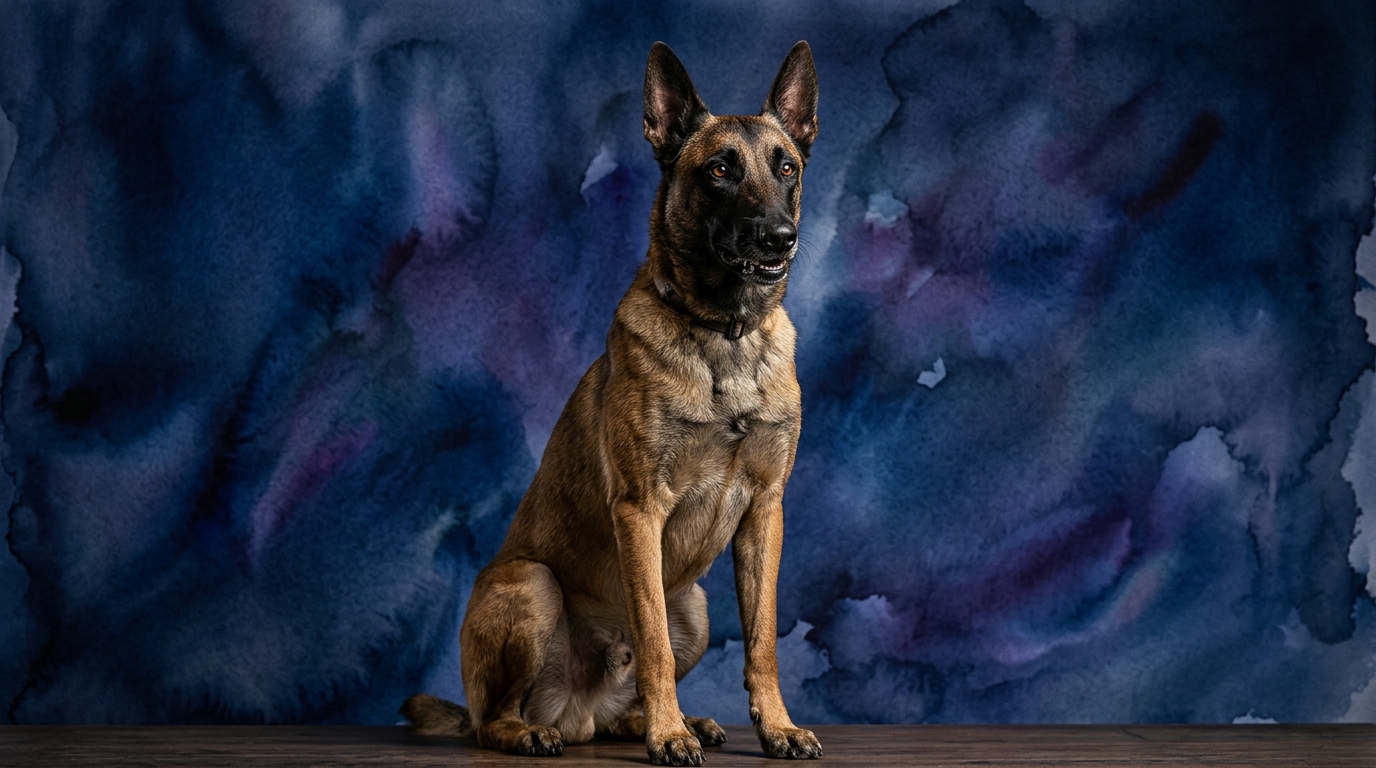
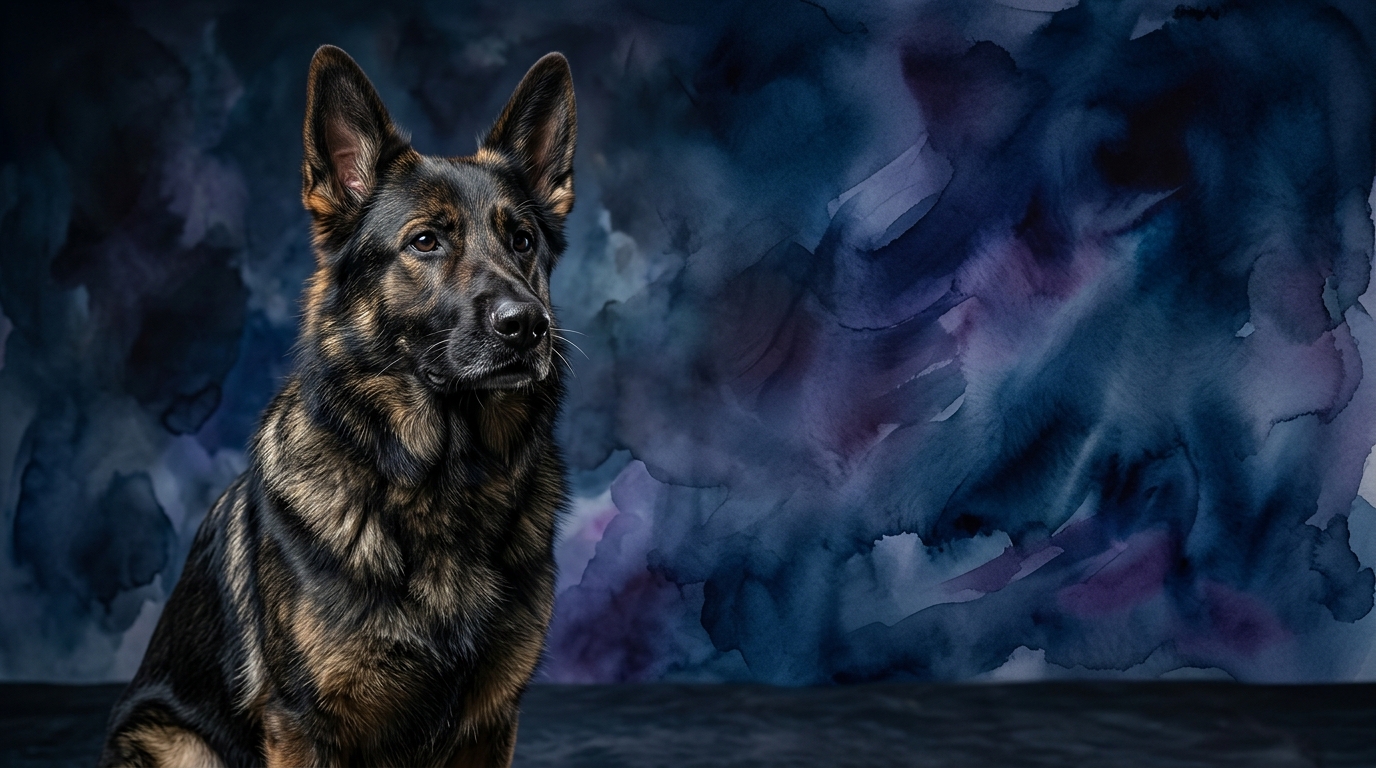
Side-by-Side IQ Profile: Unpacking Cognitive Dimensions
At The Cosmic Pet IQ Lab, we evaluate canine intelligence across five critical dimensions: problem solving, training speed, social intelligence, instinctive drive, and memory. While both the Belgian Malinois and the German Shepherd consistently demonstrate high scores, subtle but significant differences emerge that shape their interaction with the world and their handlers.
The Belgian Malinois, ranking #22 in Coren's intelligence scale, presents a profile marked by intense focus and rapid acquisition. It scores 5/5 in Problem Solving, indicating exceptional ability to navigate new challenges and adapt strategies quickly. Its Training Speed is also 5/5, reflecting a remarkable capacity for learning and retaining complex commands with minimal repetition. Social Intelligence for the Malinois is rated at 4/5, suggesting competence in understanding human cues but perhaps with a more task-oriented focus. Instinctive Drive is a perfect 5/5, underscoring its relentless energy and purpose, while Memory also earns a 5/5 for its robust recall of routines and learned behaviors.
In contrast, the German Shepherd, acclaimed at #3 on Coren's scale, showcases a well-rounded and deeply cooperative intellect. Like the Malinois, it earns 5/5 in Problem Solving, demonstrating a methodical and analytical approach to obstacles. Its Training Speed is also a top-tier 5/5, indicative of its eagerness to learn and consistent performance. Where the German Shepherd shines particularly brightly is in Social Intelligence, achieving a 5/5, signifying an acute sensitivity to human emotions and intentions. Its Instinctive Drive, a perfect 5/5, reflects strong protective and herding instincts, and its Memory is equally formidable at 5/5, ensuring enduring retention of vast information and experiences.
Comparing these profiles reveals both commonalities and distinctions. Both breeds demonstrate exceptional capabilities in independent thought (Problem Solving), rapid learning (Training Speed), and robust recall (Memory). The key differences lie in the nuances of their Social Intelligence and the specific manifestations of their Instinctive Drive, with the German Shepherd possessing a demonstrably higher capacity for social attunement.
Where the Belgian Malinois Wins Cognitively
The Belgian Malinois often exhibits a cognitive edge in scenarios demanding extreme independence and rapid, dynamic adaptation fueled by relentless drive. Its 5/5 score in Problem Solving, combined with its profound 5/5 Instinctive Drive, means it excels in environments where split-second decisions are required without constant human instruction. For instance, in protection work, a Malinois might independently assess a rapidly evolving threat and react with precision based on its training and intrinsic drive, without needing explicit, moment-by-moment commands.
The Malinois' training speed, also a 5/5, is amplified by its intense focus. While both breeds learn quickly, the Malinois often internalizes tasks with an almost insatiable desire to perform, making it a powerhouse for repetitive, high-stakes tasks where absolute consistency and speed of execution are paramount. Its slightly lower Social Intelligence (4/5 versus the German Shepherd's 5/5) can, paradoxically, be an advantage in certain high-pressure working contexts. This reduced emphasis on human emotional signals means the Malinois can often remain more task-focused and less distracted by handler anxiety or environmental social cues during critical operations, relying purely on its training and drive.
Where the German Shepherd Wins Cognitively
The German Shepherd's cognitive strengths frequently manifest in its superior social intelligence and its capacity for nuanced, cooperative problem-solving. With a 5/5 in Social Intelligence, the German Shepherd possesses an exceptional ability to read and interpret human body language, tone, and intent, fostering a deeper, more intuitive partnership. This translates to a dog that isn't just following commands but often understands the *spirit* of the instruction, adjusting its actions based on subtle cues from its handler.
Its 5/5 Problem Solving, combined with this elevated social acumen, makes the German Shepherd a master of collaborative tasks. In roles like service dog work or advanced obedience, it can anticipate needs and work in seamless synchronicity with its human. The German Shepherd's Coren ranking of #3 further underscores its broad cognitive capabilities, highlighting its reliability and versatility across a wide spectrum of cooperative tasks that demand both intellect and a deep desire to engage with its human partner. Its protective instincts, also rated 5/5, are often tempered by its social intelligence, allowing for discerning judgment in guarding roles.
Which Is Easier to Train and Why
While both breeds score 5/5 in Training Speed, the practical experience of training them can differ significantly due to their behavioral nuances. The Belgian Malinois, with its immense Instinctive Drive and independent problem-solving, learns commands at an astonishing rate. However, this speed is paired with an equally intense need for constant mental and physical engagement. A Malinois often requires a handler to match its unwavering focus and anticipate its drive; if not consistently channeled, its drive can manifest in self-directed, potentially undesirable behaviors like excessive herding or destructive tendencies.
Conversely, the German Shepherd, while equally adept at learning, often presents a more forgiving and cooperative training experience for many owners. Its 5/5 Social Intelligence means it is typically more attuned to pleasing its handler and more responsive to positive reinforcement centered around building a bond. German Shepherds are generally more tolerant of occasional handler inconsistencies and are intrinsically motivated by the desire to work alongside their human. Their methodical approach to problem-solving allows for structured, progressive training that builds confidence without the same level of potential redirection challenges that an independent Malinois might present if its energy is not perfectly managed. This makes the German Shepherd arguably 'easier' for a broader range of committed owners to train effectively, as its motivation is often more human-centric.
Which Makes a Better Family Pet for Active Owners vs. Relaxed Owners
For truly active owners, both breeds can be exceptional companions, but their specific needs diverge. A Belgian Malinois thrives with an owner who can consistently provide an immense amount of structured physical exercise and rigorous mental stimulation. This often means daily engagement in advanced obedience, agility, protection sports, or a demanding 'job' that satisfies its profound Instinctive Drive. For an owner who runs marathons with their dog, competes in high-level dog sports, or requires a dedicated working partner, the Malinois' intensity and focus are unparalleled. It is not a breed for passive participation; it requires an owner who lives an equally driven lifestyle.
The German Shepherd also requires significant activity and mental engagement but is generally more adaptable to a varied active family life. An active owner who enjoys daily long walks, hikes, fetch, and engaging in moderate dog sports will find the German Shepherd an eager and devoted companion. Its higher Social Intelligence means it thrives on being an integral part of family activities, desiring companionship and interaction above simply performing tasks. While it needs exercise, it's often more content to relax by its owner's side after a good workout, rather than constantly seeking its next 'mission.'
Neither breed is suitable for 'relaxed' owners in the conventional sense of minimal activity. Both will become bored and potentially destructive without sufficient stimulation. However, if 'relaxed' implies an owner who, while active, cannot commit to the extreme, relentless engagement a Malinois demands, then a German Shepherd is the far more appropriate choice. Its versatility and strong desire for companionship allow it to integrate more smoothly into a typical active family dynamic, offering protection and loyalty without the same intensity of behavioral management required for a Malinois.
The Verdict
Choose a Belgian Malinois if you are an experienced, highly active handler seeking an intense, driven partner for specialized, demanding, or competitive work requiring rapid adaptation and relentless focus.
Choose a German Shepherd if you are an active individual or family seeking a loyal, versatile, highly trainable companion and protector that excels in cooperative tasks and forms strong social bonds.
🧠 Find Your Pet's IQ Score
Our Pet IQ Lab assessment covers 25+ tests across 5 cognitive dimensions — personalized to your breed.
Take the Full IQ Test →Frequently Asked Questions
Do Belgian Malinois understand human emotions better?
No, German Shepherds typically score higher in social intelligence (5/5 vs 4/5), meaning they are generally more attuned to human emotional states and social cues, fostering a deeper empathetic bond and more nuanced cooperation.
Which breed is more independent in problem-solving?
Both breeds excel in problem-solving (5/5), but the Malinois often exhibits a more independent, self-directed approach due to its intense drive, sometimes taking initiative without explicit command if it perceives a task needing completion.
Is one breed more prone to separation anxiety?
While individual dogs vary greatly, German Shepherds, with their higher social intelligence and stronger desire for companionship, might be slightly more prone to expressing separation distress if their social needs for interaction aren't met compared to a more task-oriented Malinois.