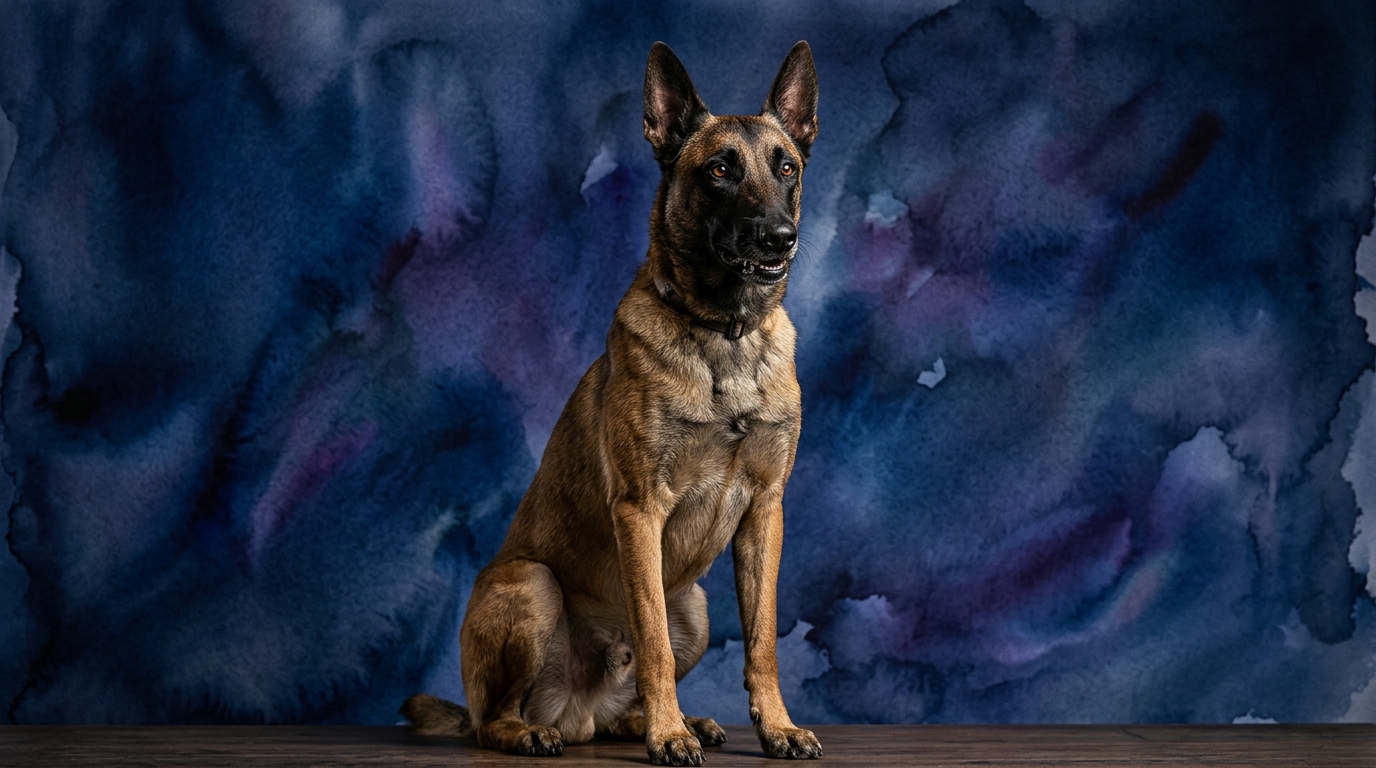
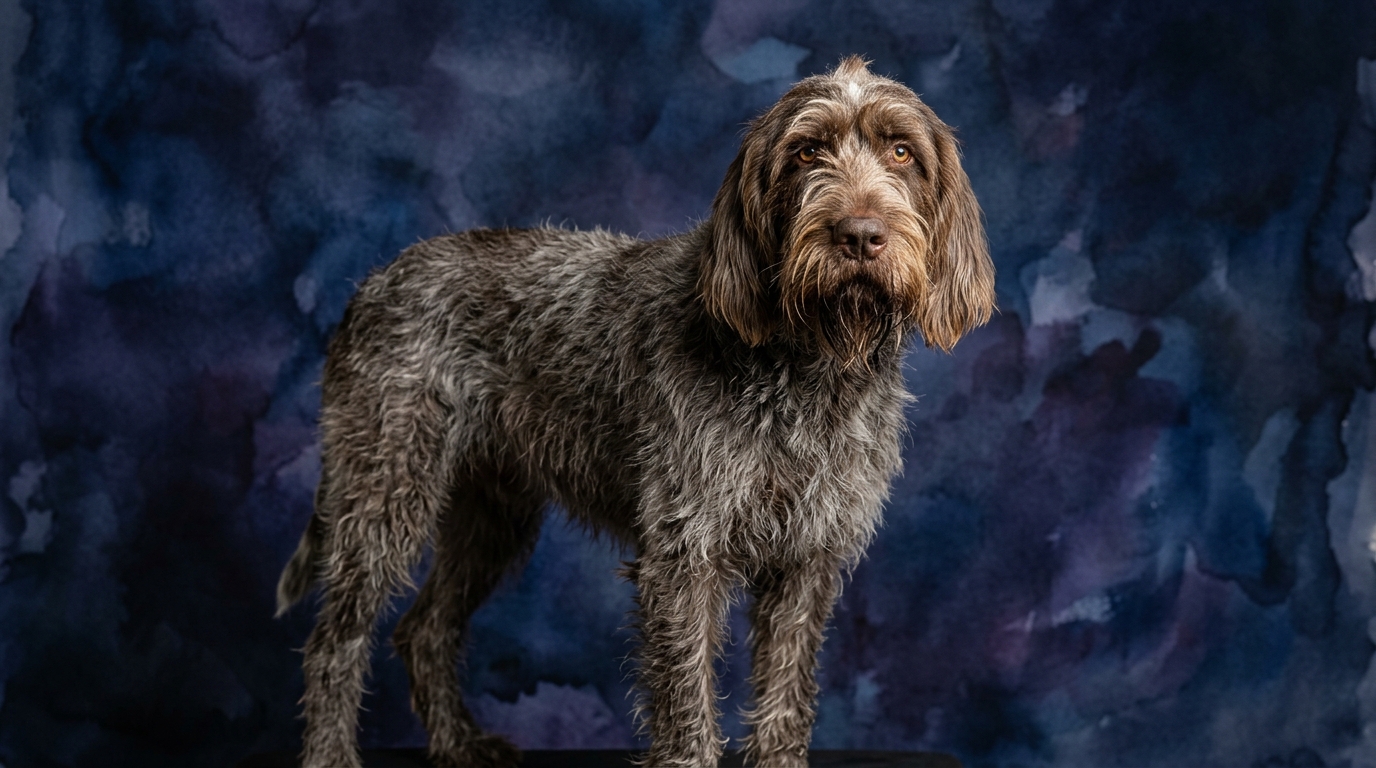
Side-by-Side Cognitive Profiles: Malinois vs. Spinone
The Cosmic Pet Pet IQ Lab's assessment reveals distinct cognitive architectures for these two breeds. The Belgian Malinois, a Herding group member, exhibits exceptional cognitive prowess across the board. Its problem Solving is rated 5/5, indicating an animal that rapidly analyzes novel situations and devises effective strategies for complex tasks, often excelling in multi-step challenges. Training Speed for the Malinois is also 5/5, meaning it absorbs new commands and intricate routines with remarkable quickness, frequently requiring minimal repetition to cement learning. Its Social Intelligence stands at 4/5, reflecting an acute ability to read handler cues and understand hierarchical structures, though sometimes preferring a singular, intense bond. The breed's Instinctive Drive is a perfect 5/5, showcasing profound innate urges for herding, protection, and task completion, translating into a tireless work ethic and unwavering focus. Finally, Memory for the Malinois is 5/5, retaining learned behaviors, commands, and environmental details over extended periods without significant decay.
In contrast, the Spinone Italiano, a Sporting group member, presents a more moderate, yet equally functional, cognitive blueprint. Its problem Solving is rated 3/5, suggesting it approaches new situations with deliberation and may require more guidance to navigate complex puzzles, capable but not always independently innovative. Training Speed for the Spinone is 3/5; it learns new commands at a steady pace, benefiting from consistent, patient repetition, and requires time for concepts to fully consolidate. Social Intelligence is 3/5, indicating a generally amiable and connected disposition with family, though perhaps without the same nuanced understanding of human intent or complex social dynamics seen in more intensely social breeds. The Spinone's Instinctive Drive is 3/5, characterized by a steady, persistent urge for hunting and retrieving, driven by scent but with a calm, less frantic persistence. Its Memory is 3/5, retaining familiar routines and commands adequately, though it might benefit from refreshers for less frequently practiced tasks, demonstrating solid but not exceptional recall.
Where the Belgian Malinois Wins Cognitively
The Belgian Malinois' cognitive strengths are evident in its capacity for rapid, complex learning and unwavering task orientation. Its 5/5 problem-solving acumen means it can quickly adapt to evolving scenarios, making it an exceptional candidate for roles requiring quick thinking, such as detection work or search and rescue operations where novel obstacles are commonplace. This breed doesn't just learn a task; it understands the underlying principles, allowing it to generalize and apply knowledge to new situations. Coupled with its 5/5 training speed, a Malinois can master intricate sequences of commands in a fraction of the time many other breeds require, allowing for advanced obedience, agility, and protection training to progress at an astonishing rate. The breed's 5/5 instinctive drive further amplifies these wins, providing an almost boundless internal motivation to engage in and complete tasks, translating directly into a relentless work ethic that few breeds can match. This combination means a Malinois not only learns faster but also possesses an intrinsic desire to utilize that learning in a productive, goal-oriented manner, making it an unparalleled partner for demanding, high-stakes activities.
Where the Spinone Italiano Wins Cognitively
While the Spinone Italiano's cognitive scores are not as high as the Malinois, its strengths lie in areas that make it a uniquely appealing companion for specific lifestyles. The Spinone's 3/5 instinctive drive, for example, represents a "win" for owners seeking a hunting partner that is persistent and thorough without being overly high-strung or frantic. This moderate drive means they can focus on their scent work with steady determination, but are also content to relax when the work is done, lacking the incessant need for mental engagement that can overwhelm some owners of higher-drive breeds. Their 3/5 problem-solving and training speed, while not rapid, signify a dog that is amenable to learning and capable of understanding tasks without constantly trying to outsmart its handler or finding destructive 'creative' solutions out of boredom. This leads to a more predictable and generally less challenging cognitive presence in a home environment. Furthermore, their 3/5 social intelligence, characterized by amiability, means they are typically less prone to the intense, singular bonding preferences sometimes seen in working breeds, making them a more universally welcoming and adaptable family member, less likely to struggle with a multi-person household's varied interactions.
Training Dynamics: Which is Easier and Why?
When considering ease of training, the distinction between the Belgian Malinois and the Spinone Italiano hinges on both the *speed of acquisition* and the *management of inherent drive*. The Belgian Malinois, with its 5/5 training speed and 5/5 memory, will undoubtedly learn new commands and complex routines faster than almost any other breed. Its profound instinctive drive means it is eager to work, often requiring minimal motivation beyond the opportunity to engage. However, this very intensity can make it challenging for inexperienced owners. A Malinois's high problem-solving capacity means it can quickly become bored or destructive if not adequately stimulated, and its relentless drive demands consistent, structured engagement. An untrained or under-stimulated Malinois is not 'difficult' because it's slow to learn, but because its unchanneled cognitive energy can manifest in behaviors that challenge an owner, from incessant herding of family members to creatively dismantling furniture.
Conversely, the Spinone Italiano, with its 3/5 training speed and 3/5 memory, requires a more patient and consistent approach. It will not pick up new commands with the same lightning speed as a Malinois, and owners must be prepared for more repetition and positive reinforcement. However, its moderate instinctive drive means there is less pressure for constant, intense mental engagement. A Spinone is less likely to become neurotically destructive from under-stimulation, making it 'easier' to integrate into a typical family routine without the need for constant, demanding work. While the Malinois learns faster, the Spinone's more manageable cognitive profile and lower intensity needs often make it a more straightforward and less overwhelming training project for the average pet owner, provided they embrace patience and consistency.
Active Owners vs. Relaxed Owners: A Lifestyle Match
The cognitive and physical demands of these breeds lead to clear distinctions in suitable ownership lifestyles. The Belgian Malinois is unequivocally a match for active, highly engaged owners. Its 5/5 instinctive drive, coupled with its immense physical stamina, means it thrives on purpose and requires constant physical and mental engagement. This breed excels with owners who are committed to structured training, participate in dog sports like agility, obedience, or protection work, or require a dedicated working partner. An owner who can't provide multiple hours of rigorous exercise and challenging mental tasks daily will find a Malinois's needs overwhelming, potentially leading to behavioral issues stemming from boredom and unspent energy.
The Spinone Italiano, on the other hand, is better suited for owners who enjoy activity but perhaps not to the extreme. While a sporting dog that appreciates outdoor adventures, its 3/5 instinctive drive and more moderate energy levels mean it's content with regular walks, hikes, or field work without the relentless intensity of a Malinois. They are excellent companions for owners who enjoy being outdoors but also appreciate quiet time indoors. A Spinone's more relaxed cognitive presence means it's less demanding mentally, happy to observe and participate without constantly seeking the next complex challenge. This makes them an ideal fit for families or individuals seeking a calm, amiable companion who enjoys activity but is equally content to snooze at their feet.
The Verdict: When to Choose Each Breed
The Verdict
Choose the Belgian Malinois if you are an experienced dog handler seeking an unparalleled working partner, committed to intense, structured training, and able to provide daily high-level physical and mental stimulation.
Opt for the Spinone Italiano if you desire a calm, amiable companion who enjoys regular outdoor activities but also values relaxed indoor companionship, and you appreciate a steady, less demanding cognitive presence in your home.
🧠 Find Your Pet's IQ Score
Our Pet IQ Lab assessment covers 25+ tests across 5 cognitive dimensions — personalized to your breed.
Take the Full IQ Test →Frequently Asked Questions
Is a Belgian Malinois suitable for a first-time dog owner?
A Belgian Malinois is generally not recommended for first-time dog owners due to its intense cognitive needs and high drive. Their rapid learning and problem-solving require an owner with significant experience to channel their energy constructively, preventing potential behavioral challenges.
Do Spinone Italianos need a lot of exercise?
Spinone Italianos require regular, moderate exercise to stay healthy and happy. While they enjoy walks, hikes, or field work, their exercise needs are less intense and relentless than those of a Belgian Malinois, making them suitable for active but not extreme lifestyles.
How do these breeds interact with children?
Belgian Malinois, with their strong herding instincts and intense focus, require careful socialization and supervision around children, especially younger ones, to ensure appropriate interactions. Spinone Italianos, generally known for their amiable and patient nature (3/5 social intelligence), tend to be more adaptable and gentle family companions, often doing well with children when properly introduced.