
Side-by-Side IQ Profile
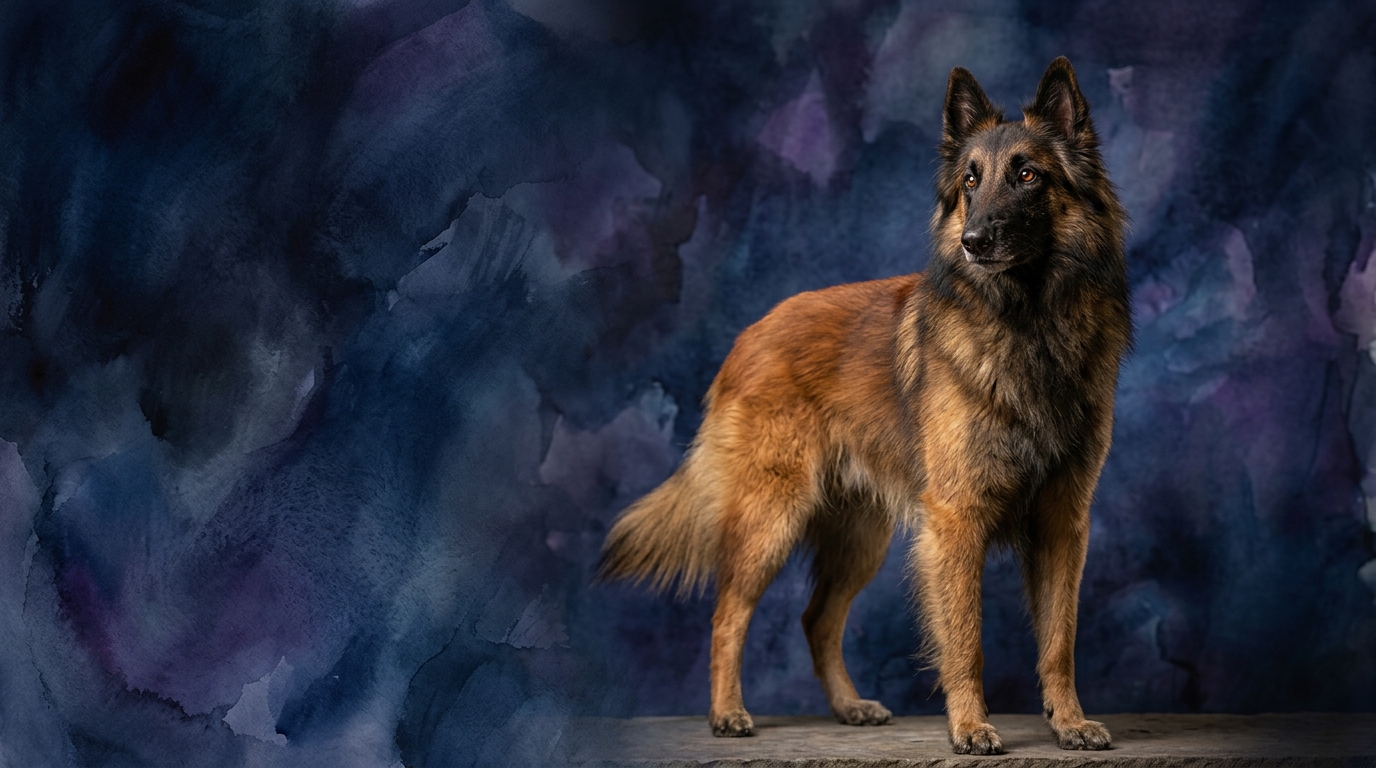
The Cosmic Pet Pet IQ Lab assesses canine intelligence across five critical dimensions, providing a nuanced view beyond simple rankings. For the Belgian Tervuren, a Herding breed ranking #14 on the Coren scale, its profile reveals a remarkable cognitive prowess: Problem Solving at 5/5, Training Speed at 5/5, Social Intelligence at 3/5, Instinctive Drive at 3/5, and Memory at 5/5. This suggests a dog capable of rapid learning and intricate thought.
In contrast, the Irish Setter, a Sporting breed with a Coren rank of #35, presents a slightly different cognitive makeup. Its scores include Problem Solving at 4/5, Training Speed at 4/5, Social Intelligence at 3/5, Instinctive Drive at 3/5, and Memory at 4/5. While still robust, these scores indicate a more balanced, perhaps less intensely cerebral approach to cognitive tasks compared to the Tervuren.
Where Belgian Tervuren Wins Cognitively
The Belgian Tervuren's cognitive strengths are evident in its perfect scores for Problem Solving, Training Speed, and Memory. A 5/5 in Problem Solving means the Tervuren approaches novel situations with a strategic mindset, often attempting multiple solutions until success. This manifests in their ability to quickly decipher the mechanics of a new puzzle toy or to independently navigate a complex agility course they haven't seen before, demonstrating a capacity for abstract reasoning beyond simple trial-and-error. Their 5/5 Training Speed indicates an almost instantaneous grasp of new commands and routines, requiring minimal repetitions for mastery. This rapid acquisition of skills allows Tervurens to advance quickly through complex training regimens, absorbing multi-step sequences with ease. Furthermore, a 5/5 in Memory ensures these learned behaviors, commands, and past experiences are retained over long periods with exceptional fidelity. This unwavering recall supports consistent performance in demanding roles, making them reliable partners in competitive obedience or protection work where precision and retention are paramount.
Where Irish Setter Wins Cognitively
While the Irish Setter's scores are consistently one point lower than the Tervuren in several categories, its cognitive profile represents a powerful synergy tailored to its sporting heritage. The Setter's 4/5 in Problem Solving means it possesses strong competence in figuring things out, particularly when tasks relate to its natural instincts. They excel at understanding patterns in their environment, such as remembering the best path through a field or consistently locating hidden retrieve items, showcasing practical intelligence for sustained outdoor activity. Its 4/5 in Training Speed allows for effective learning, making it a receptive student for field commands and hunting protocols, even if it requires a few more repetitions than a Tervuren. Crucially, the Setter's 4/5 in Memory is outstanding for its role; it provides reliable recall of game locations, scent trails, and handler signals over extended periods in varied terrain. This robust memory, combined with its instinctive drive (3/5), enables the Setter to perform tasks requiring consistent application and persistence, rather than needing to constantly adapt to novel, abstract problems. Its cognitive strengths lie in its enthusiastic, enduring application of learned skills in a dynamic outdoor environment.
Which Is Easier to Train and Why
When considering ease of training, the Belgian Tervuren generally presents a more straightforward path due to its superior scores in Training Speed and Memory. With a 5/5 in both, Tervurens absorb commands almost instantly, often understanding the underlying intent with minimal prompting. They require fewer repetitions to achieve proficiency and retain information with remarkable longevity, meaning once a behavior is learned, it is deeply ingrained. This makes them ideal for advanced obedience, intricate tricks, or specialized working roles where precision and speed of learning are critical. Their problem-solving acumen also means they can often generalize commands to new contexts more readily.
The Irish Setter, while still very trainable with 4/5 in both Training Speed and Memory, will typically require a more patient and consistent approach. They are eager and willing students, but may need more repetitions to solidify new commands and to generalize them across different environments. Their boundless enthusiasm and occasional exuberance can sometimes translate into a slight distraction during training sessions, necessitating engaging methods to maintain focus. While they certainly can achieve high levels of training, the journey might be characterized by a slightly slower acquisition rate and a need for more frequent refreshers compared to the Tervuren's near-photographic memory and rapid processing.
Which Suits Active Owners vs. Engaged Owners
The cognitive profiles of these two breeds dictate different ideal ownership scenarios. The Belgian Tervuren, with its top-tier Problem Solving, Training Speed, and Memory, thrives with active owners who are prepared to provide constant mental stimulation and engagement. These are dogs that excel in structured activities like agility, competitive obedience, rally, or protection sports, and they require an owner who enjoys the challenge of teaching complex tasks and fostering a deep working partnership. A Tervuren will become frustrated or destructive if its prodigious mind is not adequately exercised, making it unsuitable for owners seeking a purely decorative companion or a dog content with minimal mental engagement.
The Irish Setter, while undeniably an an active breed physically, offers a different kind of cognitive partnership. Owners who appreciate spirited outdoor adventures, long hikes, and engaging in field activities will find a wonderful companion in the Setter. Its 4/5 scores in Problem Solving, Training Speed, and Memory indicate a capable and cooperative mind, but one that is perhaps less intensely 'on' for abstract intellectual challenges than the Tervuren. They suit owners who provide consistent, positive training and ample physical outlets, but who might not seek the same level of intricate cognitive work. While certainly not a dog for sedentary owners, they are a better fit for those who want a competent, enthusiastic companion for active pursuits rather than a partner for highly cerebral dog sports.
The Verdict
Choose a Belgian Tervuren if you are an owner seeking a highly engaged, intellectually driven partner for complex training, competitive dog sports, or working roles where rapid learning, intricate problem-solving, and precise memory are paramount. They demand an owner dedicated to consistently challenging their sharp minds.
Choose an Irish Setter if you appreciate a spirited, enthusiastic companion for outdoor adventures, field work, and consistent, positive training, valuing their competence and charm over extreme cognitive demands. They thrive with an owner who provides regular physical outlets and engaging, positive reinforcement without requiring constant, abstract mental challenges.
🧠 Find Your Pet's IQ Score
Our Pet IQ Lab assessment covers 25+ tests across 5 cognitive dimensions — personalized to your breed.
Take the Full IQ Test →Frequently Asked Questions
Which breed is easier to live with for a first-time owner?
For a first-time owner, the Irish Setter might be slightly more manageable due to its generally less intense cognitive demands for abstract problem-solving, although both breeds require significant commitment. The Tervuren's extreme intelligence and drive can be overwhelming for an inexperienced owner if not properly channeled.
Do these breeds have similar exercise needs?
Both breeds are highly active and require substantial daily exercise, but their types of activity differ. The Tervuren needs intense physical activity coupled with significant mental work, while the Setter thrives on sustained physical exertion like running or field work, paired with engaging, but perhaps less complex, mental tasks.
How do their social intelligence scores impact family life?
Both breeds score 3/5 in Social Intelligence, indicating they understand human social cues to a moderate degree. They are generally good family companions but might be more focused on their tasks or immediate human interactions rather than broadly engaging with all social dynamics in a complex household without specific training.