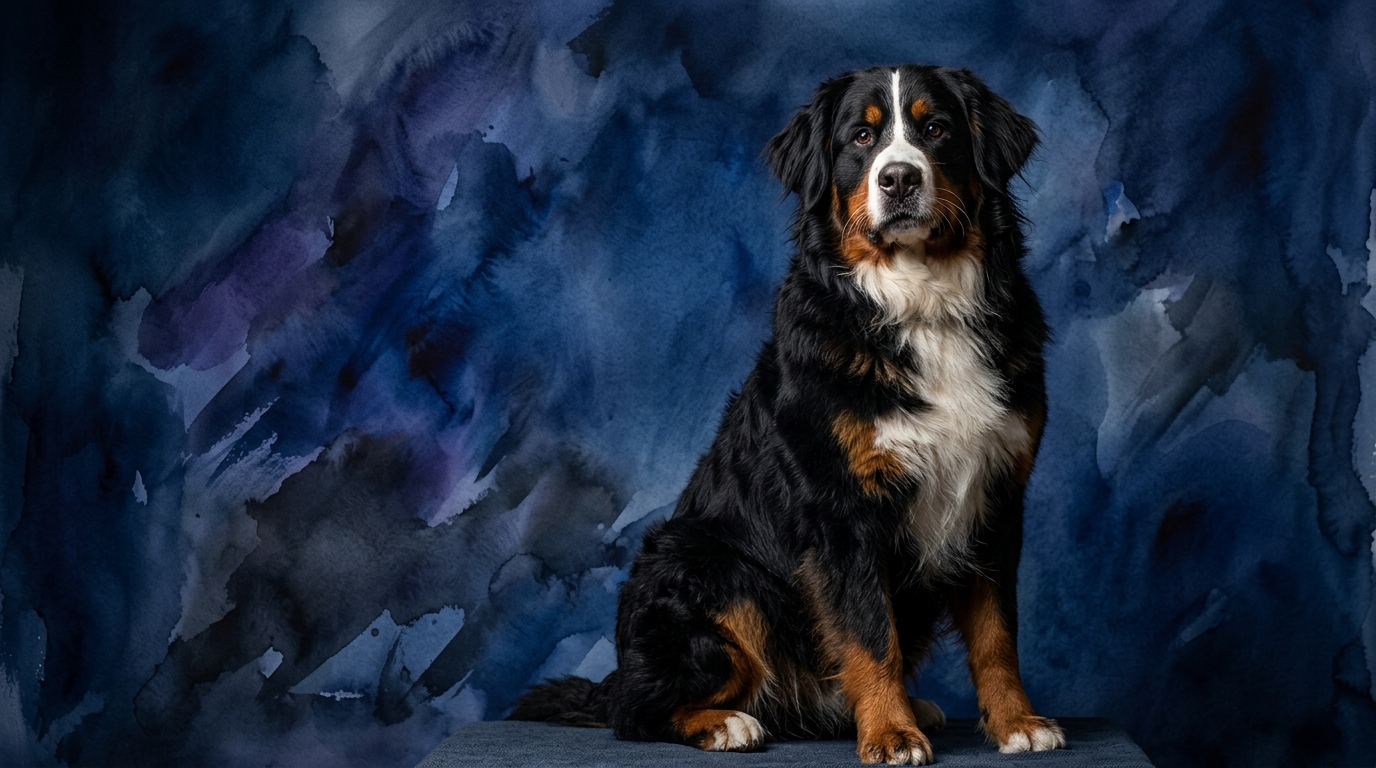

Side-by-Side IQ Profile: Bernese Mountain Dog vs. Dogue de Bordeaux
The Cosmic Pet Pet IQ Lab employs a five-dimensional framework to evaluate canine intelligence, offering a granular view beyond general perceptions. For the Bernese Mountain Dog, a breed recognized for its versatility, we see a balanced and cooperative cognitive blueprint. Its Problem Solving score of 3/5 suggests a moderate capacity for independent thought in novel situations, while its Training Speed of 4/5 indicates a quicker uptake of new commands and routines. The Bernese truly shines in Social Intelligence with a perfect 5/5, reflecting its exceptional ability to read human cues and form deep, cooperative bonds. An Instinctive Drive of 4/5 points to a strong internal motivation for activity and purpose, and its Memory at 3/5 provides a solid foundation for retaining learned behaviors and experiences. This profile aligns well with its Coren rank of #27, placing it among breeds with a notable capacity for obedience and working intelligence.
In contrast, the Dogue de Bordeaux presents a more consistent, albeit generally lower, set of scores across the board, without a specific Coren ranking. This breed's Problem Solving ability also sits at 3/5, indicating a similar moderate capacity for navigating new challenges. Its Training Speed is rated 3/5, suggesting it requires more repetition and patience compared to the Bernese to master new skills. Social Intelligence for the Dogue de Bordeaux is 3/5, implying a more independent nature and a less overtly cooperative approach to human interaction than the highly social Bernese. Its Instinctive Drive is also 3/5, pointing to a steady but not overwhelming internal motivation for activity. Finally, its Memory score is 3/5, on par with the Bernese, meaning it retains information reliably once learned. This profile paints a picture of a steadfast, rather than overtly eager, cognitive style.
Where the Bernese Mountain Dog Wins Cognitively
The Bernese Mountain Dog's cognitive strengths distinctly position it for roles requiring cooperation and adaptability. Its standout Social Intelligence score of 5/5 means it possesses an exceptional ability to understand and respond to human emotions, intentions, and communication. This makes them highly intuitive companions, often anticipating their owner's needs and thriving on close interaction and partnership. This profound social understanding translates into a dog that is not just obedient, but truly engaged in a collaborative relationship.
Furthermore, the Bernese's Training Speed of 4/5, combined with its high social intelligence, allows it to grasp and internalize new commands and complex tasks more rapidly. They are eager to please and quick to form associations between actions and consequences, making them receptive to varied training methodologies. This cognitive agility, reflected in its Coren rank, enables them to excel in diverse activities from obedience and agility to therapy work and carting, embracing new challenges with enthusiasm and a quicker learning curve than many other breeds.
Where the Dogue de Bordeaux Wins Cognitively
While the Dogue de Bordeaux's scores may not reach the peaks of the Bernese in certain dimensions, its cognitive profile possesses a functional consistency that aligns perfectly with its historical role. Its Problem Solving (3/5) and Memory (3/5) scores match the Bernese, indicating a robust, practical intelligence capable of understanding and retaining crucial information without overcomplicating situations. This steadfastness in applying learned lessons and navigating familiar environments is a quiet strength, ensuring reliability in routine.
The Dogue de Bordeaux's Instinctive Drive of 3/5, though moderate, is consistently channeled towards its inherent protective nature. This means its cognitive focus is often directed towards observation and a calm, unwavering presence, rather than a restless need for constant complex tasks. Its lower Social Intelligence (3/5) can also be seen as a strength in its specific context; it fosters a more independent and discerning nature, making it less prone to being overly distracted or easily swayed by strangers, which is beneficial for a dedicated guardian breed.
Which is Easier to Train and Why
Based on their cognitive profiles, the Bernese Mountain Dog is generally easier to train than the Dogue de Bordeaux. The Bernese's superior Training Speed (4/5 versus 3/5) means it processes and responds to new commands more quickly. This is significantly amplified by its exceptional Social Intelligence (5/5 versus 3/5), which translates into a strong desire to cooperate and a keen sensitivity to its owner's cues and emotions. A Bernese is more likely to actively seek to understand what is being asked of them and to work alongside their human partner.
Conversely, the Dogue de Bordeaux, with its moderate Training Speed and Social Intelligence, requires more patience, consistency, and a clear, confident approach. They are less inclined to offer immediate compliance simply to please, often needing a compelling reason or a very well-established routine to perform. Training a Dogue de Bordeaux often involves leveraging their memory and consistent repetition, focusing on positive reinforcement to build motivation rather than relying on an inherent eagerness to cooperate. While capable of learning, their journey to mastery will likely be slower and demand greater dedication from the trainer.
Which Suits Active Owners vs. Relaxed Owners
For owners seeking a highly engaged and active companion, the Bernese Mountain Dog is the more fitting choice. Its Instinctive Drive of 4/5 means it possesses a robust internal motivation for activity and purpose, thriving on regular exercise, mental stimulation, and participation in family activities. Coupled with its high Social Intelligence, a Bernese actively seeks interaction and collaboration, making it an ideal partner for hiking, dog sports, or any endeavor where it can work alongside its human. They require consistent mental and physical outlets to prevent boredom and channel their considerable energy positively.
The Dogue de Bordeaux, with its more moderate Instinctive Drive (3/5) and Social Intelligence (3/5), aligns better with owners who prefer a more relaxed and steadfast companion. While they still require daily exercise for their health and well-being, their need for complex, high-energy activities is generally lower than that of a Bernese. They are often content with structured walks and a comfortable spot near their family, preferring routine and a calm environment. Their cognitive profile suggests they are less prone to restlessness if not constantly challenged, making them suitable for owners who appreciate a strong, loyal presence without the demand for constant, intricate engagement.
The Verdict
Choose the Bernese Mountain Dog if you seek a highly cooperative, intelligent, and socially intuitive companion eager to engage in diverse activities and bond deeply through shared experiences.
Opt for the Dogue de Bordeaux if you value a steadfast, consistent, and quietly protective presence, preferring a companion whose intelligence manifests as reliable dedication rather than constant eagerness for complex tasks.
🧠 Find Your Pet's IQ Score
Our Pet IQ Lab assessment covers 25+ tests across 5 cognitive dimensions — personalized to your breed.
Take the Full IQ Test →Frequently Asked Questions
Do Bernese Mountain Dogs need a lot of mental stimulation?
Yes, Bernese Mountain Dogs benefit significantly from mental stimulation. Their high social intelligence and good training speed mean they thrive on learning new commands, engaging in puzzle toys, and participating in activities that challenge their minds and allow them to work cooperatively with their owners. Consistent mental engagement is key to their well-being.
Are Dogue de Bordeaux difficult to train?
Dogue de Bordeaux are not inherently difficult, but they do require more patience and consistency in training compared to some other breeds. Their moderate training speed and social intelligence mean they may take longer to grasp new concepts and are less motivated by abstract praise. Positive reinforcement and clear, repetitive training methods are most effective for them.
Which breed is better with children?
Both breeds can be wonderful with children when properly socialized and trained, but their cognitive profiles suggest differences. The Bernese Mountain Dog's high social intelligence often makes them very patient and understanding with children. The Dogue de Bordeaux, while loyal and protective, might be more reserved and require closer supervision to ensure interactions are calm and respectful due to their more independent social intelligence.