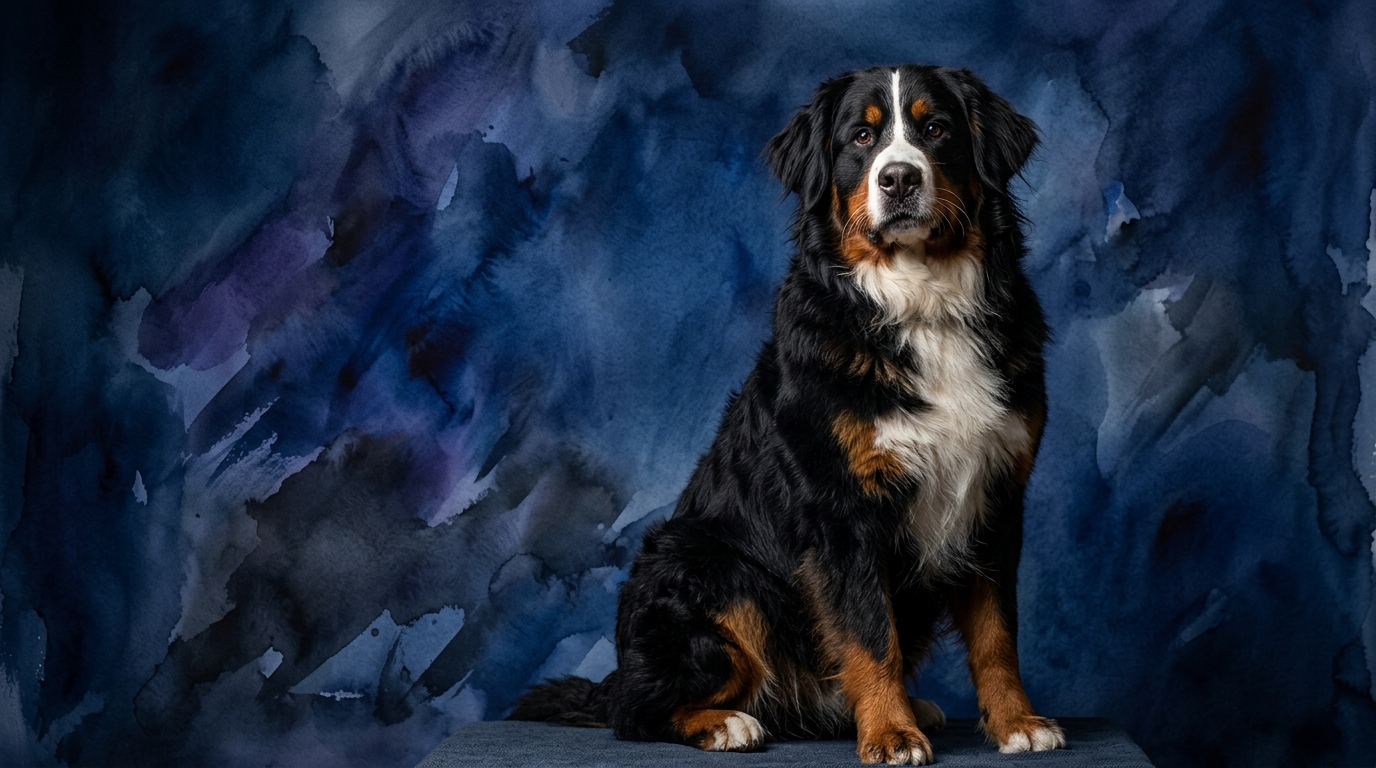
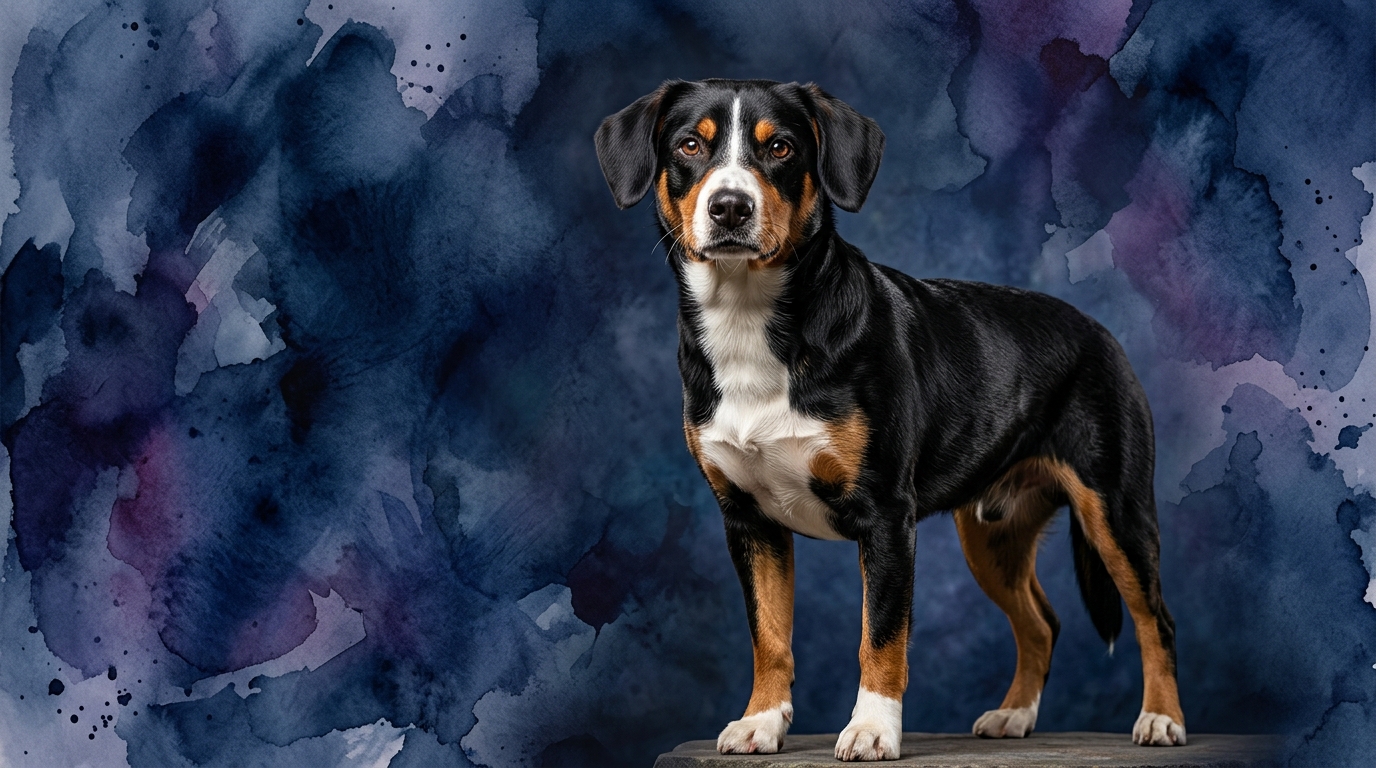
Side-by-Side Cognitive Profiles: Bernese vs. Entlebucher
The Cosmic Pet Pet IQ Lab employs a five-dimensional framework to assess canine intelligence, offering a nuanced look at how different breeds process the world. For the Bernese Mountain Dog, a member of the Working group, their Coren rank of #27 places them among breeds with a notable capacity for understanding and executing commands. Their Problem Solving score of 3/5 indicates an ability to navigate moderately complex tasks, often relying on learned patterns rather than spontaneous innovation. Training Speed, at 4/5, suggests they pick up new cues and behaviors relatively quickly, often driven by a desire to engage with their human companions. Their Social Intelligence is exceptionally high at 5/5, reflecting a profound capacity to read human emotions, intentions, and social cues, forming deep, empathetic bonds. An Instinctive Drive of 4/5 points to their historical role in pulling carts and droving, manifesting as a steady, purposeful work ethic. Finally, their Memory score of 3/5 demonstrates a reliable retention of experiences and learned behaviors.
In contrast, the Entlebucher Mountain Dog, belonging to the Herding group and not Coren-ranked, presents a distinct cognitive makeup. Their Problem Solving also scores 3/5, indicating a similar aptitude for practical challenges, though often applied with a more independent, situation-driven focus typical of herding breeds. Training Speed for the Entlebucher stands at 3/5, suggesting they learn new commands at a moderate pace, often requiring consistent, engaging methods to maintain their interest. Their Social Intelligence is 3/5, meaning they form strong bonds with their primary family but can be reserved or discerning with strangers, reading social situations within their trusted circle effectively. An Instinctive Drive of 3/5 highlights their historical role in herding livestock, manifesting as vigilance and a desire to manage or control movement, albeit with a lighter build and quicker agility than the Bernese. Their Memory score is also 3/5, indicating a solid ability to recall essential commands and routines.
Where the Bernese Mountain Dog Wins Cognitively
The Bernese Mountain Dog distinctly excels in dimensions centered around human interaction and collaboration. Their Social Intelligence score of 5/5 is a significant cognitive advantage, allowing them to perceive and respond to human emotions with remarkable sensitivity. This profound empathy makes them particularly adept at roles requiring close companionship, such as therapy work, where understanding subtle human cues is paramount. They exhibit a natural inclination to connect, often anticipating needs or offering comfort without explicit prompting. This heightened social awareness contributes to their generally amenable nature, making them highly attuned family members.
Furthermore, the Bernese's Training Speed of 4/5, compared to the Entlebucher's 3/5, indicates a quicker assimilation of new commands and behaviors. This isn't solely about rote memorization; it's often linked to their social intelligence, as their eagerness to please and strong desire for positive human interaction motivates faster learning. They tend to be more responsive to verbal cues and body language, making the initial stages of training, and the introduction of new routines, a more fluid process for many owners.
Where the Entlebucher Mountain Dog Wins Cognitively
While the Bernese excels in collaborative problem-solving and social connection, the Entlebucher Mountain Dog, with its herding heritage, demonstrates a specific cognitive advantage in tasks requiring quick, independent decision-making and agile responses. Their Problem Solving score of 3/5 is often applied to dynamic, fast-changing situations, demanding immediate reactions rather than contemplative planning. This manifests as a sharp awareness of their surroundings and a focused ability to direct or control movement, a nuanced cognitive strength suited to their historical role of managing livestock.
The Entlebucher's Instinctive Drive, while scoring 3/5 compared to the Bernese's 4/5, represents a different *type* of drive. It's less about steady, heavy hauling and more about agile, precise control and vigilance. This translates into a cognitive nimbleness and a focused determination to complete a task, even without constant human direction. Their independence, stemming from their herding roots, can be a cognitive asset in environments where self-reliance and quick, on-the-spot judgments are more valuable than constant deference to a handler.
Which Is Easier to Train and Why?
Based on their cognitive profiles, the Bernese Mountain Dog is generally considered easier to train for the average owner. Their superior Social Intelligence (5/5) means they are highly attuned to human desires and respond readily to positive reinforcement and praise. They possess a strong desire to be part of the family unit and typically find deep satisfaction in pleasing their people. This eagerness, combined with their Training Speed (4/5), translates into a dog that often learns commands quickly and applies them consistently, making early obedience and house-training a more straightforward experience. Their gentle nature also means they are less likely to challenge authority and more inclined to cooperate.
The Entlebucher Mountain Dog, with a Training Speed of 3/5 and Social Intelligence of 3/5, can present more of a training challenge. Their herding background instills a degree of independence and a strong will, meaning they might require more patience, consistency, and creative engagement. They are not necessarily stubborn, but they are discerning and need to understand the 'why' behind a command or find the motivation compelling. Owners often report that Entlebuchers can be clever at finding loopholes or testing boundaries, demanding a firm yet fair and always positive approach. While capable of learning just as much, the process may require more focused effort and a deeper understanding of their independent working dog mentality.
Suited for Active Owners vs. Relaxed Owners
The Bernese Mountain Dog, despite their larger size and an Instinctive Drive of 4/5, can adapt well to moderately active owners who enjoy consistent, purposeful outings. Their drive manifests as a desire for steady work, like long walks, hiking, or even carting, rather than frantic, high-intensity bursts of energy. Their high Social Intelligence means they are equally content with relaxed family time, cuddling on the couch after their exercise needs are met. They appreciate being included in all family activities, whether it's a stroll in the park or a quiet evening indoors, making them suitable for owners who prioritize companionship but also provide regular, gentle physical and mental stimulation.
Conversely, the Entlebucher Mountain Dog is better suited for highly active owners who can channel their spirited energy and herding instincts effectively. Although their Instinctive Drive is 3/5, their agility, quickness, and innate desire to 'work' mean they thrive on structured activities that engage both their body and mind. Owners who enjoy dog sports like agility, flyball, competitive obedience, or long, vigorous hikes will find a willing and enthusiastic partner in an Entlebucher. Without adequate mental and physical outlets, their intelligence and drive can lead to boredom and potentially destructive behaviors. They are not typically content with being solely a couch companion and require a dedicated owner prepared for consistent, high-energy engagement.
The Verdict
Choose the Bernese Mountain Dog if you seek a deeply empathetic, highly sociable companion who thrives on close family bonds and gentle, consistent training, capable of moderate activity but also enjoying quiet companionship.
Opt for the Entlebucher Mountain Dog if you are an active owner who appreciates a spirited, independent, and agile dog with a strong work ethic, willing to engage in structured activities like agility, herding, or fast-paced hikes, and who can commit to consistent, engaging training.
🧠 Find Your Pet's IQ Score
Our Pet IQ Lab assessment covers 25+ tests across 5 cognitive dimensions — personalized to your breed.
Take the Full IQ Test →Frequently Asked Questions
Are Bernese Mountain Dogs good with children?
Yes, their high social intelligence and gentle nature often make them excellent family dogs, particularly with children. However, due to their substantial size, supervision is always recommended to prevent accidental tumbles during play.
Do Entlebucher Mountain Dogs bark a lot?
Entlebuchers can be quite vocal, often using their bark as an alert due to their watchful herding instincts. Early training and socialization are crucial to manage excessive barking and teach them appropriate times to vocalize.
What's the key difference in their 'mountain dog' temperament?
The Bernese Mountain Dog generally embodies a gentle giant temperament, being people-oriented and eager to please. The Entlebucher, while loyal to family, is typically more spirited, independent, and watchful, often displaying a strong sense of purpose.