A Side-by-Side Look at Cognitive Profiles
Canine intelligence is a multifaceted concept, encompassing various aptitudes that allow a dog to navigate its world and interact with humans. While Dr. Stanley Coren's ranking system offers a broad measure of 'working and obedience intelligence,' placing the Bernese Mountain Dog at #27 and the Ibizan Hound at #53, a more granular analysis, as provided by The Cosmic Pet Pet IQ Lab, reveals the specific cognitive strengths and weaknesses of each breed.
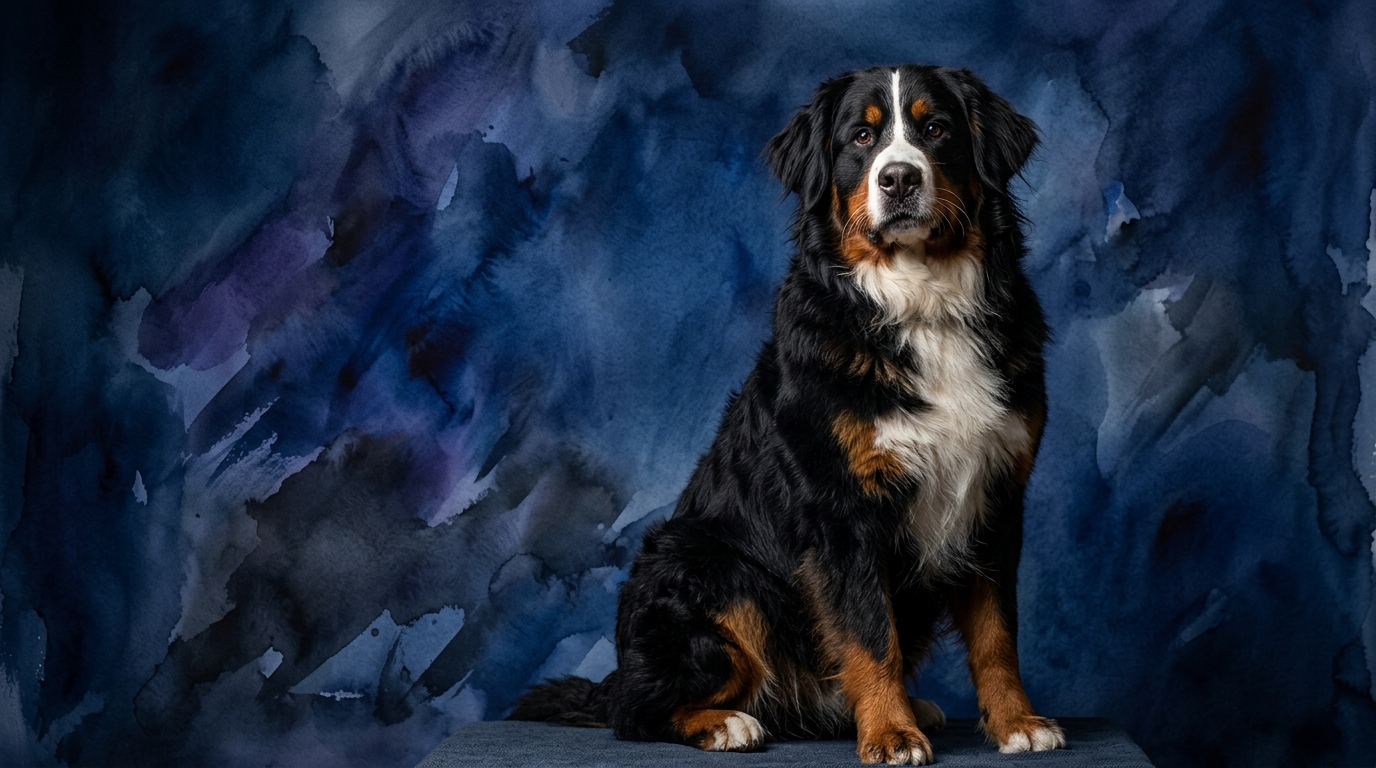
The Bernese Mountain Dog, originating from the Swiss Alps as a versatile farm dog, exhibits a cognitive profile tailored for collaboration and companionship: Problem Solving 3/5, Training Speed 4/5, Social Intelligence 5/5, Instinctive Drive 4/5, and Memory 3/5. This blend highlights their capacity for teamwork and their intuitive understanding of human interaction, a legacy of their roles herding cattle, guarding property, and pulling carts.
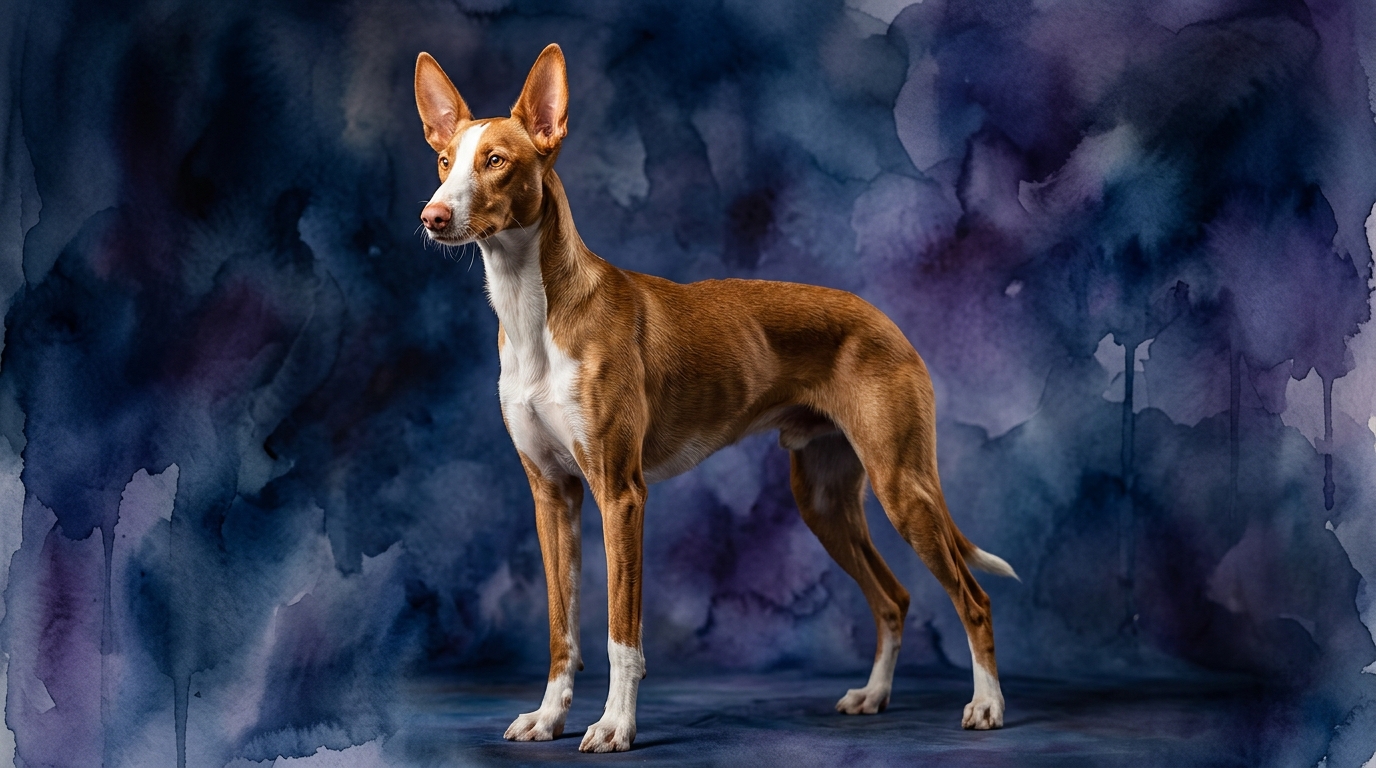
In contrast, the Ibizan Hound, a sighthound with ancient roots in the Balearic Islands, developed its mental faculties for independent hunting across varied terrain. Its IQ profile reflects this solitary pursuit: Problem Solving 3/5, Training Speed 3/5, Social Intelligence 3/5, Instinctive Drive 3/5, and Memory 3/5. These scores suggest a focus on self-reliance and environmental awareness, rather than a strong drive to work directly with human partners.
Where the Bernese Mountain Dog's Cognition Shines
The Bernese Mountain Dog's standout cognitive strength lies in its exceptional Social Intelligence (5/5). This isn't merely about being friendly; it reflects a profound ability to read human emotions, understand social cues, and integrate seamlessly into a family unit. A Bernese often anticipates its owner's needs or mood, offering comfort or seeking engagement at opportune moments, demonstrating a deep emotional attunement that surpasses many other breeds.
Coupled with their high Training Speed (4/5), this social acumen makes them adept at learning complex routines and responding reliably to commands. Their desire to be a cooperative partner means they actively seek to understand and comply with human directives, making tasks like learning multi-step tricks or therapy work feel intuitive for them. This collaborative spirit, honed over centuries of working alongside people, positions them as excellent candidates for roles requiring close human-animal partnership, unlike the more independent Ibizan Hound.
The Ibizan Hound's Unique Cognitive Strengths
While the Ibizan Hound's scores might appear modest compared to the Bernese, their cognitive strengths are uniquely adapted to their historical purpose. Their Problem Solving (3/5) and Instinctive Drive (3/5) are not geared towards human-directed tasks, but rather towards the independent pursuit and capture of prey. This manifests as a keen ability to analyze rapidly changing environmental conditions, such as the movement of small game or subtle shifts in terrain, and formulate immediate, effective hunting strategies.
An Ibizan Hound's memory (3/5) is particularly impressive when it comes to recalling specific hunting grounds, optimal routes, or the location of previously observed prey. They exhibit a form of situational awareness that allows them to make split-second decisions based on sensory input, demonstrating an autonomous, rather than collaborative, form of intelligence. This contrasts sharply with the Bernese, whose problem-solving is often mediated through human instruction and social interaction.
Training Dynamics: Bernese Mountain Dog vs. Ibizan Hound
Training a Bernese Mountain Dog is generally a more straightforward process, largely due to their superior Social Intelligence (5/5) and Training Speed (4/5). They possess an inherent eagerness to please their human companions and respond positively to clear, consistent instruction and affectionate feedback. A Bernese thrives on shared activities and views training as an opportunity for connection, making them highly receptive to learning new commands and behaviors with relatively fewer repetitions. While their Problem Solving (3/5) and Memory (3/5) are average, their strong desire to cooperate often compensates, allowing them to excel in various obedience and companion roles.
Conversely, training an Ibizan Hound often presents a distinct set of challenges. Their lower Training Speed (3/5) and Social Intelligence (3/5), combined with a significant Instinctive Drive (3/5) for chasing, mean they are less inherently motivated by human approval. An Ibizan often prioritizes its own sensory input—a distant movement, an interesting scent—over a handler's command. This independent streak can translate into 'selective hearing,' especially in stimulating environments. Successful training with an Ibizan requires immense patience, creativity, and making the training highly rewarding from their perspective, often by incorporating elements of chase or using high-value treats to capture their attention and override their strong natural urges.
Lifestyle Match: Active vs. Relaxed Owners
For owners seeking a deeply integrated, emotionally responsive companion, the Bernese Mountain Dog is an excellent fit. While they require regular exercise to maintain their physical health, their mental and emotional well-being is strongly tied to being an active part of the family. They enjoy activities that involve their people, whether it's a leisurely hike, a game in the yard, or simply lounging nearby. Their ideal owner appreciates a dog that thrives on companionship and participation in daily routines, valuing social interaction and shared experiences over constant high-octane physical demands.
The Ibizan Hound, on the other hand, is better suited for active owners who understand and can accommodate their specific needs for intense physical exertion and mental stimulation rooted in their sighthound nature. These dogs require ample opportunities to run at full speed in a securely fenced area, engaging their instinctive drive to chase and explore. While they can be calm indoors, their cognitive satisfaction comes from these bursts of high-energy activity and sensory engagement. Owners who appreciate an independent spirit, are committed to providing structured outlets for their natural athleticism, and are content with a dog that might express affection more subtly, will find a rewarding partnership with an Ibizan Hound.
The Verdict
Choose the Bernese Mountain Dog if you prioritize a highly social, collaborative companion eager to participate in family life and respond readily to guidance, thriving on emotional connection and partnership.
Choose the Ibizan Hound if you appreciate an independent, athletic companion with a keen hunting instinct, and are prepared to provide ample opportunities for secure, high-speed exercise and engage with their unique, often reserved, social style.
🧠 Find Your Pet's IQ Score
Our Pet IQ Lab assessment covers 25+ tests across 5 cognitive dimensions — personalized to your breed.
Take the Full IQ Test →Frequently Asked Questions
Is the Bernese Mountain Dog truly 'smarter' than the Ibizan Hound?
No, their intelligence manifests differently based on their historical roles. The Bernese excels in social collaboration and learning human cues, while the Ibizan's strengths lie in independent problem-solving related to its hunting instincts and environmental awareness, rather than human-directed tasks.
Can an Ibizan Hound live in a family setting like a Bernese?
Yes, but their social dynamics differ. Ibizans are often affectionate with their family members but may be more reserved with strangers and less overtly 'people-pleasing' than a Bernese, requiring understanding and respect for their specific social needs and independent nature.
Which breed requires more physical exercise?
The Ibizan Hound generally requires more intense, focused bursts of physical exercise, especially opportunities to run at full speed in a safe, enclosed space to satisfy their sighthound instincts. The Bernese benefits from consistent, moderate activity and mental engagement with their family, valuing companionship during their exercise.