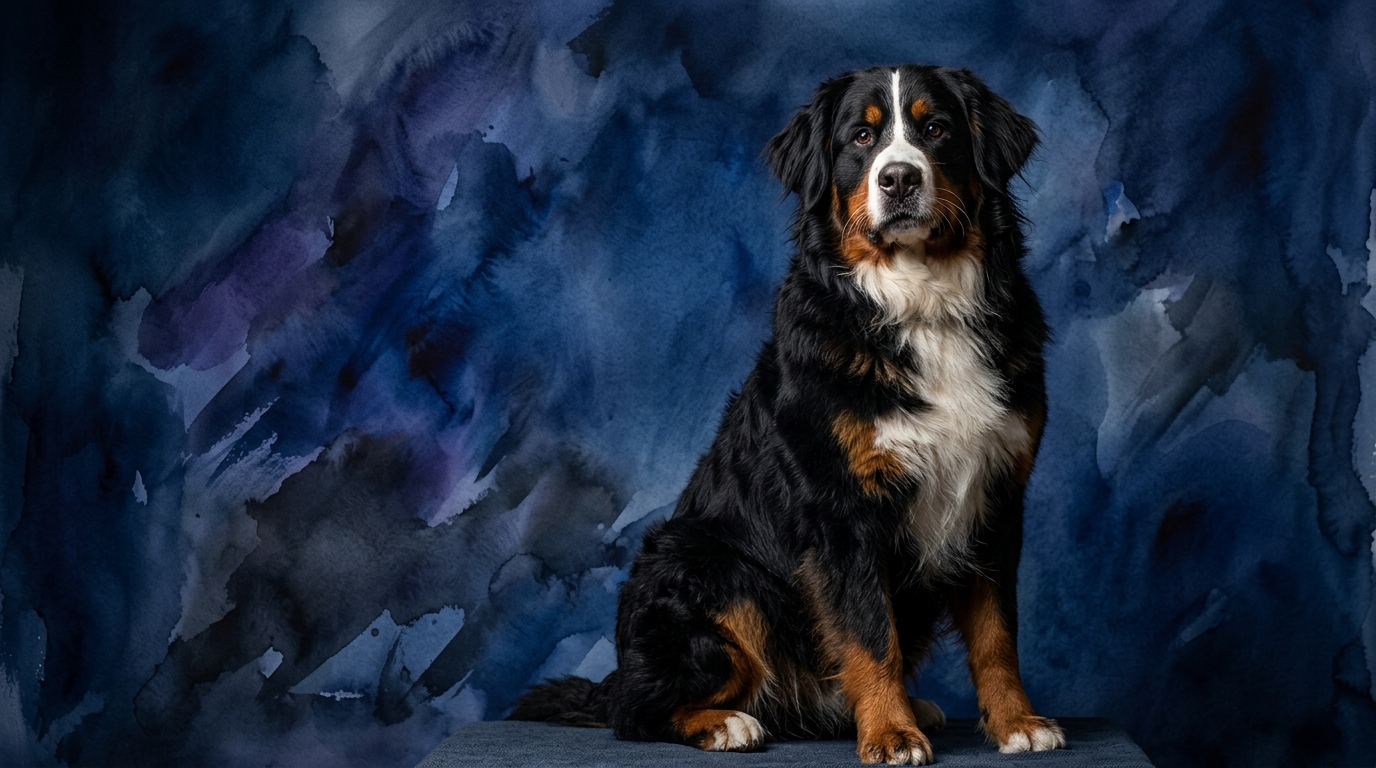
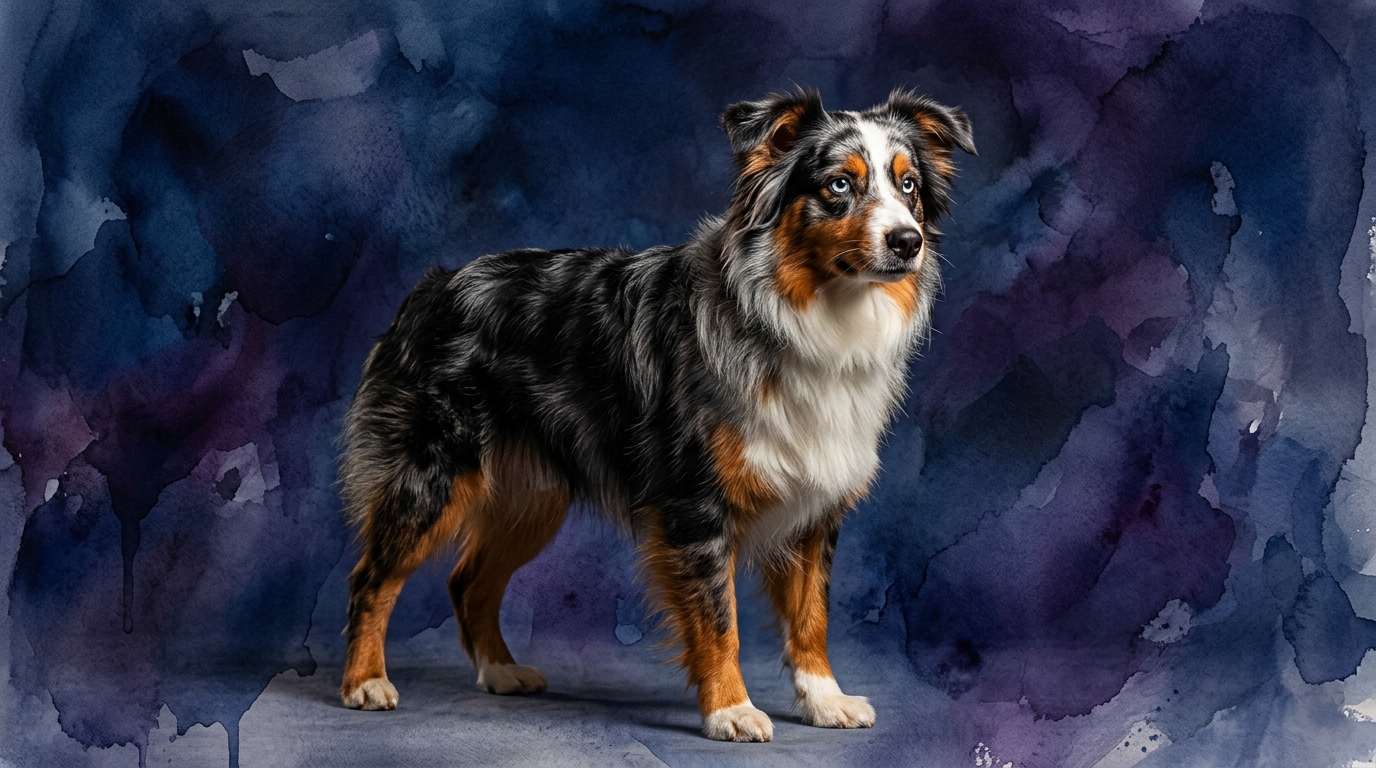
Side-by-Side IQ Profile: Bernese Mountain Dog vs. Miniature American Shepherd
The Cosmic Pet Pet IQ Lab offers a nuanced look at canine intelligence, assessing five key dimensions. Here’s how the Bernese Mountain Dog and Miniature American Shepherd compare:
Bernese Mountain Dog (Working Group, Coren Rank #27)
Problem Solving (3/5): Berners approach challenges methodically, often relying on their physical presence and learned routines rather than rapid innovation. They can work through multi-step tasks with patience once understood.
Training Speed (4/5): These dogs typically acquire new commands and routines with impressive quickness. Their desire to please and calm temperament contribute to their responsiveness, making them fast studies with consistent positive reinforcement.
Social Intelligence (5/5): A standout strength, Bernese Mountain Dogs possess a profound ability to read human emotions and social cues, adapting their behavior to family dynamics. Their empathy fosters strong bonds and seamless household integration.
Instinctive Drive (4/5): Originating as farm dogs, they carry a deep drive for purpose, guarding, and working alongside humans, manifesting as a protective instinct and moderate prey drive needing channeling.
Memory (3/5): They exhibit reliable memory for learned commands, routines, and significant relationships. Their recall for core behaviors is solid, aiding in consistent, predictable interactions.
Miniature American Shepherd (Herding Group, Not Coren-ranked)
Problem Solving (3/5): Miniature American Shepherds tackle problems practically, often with agility. They figure out obstacles and goals, sometimes using trial-and-error driven by their inherent urge to act.
Training Speed (3/5): Eager and capable, their training speed is slightly moderated compared to the Bernese. Their enthusiasm and occasional independent streak require consistent, engaging methods to prevent boredom.
Social Intelligence (3/5): Generally friendly and attentive to owners, their social intelligence focuses more on understanding commands than deep emotional attunement. They can be reserved with strangers.
Instinctive Drive (3/5): Their herding drive means they often desire to gather or control, whether family or objects. This drive, while present, is less intense than in larger herding breeds but still needs outlets.
Memory (3/5): They have a good memory for commands, routines, and regular interactions. Their ability to retain complex action sequences, especially in dog sports, reflects a functional memory.
Where the Bernese Mountain Dog Wins Cognitively
The Bernese Mountain Dog excels in areas of social harmony and calm, consistent learning. Their exceptional social intelligence (5/5) grants them an unparalleled ability to interpret human emotions and intentions. This deep empathy allows them to be incredibly attuned companions, often anticipating needs or offering comfort without explicit prompting, fostering a uniquely responsive bond. Their training speed (4/5) also provides an edge in skill acquisition. The Berner's calm demeanor and desire to please make them highly receptive to instruction, processing commands efficiently and requiring fewer repetitions. Their moderate instinctive drive means fewer internal distractions, facilitating focused learning.
Where the Miniature American Shepherd Wins Cognitively
The Miniature American Shepherd's cognitive strengths shine in dynamic tasks requiring mental and physical agility. While their problem-solving and training speed are similar, their inherent herding drive (3/5) translates into an active, responsive approach to challenges. They constantly assess their environment, adapting quickly to changing situations. Their cognitive profile is particularly suited for activities demanding both intellect and physical prowess, like dog sports. Their capacity for learning complex movement sequences combined with physical dexterity allows them to excel, making them incredibly responsive partners in structured, task-oriented activities where their drive to "do" finds satisfying expression.
Which is Easier to Train and Why
Based on Cosmic Pet Pet IQ Lab scores, the Bernese Mountain Dog is generally easier to train, primarily due to their superior social intelligence (5/5) and higher training speed (4/5). Their deep attunement to human moods makes them highly receptive and eager to please, fostering a cooperative learning environment. They grasp new commands and routines quickly, often requiring fewer repetitions. Their calm, steady temperament further reduces distraction. Conversely, the Miniature American Shepherd, with 3/5 in both social intelligence and training speed, presents a different training dynamic. While capable, their herding instincts can manifest as an independent streak or environmental focus. Their enthusiasm can translate to distractibility, necessitating consistent, engaging sessions. Owners must channel the Mini American Shepherd's instinctive drive more proactively than with a Bernese.
Which Suits Active Owners vs. Relaxed Owners
The Bernese Mountain Dog suits owners seeking a relaxed yet engaged companion. Their strong social intelligence and moderate instinctive drive mean their cognitive needs are met through consistent family interaction and a stable routine. They thrive as central family members, providing comfort. Their lower energy levels, compared to a herding breed, make them content with moderate daily exercise, ideal for those who enjoy a calmer pace but appreciate an emotionally responsive dog. The Miniature American Shepherd, conversely, is for active owners prepared for significant physical exertion and mental stimulation. Their herding background demands a "job" beyond walks; they need activities that challenge their minds and bodies. Owners engaged in dog sports, extensive hiking, or specific tasks will find an enthusiastic partner. A relaxed owner unable to channel their intense drive risks boredom or undesirable behaviors.
The Verdict
Choose the Bernese Mountain Dog if you value a deeply empathetic companion who integrates seamlessly into family life with a calm demeanor and learns new routines with confident ease.
Opt for the Miniature American Shepherd if you are an active individual or family eager to engage in dog sports or provide consistent mental and physical challenges for a spirited, task-oriented partner.
🧠 Find Your Pet's IQ Score
Our Pet IQ Lab assessment covers 25+ tests across 5 cognitive dimensions — personalized to your breed.
Take the Full IQ Test →Frequently Asked Questions
Does the Bernese Mountain Dog's social intelligence make them clingy?
While Bernese Mountain Dogs form profound bonds and enjoy closeness, their high social intelligence often means they understand boundaries and can be content with proximity rather than constant physical contact. They are attuned to their owner's availability, thriving on companionship without being overly demanding.
Can a Miniature American Shepherd live in an apartment?
A Miniature American Shepherd *can* live in an apartment, but only with an owner dedicated to providing substantial daily exercise and mental stimulation outside the home. Their inherent need for activity and a "job" means apartment living is feasible solely if their energy and cognitive drives are consistently met through rigorous walks, training, and dog sports.
How do their memories affect training consistency?
Both breeds have a 3/5 memory, indicating reliable recall for learned behaviors and routines. For the Bernese, this aids in maintaining consistent obedience and household manners. For the Miniature American Shepherd, it supports their ability to retain complex sequences in dog sports, though their drive may occasionally override immediate recall if not properly managed.