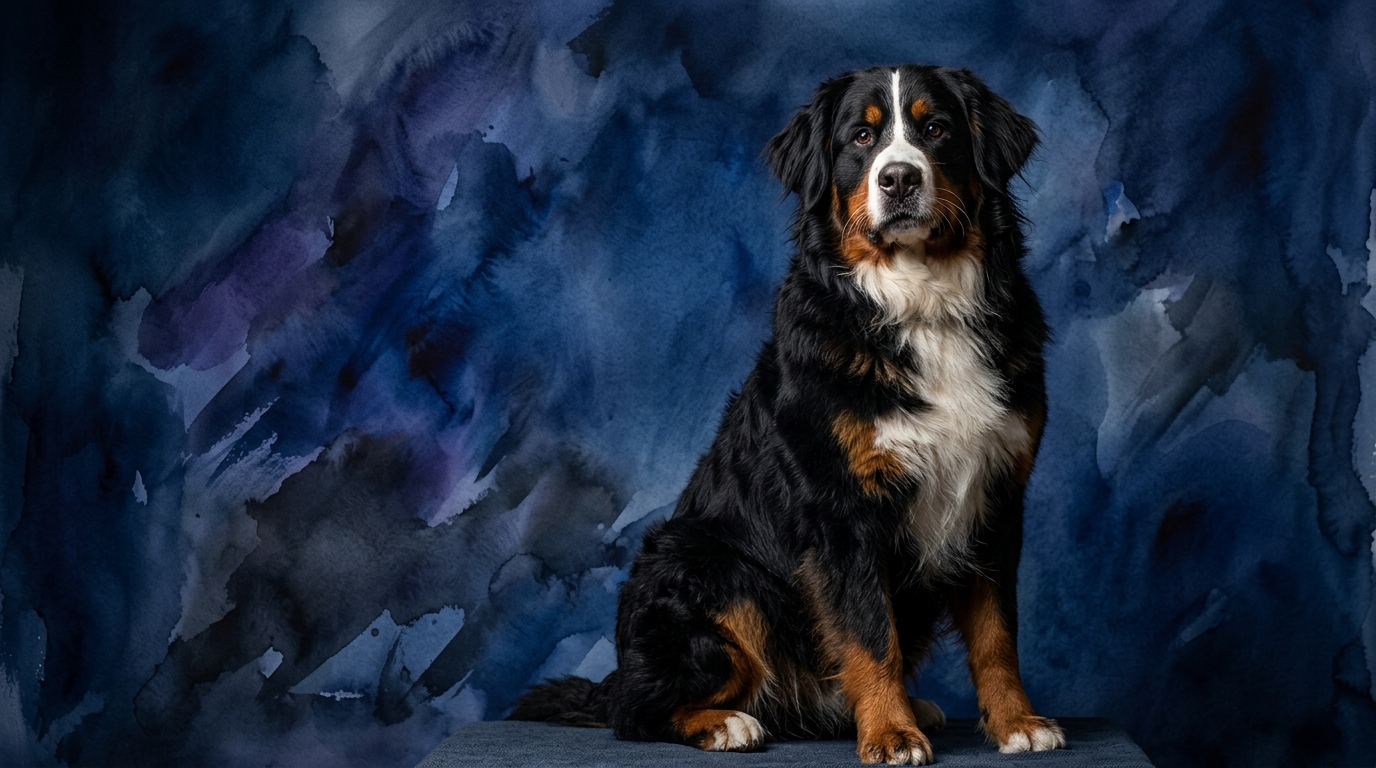
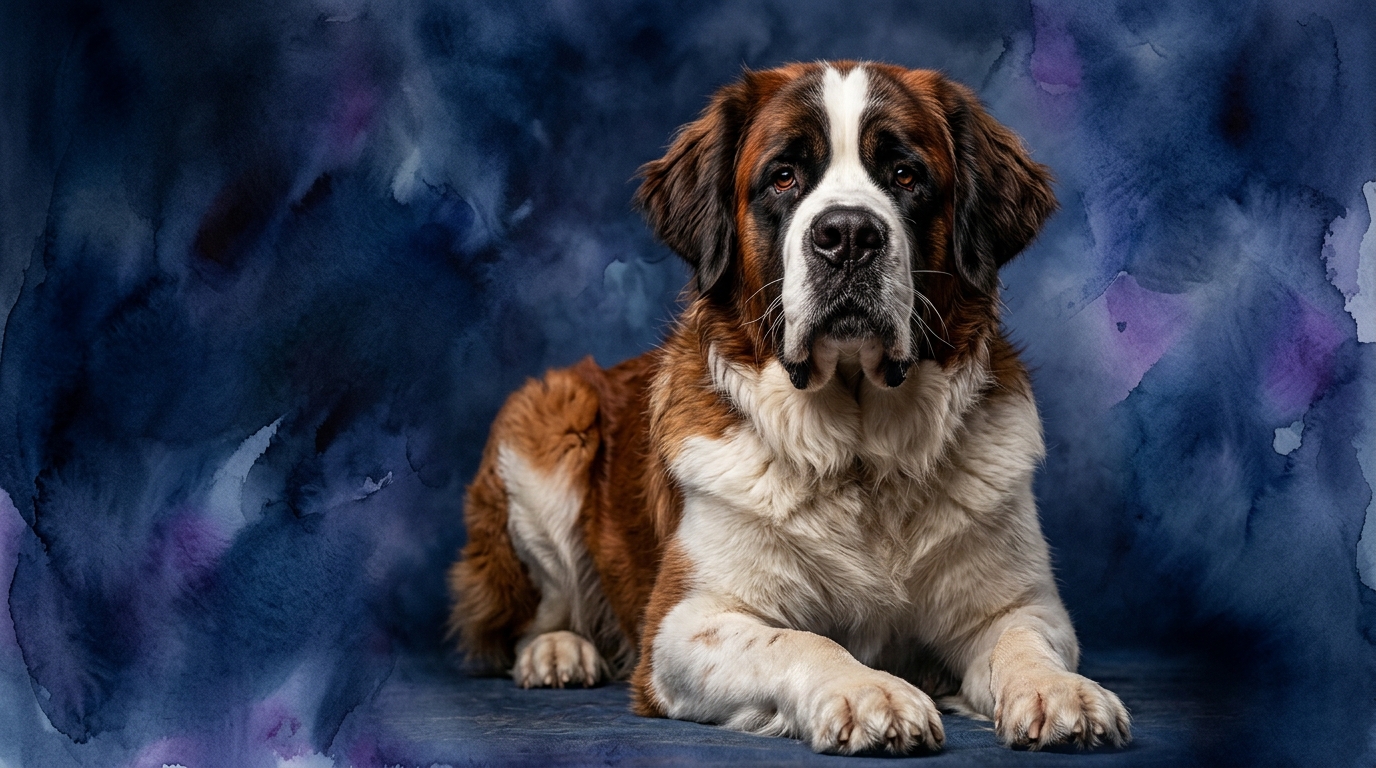
Side-by-Side Cognitive Profile: Bernese Mountain Dog vs. Saint Bernard
To understand the distinct cognitive landscapes of these two magnificent breeds, The Cosmic Pet Pet IQ Lab employs a five-dimensional intelligence framework, alongside their Coren rank, which measures working and obedience intelligence. Let's delineate their specific strengths and tendencies.
**Bernese Mountain Dog (BMD): A Responsive Companion**
**Coren Rank #27:** This placement firmly establishes the Bernese Mountain Dog as a canine with above-average working and obedience intelligence, meaning they typically understand new commands with fewer repetitions than many other breeds. Their cognitive framework supports a more direct and efficient learning process.
**Problem Solving (3/5):** Bernese Mountain Dogs possess a practical level of problem-solving acumen. They are adept at navigating familiar challenges and can figure out solutions to moderate complexities, such as opening certain gates or retrieving specific items. However, their approach often relies on learned patterns or guidance rather than pioneering novel solutions independently. They can adapt well to changes within established routines but might not spontaneously invent new strategies for entirely unfamiliar scenarios.
**Training Speed (4/5):** This breed excels in its ability to quickly grasp and retain new commands and routines. Their eagerness to please, coupled with their inherent focus, makes training sessions highly productive. They absorb instructions with relative ease, showing a commendable aptitude for learning complex sequences and behavioral modifications. This rapid acquisition of knowledge is a significant advantage for owners.
**Social Intelligence (5/5):** The Bernese Mountain Dog's social intelligence is a hallmark of the breed, reaching the highest score. They are exquisitely attuned to human emotions, body language, and subtle vocal cues, allowing them to form exceptionally deep and empathetic bonds. This perceptiveness enables them to anticipate owner needs, respond appropriately to varying social dynamics, and integrate seamlessly into family life, making them incredibly intuitive companions.
**Instinctive Drive (4/5):** Bernese Mountain Dogs exhibit strong, purposeful instinctive drives, particularly for companionship, guarding, and a historical inclination towards drafting and herding. While not as intense as a dedicated herding breed, their protective instincts are present and manageable. This drive is readily channeled through positive reinforcement, making them willing participants in tasks that leverage their natural inclinations.
**Memory (3/5):** Their memory serves them well for retaining learned behaviors and routines, demonstrating consistency in performing commands over time. While not photographic, their recall is reliable enough that previously taught skills are generally not forgotten, though occasional refreshers can help maintain peak performance, especially for less frequently used actions.
**Saint Bernard (SB): A Steadfast Guardian**
**Coren Rank #65:** Positioned lower on the Coren scale, the Saint Bernard typically requires more repetitions to understand new commands compared to breeds with higher rankings. This indicates a different cognitive approach to learning, often characterized by a more deliberate and independent processing style.
**Problem Solving (3/5):** Saint Bernards share a similar problem-solving score with the Bernese, capable of addressing practical challenges, especially those related to their historical role in search and rescue. They can navigate complex environments and make decisions crucial for their work, such as identifying a path through snow or locating a person in distress. However, their problem-solving is often rooted in established patterns or strong instinct, rather than a proactive pursuit of novel intellectual puzzles.
**Training Speed (2/5):** This breed is known for a slower acquisition rate when it comes to new commands and routines. Saint Bernards require significant patience, consistency, and repetition from their trainers. Their independent nature can sometimes manifest as a thoughtful deliberation before complying, rather than an immediate eagerness to perform. Training success hinges on making sessions engaging and rewarding to overcome their inherent methodical pace.
**Social Intelligence (4/5):** Saint Bernards possess a robust social intelligence, allowing them to form deep, affectionate bonds with their families. They are good at discerning human moods and intentions, exhibiting a tolerant and gentle disposition. While highly perceptive, their social acuity might not reach the subtle, anticipatory level seen in the Bernese, but it is more than sufficient for harmonious family integration and strong emotional connections.
**Instinctive Drive (5/5):** The Saint Bernard's instinctive drive is exceptionally strong, earning a perfect score. This is profoundly linked to their historical role as alpine rescue dogs, manifesting as an inherent desire to protect, aid, and watch over their family. This drive is not merely physical; it involves a deep-seated cognitive understanding of responsibility and a remarkable determination to fulfill their perceived duty, often displaying sound judgment in situations requiring their protective nature.
**Memory (3/5):** Similar to the Bernese, Saint Bernards have a commendable memory for routines and established commands. Once a behavior is thoroughly learned, it tends to stick. However, due to their slower training speed, the initial embedding of these memories requires more consistent and prolonged reinforcement to ensure long-term retention and reliable recall.
Where the Bernese Mountain Dog Wins Cognitively
The Bernese Mountain Dog demonstrably pulls ahead in several key cognitive domains, most notably in their overall working and obedience intelligence, reflected by their Coren rank of #27 compared to the Saint Bernard's #65. This significant difference isn't just a number; it translates into a much quicker understanding and execution of new commands and tasks. Their superior Training Speed (4/5) means they grasp concepts rapidly, requiring fewer repetitions to solidify learning. Furthermore, their exceptional Social Intelligence (5/5) allows them to anticipate owner needs and respond to subtle cues with remarkable accuracy, making them highly adaptable and intuitive partners. This combination fosters a smoother, more engaging training experience and results in a canine companion who is acutely aware of and responsive to their human's emotional and instructional nuances.
Where the Saint Bernard Wins Cognitively
While the Bernese excels in responsiveness, the Saint Bernard's cognitive strengths lie in its profound and purposeful Instinctive Drive (5/5). This isn't merely a physical urge but a deeply ingrained cognitive program for protection and aid, stemming from centuries of work as alpine rescue dogs. This drive manifests as an unwavering commitment to their perceived role, often involving remarkable judgment in critical situations. For instance, their problem-solving, though rated similarly (3/5), is powerfully channeled through this instinct, allowing them to navigate complex scenarios with resilience and determination when their protective or helping nature is activated. They possess a steadfast mental fortitude and an inherent understanding of responsibility that is truly exceptional in specific contexts.
Which Is Easier to Train and Why?
Without question, the Bernese Mountain Dog presents a significantly easier training journey for most owners. Their Coren rank of #27 is a strong indicator of their capacity to understand and obey new commands with minimal effort. This is further amplified by their Training Speed of 4/5, meaning they pick up concepts quickly and eagerly. Crucially, their top-tier Social Intelligence (5/5) makes them highly motivated by positive reinforcement and connection with their human; they genuinely strive to please and respond well to feedback. This combination of quick learning, responsiveness, and a desire for harmonious interaction means Bernese Mountain Dogs are more likely to engage enthusiastically in training, making the process efficient and rewarding. In contrast, the Saint Bernard's slower training speed (2/5) and more independent cognitive processing demand greater patience and consistency, requiring owners to invest more time and creative strategies to maintain engagement.
Which Suits Active Owners vs. Relaxed Owners?
For owners who enjoy regular, structured activities and mental engagement with their canine, the Bernese Mountain Dog is an ideal match. While not requiring extreme athleticism, their higher training speed and social intelligence make them excellent partners for obedience classes, therapy work, or even moderate hiking. They thrive on having a 'job' or purpose, whether it's carrying a pack on a walk or learning new tricks, and will eagerly participate in interactive games that challenge their minds. Their desire to please and quick learning curve means they are highly adaptable to varied routines and enjoy being an active participant in family life.
Conversely, the Saint Bernard is better suited for more relaxed owners who appreciate a calm, steadfast presence and are prepared for a deliberate pace. While they require regular, moderate exercise to maintain health, they are less demanding in terms of constant mental stimulation or complex structured activities. Their strong instinctive drive means they are content with being a loyal, watchful companion. Owners who enjoy a predictable routine and value a gentle giant whose primary role is affectionate companionship and subtle protection will find the Saint Bernard's demeanor and cognitive profile a perfect fit, understanding that training will be a slower, more patient endeavor.
The Verdict
Opt for a Bernese Mountain Dog if you value a highly responsive companion eager to learn and deeply attuned to your emotional cues, thriving on engaged interaction and varied activities. Their quicker training uptake and social perceptiveness make them ideal for owners seeking an adaptable and collaborative canine partner.
Select a Saint Bernard if you appreciate a steadfast, inherently protective presence with a strong, independent spirit, and you are prepared for a slower, more patient training journey. Their profound instinctive drives and calm demeanor suit owners who prefer a gentle giant whose loyalty and protective nature are paramount.
🧠 Find Your Pet's IQ Score
Our Pet IQ Lab assessment covers 25+ tests across 5 cognitive dimensions — personalized to your breed.
Take the Full IQ Test →Frequently Asked Questions
Is a Bernese Mountain Dog better at guarding than a Saint Bernard?
While Bernese Mountain Dogs possess a protective instinct (4/5 instinctive drive), their social intelligence often means they are more discerning, alerting to threats rather than confronting them aggressively. Saint Bernards, with their stronger instinctive drive (5/5) rooted in rescue and protection, tend to be more inherently watchful and imposing, though still gentle.
Do Saint Bernards struggle with understanding what's asked of them during training?
Saint Bernards don't necessarily struggle with understanding but rather with the *speed* of acquisition and willingness to perform immediately. Their training speed (2/5) indicates they require more repetitions and patience, and their independent nature means they might not always see the immediate benefit of compliance compared to a Bernese Mountain Dog.
Which breed is more adaptable to different living situations based on their intelligence profile?
The Bernese Mountain Dog, with its superior social intelligence (5/5) and quicker training speed (4/5), generally adapts more readily to varied environments and family dynamics. Their ability to read cues and learn new routines quickly makes them more flexible companions compared to the Saint Bernard, who prefers a more consistent and predictable routine.