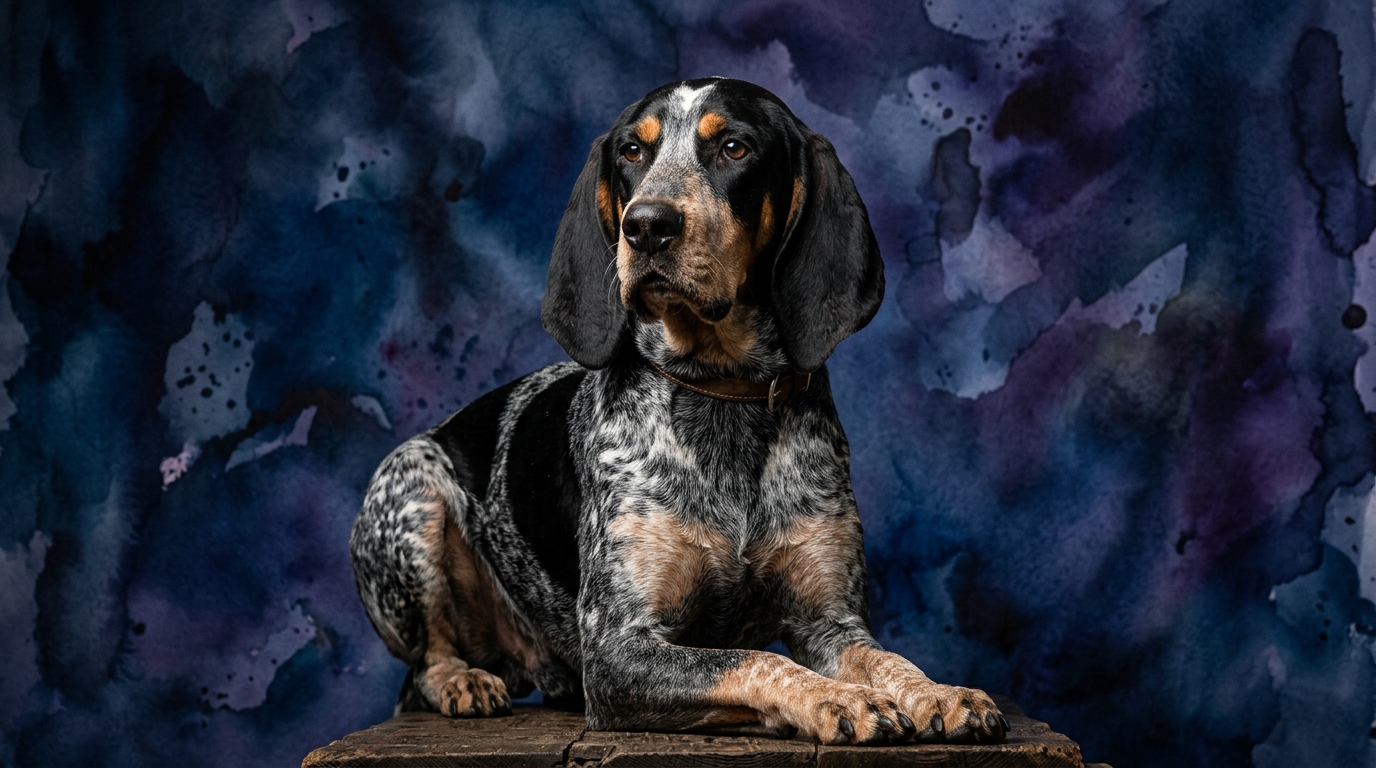

Side-by-Side Cognitive Profiles: Bluetick Coonhound vs. Miniature Poodle
At The Cosmic Pet Pet IQ Lab, we assess canine intelligence across five critical dimensions: Problem Solving, Training Speed, Social Intelligence, Instinctive Drive, and Memory. While both the Bluetick Coonhound and Miniature Poodle are distinct dog breeds, their cognitive profiles present a clear divergence in how they interact with their world and learn.
The Bluetick Coonhound consistently scores 3/5 across all five dimensions. Their Problem Solving is geared towards following intricate scent trails, a complex cognitive task requiring intense focus and persistence rather than abstract puzzle-solving. Training Speed at 3/5 reflects their ability to learn but often with a need for more repetition and motivation, particularly when their powerful nose is engaged. Social Intelligence, also 3/5, means they are typically affectionate with their family but can be independent, sometimes prioritizing a compelling scent over human interaction. Their Instinctive Drive, a moderate 3/5, is overwhelmingly focused on scent work and vocalization, a foundational aspect of their cognitive makeup. Finally, their Memory at 3/5 supports remembering familiar trails, routines, and people, though perhaps not extensive sequences of unrelated commands without consistent practice.
In stark contrast, the Miniature Poodle presents a profile indicative of a highly adaptable and quick-witted companion. They achieve an impressive 5/5 in Problem Solving, demonstrating a strong capacity to understand new situations, figure out complex tasks, and adapt learned behaviors. Their Training Speed also scores 5/5, highlighting their remarkable ability to grasp new commands rapidly and retain them with minimal repetition. While their Social Intelligence matches the Coonhound at 3/5, indicating a generally responsive and personable nature without being overly dependent or nuanced in reading subtle human cues, their Instinctive Drive is also 3/5. This drive, historically rooted in water retrieving, is more malleable and less singularly focused than a hound's. Crucially, their Memory is a standout 5/5, meaning they retain a vast repertoire of commands, routines, and experiences over long periods, making them excellent candidates for advanced obedience or trick training.
Where the Bluetick Coonhound's Cognition Shines Brightest
While the Bluetick Coonhound's scores of 3/5 across the board might seem modest compared to the Poodle's highs, their cognitive strengths are deeply specialized and incredibly effective for their intended purpose. A Bluetick Coonhound excels in tasks requiring relentless, independent focus on a single objective: tracking a scent trail. Their problem-solving isn't about opening a cabinet; it's about discerning a faint, cold trail from a myriad of other smells, navigating varied terrain, and persisting for hours. This requires a unique form of cognitive endurance and an unwavering commitment to a task that many breeds simply cannot replicate.
Their instinctive drive, while rated 3/5, is a powerful engine for this specific cognitive function. It means they are driven to use their nose, to follow a scent, and to vocalize their findings. This isn't a flaw; it’s a highly refined cognitive system for a specific job. Their memory, also 3/5, is perfectly suited for remembering complex routes, the characteristics of specific quarry scents, and the layout of familiar hunting grounds. In environments where a keen nose and unwavering focus are paramount, the Bluetick Coonhound's specialized cognitive framework is exceptionally effective, demonstrating a different, yet equally valid, form of canine intelligence.
The Miniature Poodle's Cognitive Advantages
The Miniature Poodle's cognitive advantages are evident in their impressive 5/5 scores for Problem Solving, Training Speed, and Memory, making them exceptionally versatile and adaptable companions. Their superior problem-solving skills mean they are adept at navigating complex environments, learning intricate sequences of actions, and even figuring out how to manipulate objects to achieve a goal. This capacity for abstract thought and flexible learning distinguishes them, allowing them to excel in activities ranging from agility to advanced obedience.
Their rapid Training Speed means they absorb new commands and behaviors with remarkable efficiency, often requiring fewer repetitions than many other breeds. This eagerness to learn, coupled with their excellent memory, allows them to build a vast vocabulary of commands and tricks, retaining them over extended periods. This makes them highly responsive and a joy to train for those who enjoy engaging in structured activities. While their social intelligence and instinctive drive are rated at 3/5, their overall cognitive agility means they can channel their energy into mentally stimulating activities, making them highly capable of adapting to various roles beyond their historical retrieving duties, from service work to performing arts.
Ease of Training: A Clear Distinction
When it comes to ease of training, the Miniature Poodle holds a distinct advantage over the Bluetick Coonhound, largely due to their differing scores in Training Speed and the nature of their instinctive drives. The Miniature Poodle’s 5/5 Training Speed means they are quick to pick up new commands and routines, often eager to please their human companions. Their excellent memory (5/5) ensures they retain what they've learned, making them reliable in following instructions even after a break in training. They typically respond well to positive reinforcement and can master complex sequences of commands with relative ease, making them a popular choice for competitive obedience and trick training.
In contrast, the Bluetick Coonhound’s 3/5 Training Speed indicates that while they are capable of learning, they often require more patience, repetition, and highly motivating rewards. Their powerful instinctive drive (3/5), specifically for scent, can be a significant distraction during training sessions. A compelling scent can easily override a handler's command, leading to what some might perceive as 'stubbornness.' This isn't a lack of intelligence, but rather a prioritization of their innate drive. Training a Bluetick often means understanding and working with this drive, rather than against it, perhaps incorporating scent work into their training regimen to keep them engaged and focused. Real behavioral differences include the Coonhound's tendency to 'go deaf' when on a scent, versus the Poodle's generally attentive and cooperative demeanor in a structured learning environment.
Matching Canine Cognition to Owner Lifestyles
The cognitive profiles of the Bluetick Coonhound and Miniature Poodle strongly influence which type of owner they will thrive with. The Bluetick Coonhound, with its specialized cognitive strengths in scent work and persistent tracking, is best suited for active owners who appreciate an independent, purpose-driven companion. These dogs require consistent opportunities to engage their powerful noses, whether through scent games, tracking sports, or actual hunting. Owners who enjoy long hikes in varied terrain and can provide a secure, spacious environment will be a good match. Their moderate social intelligence means they bond well with family, but their instinctual drive necessitates an owner who understands and can manage their vocalizations and tendency to follow a scent rather than a direct command. A relaxed owner who cannot provide outlets for their mental and physical energy might find a Bluetick challenging, as their unfulfilled cognitive needs can lead to restless or destructive behaviors.
The Miniature Poodle, conversely, is a much more versatile companion, suitable for a broader range of owner activity levels, though they are far from 'relaxed' in terms of mental engagement. Their high problem-solving ability, rapid training speed, and excellent memory mean they require significant mental stimulation to prevent boredom. This can come in the form of regular training, puzzle toys, learning new tricks, or participating in dog sports like agility or obedience. They are adaptable to apartment living provided their mental and physical needs are met daily. While they can enjoy an active lifestyle, they are equally content with a more relaxed pace as long as their minds are kept busy. Owners who enjoy teaching, interacting, and providing consistent mental challenges will find the Miniature Poodle to be an exceptionally rewarding and engaging companion, regardless of their own physical activity preferences.
The Verdict
Choose the Bluetick Coonhound if you are an active, outdoors-oriented owner who values a dog's independent spirit and can provide ample opportunities for scent work and physical exploration.
Opt for the Miniature Poodle if you seek a highly trainable, mentally agile companion eager to learn, adapt, and engage in diverse activities, suitable for various living situations with consistent mental stimulation.
🧠 Find Your Pet's IQ Score
Our Pet IQ Lab assessment covers 25+ tests across 5 cognitive dimensions — personalized to your breed.
Take the Full IQ Test →Frequently Asked Questions
Are Bluetick Coonhounds difficult to train?
Bluetick Coonhounds are not difficult to train, but their 3/5 Training Speed means they require more patience and consistency than some breeds. Their strong scent drive can be a significant distraction, so training methods often benefit from incorporating their natural instincts.
Do Miniature Poodles need a lot of exercise?
Miniature Poodles are energetic and benefit from regular physical activity, but their cognitive needs are equally important. They require significant mental stimulation through training, puzzles, and interactive play to keep their intelligent minds engaged and prevent boredom.
Which breed is better with children?
Both breeds can be good with children, as both score 3/5 in Social Intelligence, meaning they are generally good-natured. However, the Miniature Poodle's adaptability and trainability often make them easier to integrate into a family with young children, while a Bluetick's strong drive might require more supervision.