
Side-by-Side Cognitive Profile
**Boerboel:** This breed's cognitive strengths are deeply rooted in its heritage as a protector. Their Problem Solving (3/5) excels at practical tasks like threat assessment, navigating and securing their territory, and identifying unusual environmental cues. Their intelligence is geared towards real-world protective scenarios rather than abstract puzzles. Training Speed (3/5) indicates they are capable learners, though their substantial physical presence and innate protective instincts mean training often requires an experienced, consistent handler who can channel their powerful drives effectively. Social Intelligence (3/5) is highly attuned to their human family's emotions and intentions, displaying a discerning social awareness that quickly differentiates between welcomed guests and perceived intruders, reading human cues for threat assessment with a keen eye. Their Instinctive Drive (3/5) is dominantly protection, manifesting as a powerful territorial and guarding instinct that shapes their responses to their environment and strangers. Boerboels possess a solid Memory (3/5), recalling routines, familiar faces, and past experiences—both positive and negative—which contributes to their consistent guarding behavior and loyalty to their family.
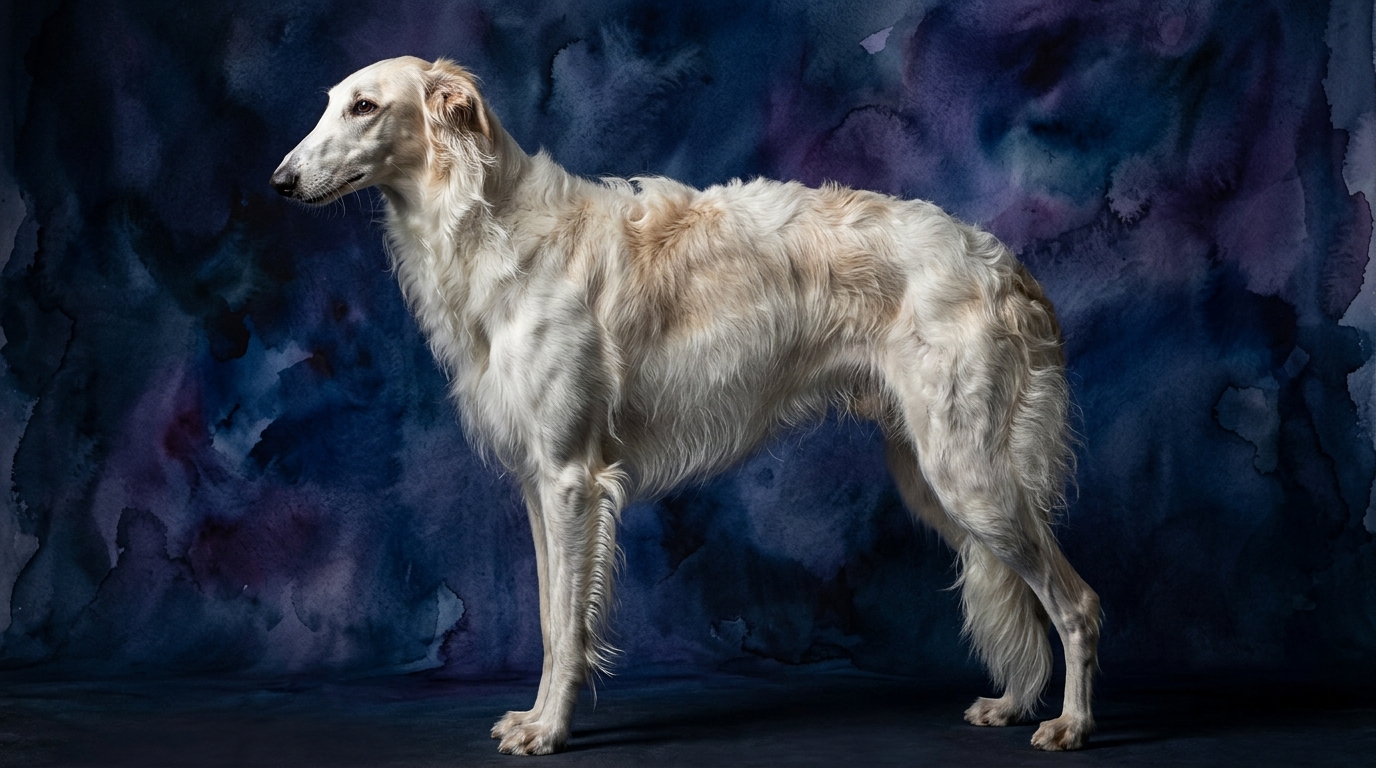
**Borzoi:** The Borzoi's cognitive profile reflects its sighthound lineage, emphasizing autonomous action and sensory acuity. Their Problem Solving (3/5) acumen shines in open-field environments, where they expertly strategize the pursuit of fast-moving prey, navigating complex terrain and anticipating evasive maneuvers. Their intelligence is less about human-directed tasks and more about independent hunting strategy. Training Speed (3/5) suggests they can learn quickly when motivated, but their sighthound independence and powerful prey drive often make them seem aloof or easily distracted. Training success hinges on creative, positive reinforcement that captures their interest, rather than rote repetition. Characterized by an elegant reserve, Borzois exhibit a nuanced Social Intelligence (3/5), often discerning with strangers but deeply affectionate and intuitive with their chosen family, reading subtle environmental cues and their family's moods with quiet observation. Their primary Instinctive Drive (3/5) is the powerful sighthound prey drive, an overwhelming urge to chase anything that moves quickly. This instinct is fundamental to their cognitive processing, influencing their focus and behavior in open spaces. Borzois demonstrate a good Memory (3/5) for chase routes, familiar landscapes, and the location of past 'prey' encounters, recalling training cues when sufficiently motivated, especially if the reward is engaging and novel.
Where the Boerboel Wins Cognitively
The Boerboel, a breed forged for protection, exhibits a cognitive edge in areas demanding vigilance and decisive action related to security. Their superior threat assessment capabilities allow them to rapidly evaluate situations, distinguishing between benign visitors and potential dangers with remarkable accuracy. This discernment is a key aspect of their social intelligence, enabling them to make independent, appropriate decisions in dynamic protective scenarios. Furthermore, their problem-solving ability is inherently practical, focused on navigating and securing their environment, such as identifying weaknesses in a perimeter or positioning themselves optimally for surveillance. This proactive, guardian-oriented cognition makes them exceptionally adept at their traditional role.
Where the Borzoi Wins Cognitively
Conversely, the Borzoi's cognitive strengths lie in domains requiring exceptional sensory processing and autonomous decision-making related to pursuit. Their visual processing and spatial reasoning are outstanding, allowing them to track and anticipate the movements of fast-moving objects over vast distances, even in challenging terrain. This makes them unparalleled strategists in a chase, where they can independently execute complex hunting patterns without human intervention. Their problem-solving capacity is keenly honed for the hunt, enabling them to quickly adapt to changing conditions during a pursuit, such as an animal changing direction or encountering an obstacle. This specialized, instinct-driven intelligence is a testament to their sighthound heritage.
Training: Different Paths to Success
Assessing which breed is 'easier' to train is less about raw learning capacity and more about managing their distinct intrinsic motivations. Both breeds score 3/5 in training speed, indicating a moderate pace of learning, but their underlying drives present different training challenges. The Boerboel, with its strong protective and territorial instincts, requires an owner who can establish clear, consistent leadership from an early age. Training involves channeling their powerful desire to guard into appropriate behaviors, demanding firm boundaries and extensive socialization to ensure they are discerning guardians, not aggressive ones. Their desire to please their family, when combined with a confident leader, can make them highly obedient in structured settings.
The Borzoi, on the other hand, is driven by an overwhelming prey drive and sighthound independence. While they can learn commands, their attention is often fleeting, easily diverted by movement in their environment. Training requires immense patience, creative positive reinforcement, and a deep understanding of their sighthound nature to motivate them. Achieving reliable recall, for instance, is a significant undertaking because their instinct to chase can override all other commands. Therefore, neither is inherently easier; the Boerboel demands a strong hand to guide its protective nature, while the Borzoi requires a nuanced approach to engage its independent spirit and manage its powerful chase instinct.
Lifestyle Fit: Active vs. Relaxed
When considering lifestyle compatibility, both breeds require a commitment to their specific needs, though these needs differ significantly. The Boerboel is a physically robust and mentally engaged breed that thrives with active owners who can provide consistent exercise, structured training, and a clear sense of purpose. While they enjoy downtime with their family, their substantial strength and guarding instincts necessitate owners who are prepared for hands-on management, extensive socialization, and a consistent routine. They are not suited for truly relaxed or sedentary owners who cannot dedicate time to their physical and mental stimulation.
The Borzoi, while appearing calm and elegant indoors, is an athletic sighthound that needs regular, vigorous bursts of exercise, ideally in a securely fenced area where they can gallop freely. They are not endurance runners but require intense sprints to satisfy their physical needs. After their exercise, they are content to be relaxed, quiet companions. Therefore, they suit active owners who understand the unique exercise requirements of sighthounds, providing safe opportunities for them to run, but who also appreciate a serene, independent indoor presence. They are not for owners who cannot provide these crucial outlets for their instinctive drive.
The Verdict
Choose the Boerboel if you are an experienced, assertive owner seeking a devoted, formidable protector and are committed to rigorous, consistent training and early, extensive socialization to channel their powerful guarding instincts appropriately.
Opt for the Borzoi if you appreciate an elegant, independent companion, can provide secure, expansive spaces for their essential high-speed runs, and possess the patience and creativity to train a sighthound whose instincts often override traditional obedience.
🧠 Find Your Pet's IQ Score
Our Pet IQ Lab assessment covers 25+ tests across 5 cognitive dimensions — personalized to your breed.
Take the Full IQ Test →Frequently Asked Questions
Do Boerboels or Borzois make good family pets?
Both can be wonderful family pets in the right environment. Boerboels are fiercely loyal and protective of their family but require experienced owners and extensive socialization, especially around children. Borzois are typically gentle and reserved, good with older, respectful children, but their strong prey drive means careful introductions to smaller pets are crucial.
Which breed requires more mental stimulation?
Both breeds benefit from mental stimulation, but in different forms. Boerboels thrive on tasks that give them purpose, such as advanced obedience, guardian training, or scent work, engaging their problem-solving and social intelligence. Borzois benefit from activities that engage their sighthound instincts, like lure coursing or challenging agility courses that leverage their speed and visual acuity.
Are either of these breeds prone to destructive behavior if not exercised enough?
Yes, inadequate exercise and mental engagement can lead to destructive behaviors in both. A bored Boerboel, with its strength and protective instincts, might become destructive or excessively territorial. An under-exercised Borzoi might express its frustration through chewing or by attempting to escape to satisfy its chase drive, highlighting the importance of meeting their distinct physical and mental needs.