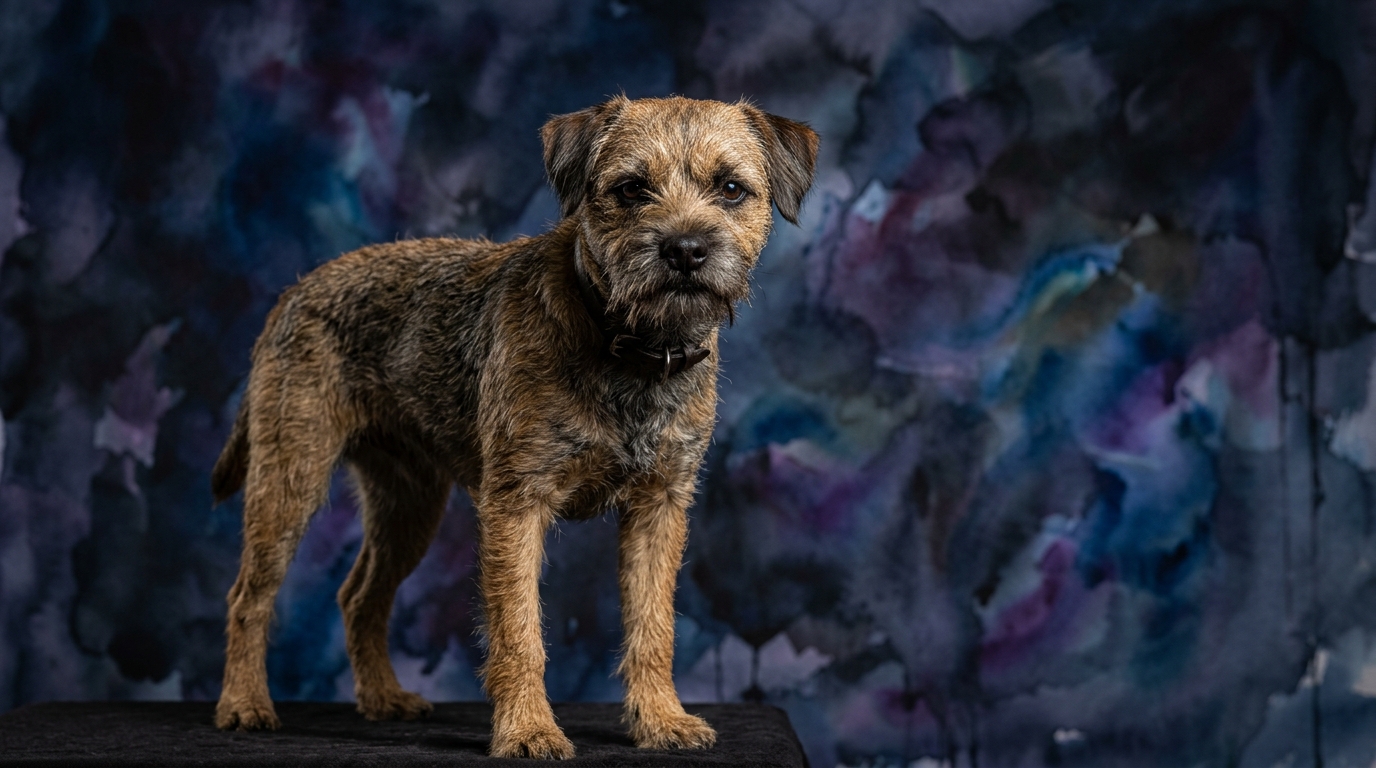

Side-by-Side IQ Profile: Border Terrier vs. Löwchen
At The Cosmic Pet's IQ Lab, we evaluate canine intelligence across five key dimensions: Problem Solving, Training Speed, Social Intelligence, Instinctive Drive, and Memory. These metrics offer a granular view of how different breeds process information, interact with their environment, and learn.
The Border Terrier, a tenacious member of the Terrier group and Coren-ranked #30, exhibits a strong cognitive profile. Their Problem Solving is rated 4/5, indicating a remarkable aptitude for navigating complex situations and independently figuring out solutions. Training Speed also scores 4/5, suggesting a quick grasp of new commands and routines. Their Social Intelligence and Instinctive Drive are both rated 3/5, meaning they understand human cues and possess a moderate but purposeful drive, often related to their historical role. Memory, at 4/5, points to excellent retention of learned information and experiences.
The Löwchen, a delightful Non-Sporting breed not listed in Coren's rankings, presents a balanced and engaging cognitive makeup. Across all five dimensions – Problem Solving, Training Speed, Social Intelligence, Instinctive Drive, and Memory – the Löwchen consistently scores 3/5. This suggests a capable learner with a moderate ability to solve puzzles, a steady pace for acquiring new skills, a good understanding of social dynamics, a manageable level of natural drives, and a reliable capacity to recall information.
Where the Border Terrier Wins Cognitively
The Border Terrier truly shines in areas demanding independent thought and robust recall. Their 4/5 Problem Solving score means they aren't content waiting for directions; they're actively assessing obstacles, whether it's figuring out how to open a child-proof gate or strategizing to retrieve a toy stuck under furniture. This inherent drive to understand and manipulate their environment makes them adept at complex puzzle toys and tasks requiring a sequence of actions. Furthermore, their 4/5 Memory ensures that once they've learned a solution or a command, it's typically embedded deeply. This translates to quick re-engagement with previously mastered skills, even after extended breaks, and an impressive ability to remember routes, locations, and the intricacies of their daily routines. Owners often report their Border Terriers remembering specific commands taught months or even years prior, showcasing a durable cognitive map.
Where the Löwchen Wins Cognitively
While the Löwchen's scores are consistently 3/5, their cognitive strengths lie in areas that foster harmonious companionship and adaptability within a domestic setting. Their 3/5 Social Intelligence, for instance, manifests as a keen ability to read human emotions and intentions, often making them highly attuned to their family's mood. This isn't necessarily about outsmarting a puzzle, but about intuitively understanding social cues and responding appropriately, making them wonderful emotional support companions. Their moderate Instinctive Drive (3/5) means they are less consumed by powerful independent urges, allowing their cognitive focus to remain more centered on human interaction and household dynamics. This translates into a dog that is less likely to be distracted by external stimuli and more inclined to engage with their owner's presence. In a way, the Löwchen's consistent 3/5 across dimensions indicates a well-rounded and balanced cognitive profile, making them adaptable and agreeable learners who prioritize connection over complex individual pursuits. They excel at learning the nuances of family life and integrating seamlessly into diverse social structures.
Which is Easier to Train and Why
Determining which breed is 'easier' to train depends significantly on an owner's approach and expectations, as both breeds offer distinct challenges and rewards. The Border Terrier, with its 4/5 Training Speed, grasps new commands rapidly, especially when training feels like a problem to solve. Their sharp intellect and eagerness for purposeful work enable quick mastery of complex routines. However, their independent Terrier spirit and moderate Instinctive Drive (3/5) mean they aren't always simply compliant; consistent, engaging, and varied training is crucial to prevent boredom and leverage their problem-solving skills. Without mental stimulation, their independent streak can lead to 'selective hearing' or self-directed entertainment.
In contrast, the Löwchen, scoring 3/5 in Training Speed, learns at a more deliberate pace. Their strong desire for companionship and connection makes them highly motivated by praise and positive interaction, generally eager to please. This renders them very responsive to gentle, consistent training. While they might not master complex tricks as quickly as a Border Terrier, their focus on the handler and lower propensity for independent ventures often makes them more agreeable and less prone to testing boundaries. Owners prioritizing affection-based training often find the Löwchen's approachability a significant advantage over the Border Terrier's driven mind.
Which Suits Active Owners vs. Relaxed Owners
The cognitive profiles of these two breeds offer clear distinctions for different lifestyle preferences. For active owners who thrive on outdoor adventures, mental challenges, and consistent engagement, the Border Terrier is an excellent match. Their 4/5 Problem Solving and Memory, combined with their 3/5 Instinctive Drive, mean they *require* mental stimulation, not just physical exertion, to prevent boredom. They excel in dog sports like agility, earthdog trials, or scent work, utilizing their sharp minds and keen senses. An owner enjoying teaching new tricks and exploring new trails will find a Border Terrier a truly fulfilling, eager partner.
Conversely, the Löwchen's balanced 3/5 scores and strong companion orientation suit more relaxed owners. While enjoying walks and playtime, their cognitive needs are largely met through consistent social interaction and integral family life. They adapt well to various living situations, needing ample human attention. A Löwchen is content to cuddle, observe household activities, and engage in moderate play, making them a wonderful choice for those seeking a devoted, charming companion without intense demands for independent mental problem-solving or high-octane physical challenges.
The Verdict
Choose the Border Terrier if you are an owner who relishes a cognitive challenge, enjoys engaging with an independent, problem-solving mind, and is prepared to channel their sharp intellect and energy into consistent training and activities.
Opt for the Löwchen if you seek a charming, emotionally attuned companion who thrives on close social interaction, adapts gracefully to a relaxed home environment, and whose cognitive strengths lie in harmonious integration into family life.
🧠 Find Your Pet's IQ Score
Our Pet IQ Lab assessment covers 25+ tests across 5 cognitive dimensions — personalized to your breed.
Take the Full IQ Test →Frequently Asked Questions
Are Border Terriers suitable for first-time dog owners?
Border Terriers can be a rewarding choice for first-time owners who are committed to consistent training and mental stimulation. Their intelligence means they learn quickly, but their independent nature requires firm, positive guidance and an understanding of their terrier instincts to prevent unwanted behaviors.
Do Löwchens need a lot of mental stimulation to prevent boredom?
Löwchens benefit from moderate mental stimulation, primarily through interactive play, training, and consistent social engagement with their family. While they don't typically demand complex puzzle-solving like some breeds, daily enrichment and companionship are crucial to their well-being.
How do their instinctive drives manifest differently in a home environment?
A Border Terrier's 3/5 instinctive drive often manifests as a keen interest in digging, chasing small animals, or exploring, requiring secure boundaries and outlets for these natural behaviors. A Löwchen's 3/5 instinctive drive is typically less intense, translating to a general curiosity and playfulness without the same strong prey or working drive, making them generally more focused on their human companions.