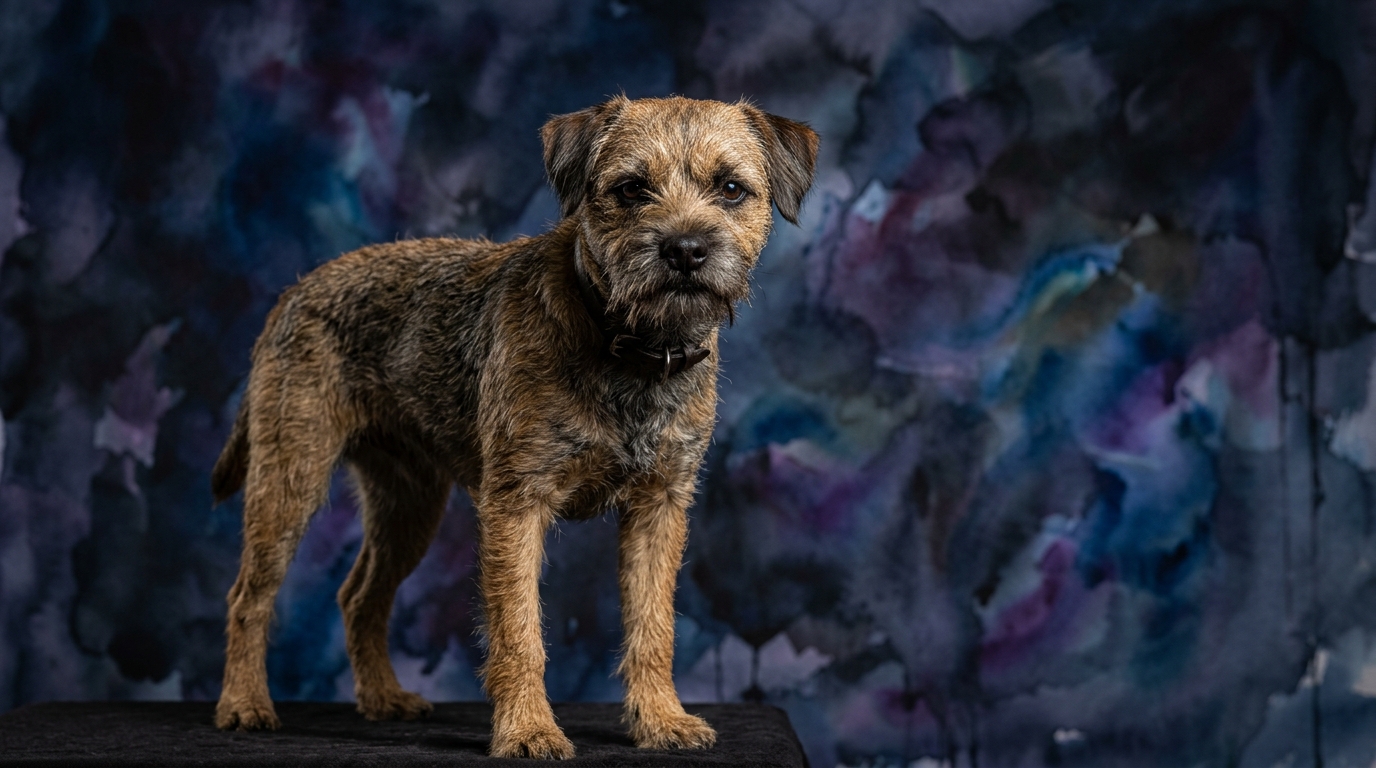

Side-by-Side IQ Profile: Border Terrier vs. Redbone Coonhound
**Border Terrier** excels in areas demanding quick wit and adaptability:
**Problem Solving (4/5):** This breed excels at practical challenges, whether it's navigating obstacles or manipulating puzzle toys. Their terrier wit means they often try multiple approaches until one succeeds, demonstrating adaptable thinking.
**Training Speed (4/5):** Border Terriers pick up new commands and routines with relative quickness. They possess an eagerness to engage and learn, though their independent streak means consistency and positive reinforcement are crucial.
**Social Intelligence (3/5):** While capable of forming deep bonds with their immediate human family, Border Terriers can be somewhat reserved with strangers and other dogs. Their social understanding is more about navigating familiar dynamics.
**Instinctive Drive (3/5):** Rooted in their history as working vermin hunters, they exhibit a moderate but persistent prey drive. This drive manifests as an interest in chasing small animals and exploring scents.
**Memory (4/5):** Border Terriers demonstrate good recall for learned commands, routines, and even specific locations. They remember past interactions and training sessions, contributing significantly to their trainability and consistent behavior.
**Redbone Coonhound** shows specialized cognitive strengths, particularly in scent work:
**Problem Solving (3/5):** Redbone Coonhounds approach problems with a focus on their primary sense: scent. Their problem-solving often revolves around tracking a trail, meticulously following complex scent patterns rather than abstract manipulation.
**Training Speed (3/5):** These hounds learn at a steady, deliberate pace. While not as quick to grasp new concepts as some breeds, they are diligent once a task, especially one involving scent work, is understood. Patience and repetition are key.
**Social Intelligence (3/5):** As pack animals, Redbones generally enjoy companionship and can be quite affectionate with their families. However, they can also be focused on their own world of scent, sometimes appearing less attuned to human social cues.
**Instinctive Drive (3/5):** Their instinctive drive is overwhelmingly centered on tracking and trailing. This strong, persistent drive to follow a scent can override other considerations, making off-leash reliability challenging in uncontrolled environments.
**Memory (3/5):** Redbones possess a specialized memory, particularly for scent trails and routes they've previously followed. Their recall for general commands might be moderate, but their ability to remember complex scent patterns is noteworthy within their specific domain.
Where the Border Terrier Wins Cognitively
The Border Terrier's cognitive strengths shine in areas requiring agile mental shifts and independent thought. Their 4/5 Problem Solving capacity enables them to quickly assess and adapt to novel situations, whether on an agility course or with a puzzle. This breed often demonstrates a keen understanding of cause and effect, learning from experience to adjust their tactics, a trait particularly useful for various dog sports and varied living environments.
Furthermore, their 4/5 Training Speed indicates a quicker uptake of new cues and behaviors compared to the Redbone. Border Terriers tend to be more responsive to varied training methods, enjoying the mental engagement of learning new tricks or commands. Their superior Memory (4/5) reinforces this, allowing them to retain a broad repertoire of learned behaviors and apply them consistently, making them versatile companions capable of excelling in obedience or simply being a well-mannered household member. This adaptability across different cognitive challenges gives the Border Terrier an edge in environments demanding varied mental engagement.
Where the Redbone Coonhound Wins Cognitively
While not scoring as high in general problem-solving, the Redbone Coonhound possesses a specialized cognitive prowess that few breeds can match: their instinctive tracking ability. Their 3/5 Instinctive Drive represents a profound and unwavering focus on scent work. This isn't just about following a trail; it involves complex cognitive processing to differentiate between scents, follow faint lines, and ignore distractions, a form of problem-solving deeply ingrained in their being. Their entire cognitive architecture is geared towards this singular, demanding task.
The Redbone's memory, while rated 3/5 for general recall, is exceptional within the context of their primary function. They remember intricate scent patterns and terrain features over long distances and extended periods, a feat of spatial and olfactory memory that underpins their effectiveness as tracking dogs. This specialized cognitive strength allows them to perform tasks requiring immense focus and endurance in a way the Border Terrier, with its more generalized problem-solving, is not designed to do. Their cognitive 'win' lies in their unwavering dedication and sophisticated processing of olfactory information, a testament to their dedicated breeding for a specific, demanding role.
Which is Easier to Train and Why
Comparing the trainability of these two breeds reveals distinct approaches rooted in their temperaments and drives. The Border Terrier, with its 4/5 Training Speed and 4/5 Memory, generally picks up basic obedience commands more quickly. Their eagerness to please a favored human, combined with their capacity for understanding varied tasks, makes them responsive to positive reinforcement and consistent training. However, their terrier independence and moderate instinctive drive (3/5) mean that while they learn fast, they can also decide if a command is 'worth it' or if a more interesting scent or squirrel demands their attention. Training requires making it engaging and rewarding to maintain their focus against their inherent self-reliance.
The Redbone Coonhound, scoring 3/5 in both Training Speed and Memory, often requires more patience and repetition. Their strong instinctive drive (3/5) to follow a scent can be a significant 'distraction' from human-directed tasks. When a Redbone is on a trail, their focus is singular, and it can be difficult to redirect them. Their training is often about managing this drive and teaching them to 'check in' rather than suppressing it entirely. While they may take longer to master a command, once learned, particularly if it's tied to their natural inclinations (like scent games), they can be incredibly dedicated. The Border Terrier might be easier for a novice owner seeking quick results in general obedience, but the Redbone can be equally trainable for an owner who understands and works with their specialized hound nature, especially in scent-based activities.
Which Suits Active Owners vs. Relaxed Owners
Both breeds are generally active, but their activity preferences differ significantly, influencing which type of owner they suit. The Border Terrier, while compact, possesses a surprising amount of energy and stamina. They thrive with owners who enjoy varied outdoor activities like hiking, jogging, or participating in dog sports such as agility or earthdog trials. Their cognitive need for diverse mental stimulation means they appreciate puzzle toys, training sessions, and opportunities to explore. An active owner who provides consistent engagement and varied challenges will find the Border Terrier a wonderfully stimulating companion. They can adapt to apartment living if their exercise and mental needs are met daily, making them suitable for active urban or suburban owners.
The Redbone Coonhound is undeniably suited for active owners, but specifically those who relish long, sustained outdoor adventures. Their incredible endurance and unwavering focus on scent make them ideal companions for lengthy hikes, tracking exercises, or even field trials. They are not content with a quick walk around the block; they need ample opportunities to stretch their legs and, crucially, engage their nose in expansive, safe environments. While affectionate indoors, they are less suited for owners seeking a purely relaxed, sedentary companion. Their strong scent drive means off-leash reliability is often a lifelong training project, making them a better fit for owners with access to secure outdoor spaces or who are committed to long-leash excursions. Therefore, the Redbone Coonhound is for the dedicated, outdoorsy individual who understands and embraces their hound's innate desire to explore with their nose.
The Verdict
Choose the Border Terrier if you seek a versatile, mentally agile companion eager to engage in diverse activities and learn quickly, thriving on varied mental and physical challenges within a family setting.
Opt for the Redbone Coonhound if you are an active, patient owner who cherishes long outdoor adventures, understands and embraces a profound scent drive, and can provide ample opportunities for tracking and exploration.
🧠 Find Your Pet's IQ Score
Our Pet IQ Lab assessment covers 25+ tests across 5 cognitive dimensions — personalized to your breed.
Take the Full IQ Test →Frequently Asked Questions
Do Border Terriers have a strong prey drive?
Yes, Border Terriers have a moderate but persistent prey drive (3/5 instinctive drive) rooted in their history of hunting vermin. This means they may chase small animals, so secure leashes and yards are important, and off-leash reliability requires diligent training.
Can a Redbone Coonhound live in an apartment?
While Redbone Coonhounds are adaptable and enjoy family company, their significant exercise needs and powerful scent drive make apartment living challenging. They require extensive daily outdoor activity, ideally in spacious areas where they can engage their nose, to prevent boredom and potential destructive behaviors.
How do these breeds typically interact with children and other pets?
Border Terriers (3/5 social intelligence) are generally good with respectful children and can coexist with other pets if socialized early, though their prey drive might be an issue with very small animals. Redbone Coonhounds (3/5 social intelligence) are often patient and gentle with children and can do well with other dogs, especially if raised together, but their strong prey drive means careful introductions to cats or smaller pets are essential.