
Side-by-Side Cognitive Profiles: The 3/5 Nuance
Despite sharing identical 3/5 ratings across all five cognitive dimensions, the application and expression of these mental capabilities differ significantly between the Borzoi and the English Toy Spaniel, shaped by their distinct histories and breed purposes. Understanding these nuances is key to appreciating their individual forms of mental aptitude.
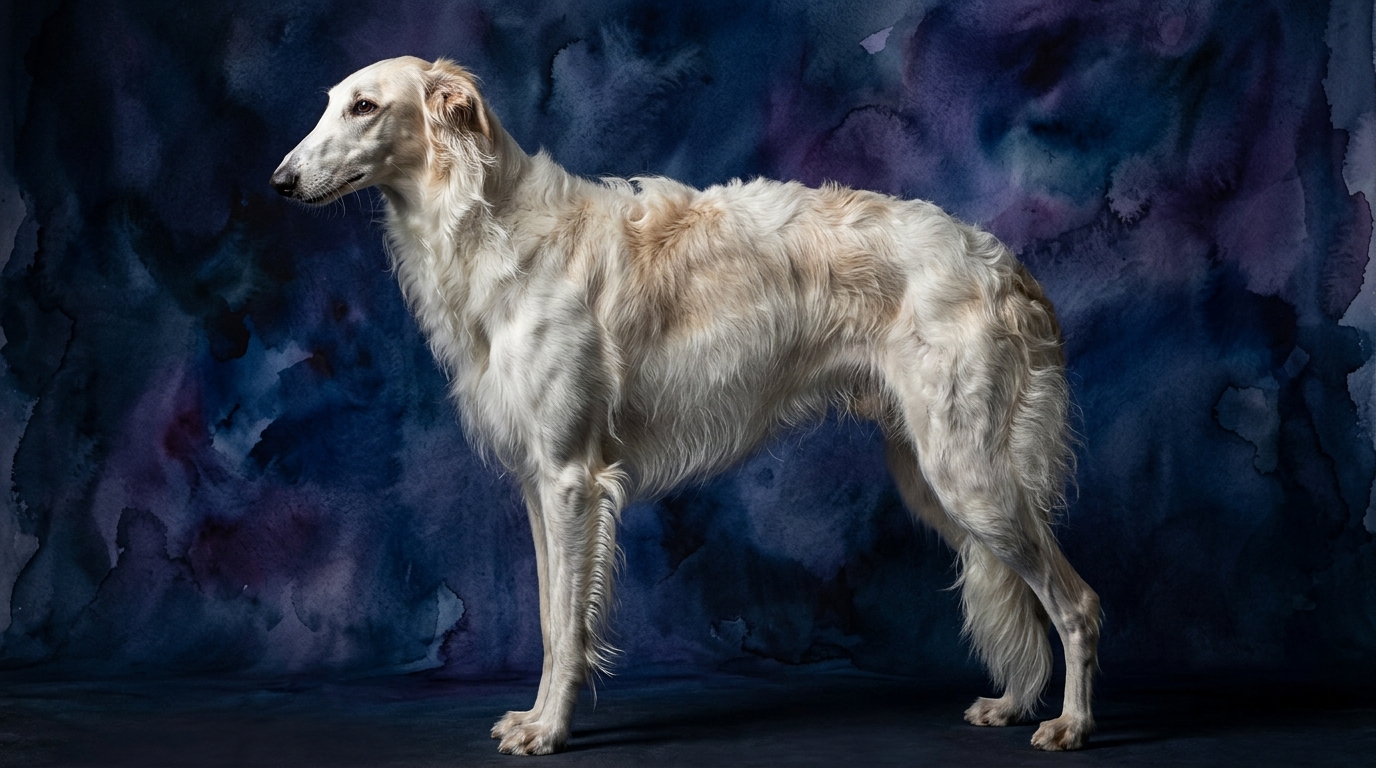
The Borzoi, a sighthound developed for hunting fast-moving game like wolves, exhibits a Problem Solving score of 3/5 that reflects independent thought and strategic thinking in dynamic, open environments. Their intelligence is geared towards anticipating prey movements, navigating complex terrain at speed, and making quick decisions without direct human command during a chase. Training Speed, also 3/5, indicates they are capable learners, but their independent nature often means they weigh commands against their own instincts, particularly if a strong prey drive is engaged. Social Intelligence at 3/5 suggests they can read human cues and understand household dynamics but tend to be reserved, often preferring quiet observation over demonstrative interaction. Their Instinctive Drive, a robust 3/5, is heavily influenced by their sighthound heritage, focusing their cognitive energy on visual stimuli and the pursuit of movement. Finally, a Memory score of 3/5 means they possess excellent recall for routes, routines, and past experiences relevant to their hunting tasks or established household patterns, though this memory might be selectively applied when instincts call.
The English Toy Spaniel, a companion breed developed for royal laps and gentle company, also scores 3/5 in Problem Solving, but this manifests as an aptitude for navigating social situations and subtly influencing their human companions for comfort or attention. Their intellect is more focused on interpersonal dynamics within a home. A Training Speed of 3/5 indicates they are eager to please and generally receptive to learning, particularly with positive reinforcement, though their sensitivity and potential for distraction require a consistent, gentle approach. Social Intelligence, at 3/5, is a significant strength for this breed, reflecting their deep attunement to human emotions, subtle body language, and the overall mood of their environment, making them exceptionally empathetic companions. Their Instinctive Drive, also 3/5, is predominantly geared towards bonding and comfort, with their cognitive focus centered on maintaining close social ties and ensuring their place within the family unit. Memory at 3/5 means they excel at remembering routines, preferred people, and past interactions, both positive and negative, that shape their domestic experience and comfort.
Where the Borzoi's Cognition Excels
The Borzoi’s cognitive strengths are deeply rooted in its heritage as a pursuit hunter. They demonstrate superior spatial reasoning, particularly when tracking a moving object across varied distances and terrains. This involves not just speed, but an innate ability to predict paths and make split-second navigational decisions. Their independent problem-solving shines when faced with a task requiring initiative rather than instruction, such as outmaneuvering an agile target or finding the most efficient route during a simulated chase. This breed also possesses a remarkable capacity for sustained focus on a single, dynamic stimulus, filtering out extraneous environmental distractions that might deter other breeds, showcasing a highly specialized form of attention.
Where the English Toy Spaniel's Cognition Excels
The English Toy Spaniel’s cognitive advantages lie squarely in its social and emotional intelligence. They possess an exceptional ability to perceive and respond to subtle human emotional states, often adjusting their own demeanor to provide comfort or solicit attention with remarkable precision. This breed excels at adapting to varied household routines and social settings, demonstrating a quiet flexibility that allows them to integrate seamlessly into family life. Their problem-solving in a domestic context often involves figuring out the most effective ways to secure closeness and affection, utilizing their understanding of human behavior to achieve their desired outcome. They thrive on companionship, and their intelligence is finely tuned to enhance this bond, making them masters of quiet empathy and devoted presence.
Training Dynamics: Independence vs. Sensitivity
While both breeds hold a 3/5 Training Speed rating, the practical experience of training them diverges considerably. The Borzoi, with its sighthound independence, learns commands efficiently but may choose to obey only if it perceives a clear benefit or if the command aligns with its internal motivations. This means recall can be particularly challenging if a compelling visual stimulus, like a squirrel, engages their powerful instinctive drive. Training Borzoi demands immense patience, consistency, and a deep respect for their independent spirit, often requiring creative methods that appeal to their natural instincts rather than demanding blind obedience. Heavy-handed or repetitive drills are likely to be met with disinterest or resistance, emphasizing the need for positive reinforcement and understanding their intrinsic motivations.
The English Toy Spaniel, on the other hand, is generally eager to please its human companions, which can make them appear more compliant in basic obedience. However, their sensitivity means that harsh corrections are counterproductive and can lead to anxiety or withdrawal. Their small size can sometimes lead owners to be less rigorous with training, inadvertently allowing inconsistent behaviors. While they pick up new cues readily, their delicate nature means they thrive on positive reinforcement, gentle guidance, and a calm training environment. Distractions, especially in busy settings, can also challenge their focus. Ultimately, neither breed is inherently 'easier' to train; rather, they each require a distinct approach that acknowledges their unique cognitive architecture and motivational drivers.
Lifestyle Match: Active Exploration vs. Relaxed Companionship
The cognitive and physical needs of these breeds dictate very different ideal lifestyles. The Borzoi, despite its calm demeanor indoors, is fundamentally an active hound that requires regular, vigorous exercise. Their problem-solving and instinctive drives are best satisfied through activities that allow for bursts of running, exploration, and the engagement of their sighthound senses in a safe, enclosed area. They suit owners who appreciate a reserved but deeply independent canine partner and can provide outlets for both their physical stamina and their mental need for purposeful movement. An owner who enjoys long walks, lure coursing, or has access to securely fenced spaces for them to run freely will find a Borzoi a rewarding companion.
In contrast, the English Toy Spaniel is the epitome of a companion dog, perfectly content with a more relaxed pace of life. Their cognitive strengths are best leveraged within a home environment where they can engage in social interactions, provide quiet companionship, and enjoy the comforts of indoor living. They thrive with owners who are home frequently, seeking a devoted, affectionate presence that requires minimal physical exertion beyond short, leisurely strolls and indoor play. Their adaptability and gentle nature make them ideal for apartment dwellers or individuals seeking a calm, constant canine presence.
The Verdict
Opt for a Borzoi if you appreciate an independent, somewhat reserved canine partner with a deep-seated drive for movement and exploration, and you're prepared to engage with their sighthound instincts through consistent, respectful training.
Select an English Toy Spaniel if you desire a devoted, adaptable companion whose intelligence shines in social interactions and whose primary joy comes from close proximity and gentle affection within a relaxed home environment.
🧠 Find Your Pet's IQ Score
Our Pet IQ Lab assessment covers 25+ tests across 5 cognitive dimensions — personalized to your breed.
Take the Full IQ Test →Frequently Asked Questions
Do Borzoi or English Toy Spaniels excel at dog sports?
Borzoi often excel in sighthound-specific sports like lure coursing and open field coursing, which tap into their instinctive drive and physical prowess, engaging their natural predatory chase. English Toy Spaniels, while less physically demanding, can enjoy activities like obedience, rally, or even trick training, leveraging their desire to please and social intelligence in a less strenuous, more interactive manner.
How do their problem-solving skills differ in a home environment?
A Borzoi's problem-solving might manifest as figuring out how to access a counter for food or navigating a complex yard layout efficiently to survey their surroundings. An English Toy Spaniel, conversely, might 'solve' the problem of getting more attention by subtly nudging a hand or strategically placing themselves for a cuddle, using their social understanding to achieve their goals within the family dynamic.
Are both breeds good with children?
Borzoi can be gentle and tolerant with well-behaved children, often preferring to avoid boisterous play due to their reserved nature and size. English Toy Spaniels are generally affectionate and enjoy family life, but their small size makes them vulnerable to rough handling, so supervision with young children is always important for their safety and comfort, ensuring gentle interactions.