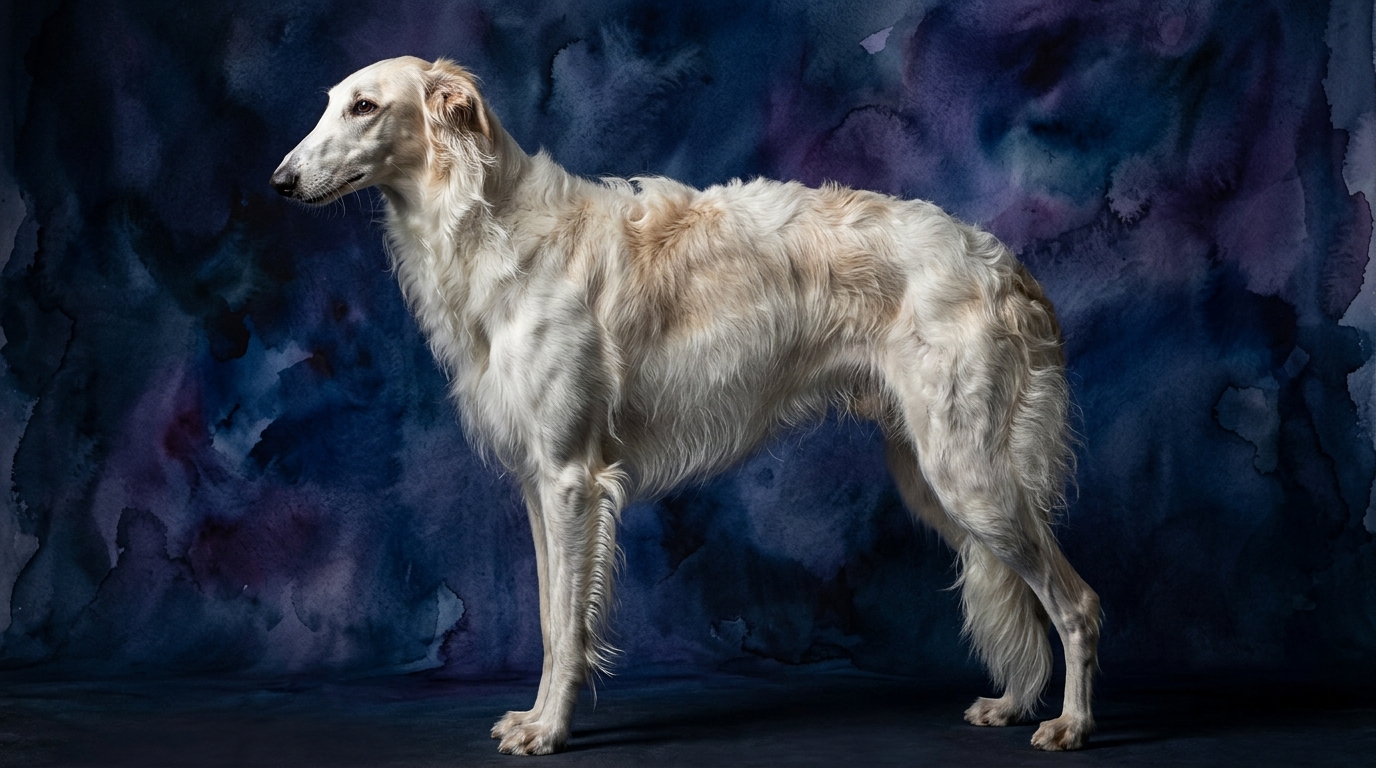

Side-by-Side IQ Profile: Borzoi vs. Toy Fox Terrier
Understanding how Borzoi and Toy Fox Terriers apply their cognitive strengths requires looking beyond raw scores to their intrinsic breed characteristics. Both score 3/5 in Problem Solving, yet a Borzoi's application might involve calculating optimal chase trajectories or identifying the quickest path to a comfortable sunbeam, reflecting their sighthound heritage. A Toy Fox Terrier, conversely, might apply this 3/5 by masterminding an escape from a crate or figuring out how to access a forbidden treat jar, demonstrating a terrier's cunning in a domestic landscape.
For Training Speed, also at 3/5, the Borzoi can absorb commands but often processes them through an independent lens, requiring motivation that aligns with their internal drives rather than simply eager compliance. The Toy Fox Terrier, while quick to learn and often enthusiastic, can also display a selective interpretation of commands, learning rapidly when engaged but potentially deciding that another activity is more compelling, a common terrier trait.
Social Intelligence, another 3/5 for both, plays out differently. Borzoi often exhibit a reserved, almost regal social awareness, deeply attuned to their family's emotional state but less demonstrative with strangers, communicating through subtle cues. The Toy Fox Terrier, in contrast, tends to be a highly expressive social participant, keenly observing human moods to initiate play or demand attention, often forming intensely close bonds and being overtly communicative.
Instinctive Drive, rated 3/5 for both, is where their evolutionary paths truly diverge. For the Borzoi, this score represents a powerful, highly specialized prey drive focused on visual pursuit and the capture of fast-moving game over open terrain, a complex sequence of observation, acceleration, and strategic maneuvering. The Toy Fox Terrier's 3/5 instinctive drive is rooted in persistent, tenacious pursuit of small vermin, often involving digging, barking, and an unwavering focus on the quarry, a deep-seated desire to hunt and dispatch.
Finally, Memory, at 3/5 for both, means they retain information efficiently. A Borzoi will remember routines, specific places for comfort or exercise, and perhaps even past negative experiences with remarkable clarity. A Toy Fox Terrier leverages its memory to recall where hidden toys or treats are stashed, previous training successes, and the specific behaviors that elicit desired responses from their human companions, demonstrating a practical, situation-specific recall.
Where the Borzoi Wins Cognitively
The Borzoi's cognitive strengths truly shine in scenarios demanding independent thought and rapid, large-scale spatial reasoning. Their sighthound heritage imbues them with an unparalleled ability to process visual stimuli over vast distances, making split-second decisions about pursuit strategy, speed, and trajectory during a chase. This isn't just instinct; it's a sophisticated application of problem-solving and memory in a dynamic, high-stakes environment. Furthermore, their nuanced social intelligence allows for a dignified, understated connection with their chosen family, often reading subtle human cues and responding with quiet empathy, rather than overt demands. They possess a quiet confidence in their own decision-making, which, while sometimes perceived as stubbornness, is actually a sign of their cognitive self-reliance.
Where the Toy Fox Terrier Wins Cognitively
The Toy Fox Terrier's cognitive prowess is best observed in their adaptable and tenacious approach to navigating the complexities of a domestic environment. Their terrier spirit translates into exceptional resourcefulness and persistence in solving practical problems, whether it's figuring out how to open a child-proof cabinet, manipulating objects to reach a desired item, or escaping a seemingly secure enclosure. Their sharp senses and quick wits contribute to a heightened alertness, making them excellent watchdogs who process novel sounds and sights with remarkable speed. Socially, their expressive nature and deep attunement to their human family allow them to master the art of charming and engaging their companions, often orchestrating interactions to their benefit with a keen understanding of household dynamics.
Which is Easier to Train and Why
Assessing which breed is “easier” to train requires understanding their distinct motivations and inherent drives. For a Borzoi, training can be a marathon of patience and positive reinforcement. Their independent nature, a hallmark of sighthounds, means they often weigh a command against their own perceived interests, especially if a compelling visual stimulus (like a squirrel) is present. They are not typically driven by an overwhelming desire to please, but rather by respect and consistent, fair leadership that makes the desired action appealing. Training success often hinges on making the process a collaboration, understanding that while they can learn quickly, their compliance is often conditional on their assessment of the situation. Their 3/5 training speed is less about raw learning capacity and more about their selective application of that capacity.
The Toy Fox Terrier, while also scoring 3/5 in Training Speed, presents a different set of training challenges and rewards. They are often quick to pick up new commands and tricks, driven by their desire for interaction and the mental stimulation that training provides. However, their terrier tenacity and sometimes strong-willed nature mean they can exhibit “selective hearing” or become easily bored if training isn't engaging and varied. Consistency is paramount, as is making training feel like a fun game to hold their attention. While they are often eager to please their beloved humans, their inherent drive to investigate and sometimes dominate can make them prone to testing boundaries. Training a Toy Fox Terrier often involves channeling their considerable energy and focus into productive outlets, requiring an owner who is firm, fair, and endlessly creative.
Which Suits Active Owners vs. Relaxed Owners
The ideal owner match for each breed is heavily influenced by their physical and mental energy expenditure patterns. An owner who defines “active” as continuous, long-duration activities might find the Borzoi a surprising fit for “relaxed” periods. Borzoi require intense, short bursts of running in a securely fenced area where they can stretch their legs and satisfy their sighthound instincts. After these exhilarating sprints, they transform into remarkably calm and often sedentary house companions, earning them the affectionate moniker “45 mph couch potatoes.” Thus, they suit owners who enjoy providing dedicated high-intensity exercise, but then appreciate a quiet, elegant presence indoors.
Conversely, the Toy Fox Terrier, despite its smaller size, possesses a more consistent and demanding energy level. They thrive on frequent engagement, needing regular walks, interactive play sessions, and plenty of mental stimulation to prevent boredom and potential destructive behaviors. Their terrier drive means they are always “on,” alert, and ready for action. They are an excellent match for active owners who enjoy incorporating their dog into daily activities, providing consistent mental challenges, and appreciate a lively, ever-present companion. For truly relaxed owners who prefer minimal daily engagement, the Toy Fox Terrier's needs for constant interaction and activity might prove overwhelming, potentially leading to an under-stimulated and restless pet.
The Verdict
If you are drawn to a dog with an independent spirit, appreciate understated elegance, can provide secure, expansive spaces for their unique exercise needs, and value a calm, gentle presence within the home, understanding that their training requires patience, respect, and a deep understanding of their sighthound nature, choose a Borzoi.
If you seek an energetic, alert, and highly interactive companion, thrive on consistent engagement and mental challenges, and are prepared for a tenacious, witty personality in a compact form, embracing their terrier drive with consistent training and plenty of stimulating activities, choose a Toy Fox Terrier.
🧠 Find Your Pet's IQ Score
Our Pet IQ Lab assessment covers 25+ tests across 5 cognitive dimensions — personalized to your breed.
Take the Full IQ Test →Frequently Asked Questions
Do Borzoi and Toy Fox Terriers learn at the same pace?
While both breeds score 3/5 in Training Speed, their learning styles differ. Borzoi, with their independent sighthound nature, might take longer to consistently comply with commands they deem unnecessary, requiring consistent, rewarding motivation tailored to their drives. Toy Fox Terriers can grasp commands quickly but may exhibit terrier stubbornness, choosing when to obey based on their own assessment of the situation and their level of engagement.
Which breed is better at problem-solving in a home environment?
The Toy Fox Terrier often excels at problem-solving within a domestic setting, using their tenacity to figure out how to open cabinets or gain access to desired items with remarkable ingenuity. Borzoi's problem-solving is more geared towards their historical role, like navigating complex terrain during a chase, making them less inclined towards domestic mischief and more towards efficient outdoor movement.
How does their social intelligence manifest differently?
A Borzoi's social intelligence often appears as reserved dignity, deeply bonding with their inner circle and subtly reading their family's moods, though they might ignore cues conflicting with their sighthound drives. The Toy Fox Terrier typically displays highly expressive social intelligence, actively engaging with their human companions, demanding attention, and quickly assessing new individuals in their environment with a keen, interactive approach.