
A Side-by-Side Cognitive Profile
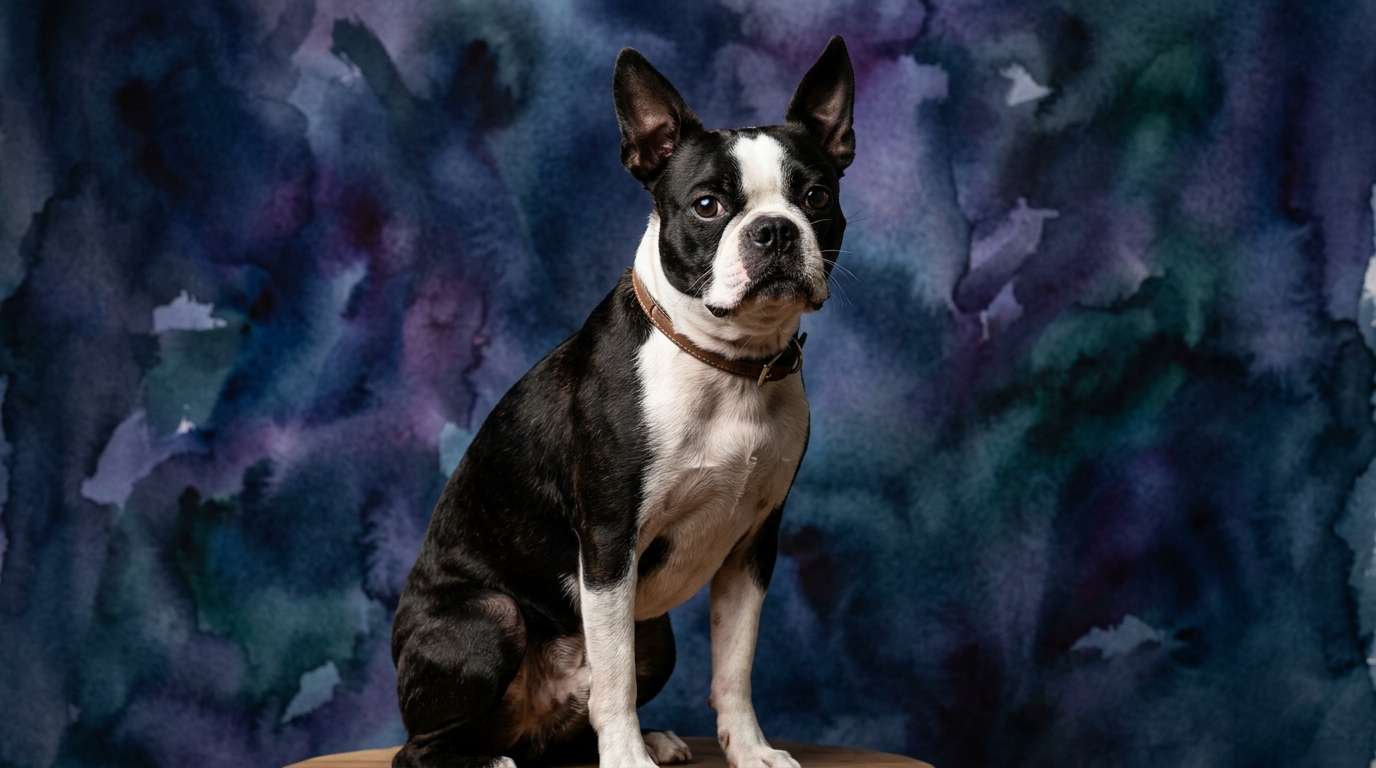
The Boston Terrier, ranked 54th by Coren, presents a balanced cognitive profile with particular strengths in social interaction. Their Problem Solving is rated 3/5, suggesting a moderate capacity for navigating novel challenges and strategizing to achieve goals. Training Speed, also at 3/5, indicates they learn new commands and routines at an average pace, responsive to consistent instruction. Where they truly shine is Social Intelligence, scoring 4/5, reflecting a keen ability to interpret human cues, adapt to social situations, and form strong relational bonds. Their Instinctive Drive is lower at 2/5, meaning they possess less inherent inclination for complex, independent tasks or traditional working roles. Memory, at 3/5, indicates a solid capacity for retaining learned information over time.
The Canaan Dog, holding a slightly higher Coren rank at 43rd, exhibits a cognitive makeup rooted in its ancient origins as a desert survivalist and livestock guardian. Their Problem Solving capability matches the Boston Terrier at 3/5, showing an equal capacity for independent thought in new situations. Training Speed is also 3/5, indicating a similar pace of learning new commands. However, their Social Intelligence is rated 3/5, suggesting they are capable of forming bonds but might not possess the same innate people-pleasing drive as the Boston Terrier, often exhibiting a more independent streak. Their Instinctive Drive is higher at 3/5, reflecting their natural inclination for vigilance, observation, and independent decision-making, characteristic of herding and guarding breeds. Crucially, their Memory stands out at 4/5, indicating a superior ability to recall learned behaviors and experiences over extended periods.
Where the Boston Terrier Cognitively Excels
The Boston Terrier's standout cognitive advantage lies in its superior Social Intelligence, scoring 4/5 compared to the Canaan Dog's 3/5. This higher rating translates into a dog that is exceptionally attuned to human emotions and social dynamics within a household. Boston Terriers often demonstrate a remarkable capacity to read their owners' moods, adjust their behavior accordingly, and seek out interaction and companionship. For instance, they might intuitively offer comfort during distress or engage in playful antics to lighten the atmosphere. This strong social acumen makes them particularly adaptable to various family structures and lifestyles, thriving on close human connection and readily integrating into the daily rhythms of domestic life.
While their raw Problem Solving score is the same as the Canaan Dog, the Boston Terrier's heightened social intelligence can subtly influence how they appear to solve problems in a human-centric environment. A Boston Terrier might, for example, figure out how to gain attention or access a desired item by observing human reactions and employing socially acceptable (or adorably mischievous) strategies. This isn't about complex logical deduction in the wild, but rather about leveraging their understanding of human behavior to navigate their immediate world effectively. Their desire to be involved and connected often drives their cognitive efforts, making them highly responsive to social reinforcement and interaction-based learning.
Where the Canaan Dog Cognitively Excels
The Canaan Dog's cognitive strengths are rooted in its heritage, most notably in its superior Memory (4/5) and higher Instinctive Drive (3/5). A 4/5 Memory score means these dogs possess an impressive capacity to retain learned commands, complex sequences, and environmental details over long durations. This isn't just about remembering “sit,” but recalling a series of commands or understanding the layout of a new territory after minimal exposure. This robust memory serves their innate vigilance, allowing them to remember who belongs and who doesn't, or where potential threats might emerge.
Their 3/5 Instinctive Drive reflects a breed capable of independent thought and action, often driven by an intrinsic need to observe, protect, and patrol. Unlike breeds bred primarily for companionship, Canaan Dogs derive satisfaction from engaging with their environment in a purposeful way, whether it's surveying their yard from a vantage point or meticulously exploring new scents. This drive means they are often self-reliant problem-solvers in situations that require vigilance or territory management, rather than solely relying on human direction. Their cognitive processes are geared towards making autonomous decisions based on observation and past experience, a hallmark of their herding and guarding ancestry.
Training Dynamics: Eagerness vs. Independence
Both the Boston Terrier and Canaan Dog share a Training Speed rating of 3/5, suggesting they learn new commands at an average pace. However, the 'ease' of training can differ significantly due to their other cognitive traits. A Boston Terrier's 4/5 Social Intelligence often translates to an eagerness to please and a strong desire for human approval. This makes them highly motivated by positive reinforcement and social praise, often making initial training sessions feel more cooperative and rewarding for the owner. They are generally keen to engage and respond to human feedback, which can create a smoother learning curve in a domestic setting.
The Canaan Dog, despite a similar training speed, brings a different dynamic to the training arena. Their higher Memory (4/5) means that once a command is learned, it's likely to be retained exceptionally well, proving beneficial for long-term consistency. However, their 3/5 Instinctive Drive and slightly lower 3/5 Social Intelligence mean they are often more independent thinkers. They might question the necessity of a command or require more consistent and varied motivation to maintain focus, rather than simply seeking to please. Training a Canaan Dog often requires a patient, confident leader who can establish clear expectations and make training feel like a collaborative task rather than a series of arbitrary rules. Their problem-solving abilities might lead them to find loopholes if training isn't consistent, challenging owners to be equally clever.
Lifestyle Suitability: Companion vs. Purpose-Driven
For owners seeking a relaxed, companion-focused lifestyle, the Boston Terrier often emerges as a more suitable choice. Their lower Instinctive Drive (2/5) means they typically have less inherent need for intense physical tasks or independent "work." Coupled with their high Social Intelligence (4/5), they thrive in environments where close human interaction, lap time, and moderate daily walks are the primary forms of engagement. They are generally content to be involved in family activities, providing affectionate companionship without demanding extensive mental or physical challenges. Their adaptability to apartment living and urban environments further underscores their suitability for less active, more home-centric owners who value a constant, amiable presence.
Conversely, the Canaan Dog is better suited for active owners who can provide consistent mental and physical stimulation. Their higher Instinctive Drive (3/5) and strong Memory (4/5) mean they are at their best when given a sense of purpose or engaging in activities that challenge their natural abilities. This could involve advanced obedience, agility, scent work, or even herding exercises. They require ample opportunities to explore, observe, and utilize their problem-solving skills in a structured way. An owner who understands and respects their independent nature, providing clear leadership and engaging activities, will find a devoted and capable partner. Without appropriate outlets, their inherent drives can manifest as boredom or undesirable behaviors, making them less ideal for a purely sedentary household.
The Verdict
Choose the Boston Terrier if you prioritize a highly social, adaptable companion eager for close human interaction and content with a moderate, domestic lifestyle.
Opt for the Canaan Dog if you seek an independent, observant partner with excellent memory, thriving on purposeful activity and a confident, consistent leader.
🧠 Find Your Pet's IQ Score
Our Pet IQ Lab assessment covers 25+ tests across 5 cognitive dimensions — personalized to your breed.
Take the Full IQ Test →Frequently Asked Questions
Are Boston Terriers good with children due to their social intelligence?
Yes, Boston Terriers often excel with children due to their high social intelligence and amiable nature. They generally adapt well to family dynamics, showing patience and a desire to interact, though supervision with very young children is always recommended.
Does the Canaan Dog's higher instinctive drive make them difficult to live with?
Not necessarily difficult, but it means they require consistent mental and physical engagement. Their drive manifests as vigilance and a need for purpose, so an owner prepared to provide training, exercise, and enrichment will find them rewarding companions.
Which breed is more suitable for first-time dog owners?
The Boston Terrier, with its higher social intelligence and generally more adaptable nature, might be a more forgiving choice for first-time owners. The Canaan Dog's independence and higher instinctive drive often benefit from an owner experienced in handling more self-reliant breeds.