
Side-by-Side IQ Profile
Our Cosmic Pet Pet IQ Lab assessment provides a detailed breakdown of five key cognitive dimensions for each breed. The Poodle (Standard), with a Coren rank of #2, consistently demonstrates peak performance across most metrics. Their Problem Solving score of 5/5 indicates an exceptional capacity to analyze novel situations and devise effective solutions, often showing ingenuity in overcoming obstacles. A Training Speed of 5/5 signifies their rapid acquisition of new commands and routines, making them quick studies in any learning environment. Their Social Intelligence also rates 5/5, reflecting a profound understanding of human cues, emotions, and social structures, enabling deep companionship and responsiveness. An Instinctive Drive of 4/5 suggests a pronounced, yet manageable, natural inclination towards activities like retrieving or tracking, which can be channeled into productive tasks. Finally, their Memory score of 5/5 means they retain learned information, commands, and experiences over extended periods, contributing to their reliability.
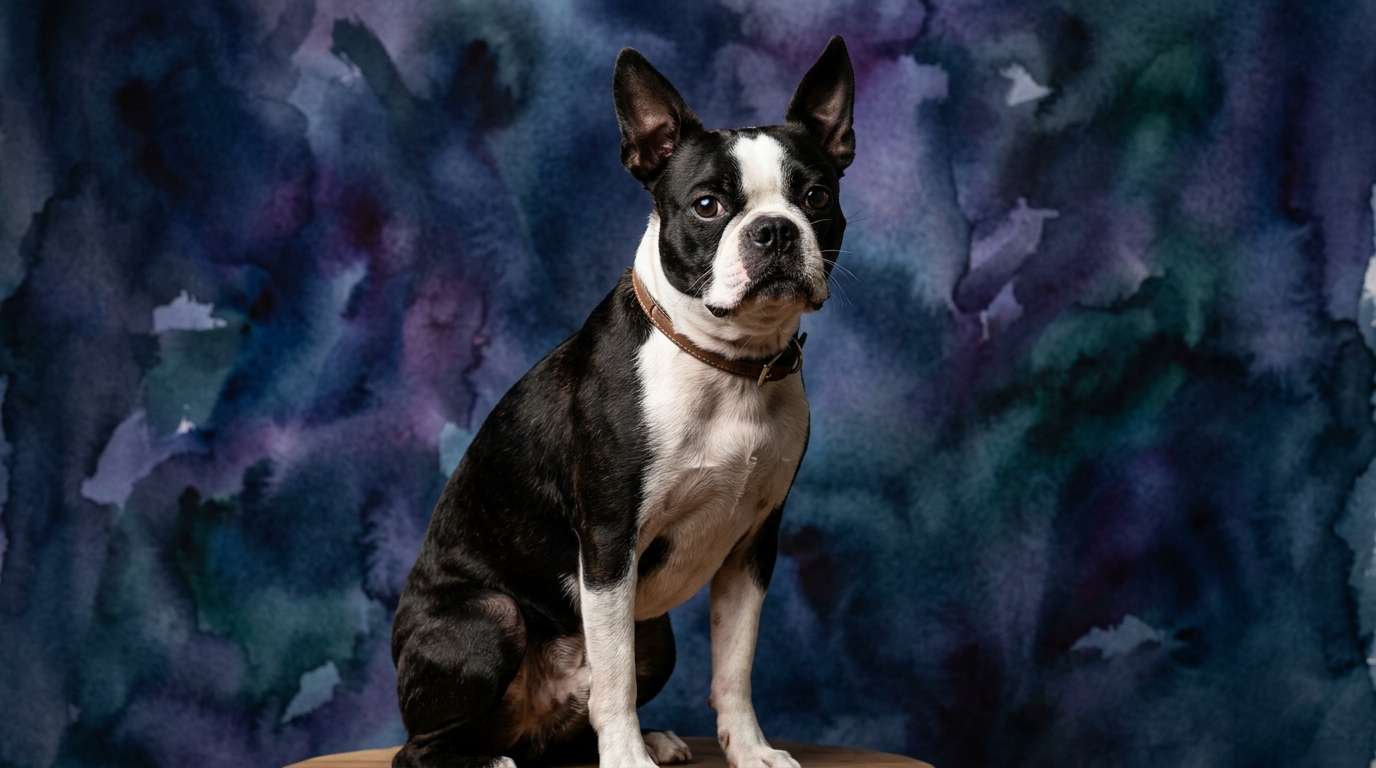
In contrast, the Boston Terrier, holding a Coren rank of #54, presents a different cognitive landscape tailored to its companion role. Their Problem Solving is rated 3/5, meaning they can navigate routine challenges but may require more guidance for complex or unfamiliar scenarios. A Training Speed of 3/5 indicates they learn at a moderate pace, benefiting from clear, consistent instruction. Where the Boston Terrier truly shines is its Social Intelligence, scoring a robust 4/5, demonstrating a strong connection with their human families and a sensitivity to their moods and social dynamics. Their Instinctive Drive is 2/5, suggesting a lower innate inclination for traditional working dog tasks, which translates into a more laid-back, less task-oriented approach to daily life. Their Memory score of 3/5 means they retain information adequately, though perhaps not with the same depth or longevity as their Poodle counterparts, benefiting from regular reinforcement.
Where Poodle (Standard) Wins Cognitively
The Poodle (Standard)'s cognitive strengths manifest in their remarkable adaptability and capacity for advanced learning. Their 5/5 Problem Solving allows them to excel in dynamic environments, effortlessly figuring out puzzle toys, navigating complex agility courses, or even performing multi-step tasks required in service work, such as opening doors or retrieving specific items. This isn't just about following commands; it's about understanding the *intent* behind the command and applying it flexibly. Their combined 5/5 Training Speed and 5/5 Memory mean they can master a vast repertoire of commands and tricks in fewer repetitions and recall them reliably months later, making them prime candidates for competitive obedience or theatrical performances. Furthermore, their 5/5 Social Intelligence, paired with their overall cognitive agility, enables them to anticipate human needs and respond with remarkable nuance, often seeming to 'read minds' in their ability to offer comfort or assistance without explicit instruction. This makes them exceptionally intuitive partners for individuals requiring emotional support or specific assistance.
Where Boston Terrier Wins Cognitively
While the Poodle excels in complex cognitive tasks, the Boston Terrier's unique profile offers distinct advantages, particularly in their role as a devoted companion. Their 4/5 Social Intelligence is a standout feature, indicating a profound ability to bond with family members and integrate seamlessly into household routines. This isn't about performing complex tasks but about intuitive emotional connection; they are acutely aware of their owner's mood and often respond with comforting presence or playful antics. The Boston Terrier’s lower Instinctive Drive (2/5) means they are generally less prone to independent pursuits like hunting small animals or extensive digging, making them more content with indoor living and less likely to follow their nose into trouble. Their moderate Problem Solving (3/5) and Memory (3/5) scores, combined with their strong social drive, often result in a dog that is less prone to overthinking or developing intricate schemes to outsmart their owners. This translates into a straightforward, good-natured demeanor that prioritizes companionship over intellectual challenge, making them wonderfully uncomplicated pets for many households.
Which is Easier to Train and Why
When it comes to ease of training, the Poodle (Standard) generally presents a more straightforward path for owners seeking rapid progress and advanced skills. Their 5/5 Training Speed means they pick up new cues almost immediately, often understanding the concept after just a few repetitions. This is complemented by their 5/5 Memory, ensuring that once a command is learned, it is rarely forgotten, minimizing the need for constant re-training. Their 5/5 Problem Solving also allows them to generalize learned behaviors to new situations, meaning a 'sit' command in the living room translates easily to a 'sit' at the park. Poodles thrive on mental engagement and view training as an enjoyable collaborative activity, often eagerly offering new behaviors.
The Boston Terrier, with a 3/5 Training Speed and 3/5 Memory, requires a more patient and consistent approach. They will learn, but it will take more repetitions and a longer period to solidify new behaviors. Their 4/5 Social Intelligence is a significant asset here, as their desire to please their human companions motivates them to engage in training, even if the learning curve is gentler. Unlike the Poodle who might anticipate the next step, the Boston Terrier benefits from clear, step-by-step instructions and positive reinforcement that makes the learning process fun and rewarding. Their lower Instinctive Drive (2/5) means they are less likely to be distracted by environmental stimuli like squirrels or intriguing scents during training sessions, which can be an advantage for focus, though their attention span may still vary. Owners should be prepared for a steady, incremental training journey rather than a rapid ascent to mastery.
Which Suits Active Owners vs Relaxed Owners
For owners who lead an active lifestyle and seek a canine partner for complex activities, the Poodle (Standard) is an exceptional match. Their 5/5 Problem Solving and 4/5 Instinctive Drive mean they thrive on mental and physical challenges, whether it's agility, competitive obedience, dock diving, or even intricate trick training. They require consistent mental stimulation to prevent boredom and channel their considerable cognitive energy productively. An owner who enjoys teaching new skills, exploring varied environments, and engaging in structured play will find the Poodle a willing and capable participant, often pushing the boundaries of what a dog can learn. Their high social intelligence also means they are deeply attuned to their owner's involvement and derive great satisfaction from working alongside them.
Conversely, the Boston Terrier is ideally suited for owners seeking a relaxed, affectionate companion who enjoys a more predictable routine and moderate activity. Their 2/5 Instinctive Drive means they are generally content with daily walks, playtime in the yard, and ample cuddle time on the sofa. While they enjoy interaction, their lower Problem Solving and Training Speed mean they don't *require* constant intellectual challenges to remain fulfilled. They are often perfectly happy observing the world from a comfortable lap or engaging in simple games of fetch. Owners who appreciate a dog with a charming personality, a strong desire for companionship, and a generally low-maintenance approach to mental stimulation will find the Boston Terrier a delightful fit. They are less likely to invent their own 'jobs' out of boredom and are content with being a loving, present member of the family.
The Verdict
Choose the Poodle (Standard) if you are an engaged owner eager to delve into advanced training, dog sports, or require a partner for complex tasks, valuing a deeply communicative and adaptable companion.
Choose the Boston Terrier if you seek a charming, emotionally intuitive companion who thrives on affection and routine, offering straightforward companionship without demanding constant intellectual engagement.
🧠 Find Your Pet's IQ Score
Our Pet IQ Lab assessment covers 25+ tests across 5 cognitive dimensions — personalized to your breed.
Take the Full IQ Test →Frequently Asked Questions
Are Poodles (Standard) prone to boredom if not adequately stimulated?
Yes, Poodles with their 5/5 Problem Solving and 5/5 Memory require consistent mental engagement; without it, they may invent their own activities, which can sometimes be undesirable. Providing puzzle toys, regular training, and varied experiences is crucial for their well-being.
Does the Boston Terrier's moderate IQ scores mean they are difficult to live with?
Not at all. The Boston Terrier's 4/5 Social Intelligence makes them wonderful, affectionate companions who are highly attuned to their families. Their moderate scores simply mean they thrive on consistency and clear communication, rather than complex problem-solving.
Which breed is better for first-time dog owners based on these profiles?
For first-time owners seeking a dog that learns quickly and enjoys training, the Poodle (Standard) can be rewarding if the owner is prepared for their mental needs. However, the Boston Terrier's lower instinctive drive and strong social intelligence might make them a more forgiving and straightforward choice for those new to dog ownership, provided patience is applied to training.