
Unpacking Their Cognitive Blueprints: A Side-by-Side IQ Profile
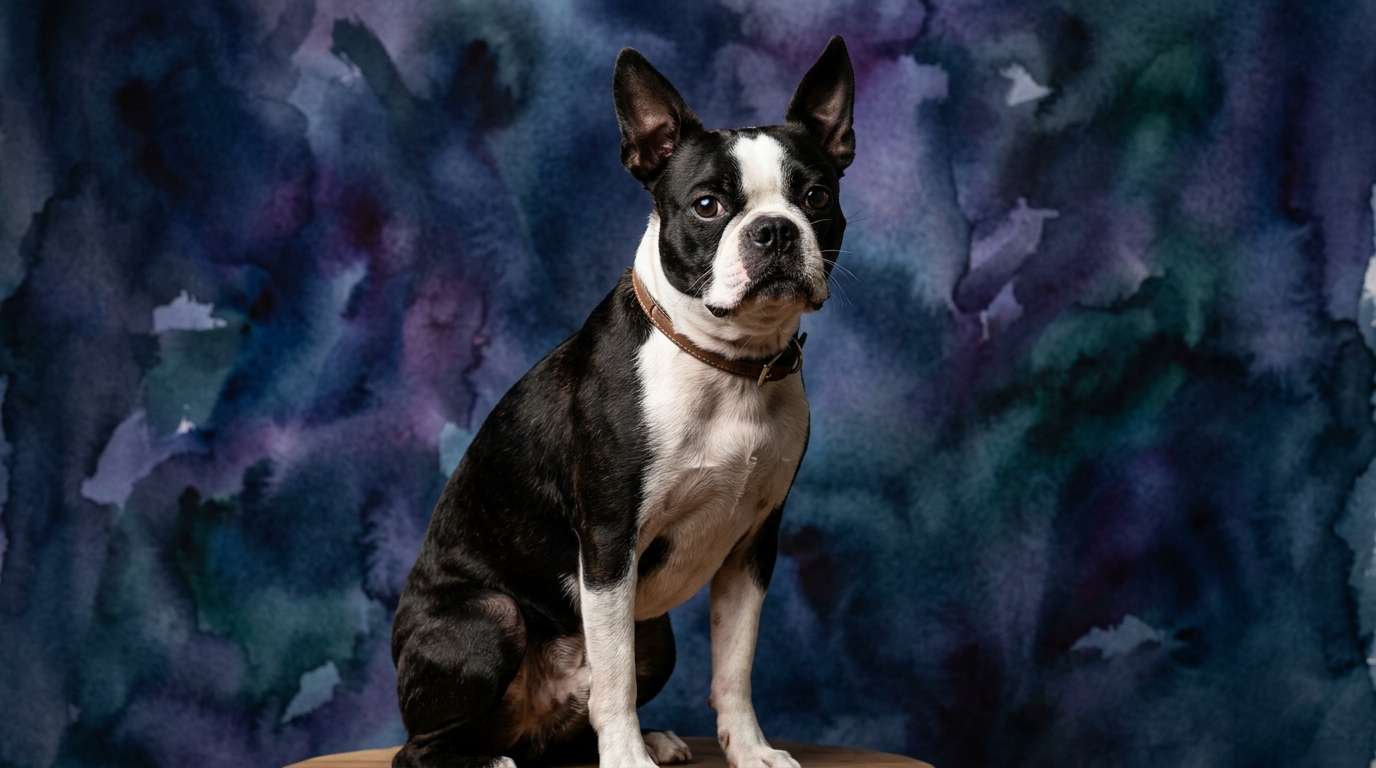
The Cosmic Pet Pet IQ Lab employs a five-dimensional model to dissect canine intelligence, moving beyond simplistic notions to reveal specific cognitive aptitudes. For the Boston Terrier, a Non-Sporting breed with a Coren ranking of #54, their profile illuminates a distinct set of mental attributes. Their problem-solving ability registers at 3/5, indicating a moderate capacity to navigate novel situations and figure out household conundrums. Training speed also scores 3/5, suggesting they absorb commands at a reasonable, steady pace. Where they truly shine is in social intelligence, scoring a remarkable 4/5, signifying a keen ability to interpret human cues and bond deeply. Their instinctive drive is notably low at 2/5, meaning they possess less innate urge for hunting or independent guarding, and their memory stands at a solid 3/5, allowing them to retain learned behaviors effectively.
In stark contrast, the Dogue de Bordeaux, a powerful Working breed, presents a different cognitive signature, though not Coren-ranked. Their problem-solving score mirrors the Boston Terrier at 3/5, demonstrating a similar foundational capacity for navigating challenges, albeit perhaps with a different approach given their physical attributes. Training speed also aligns at 3/5, suggesting a comparable rate of learning new behaviors, though motivation drivers may differ. Their social intelligence is rated 3/5, indicating strong bonds with their immediate family but potentially less overt expressiveness or broad adaptability in diverse social settings compared to the Boston Terrier. Their instinctive drive, at 3/5, is higher than the Boston Terrier's, reflecting their protective working heritage, and their memory also scores 3/5, ensuring they hold onto experiences and training.
Where the Boston Terrier's Mind Excels
The Boston Terrier's cognitive advantage is most evident in its superior social intelligence, scoring a 4/5 compared to the Dogue de Bordeaux's 3/5. This higher social acumen means Boston Terriers are often more adept at reading subtle human emotions, understanding complex vocal tones, and adjusting their behavior to align with their owner's mood. They excel in cooperative games and activities that require nuanced interaction, often appearing uncannily attuned to their human companions' needs or desires. This makes them exceptional companions for individuals who value a dog deeply integrated into the emotional fabric of the home, capable of offering comfort or engaging in responsive play.
Furthermore, the Boston Terrier's lower instinctive drive (2/5) sets it apart. This isn't a deficit but a difference in focus. With less innate urge for independent hunting, guarding, or territorial patrolling, Boston Terriers are generally less prone to acting on ancient, self-directed instincts. This translates into a dog often more content to be led by human direction, less likely to chase small animals relentlessly, or to assert dominance in unfamiliar social contexts. Their cognitive energy is often redirected towards human connection and understanding, making them highly adaptable to varied social environments and less likely to present challenges rooted in strong primal urges.
The Cognitive Strengths of the Dogue de Bordeaux
The Dogue de Bordeaux, with its 3/5 instinctive drive, showcases a different kind of cognitive strength compared to the Boston Terrier's 2/5. This moderate instinctive drive is crucial for a breed historically tasked with guarding and protection. It means the Dogue de Bordeaux possesses an innate vigilance and a capacity for discerning potential threats, often expressed as a calm, watchful presence. While not impulsively aggressive, their cognitive processes are geared towards assessing their environment and acting as a deterrent when necessary, making them effective guardians of their home and family. This drive contributes to a robust sense of loyalty and a focused protective instinct that requires careful channeling through socialization and training.
While both breeds share a 3/5 problem-solving score, the Dogue de Bordeaux's approach is often informed by its physical presence and working heritage. Their problem-solving might manifest less in figuring out complex household contraptions and more in navigating physical obstacles, assessing spatial relationships in their environment, or understanding the dynamics of a challenging situation. Their cognitive processing is often grounded in their role as a powerful, protective animal, allowing them to make decisions that prioritize the safety and security of their pack, even if it means employing a degree of physical presence. This pragmatic, purpose-driven problem-solving is a hallmark of many working breeds, reflecting a mind built for substance and reliability.
Training Dynamics: Which Breed Learns with More Ease?
Both the Boston Terrier and the Dogue de Bordeaux share a 3/5 score for training speed, suggesting they learn at a comparable, steady pace. However, the 'ease' of training extends beyond mere speed and is significantly influenced by their other cognitive dimensions. The Boston Terrier's higher social intelligence (4/5) and lower instinctive drive (2/5) often make them more straightforward to train. They are typically eager to please their human companions, highly responsive to positive reinforcement linked to social praise, and less distracted by strong independent urges. Their attentiveness to human cues means they often pick up on subtle commands and expectations, making them receptive students in various obedience disciplines, often thriving on the cooperative aspect of training.
The Dogue de Bordeaux, while equally capable of learning, might present different training considerations due to its 3/5 social intelligence and 3/5 instinctive drive. Their moderate instinctive drive means they can be more independently minded, requiring a trainer to provide clear, consistent motivation and leadership to channel their protective instincts appropriately. Their sheer size and power also mean that early, consistent training is not just beneficial but imperative for safety and good manners. While they form strong bonds, their motivation might stem more from respect and a sense of purpose rather than solely from a desire for social approval, necessitating an owner who understands their working breed psychology and can provide firm, fair guidance.
Matching Minds to Lifestyles: Active vs. Relaxed Owners
For owners with a more relaxed lifestyle, the Boston Terrier often proves to be an ideal companion. Their moderate energy levels, combined with their exceptional social intelligence, mean they are content with both active outings and quiet evenings at home. They thrive on close human interaction and are highly adaptable to various living situations, including apartment life, as long as they receive consistent attention and mental stimulation. Their lower instinctive drive also means fewer challenges related to prey drive or territoriality, allowing for a more harmonious, low-stress integration into a less structured daily routine. They are often happy to simply be near their people, observing and participating in the ebb and flow of household life.
Conversely, the Dogue de Bordeaux is better suited for more active and experienced owners who can provide consistent structure and purposeful engagement. While not hyperactive, their substantial size, protective instincts, and working heritage mean they benefit immensely from regular, moderate exercise and mental challenges that tap into their innate drives. Owners must be prepared to manage their social interactions and provide clear, confident leadership to guide their moderate instinctive drives. A Dogue de Bordeaux thrives when given a role, whether it's accompanying their owner on walks, participating in obedience training, or simply being a watchful presence. They are not a breed for hands-off owners, requiring commitment to their physical and mental well-being to truly flourish.
The Verdict
Choose the Boston Terrier if you seek a highly socially intelligent, adaptable companion who thrives on close human connection and is content with a more relaxed, integrated household life, particularly well-suited for urban living.
Opt for the Dogue de Bordeaux if you are an experienced owner prepared for consistent training and socialization, desiring a devoted, protective companion with a moderate working drive, and have the space and commitment to engage their substantial presence.
🧠 Find Your Pet's IQ Score
Our Pet IQ Lab assessment covers 25+ tests across 5 cognitive dimensions — personalized to your breed.
Take the Full IQ Test →Frequently Asked Questions
Does a Dogue de Bordeaux's size mean it's harder to train?
While both breeds have a 3/5 training speed, a Dogue de Bordeaux's size means early training is crucial for safety and manners, requiring consistent, firm, and positive reinforcement to manage their powerful physical presence effectively. Their protective instincts also necessitate clear guidance.
Are Boston Terriers good with children due to their social intelligence?
Yes, Boston Terriers often excel with children thanks to their high social intelligence (4/5), allowing them to read cues and adapt well to family dynamics. Their lower instinctive drive and generally good-natured temperament contribute to their reputation as patient and playful family companions.
What kind of mental stimulation benefits each breed?
Boston Terriers thrive on interactive games, puzzle toys, and social interaction that leverages their high social IQ. Dogue de Bordeaux benefit from structured obedience, scent work, and activities that provide a sense of purpose, engaging their moderate instinctive drive and problem-solving skills in a more physically integrated manner.