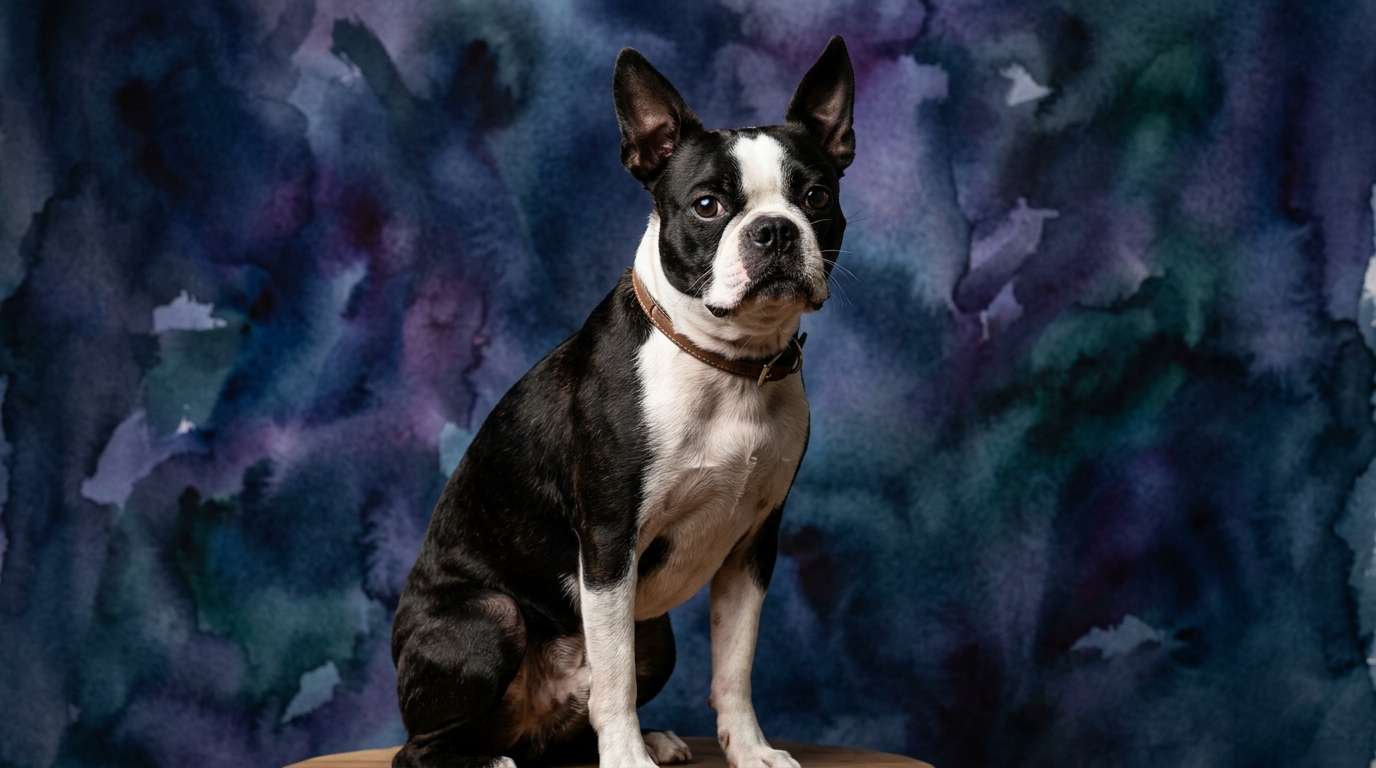
Side-by-Side IQ Profile: Boston Terrier
The Boston Terrier, a proud member of the Non-Sporting Group and ranked #54 by Coren, presents a distinct cognitive blueprint. Their Problem Solving ability, rated at 3/5, indicates a practical intelligence for navigating daily routines and solving moderately complex environmental puzzles, such as figuring out how to access a favorite toy. They are generally quick to grasp cause-and-effect in their immediate surroundings. Training Speed also sits at 3/5, meaning they learn new commands and behaviors at a consistent, moderate pace, often motivated by positive reinforcement and a strong desire to engage with their human companions. Their relatively low Instinctive Drive (2/5) means they are not typically driven by ancestral tasks like hunting or herding, preferring instead to center their activities around family interaction and comfort.
A standout trait for the Boston Terrier is their Social Intelligence, scoring a notable 4/5. This suggests a profound capacity to interpret human emotions, adapt to social cues, and integrate seamlessly into family life, often anticipating needs or reacting empathetically to moods. Their Memory, rated at 3/5, allows them to retain learned commands, household rules, and familiar faces with good reliability, contributing to their reputation as well-mannered and consistent companions.
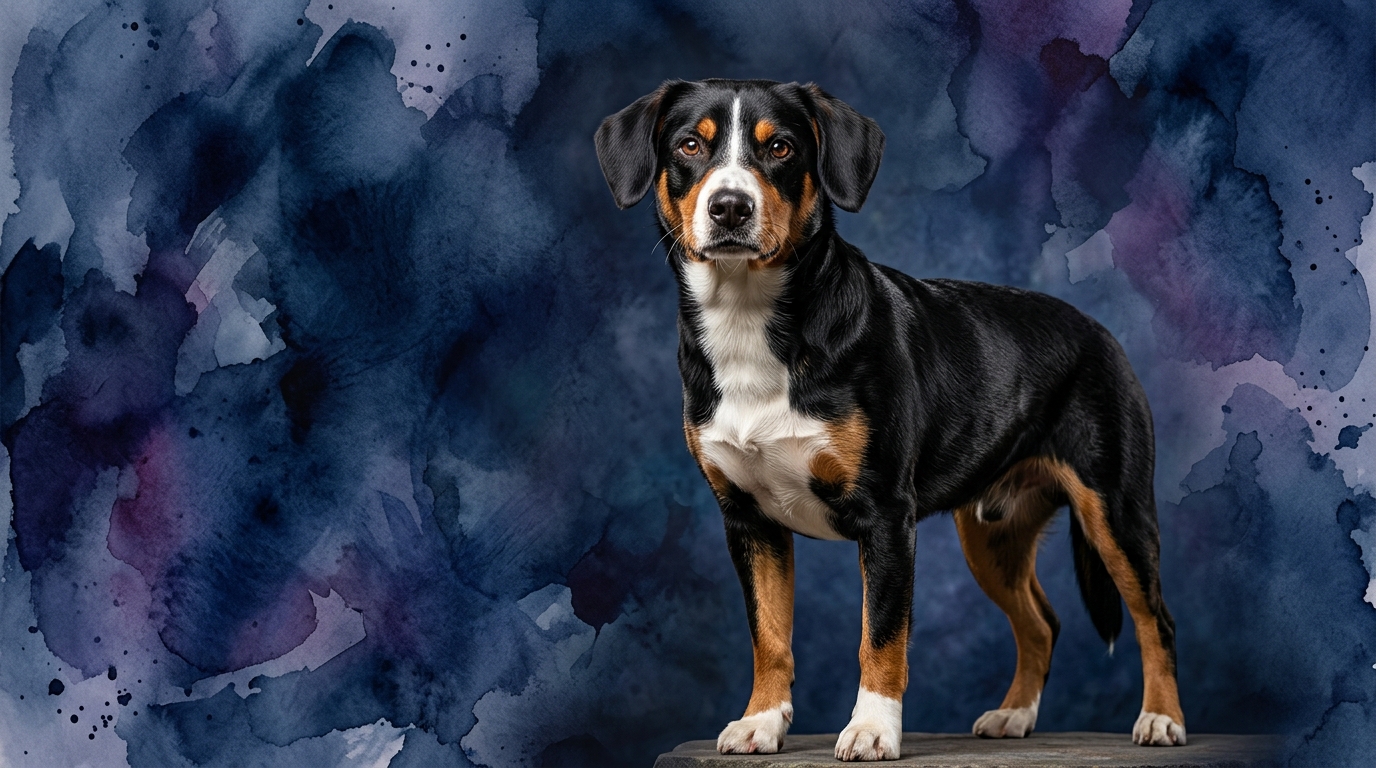
Side-by-Side IQ Profile: Entlebucher Mountain Dog
The Entlebucher Mountain Dog, a robust member of the Herding Group and not Coren-ranked, possesses a different yet equally compelling cognitive profile. Their Problem Solving ability, also 3/5, is often expressed through resourceful approaches to achieving goals related to their environment or tasks, such as figuring out how to retrieve a specific object or navigate an agility course. This practical intellect is geared towards purposeful action. Their Training Speed, mirroring the Boston at 3/5, indicates a steady capacity to acquire new skills, particularly when training is consistent, clear, and aligns with their innate desire for engagement and activity.
The Entlebucher’s Instinctive Drive scores 3/5, reflecting a moderate but significant inclination towards purposeful work, rooted in their herding heritage. This drive translates into a natural vigilance, a desire to 'gather' their family, and a readiness for structured tasks. Their Social Intelligence at 3/5 shows a solid understanding of their family unit's dynamics and a responsiveness to human direction, forming strong, loyal bonds. Memory is also rated 3/5, signifying a good retention of training, routines, and experiences, making them reliable partners in sustained activities.
Where the Boston Terrier Wins Cognitively
The Boston Terrier's cognitive edge shines brightest in the realm of Social Intelligence, where its 4/5 score surpasses the Entlebucher's 3/5. This heightened capacity means the Boston Terrier is often more acutely attuned to the subtle emotional shifts and non-verbal cues from their human companions. They possess an exceptional ability to read a room, adapt their behavior to the prevailing mood, and offer comfort or companionship precisely when it seems needed. This makes them remarkably empathetic housemates, often appearing to understand unspoken desires and fostering a deeply intuitive bond with their families.
Where the Entlebucher Mountain Dog Wins Cognitively
Conversely, the Entlebucher Mountain Dog demonstrates a clear cognitive advantage in Instinctive Drive, rated 3/5 compared to the Boston Terrier's 2/5. This robust, inherent motivation stems directly from their historical role as herding dogs and translates into a natural inclination for purposeful engagement. Entlebuchers are often characterized by their desire to 'do' something, whether it involves monitoring their surroundings, participating in structured activities, or engaging in tasks that require sustained focus. This strong internal drive provides a powerful foundation for training and activities that channel their energy and intellect towards a clear objective, making them highly responsive to tasks with a perceived purpose.
Which is Easier to Train and Why
While both breeds share a Training Speed rating of 3/5, the underlying mechanisms that make them receptive to learning differ, influencing the ease and style of their training. The Boston Terrier, with its elevated Social Intelligence, often thrives in training environments centered around positive reinforcement, praise, and close interaction. Their eagerness to please and sensitivity to human cues can make basic obedience and manners feel intuitive, as they are highly motivated by the reward of human approval and connection. They are generally compliant and adapt quickly to household rules when a strong, positive relationship with their handler is established.
The Entlebucher Mountain Dog, while equally trainable at a moderate pace, leverages its Instinctive Drive to a greater extent during learning. They respond exceptionally well to training that provides a clear purpose or 'job,' such as agility, advanced obedience, or even complex trick sequences that tap into their desire for directed activity. Their herding background means they appreciate structure and predictability; understanding the 'why' behind a command often enhances their sustained focus and commitment. For owners who enjoy engaging in task-oriented training and dog sports, the Entlebucher’s drive can make advanced learning highly rewarding, even if the initial acquisition speed is similar to the Boston Terrier.
Which Suits Active Owners vs. Relaxed Owners
For individuals or families seeking a more relaxed companion, the Boston Terrier is generally the better fit. Their lower Instinctive Drive (2/5) means they do not demand constant, intense physical or mental stimulation, preferring instead to be an integral part of family life. Their exceptional Social Intelligence (4/5) ensures they thrive on companionship, cuddles, and interactive play within the home, adapting comfortably to varied routines as long as they receive consistent affection and engagement through simple games or short walks. They are content with being close to their people, making them ideal for urban living or quieter lifestyles.
Conversely, the Entlebucher Mountain Dog is a more suitable companion for active owners. Their moderate Instinctive Drive (3/5) combined with practical Problem Solving abilities (3/5) means they require regular outlets for their energy and desire for purpose. Owners who enjoy activities like hiking, running, dog sports (agility, obedience, herding trials), or consistent, long walks will find the Entlebucher a willing and enthusiastic participant. Their cognitive profile suggests they benefit significantly from challenges that engage both their intellect and physical prowess, which is crucial for preventing boredom and potential behavioral issues stemming from under-stimulation.
The Verdict
Opt for the Boston Terrier if your lifestyle prioritizes an empathetic, socially intuitive companion who thrives on close human connection and generally adapts well to a more relaxed home environment, offering affection and charming companionship without intense demands for work.
Select the Entlebucher Mountain Dog if you are an active individual or family seeking a purposeful, driven canine partner eager to engage in structured activities, dog sports, or consistent outdoor adventures, appreciating a breed that brings a focused intellect and robust spirit to daily life.
🧠 Find Your Pet's IQ Score
Our Pet IQ Lab assessment covers 25+ tests across 5 cognitive dimensions — personalized to your breed.
Take the Full IQ Test →Frequently Asked Questions
Are Boston Terriers good at learning tricks?
Yes, Boston Terriers, with their moderate Problem Solving and Training Speed, combined with high Social Intelligence, often enjoy learning tricks, especially when it involves interacting with their human. They respond well to positive reinforcement and make enthusiastic learners for engaging, fun commands, motivated by connection.
Do Entlebucher Mountain Dogs need a lot of mental stimulation?
Absolutely, Entlebucher Mountain Dogs, possessing a solid Instinctive Drive and practical Problem Solving ability, benefit greatly from consistent mental stimulation. Engaging them in puzzle toys, obedience training, or dog sports helps channel their natural desire for purpose and prevents boredom-related behaviors, ensuring a well-adjusted companion.
How do these breeds compare in adaptability to new environments?
The Boston Terrier, with its higher Social Intelligence, often adapts more readily to new social situations and environments, relying on human cues for comfort and quickly integrating. The Entlebucher, while adaptable, might initially be more reserved and watchful in unfamiliar settings, preferring to assess its surroundings and new people before fully engaging, a trait linked to its inherent vigilance.