
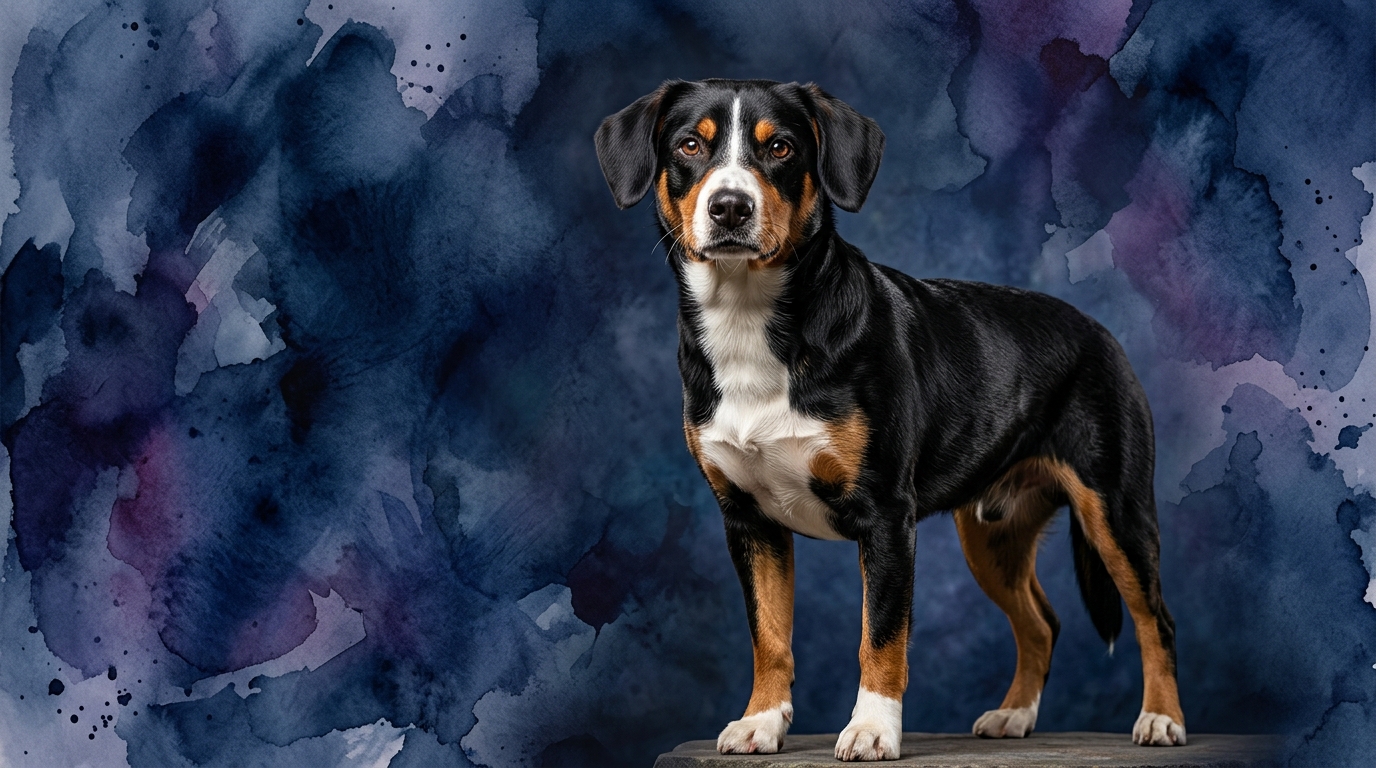
Side-by-Side IQ Profile: Boxer vs. Entlebucher Mountain Dog
The Cosmic Pet Pet IQ Lab offers a detailed lens into the cognitive makeup of our canine companions, assessing five key dimensions of intelligence. Let’s unravel the profiles for the Boxer and the Entlebucher Mountain Dog.
**Boxer (Working Group, Coren Rank #48):**
**Problem Solving (3/5):** Boxers demonstrate a moderate capacity to navigate novel situations or overcome obstacles to achieve a goal. Their approach is often characterized by a thoughtful engagement with their environment, rather than immediate brute force or purely trial-and-error.
**Training Speed (3/5):** Learning new commands and routines comes at a steady, consistent pace for the Boxer. They absorb information reliably, requiring clear, positive reinforcement and repetition to solidify new behaviors and concepts.
**Social Intelligence (5/5):** This is a standout trait for the Boxer. They exhibit exceptional aptitude for understanding human emotions, intentions, and social cues, often forming deep, empathetic bonds. Their awareness extends to group dynamics, making them highly attuned family members who often anticipate needs.
**Instinctive Drive (4/5):** Boxers possess a strong innate drive, often manifesting as a desire to play, protect, or engage in vigorous physical activity. This robust drive fuels their enthusiasm and can be channeled effectively into various dog sports or collaborative tasks.
**Memory (3/5):** Their ability to recall learned commands, routines, and past experiences is moderate. They retain information reliably over time, though consistent reinforcement helps keep older lessons sharp and accessible.
**Entlebucher Mountain Dog (Herding Group, Not Coren-Ranked):**
**Problem Solving (3/5):** Entlebuchers share a moderate problem-solving capacity, often employing logical sequences to address challenges. Their approach can be methodical, especially when it involves manipulating objects or navigating complex spaces with purpose.
**Training Speed (3/5):** Similar to the Boxer, Entlebuchers learn at a consistent rate. They benefit from structured training sessions and clear expectations, absorbing new commands and tasks with a steady, deliberate progression.
**Social Intelligence (3/5):** Entlebuchers display a moderate level of social perceptiveness. They are attentive to their primary caregivers and can gauge emotional states, but they tend to be more reserved with strangers and less outwardly effusive in their social expressions compared to some other breeds.
**Instinctive Drive (3/5):** Their innate drives are moderate, primarily rooted in their herding heritage. This can manifest as a desire to gather, control movement, or maintain order within their perceived 'flock,' which often includes their human family or other pets.
**Memory (3/5):** Entlebuchers possess a moderate memory, capable of retaining a good repertoire of commands and remembering significant past events or learned patterns. Regular practice reinforces their recall, particularly for tasks they deem important.
Where the Boxer Wins Cognitively
The Boxer's cognitive profile showcases distinct strengths, particularly in the realm of social interaction. With a top-tier Social Intelligence score of 5/5, compared to the Entlebucher's 3/5, Boxers demonstrate an unparalleled ability to interpret human cues, emotions, and intentions. This isn't just about friendliness; it's a deep cognitive empathy, allowing them to anticipate needs, offer comfort, or adjust their behavior based on subtle shifts in human mood or body language. This superior social processing makes them exceptionally intuitive companions, often seeming to 'understand' their human counterparts on a profound level, fostering exceptionally strong human-animal bonds. Furthermore, their Instinctive Drive, rated 4/5 against the Entlebucher's 3/5, manifests as a robust enthusiasm for engagement and activity. While both breeds possess innate drives, the Boxer's often translates into a broader, more generalized zest for life, play, and interaction, making them highly motivated participants in activities that involve their human family. This strong drive, coupled with their social acumen, means Boxers are often more readily engaged in collaborative tasks and games, driven by both innate urge and a profound desire to please and connect, making them cognitively geared towards partnership.
Where the Entlebucher Mountain Dog Wins Cognitively
While the Entlebucher Mountain Dog doesn't numerically surpass the Boxer in any of The Cosmic Pet Pet IQ Lab's five dimensions, their cognitive strengths lie in the nuanced application of their abilities, particularly concerning their herding heritage. Both breeds score 3/5 in Problem Solving, Training Speed, and Memory, suggesting a similar foundational capacity. However, the Entlebucher's moderate Instinctive Drive (3/5), while lower than the Boxer's, is acutely focused on the precise, strategic thinking required for herding. This translates into a cognitive advantage in tasks demanding controlled movement, spatial awareness, and the ability to anticipate and manage the actions of others within a defined space. Their problem-solving, even at a 3/5, is often applied with a methodical precision, geared towards achieving a specific outcome related to control or organization rather than broad exploration. Their moderate Social Intelligence (3/5) means they are highly attentive to their immediate family unit, often forming very strong, focused bonds. This focused loyalty can translate into an intense dedication to learning and executing tasks for their trusted handler, making their training, while not faster, potentially more precise and serious in its application. For owners seeking a dog with a specific, purposeful cognitive approach, especially one valuing order and controlled action, the Entlebucher's profile offers a distinct advantage.
Which is Easier to Train and Why
Evaluating ease of training requires looking beyond just 'Training Speed.' Both Boxers and Entlebuchers share a 3/5 rating in this dimension, indicating they learn at a comparable, steady pace. However, the Boxer's superior Social Intelligence (5/5) significantly influences the training experience. Boxers are inherently more people-oriented and eager to please, making them highly responsive to praise, affection, and positive reinforcement. Their keen ability to read human cues means they often pick up on subtle signals and are intrinsically motivated by the desire to engage and connect with their handler, turning training into a collaborative game. This profound social drive can make the training process feel more fluid and rewarding, as the Boxer actively seeks to understand and comply. In contrast, the Entlebucher's Social Intelligence of 3/5 suggests a more independent and reserved nature. While they are loyal and dedicated to their family, their motivation during training is often less about broad social interaction and more about the task itself or the bond with their primary handler. Their herding instincts, even at a 3/5, can sometimes lead to a strong independent streak or a desire to 'manage' situations on their own terms, requiring a trainer to be exceptionally clear, consistent, and patient. While both breeds require positive, reward-based methods, the Boxer's inherent social eagerness often makes them appear more compliant and 'easier' to work with in a general training context, whereas the Entlebucher might demand a more focused, task-oriented approach to harness their dedication.
Which Suits Active Owners vs. Relaxed Owners
When considering an owner's lifestyle, both the Boxer and the Entlebucher Mountain Dog lean towards those who embrace an active routine, though with different nuances. The Boxer, with its 4/5 Instinctive Drive, thrives on vigorous physical activity and consistent mental engagement. Their energy is often exuberant and playful, making them excellent companions for running, hiking, dog sports like agility, or even just extended sessions of fetch in the yard. Their high Social Intelligence also means they deeply crave interactive activities that involve their human family, making them ideal for owners who want a dog to be an integral part of their active hobbies. A relaxed owner might find a Boxer's boundless energy and need for interaction overwhelming, potentially leading to boredom-induced behaviors such as excessive chewing or barking. The Entlebucher Mountain Dog, while also possessing a moderate Instinctive Drive (3/5), channels its energy with a more purposeful, focused intensity derived from its herding background. They require regular exercise that engages both their body and their mind, such as long walks, structured training, or activities that simulate herding tasks. While they may not have the same boisterous playfulness as a Boxer, their need for mental stimulation and a 'job' is pronounced. An owner who enjoys structured outdoor activities, wants a dedicated partner for hiking or competitive obedience, and can provide consistent mental challenges will find the Entlebucher a rewarding companion. Relaxed owners, or those unable to provide consistent mental and physical outlets, might find the Entlebucher's focused energy and need for purpose challenging, potentially leading to anxiety or unwanted herding behaviors like nipping at heels.
The Verdict
Choose a Boxer if you seek a deeply empathetic, highly social, and exuberantly playful companion who thrives on extensive human interaction and vigorous, collaborative activities.
Opt for an Entlebucher Mountain Dog if you appreciate a dedicated, focused, and purposeful companion who excels in structured activities and requires an owner committed to consistent mental and physical engagement rooted in their intelligent herding instincts.
🧠 Find Your Pet's IQ Score
Our Pet IQ Lab assessment covers 25+ tests across 5 cognitive dimensions — personalized to your breed.
Take the Full IQ Test →Frequently Asked Questions
Do Boxers and Entlebuchers get along well with children?
Boxers, with their high Social Intelligence, are often very patient and playful with children, forming strong bonds within the family. Entlebuchers, while loyal to their family, may be more reserved and could display herding behaviors towards children if not properly trained and socialized from a young age, requiring careful supervision.
What kind of mental stimulation do these breeds need?
Both breeds benefit from consistent mental challenges. Boxers thrive on interactive games, puzzle toys, and learning new tricks that engage their social drive and desire for connection. Entlebuchers require tasks that tap into their problem-solving and instinctive drives, such as obedience training, scent work, or agility, to satisfy their need for purpose and structure.
Are either of these breeds suitable for first-time dog owners?
While both breeds are capable and trainable, their energy levels and specific cognitive needs might be a challenge for novice owners. Boxers' exuberance and need for social engagement require consistent guidance, and Entlebuchers' focused drive and potential for independence demand a confident, experienced handler who understands their working dog mentality.