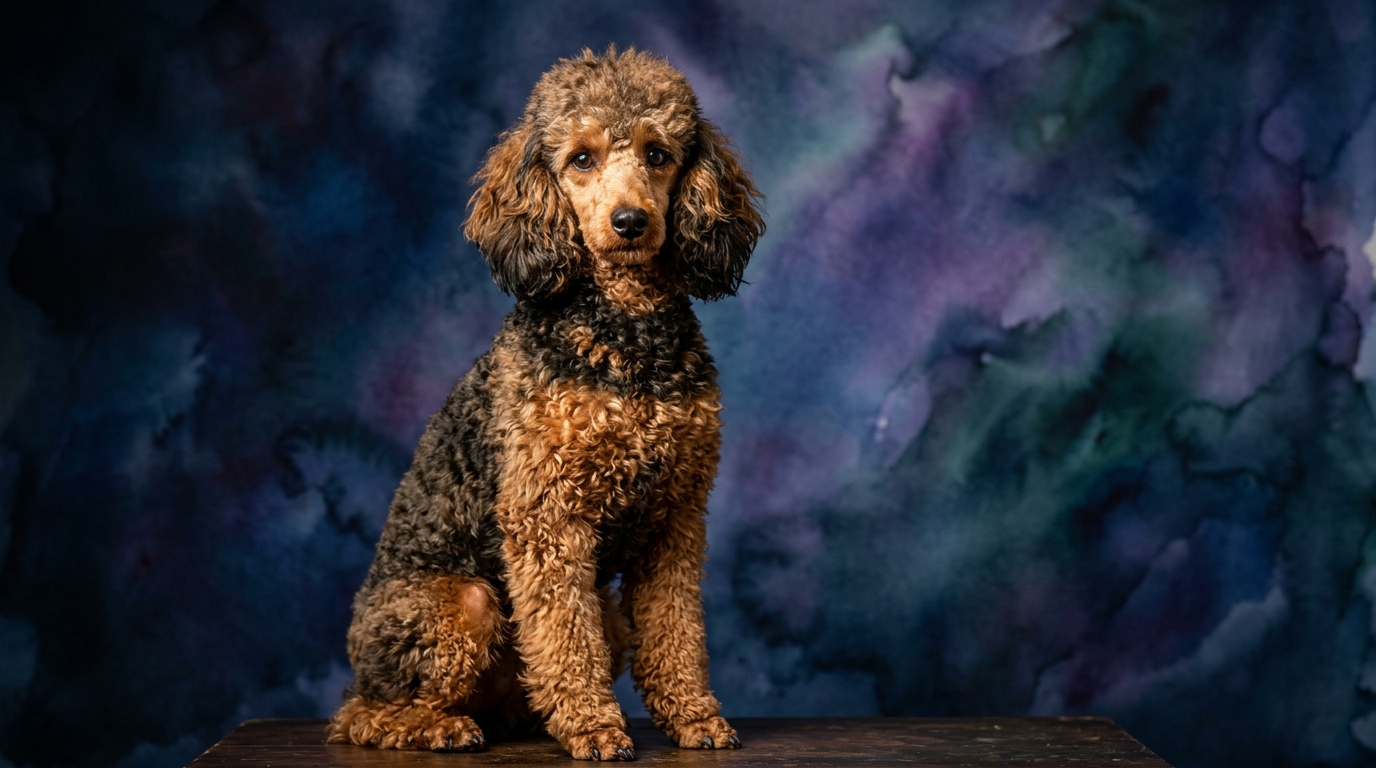
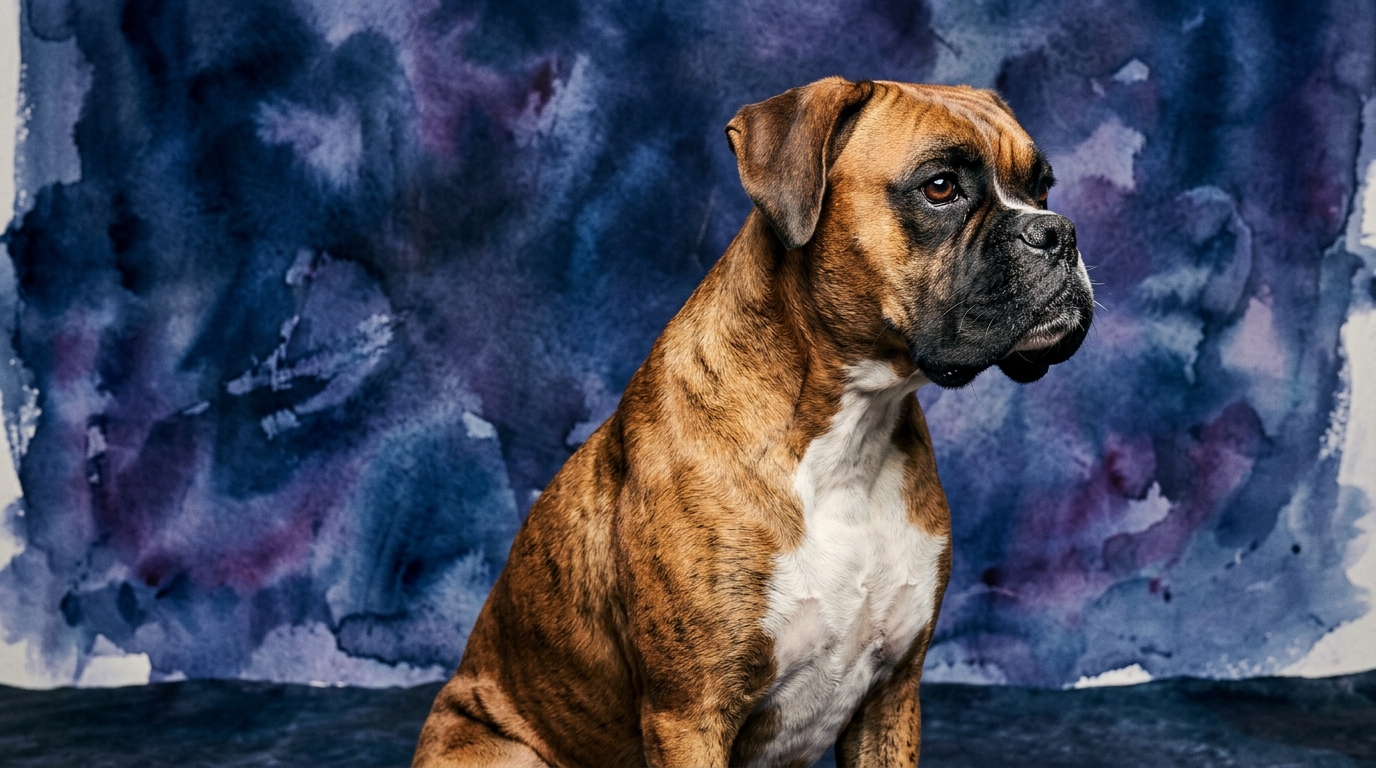
Side-by-Side IQ Profile: Poodle (Standard) vs. Boxer
The Cosmic Pet Pet IQ Lab assesses canine intelligence across five key dimensions, offering a nuanced look beyond simple obedience scores. For the Poodle (Standard), ranked #2 on the Coren scale, their profile paints a picture of exceptional cognitive prowess. They achieve a 5/5 in Problem Solving, indicating an outstanding capacity to analyze and navigate new challenges independently, often devising novel solutions. Their Training Speed is also a perfect 5/5, meaning they grasp new commands and routines with remarkable swiftness, often requiring minimal repetition. Social Intelligence stands at 5/5, reflecting a deep attunement to human emotions, intricate social cues, and complex group dynamics, making them highly perceptive companions. An Instinctive Drive of 4/5 points to a robust natural inclination for tasks, perhaps stemming from their origins as water retrievers, which can be channeled into various activities like agility or scent work. Finally, their Memory is rated 5/5, signifying an exceptional ability to recall learned behaviors, specific commands, and past experiences over extended periods.
In contrast, the Boxer, ranked #48 on the Coren scale, presents a different yet equally compelling cognitive profile. Their Problem Solving score is 3/5, suggesting a moderate ability to tackle new, complex issues, often preferring established routines over independent strategizing when faced with novelty. Training Speed is also 3/5, indicating a steady but not exceptionally rapid learning pace, requiring more consistent repetition and patience from trainers to solidify new behaviors. Notably, their Social Intelligence mirrors the Poodle's at 5/5, highlighting a profound connection to human emotions and social structures, despite their different approach to problem-solving. An Instinctive Drive of 4/5 reflects a strong natural inclination for guarding, vigorous play, and physical activity, characteristic of their working breed heritage. Their Memory is rated 3/5, signifying a functional recall sufficient for daily routines and learned commands, though perhaps with less capacity for long-term retention of intricate sequences or less frequently practiced skills compared to the Poodle.
Where the Poodle (Standard) Wins Cognitively
The Standard Poodle's cognitive strengths are particularly evident in their capacity for abstract thought and rapid learning. Their 5/5 Problem Solving score means they excel at tasks requiring conceptual understanding, such as differentiating between objects based on abstract properties (e.g., 'find the biggest toy' regardless of color or type) or solving multi-step puzzles that demand sequential reasoning. This analytical aptitude allows them to quickly adapt to novel situations, like navigating a new agility course without prior walkthroughs or understanding complex rules in a game. They don't just memorize; they process and generalize.
Furthermore, the Poodle's perfect 5/5 in Training Speed and Memory means they not only pick up new commands with impressive efficiency but also retain them for extended periods, even with infrequent practice. This makes them exceptional candidates for advanced obedience, competitive canine sports, or service roles where a vast repertoire of precise behaviors is required. Their ability to connect concepts and recall intricate sequences means they can build upon learned skills rapidly, creating a cumulative learning effect that allows for sophisticated behavioral chains and a deep understanding of human communication.
Where the Boxer Wins Cognitively
While the Boxer's problem-solving and training speed might be more moderate, their cognitive victories lie in their unwavering social attunement and resilient application of learned behaviors within their environment. Their 5/5 Social Intelligence is a standout, enabling them to read human intentions, moods, and subtle cues with remarkable accuracy. This makes them profoundly empathetic companions who often anticipate their owner's needs or reactions, forming exceptionally strong, intuitive bonds. They excel not necessarily at figuring out a novel puzzle, but at understanding the emotional landscape of their human family and responding appropriately.
The Boxer's 4/5 Instinctive Drive, combined with their social intelligence, gives them an edge in roles requiring consistent, focused engagement for protective or physical tasks. They might not invent a new way to open a gate, but once taught, they will perform their duty with a steadfastness born from their drive and loyalty. Their cognitive strength here lies in their commitment to a task when it aligns with their social bond and natural inclinations, demonstrating a robust, reliable application of learned behaviors in real-world scenarios, particularly those involving their human companions or perceived threats.
Which is Easier to Train and Why
Based on their IQ profiles, the Standard Poodle is unequivocally easier to train compared to the Boxer. The Poodle's 5/5 in both Problem Solving and Training Speed means they grasp new concepts and commands almost immediately, often requiring only a few repetitions before demonstrating proficiency. Their exceptional Memory (5/5) ensures that once a behavior is learned, it is retained long-term, reducing the need for constant refreshers. For instance, a Poodle might learn a complex multi-step retrieve on the first few attempts and recall it weeks later, whereas a Boxer might require more structured, consistent practice over a longer period.
The Boxer's 3/5 Training Speed indicates a more deliberate learning pace. While certainly capable of mastering commands, they generally require more patience, repetition, and a highly consistent training approach. Their moderate Problem Solving score (3/5) means they may rely more on rote memorization and established patterns rather than independently inferring solutions, which can make introducing novel commands or modifying existing behaviors a slower process. While their 4/5 Instinctive Drive can be a powerful motivator for work, it can also lead to distractions if not properly channeled, requiring a trainer to maintain engagement more actively than with a Poodle who often finds the learning process itself intrinsically rewarding.
Which Suits Active Owners vs. Relaxed Owners
Both the Standard Poodle and the Boxer have an Instinctive Drive score of 4/5, indicating they are not breeds suited for entirely sedentary lifestyles. However, the *type* of activity they thrive on, and how their cognitive profiles influence this, differs significantly. The Poodle, with its high Problem Solving and Memory, excels with activities that combine physical exertion with mental challenges. Owners who enjoy competitive obedience, agility, trick training, scent work, or even complex puzzle toys will find the Poodle an eager and capable participant. They require significant mental stimulation to prevent boredom, which can manifest as undesirable behaviors. An active owner for a Poodle is one who is prepared to engage their dog's brain as much as their body.
The Boxer's 4/5 Instinctive Drive is typically expressed through robust physical play, vigorous exercise, and consistent routines that channel their energy. They are well-suited for active owners who enjoy long walks, runs, hikes, or structured play sessions like fetch and tug. While they benefit from mental engagement, their problem-solving preference leans towards applying learned behaviors in physical contexts rather than abstract conceptual tasks. A 'relaxed owner' might struggle with either breed if they neglect their exercise needs, but a Boxer's physical demands are often more overtly expressed and require consistent outlets. Owners who appreciate a devoted, physically capable companion for outdoor adventures, even if the training is more straightforward, would find a Boxer a fulfilling match.
The Verdict
Choose a Standard Poodle if you seek a highly trainable, analytically minded companion eager for complex mental challenges and rapid skill acquisition.
Opt for a Boxer if you desire a profoundly social, loyal, and physically robust companion who thrives on consistent activity and dedicated companionship, even with a more deliberate learning pace.
🧠 Find Your Pet's IQ Score
Our Pet IQ Lab assessment covers 25+ tests across 5 cognitive dimensions — personalized to your breed.
Take the Full IQ Test →Frequently Asked Questions
Are Standard Poodles good for first-time dog owners?
Yes, their high trainability and eagerness to please can make them excellent companions for first-time owners willing to invest in consistent mental and physical stimulation. Their ability to quickly grasp commands simplifies the learning curve for both dog and owner, provided their cognitive needs are met.
Do Boxers require a lot of exercise?
Absolutely. With a 4/5 Instinctive Drive, Boxers need significant daily physical activity to stay happy and healthy. This typically includes vigorous play, long walks, or runs to channel their energy and prevent boredom or destructive behaviors.
Which breed is better with children?
Both breeds, with their 5/5 Social Intelligence, can be wonderful with children when properly socialized and trained. Boxers are often noted for their patient and protective nature, while Poodles are generally gentle and perceptive. Supervision is always crucial, but either can integrate well into a family environment.