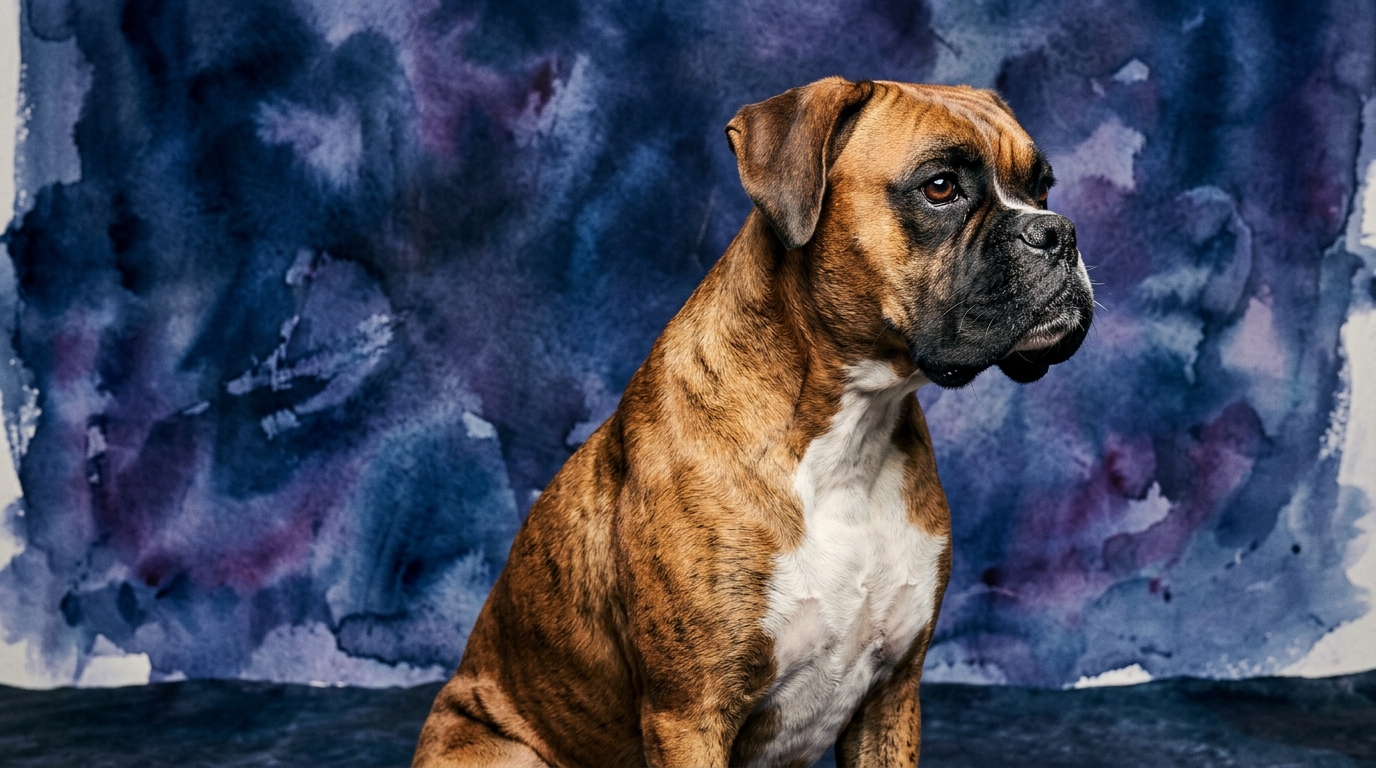
Side-by-Side Cognitive Profile: Boxer
**Problem Solving (3/5):** While not renowned for abstract puzzle-solving, Boxers demonstrate practical intelligence in navigating their environment and responding to immediate cues. Their approach to challenges is often direct, relying on physical engagement rather than complex strategizing.
**Training Speed (3/5):** Boxers grasp new commands with moderate speed, particularly when training is framed as an engaging, positive interaction. Their enthusiastic nature, however, can sometimes lead to temporary distractions, requiring consistent, patient reinforcement to solidify learning.
**Social Intelligence (5/5):** This breed possesses an extraordinary capacity to interpret human emotions, intentions, and social dynamics, making them deeply empathetic companions. Their attunement to family well-being allows for profound, intuitive communication and an almost uncanny ability to respond to their owners' moods.
**Instinctive Drive (4/5):** Boxers exhibit a notable inclination for guarding and protection, coupled with a vigorous play drive. This manifests as a vigilant awareness of their surroundings and a ready eagerness for physical engagement, contributing to their role as alert family protectors.
**Memory (3/5):** Boxers retain learned behaviors and significant experiences adequately. While they may not possess photographic recall for every detail, consistent practice ensures that commands and routines remain firmly embedded in their cognitive repertoire.
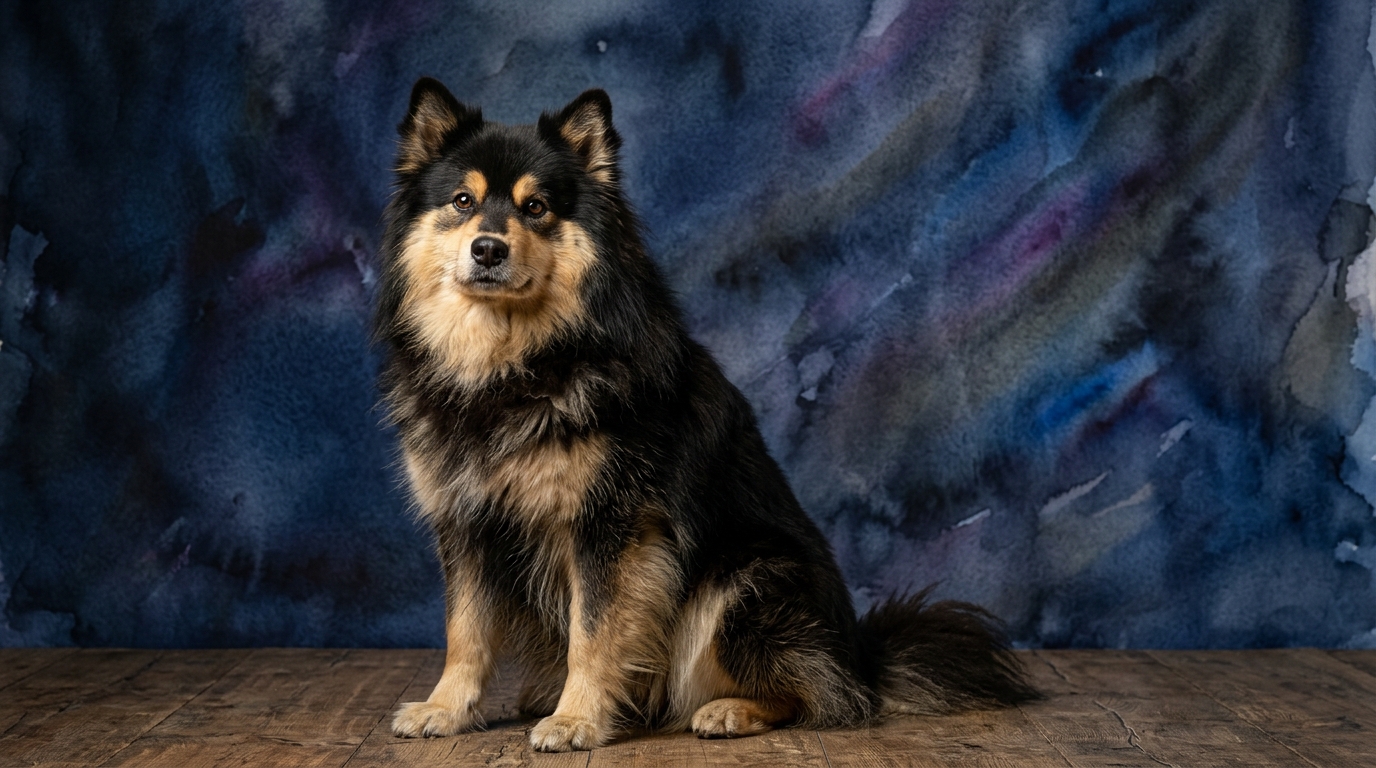
Side-by-Side Cognitive Profile: Finnish Lapphund
**Problem Solving (3/5):** Finnish Lapphunds display practical intelligence, particularly in tasks related to their heritage of managing livestock in challenging environments. They excel at figuring out situational solutions, rather than purely abstract cognitive challenges, demonstrating a resilient adaptability.
**Training Speed (3/5):** Lapphunds learn at a steady pace, responding well to patient, consistent training methods that respect their independent spirit. While not always seeking to immediately comply, they absorb information effectively when motivated by fairness and clear communication from their handler.
**Social Intelligence (3/5):** Lapphunds form strong, loyal bonds with their immediate family, understanding human intent and cues within that trusted circle. However, they tend to be more reserved with strangers, demonstrating a discerning nature rather than an overt eagerness to engage broadly.
**Instinctive Drive (3/5):** This breed possesses a moderate herding instinct, manifesting as a subtle desire to keep their 'flock' (family) together and safe. This drive is characterized by watchful observation and a gentle influence, rather than intense pursuit or guarding.
**Memory (3/5):** Finnish Lapphunds exhibit a solid capacity for recalling routines, commands, and past experiences, especially those deeply integrated into their daily life and relationships. Their memory serves their independent nature well, allowing them to navigate familiar contexts with confidence.
Where the Boxer Wins Cognitively
The Boxer's standout cognitive advantage lies in its extraordinary Social Intelligence (5/5 compared to the Lapphund's 3/5). This breed possesses an almost unparalleled ability to interpret human emotions, intentions, and subtle social cues, fostering an exceptionally deep and empathetic bond with their family. They don't just understand commands; they seem to grasp the underlying human sentiment, making them incredibly intuitive companions. This translates into a dog that is profoundly attuned to the family's emotional landscape, often responding with comforting gestures or playful antics precisely when needed. Furthermore, the Boxer's higher Instinctive Drive (4/5 versus 3/5) gives them an edge in acute environmental awareness and protective vigilance. This drive isn't merely about physical guarding but encompasses a heightened sensitivity to their surroundings and a natural inclination to act as a watchful guardian for their loved ones, making them keenly aware of any perceived changes or threats within their domain.
Where the Finnish Lapphund Wins Cognitively
While the scores for Problem Solving and Instinctive Drive are numerically similar, the Finnish Lapphund's cognitive strengths manifest differently, rooted in their independent herding heritage. Their Problem Solving (3/5) shines in practical, environmental contexts, particularly in situations requiring self-reliance and adaptability. A Lapphund might not excel at abstract puzzles designed by humans, but they are adept at navigating complex terrains, finding optimal routes, or making independent decisions to manage a 'flock' – skills that require a specific type of situational awareness and resilience. Their Instinctive Drive (3/5), though moderate, is precisely geared towards cohesive group management. This isn't about overt protection but a subtle, persistent focus on keeping their family unit together, demonstrating a cognitive ability to monitor and influence group dynamics without direct command. This independence, a cognitive trait, allows them to be less reliant on constant human direction in certain scenarios, showcasing a robust self-sufficiency.
Which is Easier to Train and Why?
Both breeds share a Training Speed score of 3/5, yet their training experiences can diverge significantly due to their inherent temperaments. The Boxer, with its high Social Intelligence, often appears eager to please and thrives on positive reinforcement, making initial learning engaging. However, their boundless energy and playful exuberance can sometimes translate into distractibility, requiring consistent, firm, yet gentle guidance to maintain focus. They learn quickly but need boundaries to channel their enthusiasm effectively. The Finnish Lapphund, by contrast, also learns steadily but brings a distinct independent streak, a hallmark of many herding breeds. While they are intelligent and capable of understanding complex tasks, they might require more intrinsic motivation and a clear 'why' for compliance. They respond best to patient, fair, and consistent training that respects their self-reliant nature, rather than purely obedience-driven approaches. Therefore, while a Boxer might initially seem more 'responsive' due to their social drive, a Lapphund often provides more reliable, thoughtful compliance once they understand and trust the process, though it may take more nuanced effort to get there.
Suitability for Active vs. Relaxed Owners
When considering ownership, the Boxer clearly aligns with active individuals or families. Their 4/5 Instinctive Drive and generally vigorous temperament necessitate significant daily physical activity and consistent mental engagement. They thrive on structured exercise, interactive play, and being an integral, energetic participant in family life, requiring an owner who can consistently match their zest for activity. A less active lifestyle would likely leave a Boxer under-stimulated, potentially leading to undesirable behaviors. The Finnish Lapphund, while certainly appreciating regular activity due to its herding background, offers more adaptability for owners with varying energy levels. Their 3/5 Instinctive Drive suggests a need for moderate exercise and mental stimulation, but they are not as perpetually 'on' as the Boxer. They enjoy outdoor adventures and engaging tasks but are equally content with quiet companionship indoors, making them suitable for moderately active owners who can provide consistent walks and mental enrichment without the high-octane demands of a true working powerhouse.
The Verdict
For owners seeking an exceptionally socially intelligent, deeply bonded companion who thrives on active engagement and offers a strong sense of protective vigilance, the Boxer is an excellent choice.
Choose the Finnish Lapphund for an owner who appreciates a resilient, somewhat independent companion with practical intelligence and a steady temperament, ideal for moderate activity and a life that values quiet companionship alongside outdoor adventures.
🧠 Find Your Pet's IQ Score
Our Pet IQ Lab assessment covers 25+ tests across 5 cognitive dimensions — personalized to your breed.
Take the Full IQ Test →Frequently Asked Questions
Are Boxers prone to separation anxiety due to their high social intelligence?
Boxers' deep social bonds mean they thrive on companionship and can develop separation distress if left alone for extended periods without proper training. Their high social intelligence makes them very sensitive to their family's presence and absence, requiring owners to foster independence early.
How does a Finnish Lapphund's herding drive manifest in a non-herding home?
In a family setting, a Finnish Lapphund's herding drive often translates into a desire to keep their 'flock' (family members) together, subtly nudging or circling. This gentle instinct can make them watchful and attentive to where everyone is, rather than exhibiting intense chasing behaviors.
Do Boxers and Finnish Lapphunds require similar amounts of mental stimulation?
Both breeds benefit from mental stimulation, but the type differs; Boxers thrive on interactive play and obedience training due to their social drive, while Lapphunds appreciate problem-solving tasks and activities that engage their independent, practical herding intelligence. Tailoring activities to their specific cognitive strengths is key for both.