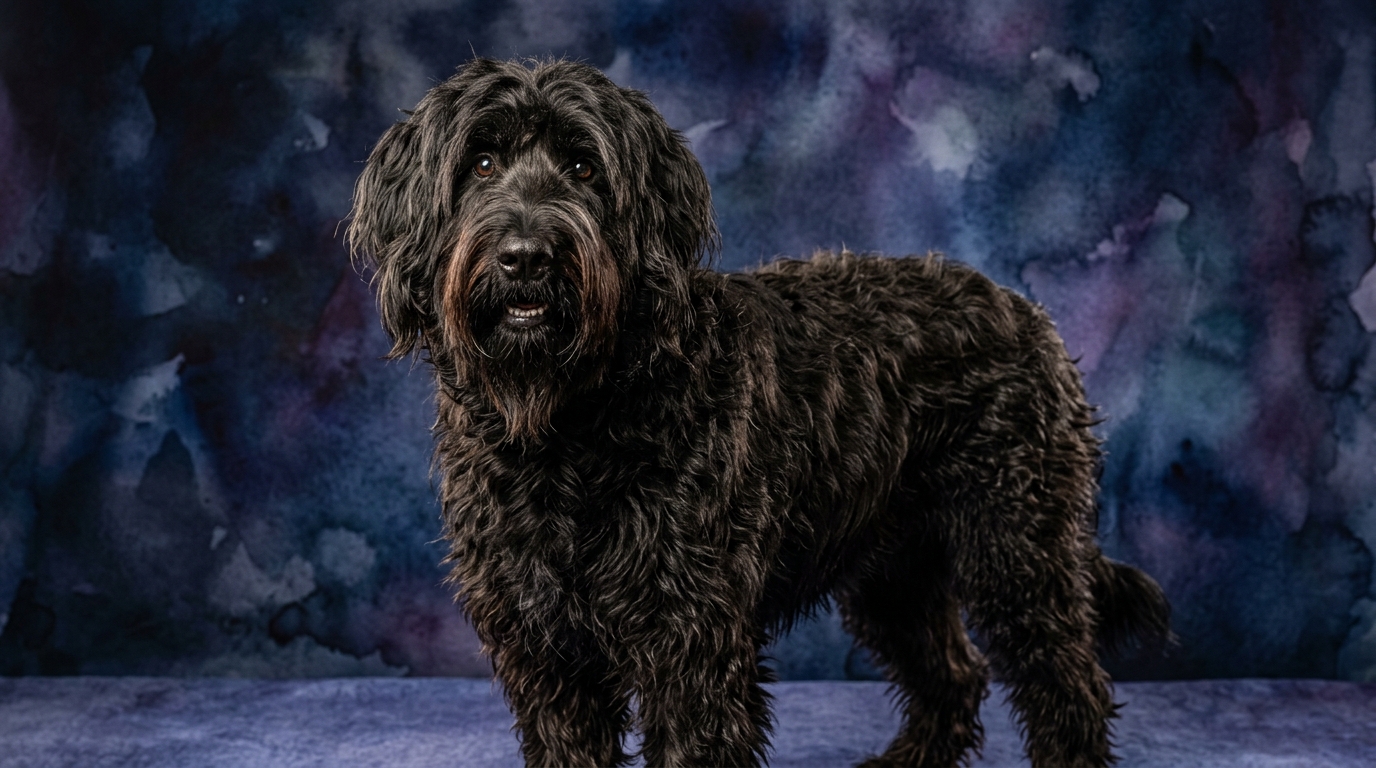
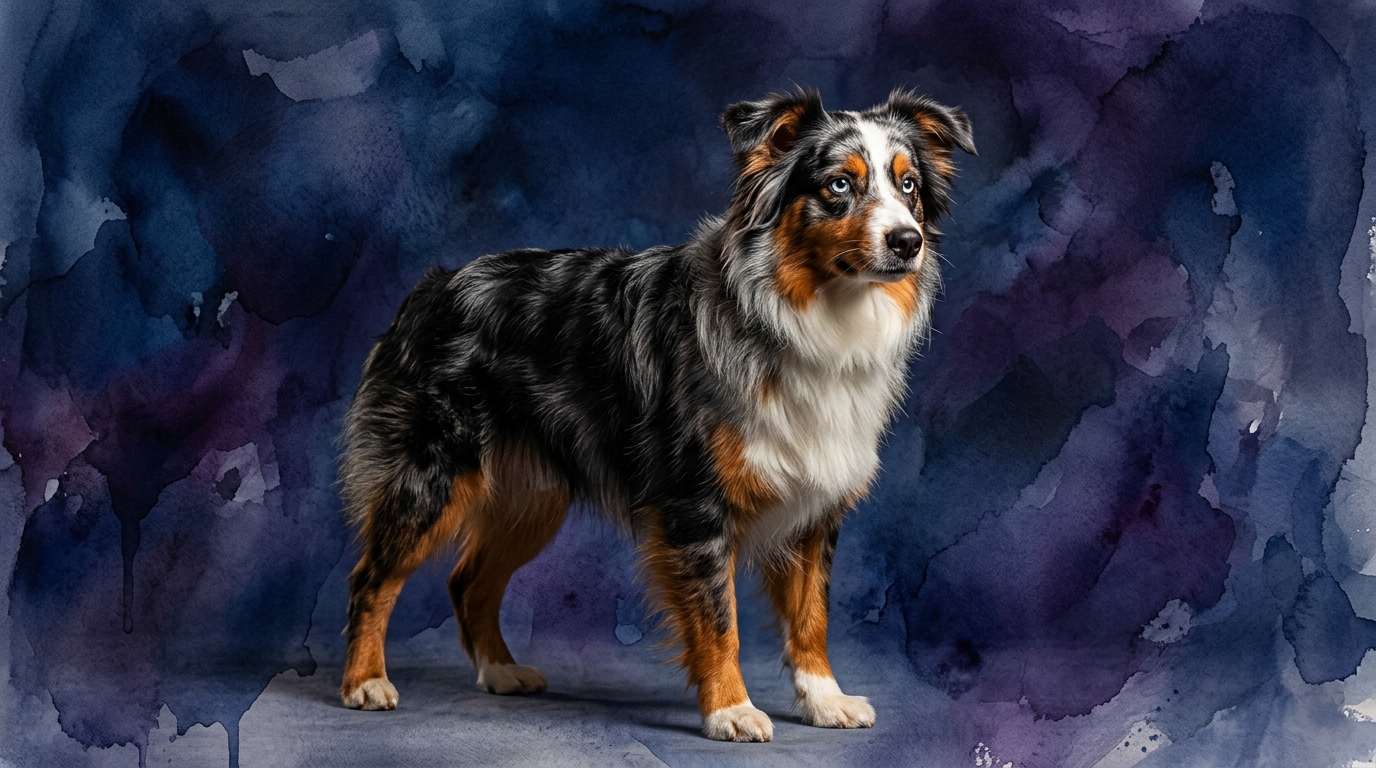
Side-by-Side Cognitive Profile
The Briard, a breed historically tasked with guarding and moving flocks, exhibits a cognitive profile reflecting its independent and strategic heritage. With a Coren rank of #30, its intellectual prowess is well-established. Its Problem Solving (4/5) ability is particularly strong; these dogs don't just react, they analyze situations, often devising novel solutions to obstacles or challenges. This translates into a dog that can figure out how to open gates, retrieve out-of-reach items, or navigate complex environments without constant human intervention. Their Training Speed (4/5) is equally impressive, meaning they grasp new commands and concepts with remarkable swiftness, often requiring fewer repetitions than many other breeds. This makes advanced obedience or specialized tasks highly achievable. Their Social Intelligence (3/5), while competent, tends towards a more discerning nature; they form deep, protective bonds with their core family but often maintain a watchful, reserved demeanor with strangers, processing social cues within their established hierarchy. The Instinctive Drive (3/5) reflects a moderate but persistent herding impulse, which, if not channeled, might lead to attempts at 'corralling' family members or other pets. Finally, their Memory (4/5) is excellent, allowing them to recall complex sequences of commands, past experiences, and specific individuals with impressive longevity, which underpins their rapid training and problem-solving success.
The Miniature American Shepherd, though not formally Coren-ranked, presents a balanced and highly adaptable cognitive profile, making it a versatile companion. Its Problem Solving (3/5) score indicates a solid capacity to understand and resolve standard challenges, learning effectively from past experiences and applying learned solutions to similar situations. While they may not independently invent novel strategies as readily as some breeds, they are certainly capable and resourceful within familiar contexts. Their Training Speed (3/5) is consistent and reliable; they absorb new commands steadily with clear instruction and positive reinforcement, making them a rewarding breed to train for a variety of activities. The Social Intelligence (3/5) of the MAS is often characterized by a friendly, outgoing disposition; they are attuned to human emotions and generally eager to interact positively with both their family and new acquaintances, making them socially adaptable. Their Instinctive Drive (3/5) maintains a moderate herding impulse, typically expressed as a desire to keep their human 'flock' together, which is manageable with appropriate outlets like play or structured activities. Lastly, their Memory (3/5) ensures good retention of commands, routines, and social interactions, contributing to their overall consistency and responsiveness in daily life. This balanced cognitive makeup fosters a practical and highly engaged partnership.
Where Briard Wins Cognitively
The Briard truly distinguishes itself in its capacity for independent thought and advanced cognitive processing, earning a 4/5 in both Problem Solving and Memory. Unlike breeds that excel primarily through rote memorization or following cues, the Briard often seems to 'think' its way through challenges, evaluating options and adjusting strategies without constant human direction. This makes them exceptional at tasks requiring nuanced decision-making, such as complex obedience routines with multiple steps or navigating intricate agility courses where a handler's precise instruction might be delayed. Their superior memory means they retain these complex solutions and training sequences over extended periods, making refreshers quicker and less intensive. For an owner seeking a canine partner capable of true collaboration and independent contribution to tasks, the Briard's capacity to process, recall, and apply intricate information gives it a clear cognitive edge.
Where Miniature American Shepherd Excels
While the Briard often shines in independent problem-solving, the Miniature American Shepherd’s cognitive profile, marked by consistent 3/5 scores across all dimensions, offers a different kind of advantage: reliable consistency and balanced adaptability. The MAS doesn't necessarily 'win' by outscoring the Briard in individual categories, but rather by exhibiting a highly functional and harmonious blend of traits that make it exceptionally predictable and steady. Their moderate problem-solving ensures they can adapt to routine changes without becoming overly flustered or prone to overthinking, making them excellent for owners who value a dog that handles daily life with calm competence. Furthermore, their balanced instinctive drive and social intelligence mean they are generally less prone to extreme behaviors stemming from unchanneled mental energy or social anxieties, allowing them to integrate smoothly into diverse family environments. This breed excels in providing a reliable, engaged, and emotionally responsive companion whose cognitive make-up fosters a consistent partnership without demanding constant, high-level intellectual engagement.
Training Experience: Ease and Expectations
When considering ease of training, the Briard's 4/5 Training Speed combined with its formidable Memory (4/5) gives it a distinct advantage in the initial acquisition of commands and the long-term retention of complex behaviors. A Briard typically picks up new cues with fewer repetitions and generalizes concepts more quickly, meaning an owner can progress through training stages at a faster clip. For example, teaching a Briard an intricate chain of commands for a scent work exercise might involve fewer individual sessions to solidify each step, and once learned, the sequence is likely to be recalled accurately weeks later. However, the Briard’s higher Problem Solving score can also mean it might occasionally choose to 'interpret' commands or find alternative solutions if it perceives a more efficient path, requiring an owner who is consistent and clear in their expectations. In contrast, the Miniature American Shepherd, with its 3/5 Training Speed and Memory, learns reliably but often requires more consistent repetition to embed new behaviors. Its strength lies in its eagerness to please and its generally less independent approach to tasks, making it highly responsive to direct instruction. While it may take more sessions to master a new trick, the MAS is less likely to deviate from the learned behavior, offering a more straightforward and predictable training experience for owners who prefer a dog that follows directives consistently without much independent improvisation. Therefore, for an owner seeking rapid learning and the ability to tackle advanced concepts, the Briard might be 'easier' in terms of cognitive capacity, but for an owner prioritizing consistent adherence and a less 'thinking for itself' approach, the MAS offers a more predictable training journey.
Matching Canine Cognition to Owner Lifestyle
The cognitive profiles of these two breeds offer clear indicators for owner lifestyles. The Briard, with its robust Problem Solving (4/5) and Memory (4/5), thrives with active owners who are prepared to provide consistent mental stimulation beyond just physical exercise. These dogs need to 'work' their brains regularly, whether through advanced obedience, agility, herding trials, or complex puzzle toys. A Briard left without adequate mental engagement can become bored and potentially channel its formidable intellect into less desirable activities, such as devising ways to open doors or exploring forbidden areas. They suit owners who enjoy teaching new things, setting challenges, and engaging in collaborative problem-solving. Conversely, the Miniature American Shepherd, with its consistent 3/5 scores across the board, is well-suited for active owners who prioritize regular physical activity and consistent, but not necessarily complex, mental engagement. They enjoy learning new tricks and participating in dog sports, but their cognitive needs are generally met by a structured routine of walks, play, and basic training refreshers without requiring constant novel challenges. They are less prone to becoming destructive out of sheer intellectual boredom, making them a good fit for owners who want an engaged companion for daily adventures without the intense pressure of continuously stimulating an exceptionally strategic mind. While both are active breeds, the Briard demands a higher cognitive 'workload' from its owner, making it better for those who relish intellectual partnership, whereas the MAS offers a highly engaged and companionable presence that is satisfied with a more predictable rhythm of activity and learning.
The Verdict
Choose the Briard if you are an experienced owner eager for a deep intellectual partnership, ready to provide consistent, complex mental challenges and appreciate a dog that thinks independently.
Opt for the Miniature American Shepherd if you seek a highly engaged, reliable, and consistently responsive companion for an active lifestyle, valuing predictability and a less demanding cognitive relationship.
🧠 Find Your Pet's IQ Score
Our Pet IQ Lab assessment covers 25+ tests across 5 cognitive dimensions — personalized to your breed.
Take the Full IQ Test →Frequently Asked Questions
Does the Briard's higher problem-solving score make it more challenging to own?
The Briard's advanced problem-solving can be a double-edged sword; it makes them capable of impressive feats but also means they require consistent mental engagement and clear boundaries to prevent them from 'solving' problems in ways their owners might not appreciate.
Is the Miniature American Shepherd less adaptable due to its moderate problem-solving?
Not at all. The Miniature American Shepherd's consistent cognitive scores suggest a balanced adaptability, allowing them to adjust reliably to routine changes and new environments without the potential for overthinking or independent deviation seen in some higher problem-solvers.
How does social intelligence impact daily life for these breeds?
The Briard's selective social intelligence means it often forms deep bonds with its family but can be reserved with strangers, requiring careful socialization. The MAS's balanced social intelligence generally makes it more outgoing and adaptable in diverse social settings, fostering easier interactions with new people and pets.