
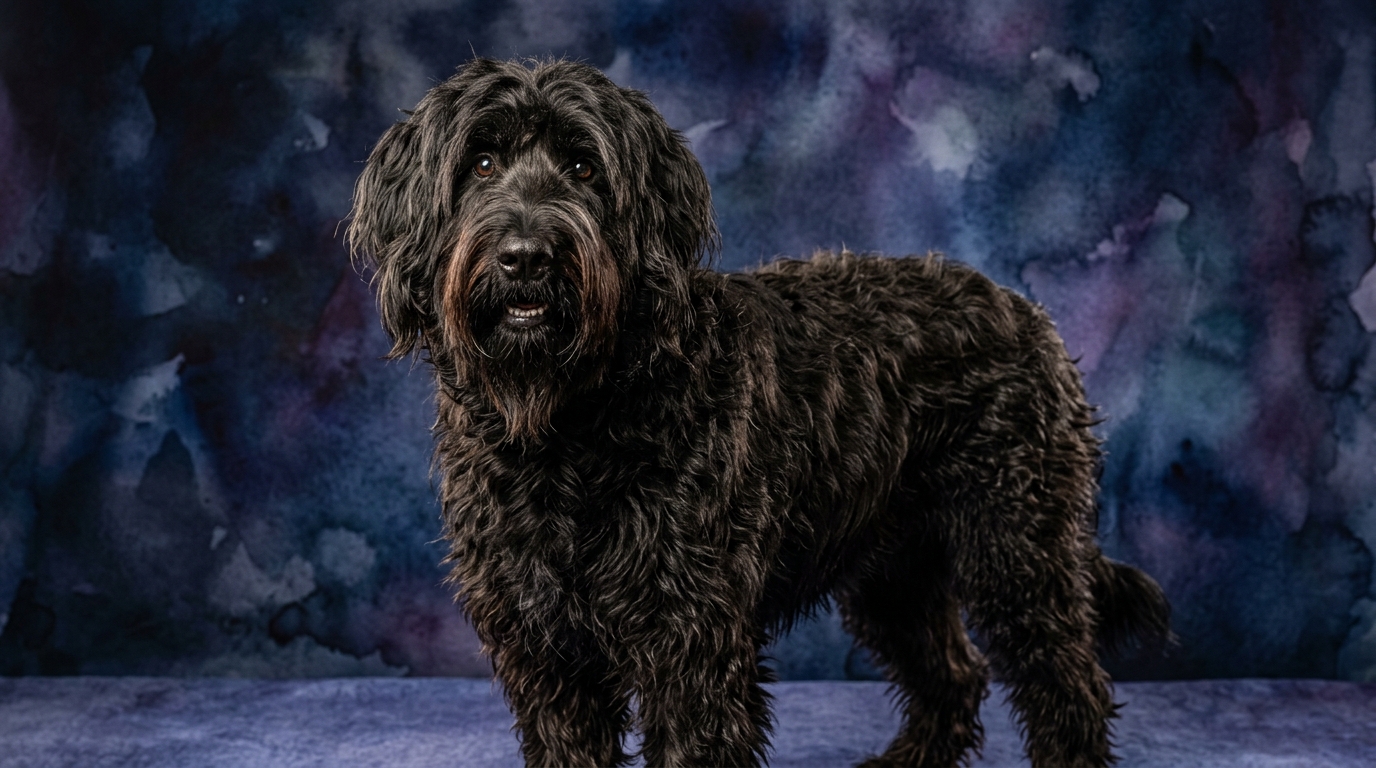
Side-by-Side IQ Profile: Poodle (Standard) vs. Briard
The Cosmic Pet Pet IQ Lab's framework offers a granular look at canine cognition, and for the Standard Poodle and Briard, the scores paint a clear picture of their predispositions. The Standard Poodle, holding Coren's rank #2, consistently scores at the highest echelon across most cognitive dimensions. Their Problem Solving is rated 5/5, indicating an exceptional capacity to navigate novel situations and figure out complex tasks independently. Training Speed also sits at a perfect 5/5, signifying rapid command acquisition and a strong desire to engage in cooperative learning. Social Intelligence, another 5/5, highlights their profound ability to interpret human cues, emotions, and intentions, fostering deep interpersonal bonds. Their Instinctive Drive is a robust 4/5, reflecting a purposeful, though adaptable, internal motivation, while Memory is a flawless 5/5, ensuring they retain learned behaviors and experiences with remarkable fidelity.
In contrast, the Briard, ranked #30 by Coren, presents a profile geared towards independent work and watchful guardianship. Their Problem Solving score of 4/5 demonstrates a strong capability for understanding and resolving challenges, albeit sometimes with a unique, self-directed approach. Training Speed, also at 4/5, means they learn efficiently, though they might require more motivational nuance than their Poodle counterparts. Social Intelligence is rated 3/5, suggesting they are discerning in their interactions, valuing trust and purpose over universal eagerness to please. Their Instinctive Drive is 3/5, rooted in their historical roles of herding and guarding, which often calls for independent decision-making rather than constant human direction. Memory stands at a solid 4/5, allowing them to recall tasks, people, and boundaries effectively, crucial for their protective duties.
Where the Standard Poodle Wins Cognitively
The Standard Poodle's cognitive strengths shine brightest in areas demanding rapid assimilation of information and nuanced social interaction. Their 5/5 Training Speed means they can master an extensive repertoire of commands and tricks with minimal repetition, making them exceptional candidates for advanced obedience, agility, and canine freestyle. This quick uptake is often coupled with an eager-to-please temperament, making training a highly rewarding, collaborative experience.
Their perfect 5/5 Social Intelligence gives them an unparalleled ability to attune to human emotions and intentions. A Standard Poodle can often anticipate an owner's needs or mood shifts, making them wonderfully empathetic companions and highly suitable for roles requiring sensitive interaction, such as therapy or service work. This deep social awareness also contributes to their adaptability in various social settings, allowing them to integrate smoothly into diverse family dynamics and public environments. Furthermore, their 5/5 Problem Solving, combined with their strong memory, allows them to excel at intricate puzzle toys, complex scent work, or even learning multi-step routines, demonstrating a profound capacity for abstract thought and strategic planning.
Where the Briard Wins Cognitively
While the Briard's scores might be slightly lower on paper, their cognitive profile represents a unique set of strengths, particularly valuable for owners seeking a more independent and protective companion. Their 4/5 Problem Solving, paired with a 3/5 Instinctive Drive rooted in herding and guarding, means they excel at tasks requiring independent judgment and initiative. A Briard might not seek constant instruction for a perceived threat, but rather assess the situation and act decisively based on their innate understanding of their role.
The Briard's 3/5 Social Intelligence, though lower than the Poodle's, is not a deficit but rather an indicator of their selective nature. They form deep, loyal bonds with their chosen family but may be more reserved or discerning with strangers. This trait, combined with their protective instincts, makes them formidable guardians who prioritize the safety of their loved ones over widespread affability. Their memory, at 4/5, ensures they retain knowledge of their territory, family members, and perceived threats, reinforcing their role as a steadfast sentinel. These dogs thrive when given a purpose that leverages their thoughtful, independent nature, rather than solely relying on rote obedience.
Which is Easier to Train and Why
When evaluating ease of training, the Standard Poodle generally offers a more straightforward experience due to their exceptional cognitive scores. Their 5/5 Training Speed means they grasp new commands almost instantaneously, often requiring fewer repetitions than many other breeds. This rapid acquisition is amplified by their 5/5 Social Intelligence, which fosters a strong desire to cooperate and please their human companions. They are highly responsive to positive reinforcement, eager to engage in interactive learning, and readily follow instructions, making them a joy for both novice and experienced trainers seeking a highly compliant and adaptable canine student.
The Briard, with a 4/5 Training Speed and 3/5 Social Intelligence, requires a different approach. While they are capable learners, their independent nature and historical role as self-reliant herders and guardians mean they are less inclined to blindly follow commands without understanding the purpose or if they perceive a better alternative. They might question directives or take a moment to process before complying, especially if the command seems illogical from their perspective. Training a Briard demands patience, consistency, and a deep understanding of canine motivation, often benefiting from methods that encourage their independent thought while clearly establishing boundaries. They are not difficult to train, but they are discerning, requiring an owner who appreciates and can channel their thoughtful, sometimes questioning, temperament.
Which Suits Active Owners vs. Relaxed Owners
For active owners who thrive on mental stimulation and collaborative activities, the Standard Poodle is an ideal match. Their perfect 5/5 in Problem Solving and Training Speed, combined with a 4/5 Instinctive Drive, means they excel in dog sports like agility, obedience, dock diving, and scent work, eagerly participating and mastering complex routines. These dogs require consistent mental engagement to prevent boredom, making them perfect for owners who enjoy teaching new tricks, engaging in puzzle games, or participating in competitive events. Their social intelligence also makes them wonderful companions for active social lives, whether hiking with friends or visiting dog-friendly venues. They are not dogs content to be couch potatoes; they need their minds challenged as much as their bodies.
The Briard, while certainly capable of activity, suits a specific type of active owner: one who appreciates a dog's independent spirit and is prepared to channel their herding and guarding instincts constructively. Their 3/5 Instinctive Drive means they are driven by purpose, but not necessarily by constant human direction, making them less suited for owners seeking a purely compliant, highly biddable companion for every activity. They thrive in environments where they can exercise their natural guarding or herding tendencies, perhaps with a job like protecting livestock, patrolling a property, or participating in herding trials. While they enjoy physical activity, a relaxed owner might find their independent decision-making and protective nature challenging without proper guidance and socialization, as they prefer to think for themselves rather than simply follow. They need an owner who can provide structured activities that respect their cognitive independence and historical purpose.
The Verdict
Choose the Standard Poodle if you desire a highly responsive, adaptable, and empathetic companion eager for collaborative learning and deep social engagement, thriving on varied mental challenges and close human interaction. They are perfect for owners who enjoy intricate training, canine sports, and a dog that is deeply attuned to their family's emotional landscape.
Choose the Briard if you seek a loyal, independent, and protective companion with a thoughtful approach to problem-solving and a discerning social nature, valuing purpose and security. They are ideal for owners who appreciate an independent thinker, are prepared to channel their natural guarding instincts, and can provide consistent, patient guidance for a dog that thrives on having a job.
🧠 Find Your Pet's IQ Score
Our Pet IQ Lab assessment covers 25+ tests across 5 cognitive dimensions — personalized to your breed.
Take the Full IQ Test →Frequently Asked Questions
Are Briards difficult to train due to their lower social intelligence score?
Briards are not inherently difficult to train, but they are discerning learners. Their 3/5 Social Intelligence means they are less intrinsically motivated by constant human approval compared to a Poodle. They require consistent, patient training methods that make sense to them, often responding best when they understand the 'why' behind a command and when their independent nature is respected and channeled positively.
Do Standard Poodles require extensive mental stimulation?
Absolutely. With 5/5 Problem Solving and 5/5 Memory, Standard Poodles thrive on mental engagement. They need regular opportunities to solve puzzles, learn new commands, or participate in dog sports to prevent boredom and channel their considerable cognitive abilities constructively. Without adequate mental outlets, they can become restless or find their own (potentially undesirable) ways to entertain themselves.
Which breed is better for a first-time dog owner?
For a first-time dog owner, the Standard Poodle is generally a more forgiving choice due to their exceptional training speed, eager-to-please nature, and high social intelligence, making them easier to guide and live with. The Briard, while loyal, requires an owner who understands and can consistently manage their independent and protective instincts, which can be a significant learning curve for someone new to dog ownership.