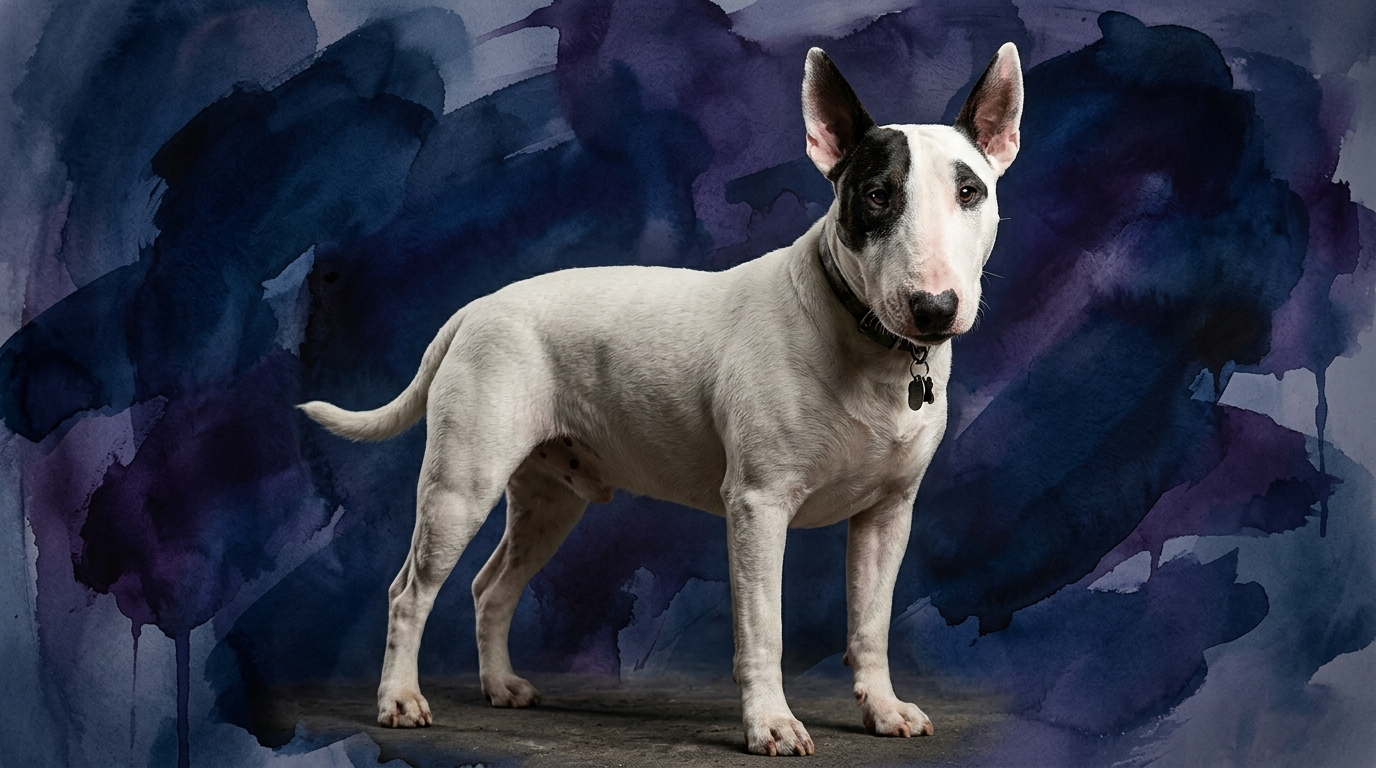

Side-by-Side IQ Profile: Bull Terrier vs. Redbone Coonhound
The Cosmic Pet Pet IQ Lab assigns both the Bull Terrier and the Redbone Coonhound identical 3/5 ratings across five key cognitive dimensions, suggesting a baseline of capable intellect. However, the application of these scores differs significantly due to their distinct breed histories and inherent predispositions.
For Problem Solving (3/5), the Bull Terrier often channels this into direct, often tenacious efforts to overcome physical obstacles or manipulate objects to achieve a goal, reflecting their terrier heritage of independent action. The Redbone Coonhound, conversely, applies its problem-solving prowess to intricate sensory puzzles, meticulously unravelling complex scent trails and navigating challenging environments, a hallmark of their hound lineage.
Regarding Training Speed (3/5), Bull Terriers learn new commands and routines moderately well, thriving with consistent, engaging methods that appeal to their strong personalities and desire for interaction. Redbone Coonhounds also demonstrate a moderate capacity for learning, but their progress can be more heavily influenced by the presence of compelling environmental distractions, particularly scents, requiring patient and persistent training strategies.
Social Intelligence (3/5) in a Bull Terrier manifests as deep bonds and an understanding of family dynamics, though their assertive nature means they engage on their own terms, often displaying a playful yet determined disposition. Redbone Coonhounds, too, form warm, affectionate connections, but their social interactions are sometimes punctuated by their intense focus on external olfactory stimuli, making them sociable but occasionally distracted companions.
Their Instinctive Drive (3/5) is where the most stark divergence lies. For the Bull Terrier, this score points to a moderate but clear prey drive, a persistent desire to chase and interact with moving targets, rooted in their historical role as vermin dispatchers. The Redbone Coonhound’s identical 3/5 score, however, represents an overwhelming and singularly focused scent drive, a relentless compulsion to track and explore the world through its nose, defining much of its cognitive activity.
Finally, Memory (3/5) in both breeds is solid. Bull Terriers reliably recall commands, routines, and the personalities within their human family, contributing to their adaptability in a structured home. Redbone Coonhounds exhibit a strong memory for scent patterns, established trails, and environmental cues, invaluable for their tracking instincts, alongside recalling familiar people and places.
Where the Bull Terrier's Cognition Shines
Despite identical scores, the Bull Terrier's cognitive strengths lean towards a more direct, often physically manifested form of intelligence. Their problem-solving (3/5), for instance, excels in scenarios requiring ingenuity to manipulate their immediate environment, such as figuring out how to open a cupboard or escape a secure yard. This isn't about following a trail, but about actively changing their surroundings to achieve a goal.
Their training speed (3/5), while moderate, benefits from their desire for engagement and their capacity to focus intently on a task when motivated, allowing them to master complex tricks or agility courses with dedicated effort. The Bull Terrier's social intelligence (3/5) allows for nuanced interaction within a family, often leading to a deep understanding of household routines and individual human moods, enabling them to anticipate needs or initiate play. Their memory (3/5) is robust for learned behaviors and human-established boundaries, making them consistent companions once trained. The Bull Terrier's distinct personality, coupled with their cognitive tenacity, makes them adept at navigating structured environments and engaging in interactive problem-solving games.
Where the Redbone Coonhound's Instinctive Intellect Excels
The Redbone Coonhound's cognitive brilliance lies predominantly in its extraordinary sensory processing and application of its instinctive drive (3/5). Their problem-solving (3/5) is a masterclass in environmental interpretation, where they can analyze and follow incredibly faint, complex scent trails across varied and challenging terrain for hours, demonstrating remarkable persistence and focus. This isn't about brute force but about intricate data processing through their nose.
Their memory (3/5) is particularly strong for scent patterns and geographical layouts associated with their tracking endeavors, allowing them to retrace steps or remember promising areas. While their training speed (3/5) for traditional obedience might be overshadowed by their primary drive, they exhibit a rapid capacity for learning tasks related to scent work or tracking, demonstrating their specialized form of intellect. Their social intelligence (3/5) allows them to work cooperatively within a pack or with a handler during a hunt, understanding roles and communication cues in a focused, task-oriented manner, complementing their profound natural instincts.
Training Dynamics: Bull Terrier vs. Redbone Coonhound
When it comes to training ease, the nuanced differences in their cognitive profiles become apparent. Both breeds hold a Training Speed (3/5) rating, yet the type of training and the approach required diverge. The Bull Terrier, with its Coren rank of #66, suggests a moderate receptiveness to obedience training, often responding well to positive reinforcement, consistency, and engaging methods that make training feel like a game. Their independent streak means they require clear boundaries and a confident handler, but they generally aim to please once they understand the expectation and motivation.
In contrast, the Redbone Coonhound, being unranked by Coren, indicates that traditional obedience might present more challenges. Their powerful instinctive drive (3/5) for scent tracking means that while they can learn commands, their focus can be easily diverted by an intriguing smell. Training a Redbone requires immense patience, understanding of their scent-driven world, and often necessitates a strong recall command drilled in from an early age, as their nose can lead them far astray.
They are not necessarily "harder" to train, but their motivation structure is fundamentally different; what constitutes a reward for a Bull Terrier might be irrelevant to a Redbone fixated on a trail. Therefore, while both require consistent effort, the Bull Terrier is generally easier to train in a conventional obedience setting due to its more human-centric motivation and focused engagement during tasks, whereas the Redbone Coonhound demands a handler who can integrate their natural drives into the training process or manage them effectively.
Matching Cognitive Profiles to Lifestyles: Active vs. Relaxed Owners
Understanding these cognitive nuances is crucial for matching a dog to an owner's lifestyle. For owners seeking a companion that thrives on interactive play, structured learning, and direct engagement, the Bull Terrier presents a compelling choice. Their problem-solving (3/5) manifests as a desire to be involved in household activities and games, making them suitable for active owners who enjoy teaching tricks, participating in dog sports like agility, or simply engaging in vigorous play sessions. Their social intelligence (3/5) means they form strong, often assertive bonds, requiring an owner who can provide consistent leadership and integrate them fully into family life. They are dogs that want to do things with their people.
Conversely, the Redbone Coonhound, with its profound instinctive drive (3/5) and specialized problem-solving (3/5), is ideally suited for highly active owners who appreciate and can channel their natural tracking abilities. This means long, vigorous walks or runs where they can explore scents, participation in scent work, or even actual hunting activities. A "relaxed owner" might struggle with a Redbone Coonhound's need for extensive mental and physical stimulation, which, if unfulfilled, can lead to restless behaviors. Their memory (3/5) for trails and their independent nature mean they need secure environments and consistent recall practice. While affectionate, their focus on the olfactory world means their companionship is often more about shared outdoor adventures than constant, direct human interaction. Therefore, the Bull Terrier suits an owner seeking an engaged, interactive partner for structured activities, while the Redbone Coonhound thrives with an owner who can embrace and facilitate its deep-seated, scent-driven exploration.
The Verdict
Choose the Bull Terrier if you seek an interactive, tenacious companion eager for structured learning and direct engagement in family activities, thriving under consistent guidance and a strong bond.
Opt for the Redbone Coonhound if you are an active individual passionate about channeling a powerful scent drive into extensive outdoor exploration, scent work, or hunting, appreciating their independent, focused nature.
🧠 Find Your Pet's IQ Score
Our Pet IQ Lab assessment covers 25+ tests across 5 cognitive dimensions — personalized to your breed.
Take the Full IQ Test →Frequently Asked Questions
Are Bull Terriers good family dogs?
Bull Terriers can be excellent family dogs, forming strong bonds and displaying loyalty. Their social intelligence allows them to integrate well, but their strong personalities require consistent training and supervision, especially around young children or other pets, to ensure harmonious interactions.
How much exercise does a Redbone Coonhound need?
Redbone Coonhounds require substantial daily exercise to satisfy their high energy levels and powerful instinctive drives. Long walks, runs, or engaging in scent work for at least an hour or two daily are essential to keep them mentally stimulated and physically content, preventing boredom-related behaviors.
Which breed is better for apartment living?
Neither breed is ideal for small apartment living without significant commitment to outdoor activity. However, a well-exercised Bull Terrier might adapt slightly better due to its more direct engagement and less overwhelming scent drive, whereas a Redbone Coonhound's need to track and explore can be challenging to meet in limited spaces.