Side-by-Side Cognitive Profiles
The Cosmic Pet Pet IQ Lab utilizes a five-dimensional framework to assess canine cognition, moving beyond simplistic notions of 'smartness' to provide a nuanced understanding of how different breeds learn, adapt, and interact. These dimensions—Problem Solving, Training Speed, Social Intelligence, Instinctive Drive, and Memory—offer a comprehensive look into a dog's mental landscape.
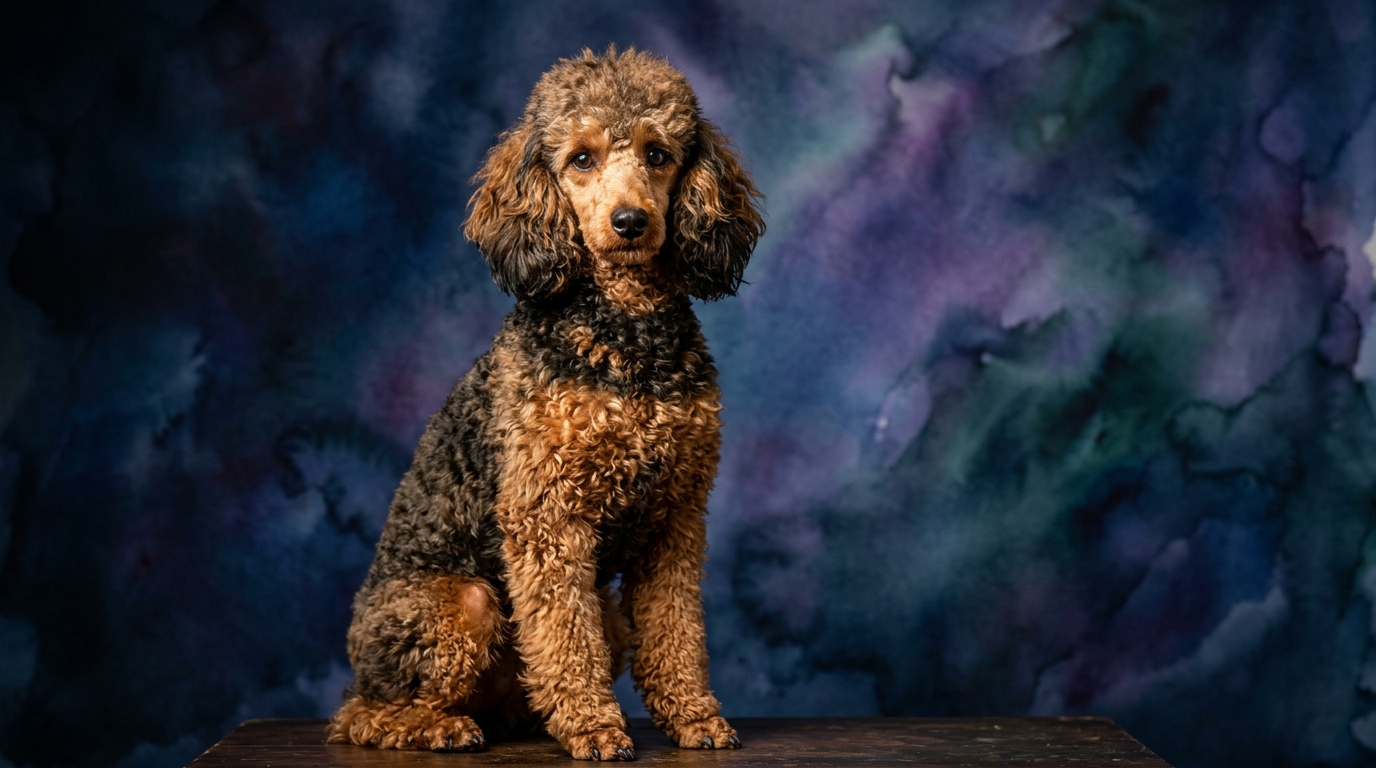
The Poodle (Standard), a member of the Non-Sporting group, showcases an exceptional cognitive blueprint, earning a Coren ranking of #2. Its Problem Solving is rated 5/5, indicating an adeptness at navigating novel challenges and understanding cause-and-effect relationships. Training Speed also stands at 5/5, reflecting a rapid uptake of new commands and routines. Social Intelligence, at 5/5, highlights their profound ability to interpret human cues and social dynamics. Their Instinctive Drive is a balanced 4/5, suggesting a manageable inherent motivation, while Memory, a perfect 5/5, means they retain vast amounts of information over extended periods.
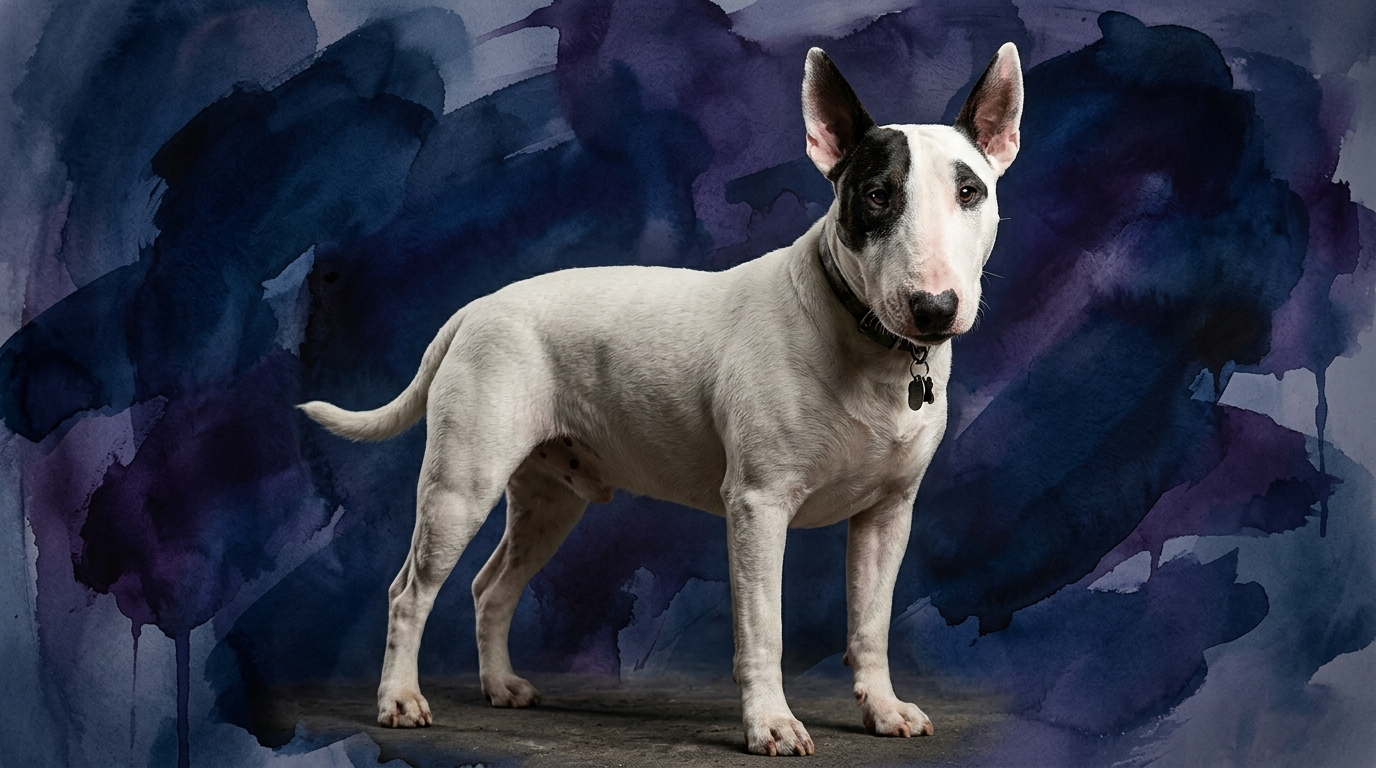
In contrast, the Bull Terrier, from the Terrier group, holds a Coren ranking of #66, presenting a different cognitive profile across the board. Its Problem Solving is rated 3/5, suggesting a more direct, perhaps less analytical, approach to new situations. Training Speed is 3/5, indicating a need for more consistent repetition to solidify learned behaviors. Social Intelligence also scores 3/5, implying a more straightforward interpretation of social cues, less prone to subtle emotional nuances. Instinctive Drive, at 3/5, speaks to their characteristic terrier tenacity, which can be channeled but requires focused direction. Lastly, Memory is 3/5, meaning they learn through consistent reinforcement but may not retain complex, infrequently used commands as readily as their Poodle counterpart.
Where the Poodle (Standard) Shines Cognitively
The Poodle (Standard) distinguishes itself with unparalleled Problem Solving abilities, scoring a perfect 5/5. This means a Poodle is not just reacting; it's actively strategizing. Owners frequently observe them figuring out complex latches, understanding multi-step puzzles, or even devising creative solutions to access desired objects. Their capacity to mentally map out sequences and predict outcomes is a hallmark of their cognitive prowess, making them adept at navigating intricate environments or learning novel tasks.
Their 5/5 Training Speed and Memory are intrinsically linked, creating a highly efficient learning machine. A Poodle can grasp a new command or concept with remarkably few repetitions, often showing comprehension after just a handful of trials. This quick acquisition is paired with exceptional long-term retention, allowing them to perform complex sequences learned months or even years prior without significant refreshers. This cognitive synergy makes them prime candidates for advanced obedience, agility, service work, or any role requiring rapid, sustained learning.
Furthermore, the Poodle's 5/5 Social Intelligence allows them to read and respond to human emotions and intentions with remarkable precision. They often seem to anticipate their owner's moods or desires, adapting their behavior accordingly. This attunement fosters a deep, intuitive bond, as they excel at understanding household routines, social etiquette, and even subtle shifts in vocal tone or body language, making them extraordinarily perceptive and responsive companions.
Unpacking the Bull Terrier's Cognitive Strengths
While the Bull Terrier's 3/5 in Problem Solving might suggest a less analytical approach, it often translates into a distinct form of tenacity. Instead of intricate strategizing, a Bull Terrier might approach a challenge with sheer determination and physical exploration. They might try various physical methods to solve a problem, exhibiting a robust, 'never-give-up' attitude rather than a quick, mental workaround. This direct, persistent problem-solving style can be effective in its own right, highlighting their characteristic terrier grit.
The Bull Terrier's Instinctive Drive, rated 3/5, while not the highest, speaks to their inherent focus and resilience. This drive, when properly channeled through consistent training and structured activities, can be a significant strength. It means they possess a strong will and determination that can be directed towards specific tasks, such as scent work or endurance activities, where their focused energy and physical robustness become assets. Their lower score here doesn't imply a lack of drive, but rather a drive that needs more deliberate guidance.
Their 3/5 in Social Intelligence and Memory, rather than being a deficit, points to a straightforward and uncomplicated companionship. Bull Terriers are often less prone to overthinking social dynamics or holding grudges. They thrive on clear, consistent communication and appreciate direct interaction. Owners who value an honest, robust relationship will find this aspect appealing, as their memory, while requiring more repetition, ensures that once a behavior or routine is firmly established, it becomes a reliable part of their predictable world.
Training Dynamics: Poodle (Standard) vs. Bull Terrier
Training a Poodle (Standard) is often a fluid and rewarding experience, primarily due to their 5/5 Training Speed. They grasp new commands and concepts with remarkable efficiency, often requiring only a few repetitions to solidify a behavior. This means owners can quickly progress to advanced tasks, complex sequences, or intricate tricks. Poodles are typically eager to please and thrive on mental engagement, viewing training as an exciting cooperative endeavor, making them highly responsive to positive reinforcement and eager for new challenges.
The Bull Terrier, with a Training Speed of 3/5, presents a different training journey. While certainly trainable, they require significantly more patience, consistency, and repetition to master new behaviors. Their independent terrier spirit means they may not always see the immediate benefit in complying, requiring trainers to be highly motivating and clear. Commands need to be explicit, and training sessions should be structured, positive, and engaging to prevent boredom or stubbornness. Success with a Bull Terrier comes from understanding their unique temperament and building a strong, trust-based relationship through persistent, fair leadership.
These cognitive differences manifest in real behavioral distinctions. A Poodle might instinctively offer desired behaviors or adapt to new routines with minimal guidance, often anticipating what is expected. A Bull Terrier, conversely, might require more explicit instruction and firm establishment of boundaries. They are less likely to infer expectations and more likely to test limits if consistency is lacking. For the Bull Terrier, real behavioral change stems from deeply ingrained habits formed through diligent, repetitive training, whereas for the Poodle, it often involves rapid comprehension and flexible adaptation.
Matching Minds to Lifestyles: Active vs. Robust Companionship
The Poodle (Standard) is an ideal match for active owners who seek deep cognitive engagement with their canine companion. Their strong problem-solving and memory (both 5/5) mean they require substantial mental stimulation alongside physical exercise. Owners who enjoy teaching advanced tricks, participating in dog sports like agility, obedience, or rally, or engaging in complex scent work will find a Poodle to be an enthusiastic and capable partner. They thrive when given a 'job' that challenges their intellect, preventing boredom and fostering their remarkable adaptability.
The Bull Terrier suits owners seeking a robust, loyal, and often humorous companion who appreciates a direct and steadfast personality. While they possess a good amount of physical energy and benefit from regular exercise, their cognitive profile suggests less demand for intricate mental puzzles compared to the Poodle. Owners must be prepared for consistent, patient training, focusing on clear communication and solidifying basic commands rather than expecting rapid mastery of complex tasks. They thrive with owners who provide firm, fair leadership and enjoy their unique, sometimes stubborn, and always devoted presence, valuing their tenacity over nuanced intellectual agility.
The Verdict
Choose the Poodle (Standard) if you desire a highly adaptable and mentally agile companion eager to engage in complex learning, advanced obedience, and thrive on intricate problem-solving challenges.
Opt for the Bull Terrier if you seek a resilient, loyal, and often amusing companion, understanding that consistent, patient training and clear communication will build a strong bond with their unique, direct personality.
🧠 Find Your Pet's IQ Score
Our Pet IQ Lab assessment covers 25+ tests across 5 cognitive dimensions — personalized to your breed.
Take the Full IQ Test →Frequently Asked Questions
Can a Bull Terrier be trained for advanced tasks?
Yes, a Bull Terrier can learn advanced tasks, but it typically requires significantly more repetition and patience compared to a Poodle (Standard). Their training speed (3/5) means consistency and positive reinforcement are paramount for success, building upon a strong foundation of basic obedience.
Do Poodles need a lot of mental stimulation?
Absolutely. With 5/5 scores in problem-solving and memory, Poodles thrive on mental challenges. Without adequate mental engagement, they can become bored, potentially leading to destructive behaviors, excessive vocalization, or general restlessness due to their unused cognitive capacity.
How does 'social intelligence' impact daily life for these breeds?
A Poodle's 5/5 social intelligence means they often pick up on subtle human cues, emotional states, and household routines with ease, making them highly attuned family members. A Bull Terrier's 3/5 social intelligence suggests they might be less sensitive to nuanced emotional shifts and benefit from more explicit communication and consistent social structures, offering a more straightforward companionship.