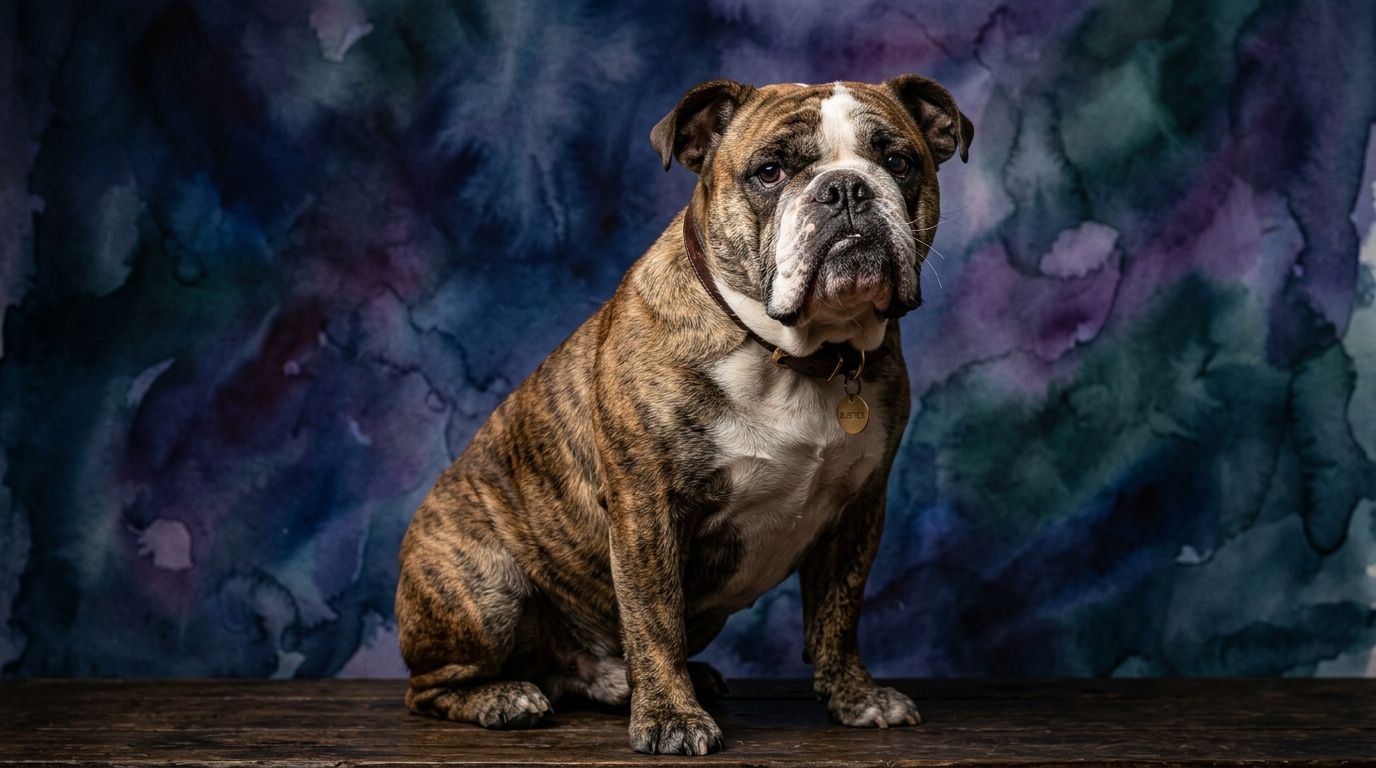
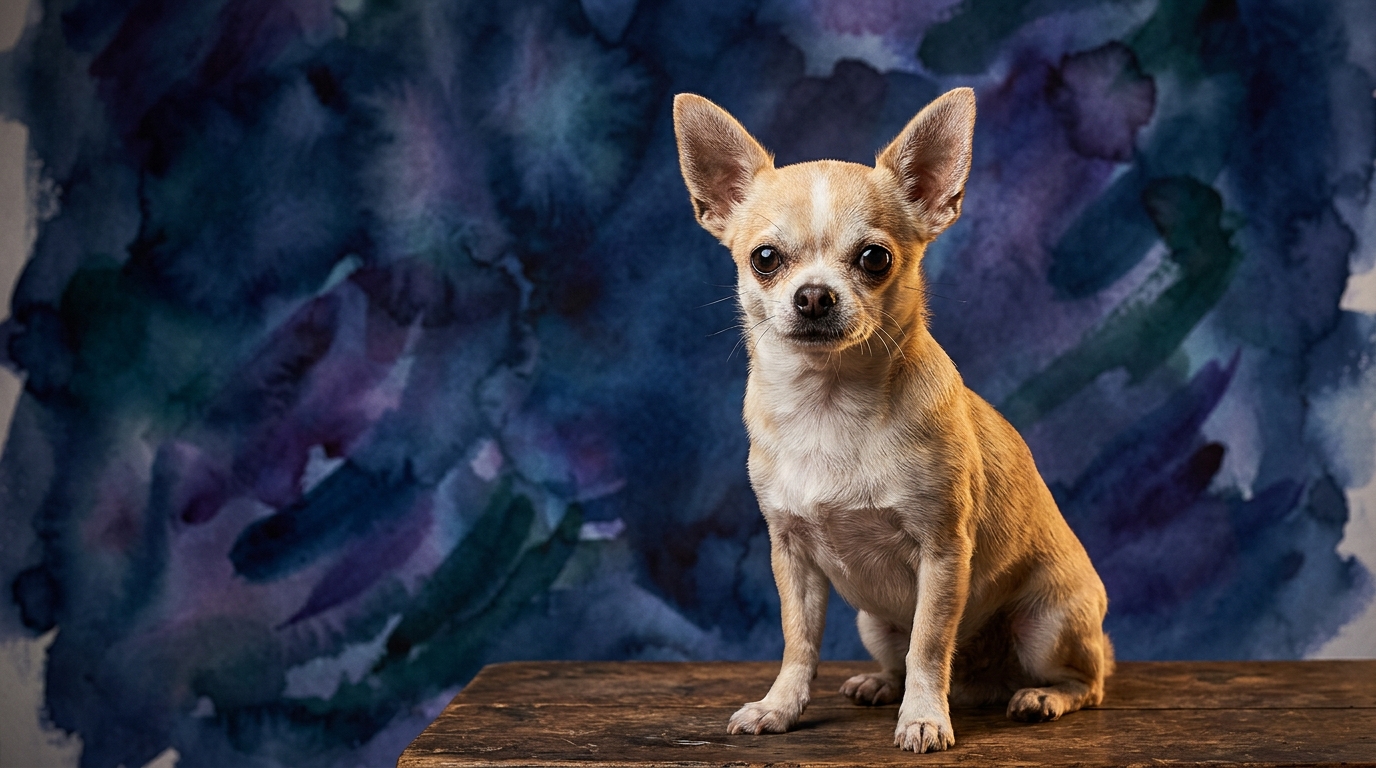
Side-by-Side IQ Profile: Bulldog (English) vs. Chihuahua
The Cosmic Pet Pet IQ Lab employs a five-dimensional framework to assess canine cognition, providing a nuanced understanding of each breed's mental landscape. Let's break down the scores for the English Bulldog and the Chihuahua.
For the **Bulldog (English)** (Coren rank #77): Their Problem Solving is rated 2/5, indicating a methodical, less spontaneous approach to novel challenges, often favoring learned patterns. Training Speed scores 2/5, pointing to a need for significant patience and consistency, as new commands take longer to solidify. Social Intelligence is a robust 4/5, highlighting excellent abilities to read human cues and household social dynamics. Instinctive Drive is 3/5, meaning natural inclinations like companionship are present but not overwhelmingly intense. Memory scores 2/5, suggesting learned behaviors and routines may require regular reinforcement to remain sharp.
For the **Chihuahua** (Coren rank #67): Their Problem Solving is rated 3/5, showing a more adaptable and resourceful approach to new situations, willing to try varied strategies. Training Speed scores 3/5, indicating they learn new commands at a moderate pace, generally quicker than Bulldogs, with consistent positive reinforcement. Social Intelligence matches the Bulldog at 4/5, highlighting their keen awareness of social cues and ability to integrate into family structures. Instinctive Drive is 3/5, similar to the Bulldog, possessing moderate innate drives, often expressed as alertness or strong companionship desire. Memory scores an impressive 4/5, suggesting effective retention of learned behaviors, routines, and experiences, requiring less frequent reinforcement.
Where the English Bulldog Wins Cognitively
The English Bulldog's core cognitive strength lies in its robust Social Intelligence, scoring 4 out of 5. This signifies an exceptional capacity to interpret human emotions, body language, and subtle household social structures. While not quick to learn complex tricks, their ability to tune into the emotional atmosphere and respond appropriately makes them remarkably empathetic companions. For instance, a Bulldog might intuitively offer comfort when sensing distress or understand cues distinguishing playtime from quiet time, demonstrating a sophisticated grasp of social boundaries. This high social acumen enables them to integrate seamlessly into family life, often becoming deeply attuned to their owner's routines and moods, fostering a strong, unspoken bond. Their moderate Instinctive Drive (3/5) means innate behaviors are manageable, aligning well with their social intelligence for cooperative living.
Where the Chihuahua Wins Cognitively
The Chihuahua truly excels in its Memory, boasting an impressive 4 out of 5. This superior recall means they adeptly retain learned commands, routines, and past experiences, often requiring less frequent reinforcement once established. This strong memory ensures consistency in responses, whether remembering a toy's location or recalling a training cue. Coupled with a Problem Solving score of 3 out of 5, the Chihuahua demonstrates greater adaptability and willingness to experiment when faced with novelty. They are more likely to try different approaches or recall a previous successful solution. Their Training Speed of 3 out of 5 also gives them an edge, indicating a quicker grasp of new concepts than the Bulldog, especially with engaging, consistent training. This combination of quick learning, good problem-solving, and excellent memory allows them to navigate complex home environments and learn routines with remarkable efficiency, often appearing more resourceful.
Which is Easier to Train and Why
Based on The Cosmic Pet Pet IQ Lab data, the Chihuahua generally presents as the easier breed to train, primarily due to its superior Training Speed (3/5) and excellent Memory (4/5). A Chihuahua can typically grasp new commands with fewer repetitions compared to an English Bulldog (Training Speed 2/5). For example, teaching a Chihuahua to “stay” might involve 10-15 consistent sessions for reliable recall, whereas a Bulldog might require 20-30 or more. The Chihuahua's strong memory ensures that once a behavior is learned, it is retained longer, reducing the need for constant reteaching. This means less owner frustration and quicker progression.
Furthermore, the Chihuahua's slightly higher Problem Solving score (3/5) means they are often more engaged in training, actively trying to figure out expectations. In contrast, the English Bulldog's lower Training Speed and Memory scores necessitate significant patience, consistency, and often, creative motivation. They are not unwilling, but their cognitive processing for new commands is slower, and retention needs more frequent reinforcement for their 2/5 memory. Understanding these intrinsic differences aids optimal training approaches.
Which Suits Active Owners vs. Relaxed Owners
The choice between an English Bulldog and a Chihuahua often hinges on an owner's lifestyle. The English Bulldog, with its lower Problem Solving (2/5) and Training Speed (2/5), alongside a moderate Instinctive Drive (3/5), generally suits more relaxed owners. Their disposition leans towards a calm, unhurried pace. While benefiting from regular, short walks, they are not built for endurance. Their strong Social Intelligence (4/5) means they thrive on companionship and being an integral, often inert, part of family activities like movie nights, rather than demanding strenuous outings. They are content with predictable routines and a comfortable spot by their human's side.
Conversely, the Chihuahua, despite its small stature, often aligns better with owners who appreciate mental engagement and a moderately active lifestyle. Their higher Problem Solving (3/5), Training Speed (3/5), and excellent Memory (4/5) mean they enjoy learning new tricks, participating in puzzle toys, and even excelling in miniature agility. While not requiring miles of running, they appreciate varied environments, short walks, and consistent interaction that stimulates their quick minds. Their moderate Instinctive Drive (3/5) can manifest as alertness and a desire to explore, making them a good fit for owners who enjoy engaging through training games and excursions. They are lively companions adaptable to activities from a brisk walk to complex obedience, suitable for owners desiring a more interactive and mentally stimulating relationship.
The Verdict
Choose an English Bulldog if you seek an inherently calm, deeply socially intelligent companion who thrives on predictable routines and offers unwavering, empathetic presence, valuing comfort over complex mental challenges.
Choose a Chihuahua if you desire a lively, quick-witted canine with an excellent memory and a keen ability to learn, suitable for owners who enjoy consistent training and mental engagement in a compact package.
🧠 Find Your Pet's IQ Score
Our Pet IQ Lab assessment covers 25+ tests across 5 cognitive dimensions — personalized to your breed.
Take the Full IQ Test →Frequently Asked Questions
Are English Bulldogs stubborn during training?
English Bulldogs are not inherently stubborn, but their lower Training Speed (2/5) and Memory (2/5) mean they require more repetitions and consistent, positive reinforcement to grasp and retain new commands. What might seem like stubbornness is often simply a slower cognitive processing speed for novel information, requiring extra patience from their trainers.
Do Chihuahuas have a good memory for house-training?
Yes, Chihuahuas possess an excellent Memory (4/5), which significantly aids in house-training. Once they understand and consistently practice their designated potty spot and schedule, they are very likely to remember it, making them quite reliable once the routine is firmly established.
How do their social intelligence scores impact their interactions with other pets?
Both breeds score a high 4/5 in Social Intelligence, meaning they generally possess a good capacity to read and understand social cues, which can extend to interactions with other pets. With proper socialization from a young age, both English Bulldogs and Chihuahuas can learn to coexist peacefully and appropriately within a multi-pet household, adapting to the social dynamics of the group.