
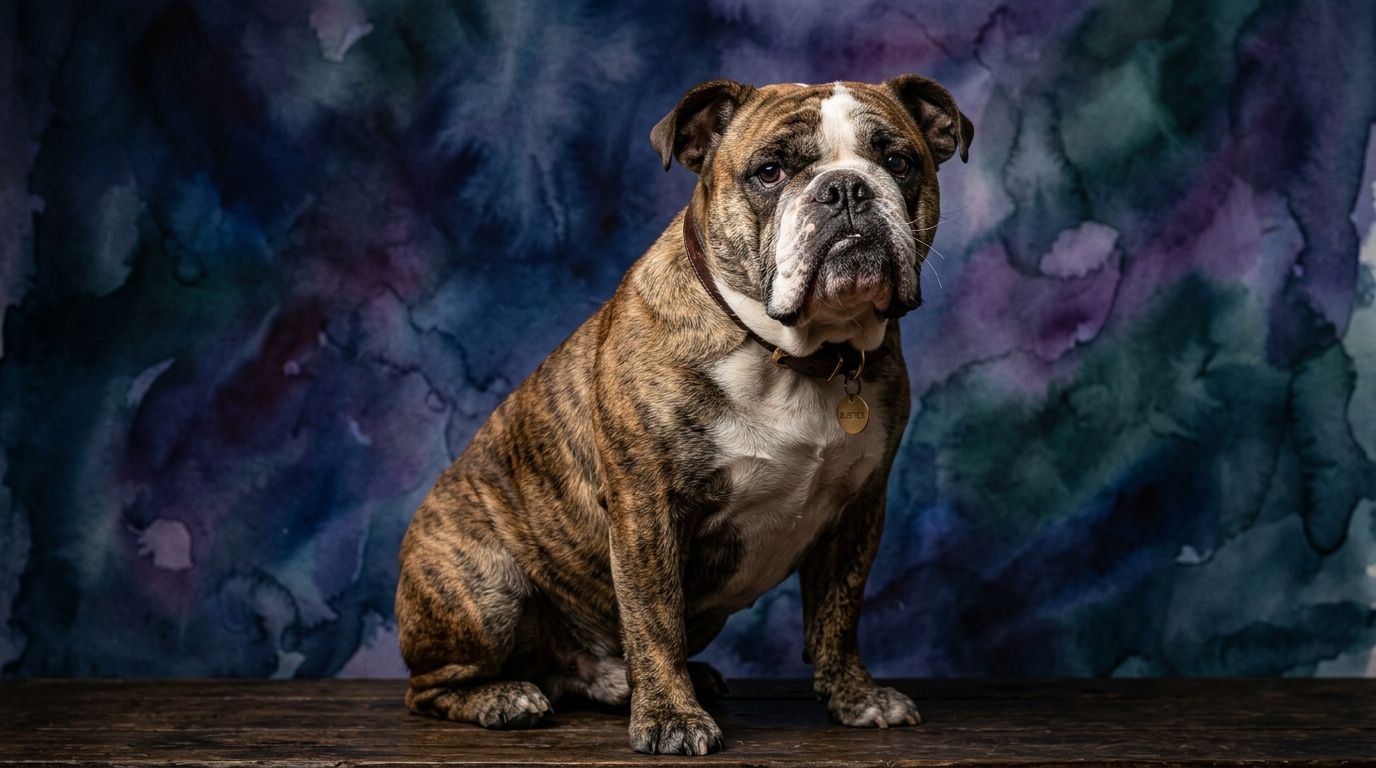
Side-by-Side Cognitive Profile: Poodle (Standard) vs. English Bulldog
When evaluating a dog's cognitive abilities, it's crucial to look beyond anecdotal observations and examine specific dimensions of intelligence. Our Cosmic Pet Pet IQ Lab employs a five-point scale across key areas, revealing distinct profiles for the Poodle (Standard) and the English Bulldog. Understanding these differences provides clarity on their learning styles, adaptability, and how they interact with their environment.
The Standard Poodle, holding a Coren rank of #2, consistently demonstrates a profound capacity for learning and adaptation. Their Problem Solving score of 5/5 indicates an exceptional ability to analyze novel situations and devise solutions, such as figuring out complex puzzle toys or overcoming obstacles to reach a desired object; they often demonstrate insight rather than just trial-and-error. Their Training Speed of 5/5 signifies rapid acquisition of new commands and routines, often grasping new concepts in very few repetitions, quickly associating actions with verbal cues or hand signals. A Social Intelligence score of 5/5 highlights their acute awareness of human emotions, intentions, and social cues, excelling at understanding complex social dynamics within a household and often predicting owner behavior. Their Instinctive Drive, rated at 4/5, points to a strong, inherent motivation for tasks like retrieving or scent work, which can be channeled into various dog sports. Finally, a Memory score of 5/5 reflects outstanding recall of learned commands, routines, and experiences, even after long periods.
In contrast, the English Bulldog, ranked #77 by Coren, offers a different cognitive blueprint, characterized by a steady, companion-focused approach rather than task-oriented brilliance. Their Problem Solving score of 2/5 suggests that while capable of solving simple, direct problems, they tend to rely more on persistence or basic trial-and-error rather than analytical thought; complex multi-step puzzles can be frustrating or ignored. A Training Speed of 2/5 means learning new commands typically requires more patience and repetition, as they are deliberate learners needing consistent reinforcement over an extended period to solidify new behaviors. Their Social Intelligence, rated at 4/5, indicates a good understanding of human companionship and emotional states, showing affection and recognizing familiar faces, connecting well with their immediate family though their expression might be more subtle. Their Instinctive Drive of 3/5 exhibits a moderate motivation for specific activities, often centered around comfort, companionship, or short bursts of play, rather than a strong task-oriented drive. Lastly, a Memory score of 2/5 means they recall basic routines and familiar people but may require refreshers for less frequently practiced commands or specific past events, their memory being sufficient for daily life but not for complex sequences or extended periods of inactivity on a learned skill.
Where the Poodle (Standard) Excels Cognitively
The Standard Poodle's cognitive strengths are undeniably impressive, placing them among breeds that thrive on intellectual engagement. Their top-tier scores in Problem Solving, Training Speed, Social Intelligence, and Memory coalesce to create a highly adaptable and perceptive companion. This breed doesn't just learn; it often understands the 'why' behind actions, making them exceptional candidates for complex tasks and advanced obedience. For instance, a Standard Poodle can quickly grasp the concept of 'fetch' not just as retrieving an object, but as returning it to a specific person, even generalizing this behavior to new objects or environments without extensive re-training. Their memory allows them to retain vast repertoires of commands and cues, even after extended breaks from training. This means an owner can teach a Poodle a new trick, revisit it months later, and find the dog still largely remembers the sequence.
Beyond simple commands, their problem-solving prowess allows them to navigate intricate environments, figure out how to manipulate latches or open containers, or even strategically plan routes to a desired location. This capacity for analytical thought is evident when they encounter a novel obstacle; instead of simply pushing against it, they might pause, observe, and then attempt a different approach, demonstrating foresight. Their high social intelligence further enhances this, as they are exquisitely attuned to human gestures, vocal inflections, and emotional states, allowing them to anticipate requests or respond appropriately to subtle shifts in household dynamics. This makes them highly responsive partners in activities like therapy work, where understanding human needs is paramount, or in performance sports where precise execution based on handler cues is critical. Their cognitive profile points to a dog that actively participates in its learning, often seeking out challenges rather than merely reacting to them.
Where the English Bulldog Demonstrates Unique Cognitive Strengths
While the English Bulldog's cognitive profile differs significantly from the Poodle's, it possesses its own distinct set of strengths, particularly in areas related to companionship and emotional stability. Their Social Intelligence score of 4/5 is a notable asset, indicating a profound capacity for forming deep, affectionate bonds with their human families. This isn't necessarily about understanding complex human language, but rather about an innate ability to read and respond to the emotional climate of their immediate social group. A Bulldog excels at being a comforting presence, often sensing when their owner needs quiet companionship or a gentle nudge of affection. They might not solve a puzzle, but their unwavering devotion and sensitivity to their owner's mood make them exceptional emotional support animals, demonstrating a robust and reliable social understanding within their trusted circle.
Their moderate Instinctive Drive (3/5) also plays a role in their unique appeal. While not driven by a strong desire for complex tasks, this moderate drive contributes to their generally calm and low-key demeanor. This means they are less prone to anxiety-driven behaviors that might stem from under-stimulation in a more highly driven breed. Their cognitive strength here lies in their capacity for contentment within a relaxed routine, requiring less mental 'work' to maintain a balanced state. This allows them to be present and engaged with their family in a less demanding way, offering steadfast companionship without the constant need for redirection or complex mental games. Their slower Training Speed and Problem Solving, while challenging for competitive obedience, can also translate to a certain unflappability; they are often less reactive to sudden changes or novel stimuli, processing information at a steady pace that contributes to their placid nature. This cognitive stability is a unique strength, making them ideal for owners seeking a predictable, emotionally grounded companion.
Training Dynamics: Poodle (Standard) vs. English Bulldog
When it comes to trainability, the contrast between the Poodle (Standard) and the English Bulldog is stark, largely due to their differing cognitive profiles. The Standard Poodle, with its 5/5 scores in Training Speed, Memory, and Problem Solving, is often described as a dream to train. They possess an innate eagerness to learn and a keen desire to please their handlers, making them highly receptive to instruction. They grasp new commands and concepts with remarkable speed, often requiring only a few repetitions to solidify a new behavior. Their high social intelligence means they are attuned to their handler's cues, intentions, and even subtle body language, allowing for nuanced communication. Poodles thrive on mental stimulation and enjoy the process of learning, often seeking out opportunities to engage in training sessions or puzzle-solving. This makes them excellent candidates for advanced obedience, agility, rally, scent work, and even complex service dog tasks, where multi-step commands and reliable recall are essential.
The English Bulldog, on the other hand, presents a different set of training challenges, stemming from their 2/5 scores in Training Speed and Memory. While they are certainly capable of learning, they are often described as 'deliberate' or 'opinionated' learners. New commands require significant patience, consistency, and positive reinforcement over an extended period. What a Poodle might learn in a few minutes, a Bulldog might take several sessions to fully grasp. Their lower instinctive drive for human-directed tasks means motivation often needs to be carefully managed, typically relying on high-value food rewards or short bursts of engaging play. Training sessions must be kept short, positive, and varied to prevent boredom or disengagement. Their perceived 'stubbornness' is often a combination of slower processing, a lower intrinsic motivation for complex tasks, and a strong preference for comfort over exertion. While they can learn basic obedience and household manners, owners should approach training with realistic expectations, focusing on building a strong bond and celebrating small, consistent progress rather than aiming for competitive performance.
Matching Canine Minds to Owner Lifestyles
The distinct cognitive profiles of the Standard Poodle and the English Bulldog naturally align with different owner lifestyles and expectations. For active owners seeking a dynamic, engaged, and mentally agile companion, the Standard Poodle is an ideal match. This breed thrives on consistent mental and physical exercise, requiring more than just daily walks. They excel in dog sports like agility, obedience, flyball, and dock diving, eagerly participating in activities that challenge both their bodies and their minds. Their problem-solving abilities and strong instinctive drive mean they benefit from puzzle toys, advanced training classes, and opportunities for scent work or retrieving games. An under-stimulated Standard Poodle, lacking sufficient mental engagement, can become bored, potentially leading to undesirable behaviors as they seek their own forms of entertainment or problem-solving.
Conversely, the English Bulldog is perfectly suited for owners who lead a more relaxed, unhurried lifestyle. Content with moderate, regular exercise—such as short, leisurely walks or a brief play session in the yard—they do not demand intense physical or mental exertion. Their preference for comfortable lounging and close companionship makes them excellent household companions for individuals or families who value a calm, steadfast presence. Their physical limitations, including their brachycephalic (flat-faced) anatomy, necessitate a more relaxed pace and careful management in warm weather, further reinforcing their suitability for a less active household. Owners who appreciate a dog that excels in affectionate companionship rather than complex tasks will find the Bulldog's placid temperament and deep social bonds to be precisely what they are looking for.
The Verdict: When to Choose Each Breed
The Verdict
Choose the Poodle (Standard) if you seek a highly engaged, trainable partner for advanced activities, dog sports, or a dog that thrives on intellectual challenge and can adapt to various roles like therapy or service work.
Opt for the English Bulldog if you value a calm, affectionate, and steadfast companion, content with a more relaxed pace of life, and appreciate a dog that excels in companionship rather than complex cognitive tasks.
🧠 Find Your Pet's IQ Score
Our Pet IQ Lab assessment covers 25+ tests across 5 cognitive dimensions — personalized to your breed.
Take the Full IQ Test →Frequently Asked Questions
Can a Bulldog learn complex tricks?
While they can learn basic commands, complex tricks require significant patience and repetition due to their slower training speed and problem-solving scores. Their motivation is often more tied to comfort than task mastery, so consistent, positive reinforcement is key.
Do Poodles need a lot of mental stimulation?
Absolutely. With their top-tier problem-solving and memory, Standard Poodles thrive on consistent mental challenges. Without adequate mental engagement, they can become bored, potentially leading to undesirable behaviors as they seek their own forms of stimulation.
Is a Bulldog's social intelligence different from a Poodle's?
Yes, while both are socially attuned, a Bulldog's social intelligence often manifests as deep family bonding and emotional sensitivity within their immediate circle. A Poodle's social intelligence extends to a broader understanding of human intentions and complex social dynamics, making them highly adaptable in various social settings.