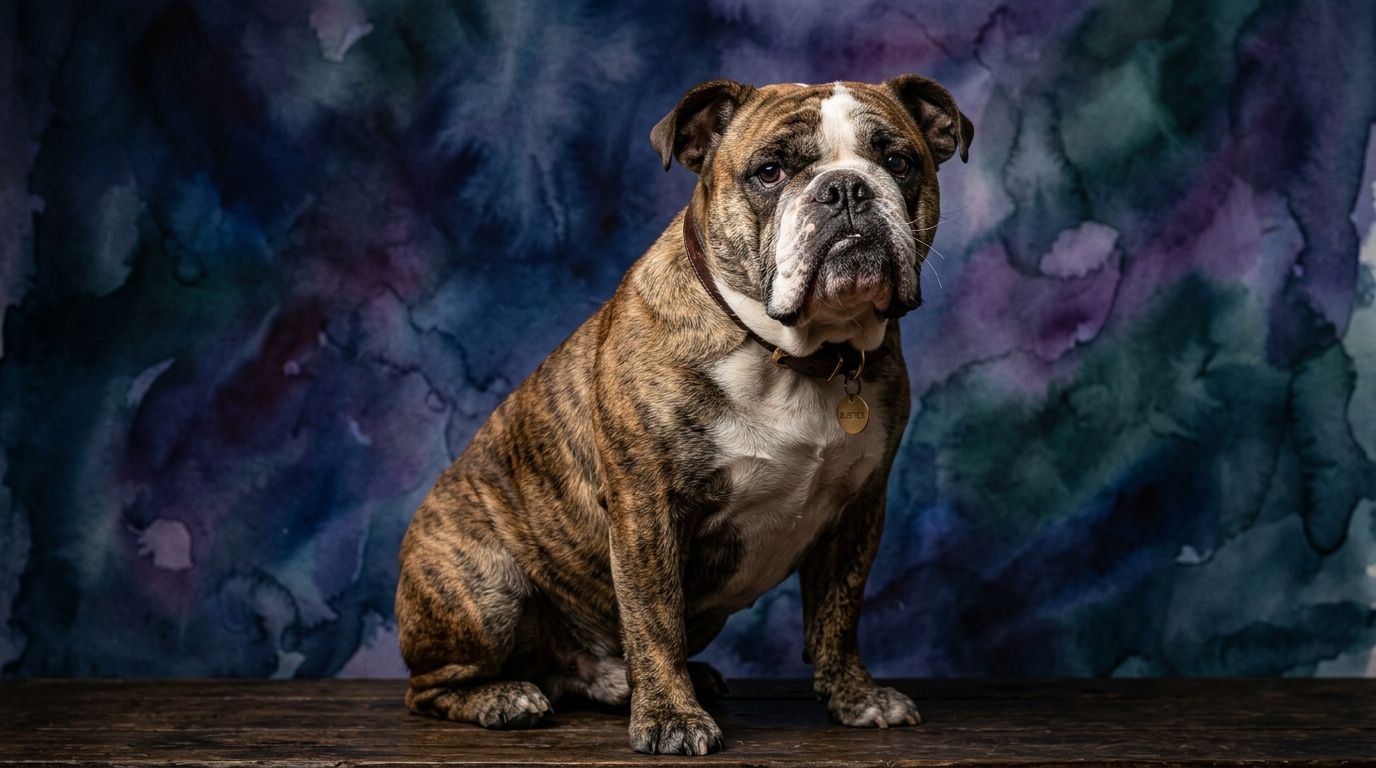
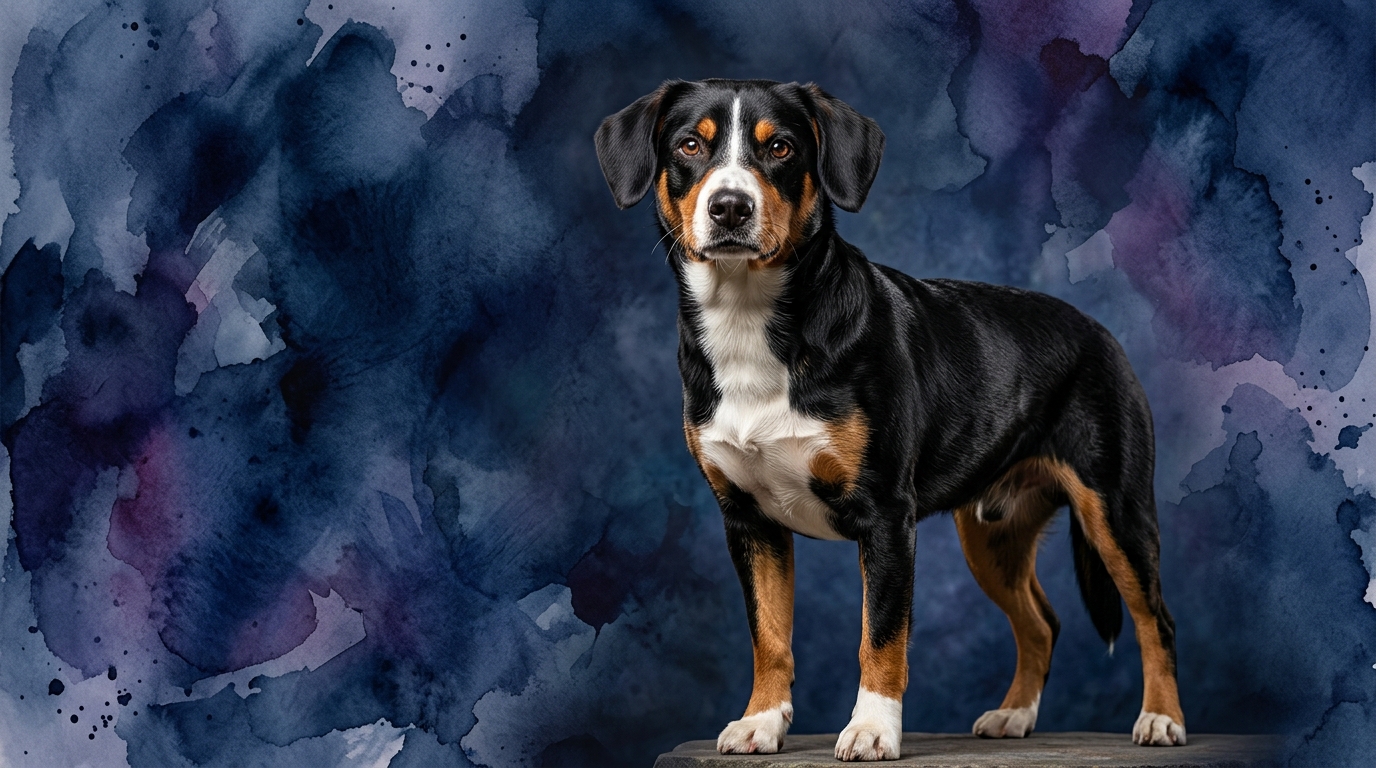
Side-by-Side IQ Profile
The Cosmic Pet Pet IQ Lab employs a five-dimensional framework to assess canine intelligence, offering a nuanced view beyond simple obedience. Let's examine how the Bulldog (English) and the Entlebucher Mountain Dog stack up across these specific cognitive dimensions.
For the Bulldog (English), problem-solving ability is rated at 2/5. This suggests they are not typically inclined to tackle complex, multi-step puzzles independently, often preferring to wait for human guidance or for a simpler solution to present itself. Their training speed also registers at 2/5, indicating that new commands and behaviors require significant patience, consistent repetition, and positive reinforcement to embed effectively. Where the Bulldog truly shines is in social intelligence, scoring an impressive 4/5. They possess a remarkable capacity to understand human emotions, intentions, and social cues, fostering deep bonds and adapting well to family dynamics. Their instinctive drive is moderate at 3/5, often manifesting as a protective loyalty or a desire for comfort rather than intense working behaviors. Lastly, their memory stands at 2/5, meaning they recall simple routines and strong associations, but might struggle with infrequent commands or complex sequences.
The Entlebucher Mountain Dog presents a different cognitive blueprint. Their problem-solving ability is rated at 3/5, suggesting a capacity to navigate moderately complex situations and figure out solutions, particularly when motivated by a goal or task. Training speed for the Entlebucher is also 3/5; they generally pick up new commands at an average pace, benefiting from engaging training methods and a clear purpose. Their social intelligence is 3/5, indicating an adequate understanding of social cues and a strong bond with their immediate family, though they can be more reserved with strangers than the Bulldog. The instinctive drive of the Entlebucher is also 3/5, often expressed through their heritage as herding dogs with a need for activity, vigilance, and a sense of purpose. Their memory is rated at 3/5, allowing them to retain training, recall past experiences, and remember environmental layouts with reasonable proficiency.
Where Bulldog (English) Wins Cognitively
The Bulldog (English) holds a distinct advantage in the realm of social intelligence, scoring 4/5 compared to the Entlebucher's 3/5. This higher rating means Bulldogs possess a superior ability to read and respond to human emotions and intentions. They are inherently attuned to their owners' moods, often offering comfort or seeking interaction based on subtle cues that other breeds might miss. This makes them exceptionally empathetic companions, fostering profound emotional connections within their families. Their capacity for social understanding allows them to integrate seamlessly into household routines and family life, adapting to the nuances of human interaction with remarkable sensitivity. This strong social acumen often translates into a desire to be near their people, making them excellent, comforting presences in a home environment.
While not a 'win' in a competitive sense, the Bulldog's moderate instinctive drive (3/5) can also be seen as an advantage for owners seeking a less demanding companion. Unlike breeds with an intense working background, the Bulldog's drive is typically satisfied with companionship and moderate activity, rather than a constant need for a 'job' or extensive physical exertion. This cognitive characteristic, coupled with their social intelligence, positions them as masters of relaxed companionship, adept at understanding and participating in the quieter moments of family life without requiring constant mental or physical engagement.
Where Entlebucher Mountain Dog Wins Cognitively
The Entlebucher Mountain Dog demonstrates clear cognitive strengths in areas of practical application and learning efficiency. With a problem-solving score of 3/5 (compared to the Bulldog's 2/5), Entlebuchers are more inclined to independently assess and navigate their environment to achieve a goal. This means they are more likely to figure out how to open a gate, retrieve a hidden toy, or find a creative path around an obstacle. This aptitude for practical problem-solving stems from their working dog heritage, where independent thought and adaptability were crucial for tasks like herding livestock.
Similarly, the Entlebucher's training speed of 3/5 surpasses the Bulldog's 2/5. This indicates they generally grasp new commands and concepts more quickly, requiring fewer repetitions to solidify a behavior. Their memory, also rated at 3/5 (versus the Bulldog's 2/5), further enhances their trainability and capacity for complex learning. An Entlebucher is more likely to retain a wider array of commands over time and recall intricate sequences, making them suitable for activities like obedience trials, agility, or advanced task training. This combination of faster learning and better retention allows them to build a larger behavioral repertoire and adapt to varied training scenarios with greater ease.
Which is Easier to Train and Why
Based on their cognitive profiles, the Entlebucher Mountain Dog is generally easier to train than the Bulldog (English). The Entlebucher's higher scores in training speed (3/5), problem-solving (3/5), and memory (3/5) all contribute to a more responsive and efficient learning process. They are quicker to understand what is being asked of them, can generalize learned behaviors to new situations, and retain that information more effectively over time. Their moderate instinctive drive (3/5), rooted in their herding background, often translates into a desire for purpose and activity, which can be channeled productively into training sessions, making them more engaged and motivated learners.
In contrast, the Bulldog (English), with a training speed of 2/5 and problem-solving at 2/5, presents a greater challenge for trainers. Their lower Coren rank of #77 further supports the observation that they typically require more repetitions and patience to learn and reliably execute commands. While their high social intelligence (4/5) can be a powerful motivator – they often want to please their beloved humans – their inherent nature means they might take longer to process information and can be prone to what is often perceived as 'stubbornness' when not adequately motivated or if the training isn't engaging enough. Training a Bulldog often requires more creativity in making sessions fun and rewarding, breaking tasks into smaller steps, and accepting that progress may be slower. They might also demonstrate selective hearing if they deem a request not worth their immediate effort, a behavioral trait linked to their lower problem-solving and training speed scores.
Which Suits Active Owners vs Relaxed Owners
The cognitive and energetic profiles of these two breeds naturally align with different owner lifestyles. The Bulldog (English) is an ideal match for relaxed owners or those seeking a less physically demanding companion. Their moderate instinctive drive (3/5), combined with a generally lower energy level, means they are content with shorter, leisurely walks and ample time spent lounging with their family. Their exceptional social intelligence (4/5) makes them deeply satisfying companions in a relaxed home, as they thrive on emotional connection and physical proximity rather than constant activity or mental challenges. They are perfectly happy to be a 'couch potato' companion, observing the household's rhythm.
Conversely, the Entlebucher Mountain Dog is best suited for active owners who can provide consistent physical and mental stimulation. Their moderate instinctive drive (3/5), coupled with their working heritage in the Herding group, means they possess a natural need for purposeful activity. They enjoy engaging in tasks, learning new skills, and participating in dog sports like agility, obedience, or hiking. An Entlebucher thrives when given a 'job' to do, whether it's daily training sessions, long walks, or interactive games that challenge their problem-solving abilities. Owners who appreciate a canine partner for outdoor adventures and structured activities will find the Entlebucher's cognitive makeup and energy levels to be a rewarding match.
The Verdict
Choose the Bulldog (English) if you prioritize a deeply empathetic, low-maintenance companion attuned to your emotions, suitable for a relaxed home environment.
Opt for the Entlebucher Mountain Dog if you seek an active, trainable partner eager to learn and engage in purposeful activities, thriving with consistent mental and physical challenges.
🧠 Find Your Pet's IQ Score
Our Pet IQ Lab assessment covers 25+ tests across 5 cognitive dimensions — personalized to your breed.
Take the Full IQ Test →Frequently Asked Questions
Is the Bulldog (English) difficult to live with due to its lower training speed?
While Bulldogs may take longer to learn new commands, their high social intelligence means they are often eager to please their family. Patience and consistent, positive reinforcement are key, and their affectionate nature typically makes them rewarding companions despite the training effort.
Do Entlebucher Mountain Dogs require constant mental stimulation?
Entlebuchers have a moderate instinctive drive and an aptitude for problem-solving, making regular mental stimulation beneficial. This doesn't mean constant activity, but daily engagement through training, puzzle toys, or interactive play will help prevent boredom and channel their energy constructively.
How does the social intelligence difference impact daily life with these breeds?
A Bulldog's higher social intelligence means they are often more attuned to human moods and may seek to comfort or interact based on subtle cues, fostering a very emotionally connected bond. An Entlebucher's social intelligence, while good, might mean they are more reserved with strangers and rely more on direct instruction within the family dynamic.