Side-by-side IQ profile
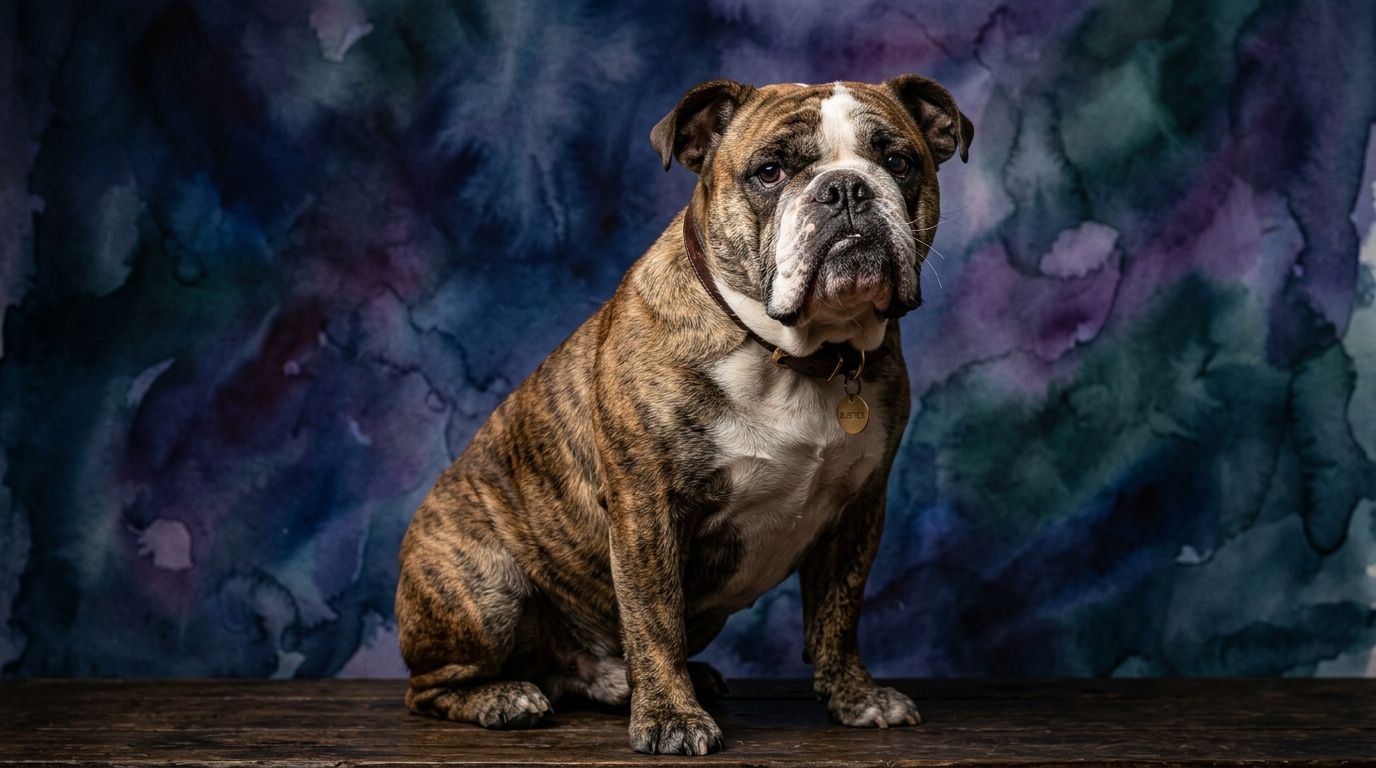
**Bulldog (English)**: **Problem Solving (2/5)**: Bulldogs generally approach novel challenges methodically. Their solutions often stem from persistence rather than rapid analytical leaps, indicating a preference for familiar routines over complex, abstract puzzles. **Training Speed (2/5)**: Acquiring new commands is typically deliberate. Their independent nature often means they require consistent, patient, and engaging methods to internalize instructions, making the process a gradual one. **Social Intelligence (4/5)**: This breed excels in understanding and navigating social dynamics. Bulldogs are highly attuned to human emotions and group interactions, demonstrating a remarkable capacity for forming deep bonds and adapting their behavior to fit social contexts. **Instinctive Drive (3/5)**: Their historical role manifests as a moderate drive. While not driven by intense prey instincts or boundless energy, they possess a foundational tenacity and a desire for companionship that guides their actions. **Memory (2/5)**: Bulldogs retain information, but perhaps not with the same rapid recall or long-term precision as some other breeds. Learning stickiness is achieved through repetition, reinforcing their preference for established habits and routines.
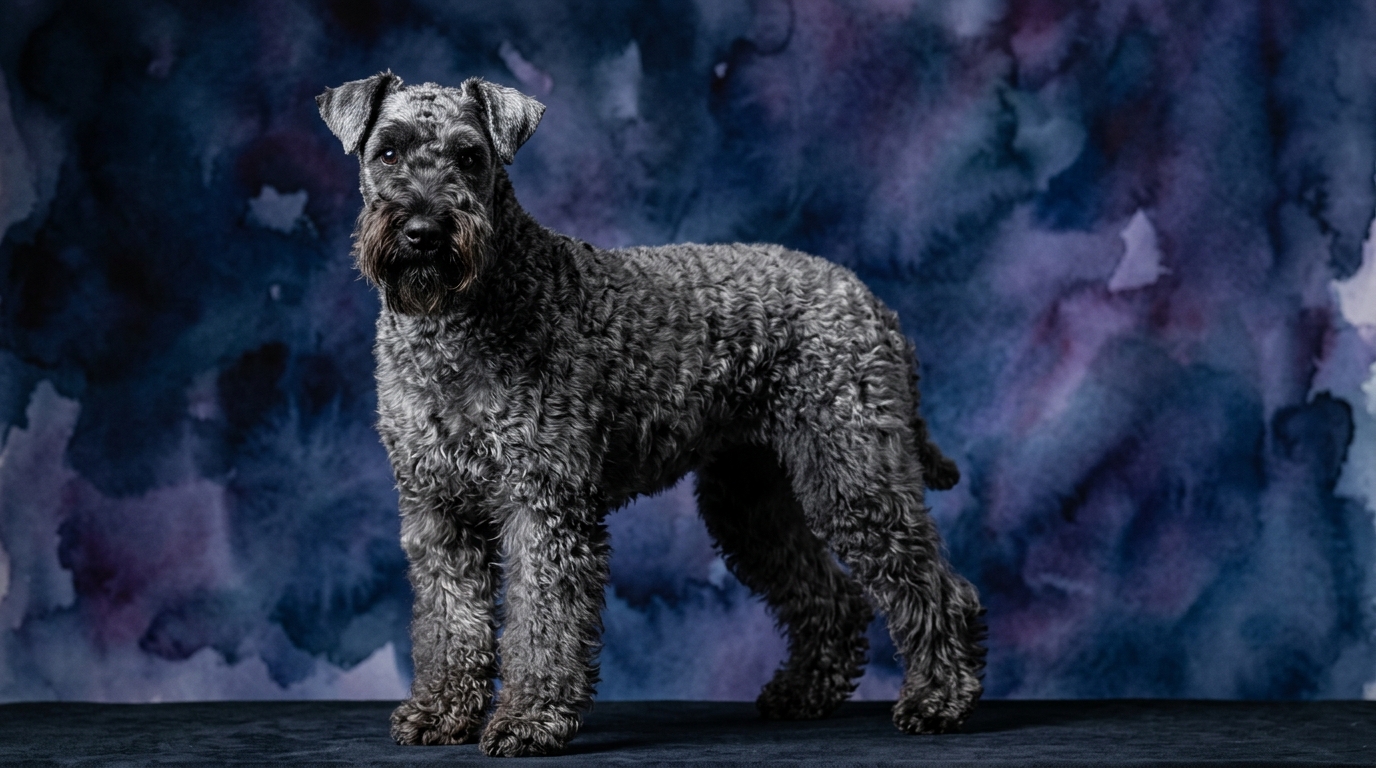
**Kerry Blue Terrier**: **Problem Solving (3/5)**: Kerry Blue Terriers exhibit a more active approach to problem-solving, often experimenting with different strategies to overcome obstacles. Their terrier heritage imbues them with a certain ingenuity and a willingness to explore solutions. **Training Speed (3/5)**: These terriers generally pick up new commands at a moderate pace. Their eagerness to engage and their inherent drive to work alongside their human companions contribute to a relatively efficient learning curve, though their independent streak still requires thoughtful training. **Social Intelligence (3/5)**: Kerry Blue Terriers are socially competent, capable of understanding cues and forming strong attachments. While perhaps not as overtly demonstrative as the Bulldog, they maintain a balanced awareness of their environment and the people within it. **Instinctive Drive (3/5)**: True to their terrier roots, Kerry Blues possess a moderate, but purposeful, instinctive drive. This often translates into an eagerness for activity, a keen interest in their surroundings, and a historical predisposition for tasks involving vigilance and pursuit. **Memory (3/5)**: Kerry Blue Terriers demonstrate a solid capacity for memory, retaining learned behaviors and environmental associations effectively. This allows them to build upon past experiences and adapt their responses over time.
Where Bulldog (English) wins cognitively
The English Bulldog's standout cognitive strength lies unequivocally in its social intelligence, scoring a remarkable 4 out of 5. This dimension reflects their profound capacity for understanding and responding to the emotional states and social cues of humans and other animals. Bulldogs possess an innate ability to integrate into family life, often acting as emotional barometers and providing comforting companionship through their perceptive nature. Their ability to read a room, sense an owner's mood, and offer silent support or gentle engagement is a nuanced cognitive skill. This makes them remarkably adaptable in diverse social settings, often exhibiting a calm, reassuring presence. They thrive on connection and demonstrate a deep, almost empathetic, understanding of their human companions, making them particularly adept at forming profound, reciprocal bonds.
Where Kerry Blue Terrier wins cognitively
The Kerry Blue Terrier demonstrates a more balanced and generally higher cognitive profile across several key dimensions compared to the Bulldog, particularly in areas related to active learning and engagement. With a score of 3 out of 5 in problem-solving, training speed, and memory, the Kerry Blue Terrier shows a greater aptitude for processing new information, adapting to novel situations, and retaining complex sequences of commands. Their problem-solving capacity means they are more likely to independently figure out how to access a toy or navigate an obstacle, often employing a trial-and-error approach that speaks to their innate curiosity and mental agility. This breed's quicker training speed allows for more varied and advanced obedience or trick training, as they grasp concepts and associate actions with outcomes more readily. Furthermore, their superior memory indicates a more enduring retention of these learned behaviors, meaning less frequent refreshers are needed once a task is mastered, allowing for a broader repertoire of skills over their lifetime.
Which is easier to train and why
Based on their cognitive profiles, the Kerry Blue Terrier is generally easier to train than the English Bulldog. The Kerry Blue Terrier scores a 3/5 in Training Speed and Problem Solving, contrasting with the Bulldog's 2/5 in both categories, a significant difference. Kerry Blues, with their terrier heritage, possess an inherent drive to engage and a curiosity that fuels learning, making them more receptive to instruction. Their higher problem-solving score means they can better understand commands or figure out what is being asked more quickly, leading to fewer repetitions. For instance, teaching a multi-step fetch command would likely progress faster with a Kerry Blue Terrier due to their combined memory and problem-solving abilities.
The English Bulldog, while capable of learning, approaches training with a more deliberate and independent mindset. Their lower training speed score means they require more patience, consistency, and positive reinforcement. They have a lower intrinsic motivation for rapid task acquisition, often preferring comfort and routine. Their lower problem-solving score suggests they might struggle more with abstract concepts or complex sequences, requiring trainers to break down tasks. For example, a Bulldog may take longer to reliably "stay" with distractions, needing extensive reinforcement. While their social intelligence ensures they respond well to gentle training, their cognitive architecture processes new information at a slower rate than the more agile Kerry Blue Terrier.
Which suits active owners vs relaxed owners
The choice between these two breeds, when considering owner lifestyle, largely hinges on their differing cognitive and instinctive drives. The Kerry Blue Terrier, with its 3/5 instinctive drive and higher scores in problem-solving and training speed, is generally better suited for active owners. These owners appreciate a dog that thrives on mental and physical engagement, enjoying activities like agility, advanced obedience, or dog sports that tap into their terrier ingenuity and energy. An active owner would find the Kerry Blue Terrier's eagerness to learn and participate a rewarding match, capable of handling varied training sessions and daily excursions that stimulate both body and mind. They require consistent interaction and tasks to prevent boredom, which could manifest as less desirable behaviors if their cognitive needs are not met.
Conversely, the English Bulldog, with its 3/5 instinctive drive but lower scores in problem-solving and training speed, aligns more closely with relaxed owners. These individuals seek a companion that values comfort, routine, and a strong, affectionate bond without demanding constant, high-intensity mental or physical exertion. While not entirely sedentary, the Bulldog's cognitive profile suggests they are less inclined towards complex problem-solving games or rapid-fire training drills. Their exceptional social intelligence (4/5) makes them ideal for owners who prioritize companionship and emotional connection, valuing a dog that is attuned to family dynamics and content with a predictable, comfortable lifestyle. Short, gentle walks and calm, predictable interactions are often sufficient to meet their needs, allowing relaxed owners to enjoy their profound social presence without the pressure of constant engagement.
The Verdict
Choose the English Bulldog if you prioritize a deeply affectionate, perceptive companion whose greatest cognitive strength lies in social attunement, thriving in a relaxed home environment with predictable routines and valuing emotional connection over complex training or high-energy activities.
Choose the Kerry Blue Terrier if you are an active individual or family seeking a mentally agile companion capable of learning a broader range of skills, enjoying varied activities, and engaging in more complex problem-solving, appreciating a dog with a balanced cognitive profile and a willingness to participate in structured tasks.
🧠 Find Your Pet's IQ Score
Our Pet IQ Lab assessment covers 25+ tests across 5 cognitive dimensions — personalized to your breed.
Take the Full IQ Test →Frequently Asked Questions
Does the Bulldog's low problem-solving score mean it cannot learn?
Not at all. A score of 2/5 in problem-solving indicates a deliberate approach, not an inability to learn. Bulldogs simply prefer established routines and may take longer to process novel situations, requiring more direct guidance and patience to navigate new challenges effectively.
How does the Kerry Blue Terrier's instinctive drive impact its behavior?
A 3/5 instinctive drive means Kerry Blue Terriers possess a moderate, purposeful drive, often manifesting as an eagerness for activity and a keen interest in their surroundings. This can translate into a natural curiosity and a desire to engage in tasks, making them responsive to training that channels these instincts positively.
Is a higher social intelligence score always better for a pet owner?
A higher social intelligence score, like the Bulldog's 4/5, indicates a profound capacity for understanding and responding to human emotions and social dynamics, which is excellent for companionship. However, the "best" score depends on an owner's specific needs; some prefer a dog with a more independent social stance, while others value deep emotional attunement.