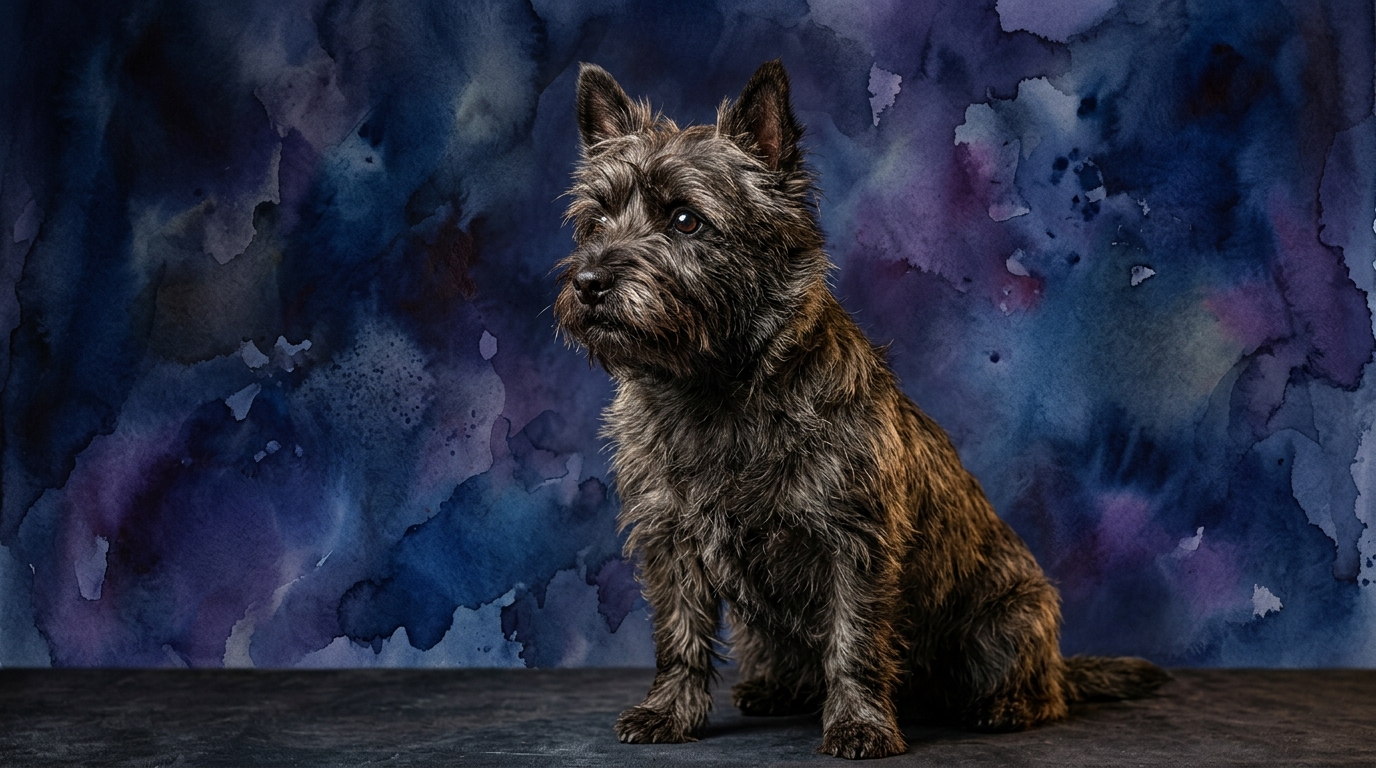

Side-by-Side IQ Profile: Cairn Terrier vs. Border Terrier
The Cosmic Pet Pet IQ Lab evaluates canine intelligence across five critical dimensions, and both the Cairn Terrier and Border Terrier present an intriguing near-match. Problem Solving, rated at 4/5 for both, reflects their capacity to navigate challenges and figure out solutions independently. For the Cairn, this often translates into tenacious exploration and persistent efforts to reach desired objects or locations, while the Border exhibits this through strategic thinking in pursuit games or adapting to new environments. Training Speed, also a 4/5 for both, signifies their readiness to learn new commands and routines. Cairns are quick to grasp concepts but may require consistent motivation, whereas Borders often show a slightly more eager-to-please attitude, translating to rapid acquisition of varied tasks. Social Intelligence, at 3/5 for both, indicates their ability to understand and respond to human cues and social dynamics. Cairns form deep bonds with their immediate family, sometimes appearing less interested in strangers, while Borders often display a friendly curiosity towards new people and animals, though still retaining their terrier independence. Instinctive Drive, scored 3/5 for both, highlights their innate breed-specific behaviors, primarily hunting and digging for these terriers. Cairns possess a formidable prey drive, expressed through vigorous digging and chasing small animals, a trait deeply embedded in their heritage. Border Terriers, bred for working alongside foxhounds, also exhibit a strong drive for pursuit and exploration, often displaying remarkable stamina and focus in their instinctive behaviors. Memory, another 4/5 for both, underlines their excellent recall of learned commands, routines, and experiences. Cairns demonstrate strong spatial memory, remembering routes and hiding spots, while Borders exhibit robust associative memory, linking specific actions to outcomes with impressive accuracy.
Where the Cairn Terrier Wins Cognitively
While their raw IQ scores align perfectly with the Border Terrier, the Cairn Terrier's cognitive strengths often manifest with a distinct tenacity and independent spirit. Their 4/5 Problem Solving score shines particularly brightly when faced with physical barriers or puzzles that require sustained, creative effort; a Cairn will often try multiple approaches, sometimes with a stubborn determination, until a solution is found, especially if it involves accessing a forbidden treat or exploring a new scent. This persistent problem-solving, rooted in their original purpose of flushing quarry from cairns, makes them formidable little strategists in their own right. Furthermore, their 4/5 Memory appears to be exceptionally strong for routines and specific locations, allowing them to navigate familiar territories with precision and anticipate daily events. This can make them highly predictable companions once a routine is established, remembering where favorite toys are hidden or the exact path to their preferred sniffing spots. Their Social Intelligence, while 3/5, often translates into a particularly acute understanding of their primary caregivers' moods and subtle cues, fostering an exceptionally deep, almost telepathic bond within their chosen human pack.
Where the Border Terrier Wins Cognitively
The Border Terrier, with its identical IQ scores but slightly higher Coren rank (#30 vs. #35), often demonstrates a nuanced edge in adaptable cognition and cooperative learning. Their 4/5 Problem Solving, while equally high, tends to manifest as a more flexible and strategic approach, particularly in dynamic environments or when working alongside humans. Borders excel at figuring out how to navigate complex terrains or adjust their tactics during a game of fetch, showcasing an intuitive understanding of changing circumstances. This adaptability stems from their history of working in varied hunting conditions, requiring quick, on-the-spot decisions. Their 4/5 Training Speed, though numerically identical, often comes with a slightly greater eagerness to please and a focus that can make them marginally quicker to generalize learned behaviors across different contexts or commands. This responsiveness makes them particularly receptive to advanced training and canine sports. The Border's 3/5 Social Intelligence frequently exhibits itself as a more generalized friendliness and an ability to integrate smoothly into multi-dog or multi-person households, often reading social cues from a wider array of individuals with relative ease. This makes them often perceived as more outwardly sociable than their Cairn counterparts, ready to engage with a broader social circle.
Which is Easier to Train and Why
Assessing which breed is 'easier' to train, despite their identical 4/5 Training Speed score, hinges on understanding their inherent temperaments and how they approach learning. The Cairn Terrier, while quick to grasp commands, often couples this with a robust independent streak and a strong will. They are perfectly capable of learning complex tasks, but their motivation must be carefully managed; a Cairn might decide a command isn't worth their effort if a more interesting scent or activity presents itself. Training a Cairn requires patience, consistency, and a creative use of positive reinforcement to make learning more rewarding than their independent pursuits. Their terrier stubbornness means owners must establish clear boundaries and make training a fun, engaging partnership. The Border Terrier, on the other hand, often brings a slightly more cooperative attitude to the training arena. While still a terrier with an independent mind, their history of working alongside hunters has fostered a desire to collaborate and please their human partners. This often translates into a more focused attention during training sessions and a greater willingness to repeat tasks, even without immediate high-value rewards. Consequently, while both learn quickly, the Border Terrier might be perceived as marginally 'easier' to train for novice owners due to their slightly more biddable nature and eagerness to engage in structured activities. Owners seeking a dog for competitive canine sports might find the Border's focus and drive slightly more aligned with those goals.
Which Suits Active Owners vs. Relaxed Owners
Both the Cairn Terrier and the Border Terrier are active breeds, and neither is truly suited for a 'relaxed' owner who prefers a sedentary lifestyle. However, the type of activity they thrive on offers a point of differentiation. The Cairn Terrier, with its boundless energy and insatiable curiosity, is ideal for active owners who enjoy varied outdoor adventures. They love exploring, digging, and chasing, requiring consistent physical exercise combined with mental stimulation to prevent boredom and destructive behaviors. An owner who enjoys long, meandering walks, puzzle toys, and interactive play sessions will find a Cairn a delightful companion. Their instinctual drive (3/5) means they need outlets for their hunting tendencies, perhaps through scent work or controlled chase games. The Border Terrier, while equally active, often possesses a slightly more enduring stamina and a focus that makes them excellent partners for more structured activities. They excel in long hikes, agility courses, earthdog trials, or even jogging, thanks to their robust build and sustained energy levels. Owners who participate in canine sports or enjoy regular, vigorous exercise will find the Border's drive (3/5) and adaptability a perfect match. For truly relaxed owners, neither breed is recommended without significant commitment to daily exercise and engagement; however, an owner seeking a dog that can transition from high-energy outdoor activities to calm indoor companionship might find the Border's 'off switch' slightly more pronounced than the perpetually curious Cairn.
The Verdict
Choose a Cairn Terrier if you appreciate a dog with tenacious problem-solving, a deep emotional bond with its family, and are prepared to engage with a spirited, independent learner who thrives on varied exploration.
Opt for a Border Terrier if you seek a partner with adaptable problem-solving, a slightly more cooperative training demeanor, and a robust energy level suited for sustained outdoor adventures and canine sports.
🧠 Find Your Pet's IQ Score
Our Pet IQ Lab assessment covers 25+ tests across 5 cognitive dimensions — personalized to your breed.
Take the Full IQ Test →Frequently Asked Questions
Are Cairn Terriers good family dogs?
Cairn Terriers can be excellent family dogs, forming strong, affectionate bonds with their human 'pack.' They are playful and sturdy, but their independent streak means they do best with consistent training and socialization from a young age, especially around young children who understand how to interact respectfully.
Do Border Terriers bark a lot?
Border Terriers, like many terriers, can be prone to barking, particularly when alerting to strangers, other animals, or unfamiliar sounds. However, with consistent training and proper socialization, their barking can be managed, and they are not typically considered excessive barkers compared to some other terrier breeds.
What's the biggest difference in temperament between them?
The most significant temperamental difference lies in their approach to cooperation and independence: Cairn Terriers tend to be more overtly independent and tenacious in pursuing their own interests, while Border Terriers, though still independent, often exhibit a slightly more biddable and cooperative nature, making them generally more amenable to structured training and social situations.