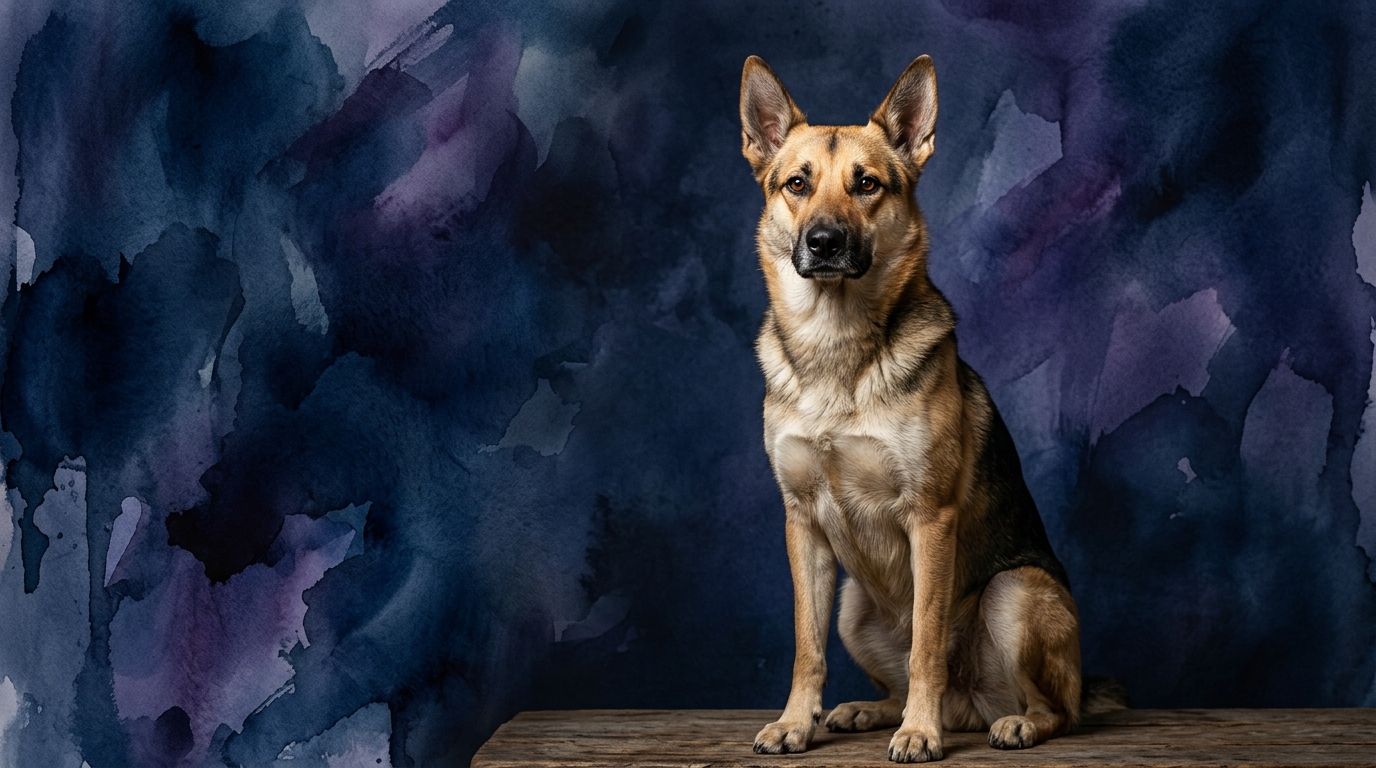
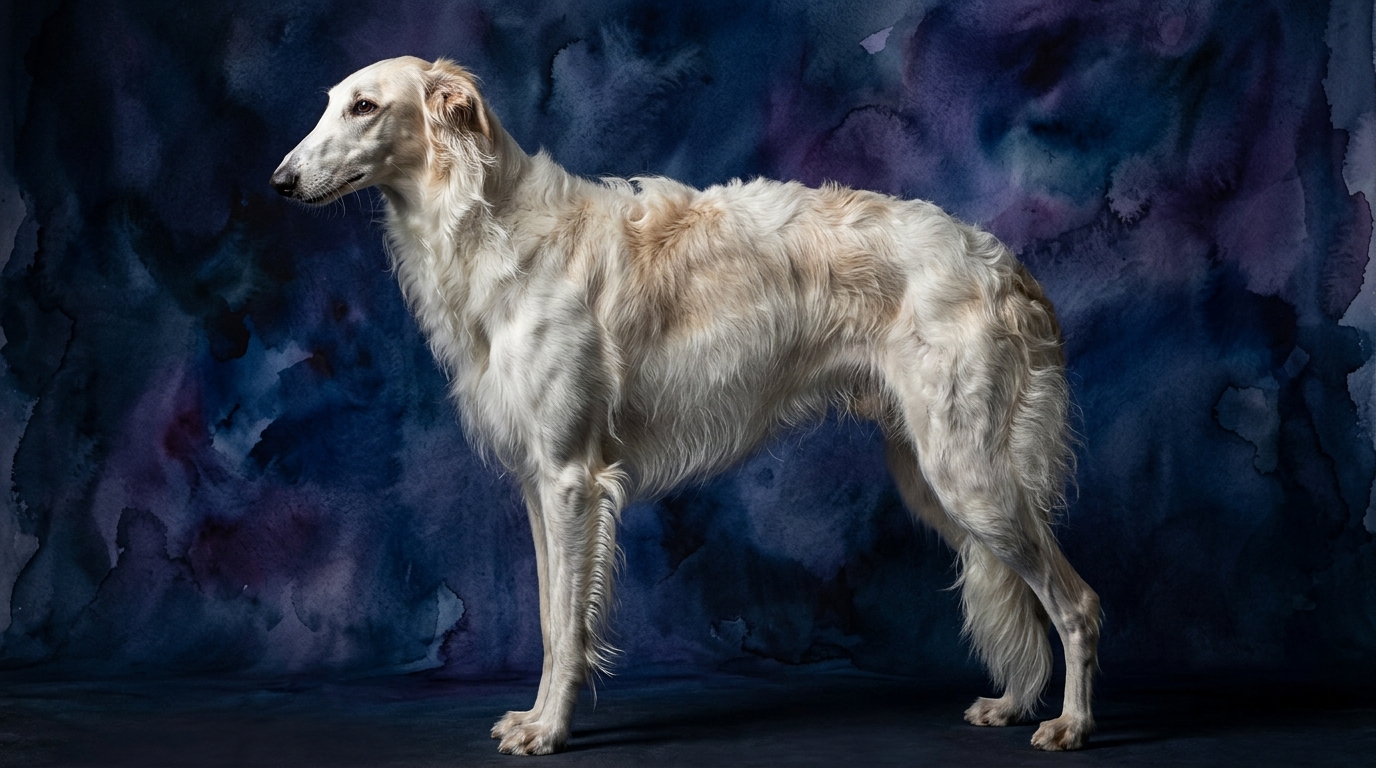
Side-by-Side IQ Profile: Canaan Dog vs. Borzoi
The Cosmic Pet Pet IQ Lab employs five dimensions to evaluate canine intelligence, offering a nuanced view beyond simple obedience rankings. Let's delve into how the Canaan Dog and Borzoi stack up across these critical cognitive areas, noting their Coren ranks of #43 and #75 respectively, which primarily reflect working and obedience intelligence.
The **Canaan Dog (Herding Group, Coren Rank #43)** exhibits a balanced cognitive profile shaped by its ancient origins and herding role. Its **Problem Solving (3/5)** capacity is moderate, often showcasing independent thought to navigate obstacles or manage situations, relying on its own judgment rather than constant human direction. **Training Speed (3/5)** is also moderate; while capable, they require consistent, engaging methods and a clear purpose for tasks, as their independent streak means they are not always eager to please for its own sake. Their **Social Intelligence (3/5)** is moderate, characterized by observation and strong bonds within their family unit, though they maintain a reserved demeanor with strangers. The Canaan Dog's **Instinctive Drive (3/5)** manifests as a natural inclination to survey, protect, and sometimes 'manage' their environment and family members, rooted in their herding and guarding heritage. A standout trait is their **Memory (4/5)**, demonstrating strong retention of commands, routines, and experiences, which can significantly aid in consistent learning but also means they remember perceived slights.
Conversely, the **Borzoi (Hound Group, Coren Rank #75)** presents a cognitive profile finely tuned for its sighthound purpose. Their **Problem Solving (3/5)** is moderate, primarily focused on visual cues and efficient pursuit, excelling at calculating the quickest path to a moving target or navigating complex terrain during a chase rather than intricate mental puzzles. **Training Speed (3/5)** is moderate, similar to the Canaan Dog; they learn efficiently but their sighthound independence and desire to chase can often override compliance, necessitating engaging, positive methods. Their **Social Intelligence (3/5)** is moderate, characterized by sensitivity and deep family bonds, but they maintain a dignified reserve with strangers, observing rather than actively engaging. The Borzoi's **Instinctive Drive (3/5)** is powerfully channeled into their sighthound prey drive, manifesting as an overwhelming impulse to pursue anything that moves quickly, which is a central component of their cognitive makeup. Their **Memory (3/5)** is moderate, allowing them to recall routines and learned commands, especially those associated with positive reinforcement, though perhaps less focused on intricate details or complex sequences compared to breeds with higher memory scores, particularly when their prey drive is activated.
Where the Canaan Dog Wins Cognitively
The Canaan Dog's cognitive edge primarily lies in its superior memory and its adaptable problem-solving, which is more broadly applicable beyond a single instinctive focus. Their 4/5 memory score means they retain information, both positive and negative, with greater fidelity than the Borzoi’s 3/5. This translates to a dog that can master complex sequences of commands more reliably over time and remember specific locations or patterns with more precision. For instance, a Canaan Dog might more readily recall the exact location of a misplaced toy or a specific path taken on an infrequent walk, whereas a Borzoi's memory might be more task-specific, like remembering a particular scent trail.
Their problem-solving, while rated 3/5 like the Borzoi, is less specialized. Derived from a history of independent survival and herding, a Canaan Dog might be more inclined to figure out how to open a gate or unlatch a cabinet, demonstrating a generalized inquisitiveness and adaptive thinking. They are less likely to be solely driven by a visual chase stimulus, allowing their cognitive resources to be applied to a wider range of environmental challenges. This breed's Coren rank of #43, compared to the Borzoi's #75, reflects this broader application of their cognitive skills in obedience and working tasks, where a good memory and versatile problem-solving are assets.
Where the Borzoi Wins Cognitively
While the Borzoi's overall Coren rank is lower, their cognitive strengths are highly specialized and effective within their intended purpose: the pursuit of fast-moving game. Their problem-solving, rated 3/5, shines brightest in dynamic, high-speed scenarios. A Borzoi excels at calculating the most efficient intercept course for a fleeing object, rapidly adjusting its strategy based on the target's movements and environmental obstacles. This isn't about opening a latch; it's about optimizing a chase, a complex cognitive task involving spatial reasoning, predictive tracking, and rapid decision-making under pressure.
Their instinctive drive, also 3/5, is a powerful, focused engine that fuels this cognitive specialization. When their sighthound instincts are engaged, their attention becomes singularly fixated, demonstrating an unparalleled cognitive efficiency in that specific domain. While their memory score is 3/5, it is perfectly adequate for remembering the 'rules' of the chase, the layout of familiar hunting grounds, or the subtle cues of their human companions that initiate such activities. Their social intelligence, also 3/5, allows them to cooperate with human hunters, understanding the setup and release cues, even if their ultimate focus shifts to the prey. The Borzoi's cognitive 'win' is in its magnificent, single-minded dedication to its primary drive, transforming it into a highly effective, specialized pursuit machine.
Which is Easier to Train and Why
Determining which breed is 'easier' to train requires understanding their inherent motivations and cognitive biases, as both score 3/5 in Training Speed. The Canaan Dog, with its Herding group background and superior memory (4/5), tends to be more receptive to consistent, structured training that leverages its retention. They thrive when given a job to do and appreciate clear boundaries, making them capable of learning a wide array of commands and routines. However, their independent 'pariah' heritage means they can be stubborn if they don't see the point or if training feels unfair. They need a handler who is firm, fair, and engaging, but once a lesson is grasped, their strong memory ensures it sticks.
The Borzoi, despite also scoring 3/5 in Training Speed, presents a different set of training challenges. Their sighthound nature means their primary cognitive focus is often on visual stimuli and the exhilarating thrill of the chase. While they are sensitive and can form strong bonds, their instinctive drive (3/5) to pursue moving objects can be profoundly distracting. A Borzoi might perfectly execute a 'stay' command in a quiet room, but the sight of a squirrel darting across a field can instantly override all learned behaviors. Training a Borzoi requires immense patience, positive reinforcement, and a deep understanding of their prey drive, often necessitating a securely fenced area or a long lead. Their independence isn't rooted in managing a flock but in making split-second decisions during a chase, meaning they are less inclined to constantly check in with their handler. Therefore, while both require commitment, the Canaan Dog's training might feel more like teaching a capable but opinionated student, whereas the Borzoi's training often involves competing with a powerful, deeply ingrained instinct. For a novice, the Canaan Dog might prove marginally 'easier' due to its better memory and a less overriding, single-minded instinctive drive.
Which Suits Active Owners vs. Relaxed Owners
The choice between a Canaan Dog and a Borzoi significantly depends on an owner's lifestyle, particularly their activity level and willingness to engage with specific breed needs. For **active owners**, the Canaan Dog presents a compelling option. While their instinctive drive is 3/5, it manifests as a need for purpose and mental stimulation alongside physical activity. Owners who enjoy activities like dog sports (agility, obedience, herding trials), long hikes, or structured 'jobs' for their dog will find the Canaan Dog's cognitive makeup aligns well. Their moderate problem-solving and social intelligence mean they enjoy learning and engaging in interactive play, but their memory (4/5) and independent streak require consistency and mental challenges to prevent boredom-induced behaviors. An active owner for a Canaan Dog isn't just about physical exercise; it's about providing a structured environment where their cognitive abilities are regularly exercised and their herding instincts are channeled constructively.
For **relaxed owners**, the Borzoi might seem counter-intuitive given their powerful sighthound drive, but they can surprisingly fit this profile under specific conditions. While they need bursts of intense physical activity – a secure, large space for a full-speed sprint is non-negotiable – their indoor demeanor is often remarkably calm and dignified. A 'relaxed owner' for a Borzoi is one who understands that their dog needs significant, focused exercise in a controlled environment, but then is content with a quiet, elegant companion indoors. Their moderate social intelligence means they are not overly demanding of constant attention, preferring to observe or lounge regally. However, this relaxed owner must be acutely aware of the Borzoi's instinctive drive (3/5) and manage it responsibly, meaning no off-leash walks in unsecured areas. They are not a dog for casual strolls in open, unfenced spaces. The relaxation comes from their quiet nature indoors, not from a lack of exercise needs. In essence, an active owner for a Canaan Dog is one who wants to *do things* with their dog, engaging their mind and body. A relaxed owner for a Borzoi is one who provides the necessary high-intensity exercise in bursts, then appreciates a serene, independent companion for the rest of the day, carefully managing their prey drive.
The Verdict
Choose Canaan Dog if: You are seeking a capable, independent canine partner who thrives on consistent training, mental challenges, and structured activities, and you appreciate a breed with strong memory and versatile problem-solving. They are an excellent choice for owners prepared to engage with a dog that thinks for itself and benefits from a clear 'job' or purpose.
Choose Borzoi if: You are drawn to an elegant, dignified companion who requires dedicated, high-intensity sprinting opportunities in a secure environment, and you appreciate their specialized cognitive focus on pursuit coupled with a calm indoor presence. They are ideal for owners who understand and respect their powerful sighthound instincts and are committed to managing them responsibly.
🧠 Find Your Pet's IQ Score
Our Pet IQ Lab assessment covers 25+ tests across 5 cognitive dimensions — personalized to your breed.
Take the Full IQ Test →Frequently Asked Questions
Do Canaan Dogs or Borzoi get along well with other pets?
Canaan Dogs, with their moderate social intelligence and herding background, can generally coexist with other pets if properly socialized from a young age, often taking on a 'herding' role with smaller animals. Borzoi, however, possess a strong sighthound prey drive; while they can live peacefully with cats or smaller dogs if raised with them, their instinct to chase anything that runs can be a significant risk for unfamiliar small animals.
Are Canaan Dogs or Borzoi better for first-time dog owners?
Neither breed is typically recommended for first-time dog owners due to their independent natures and specific needs. Canaan Dogs require an experienced hand to manage their independent thinking and protective instincts, while Borzoi demand an owner who can consistently manage their powerful prey drive and provide adequate, safe exercise opportunities.
How do their grooming needs compare?
Canaan Dogs have a relatively low-maintenance double coat that requires weekly brushing to manage shedding and keep it healthy. Borzoi, with their long, silky coats, require more extensive grooming, including regular brushing several times a week to prevent mats and tangles, particularly around their feathering, and more frequent bathing.