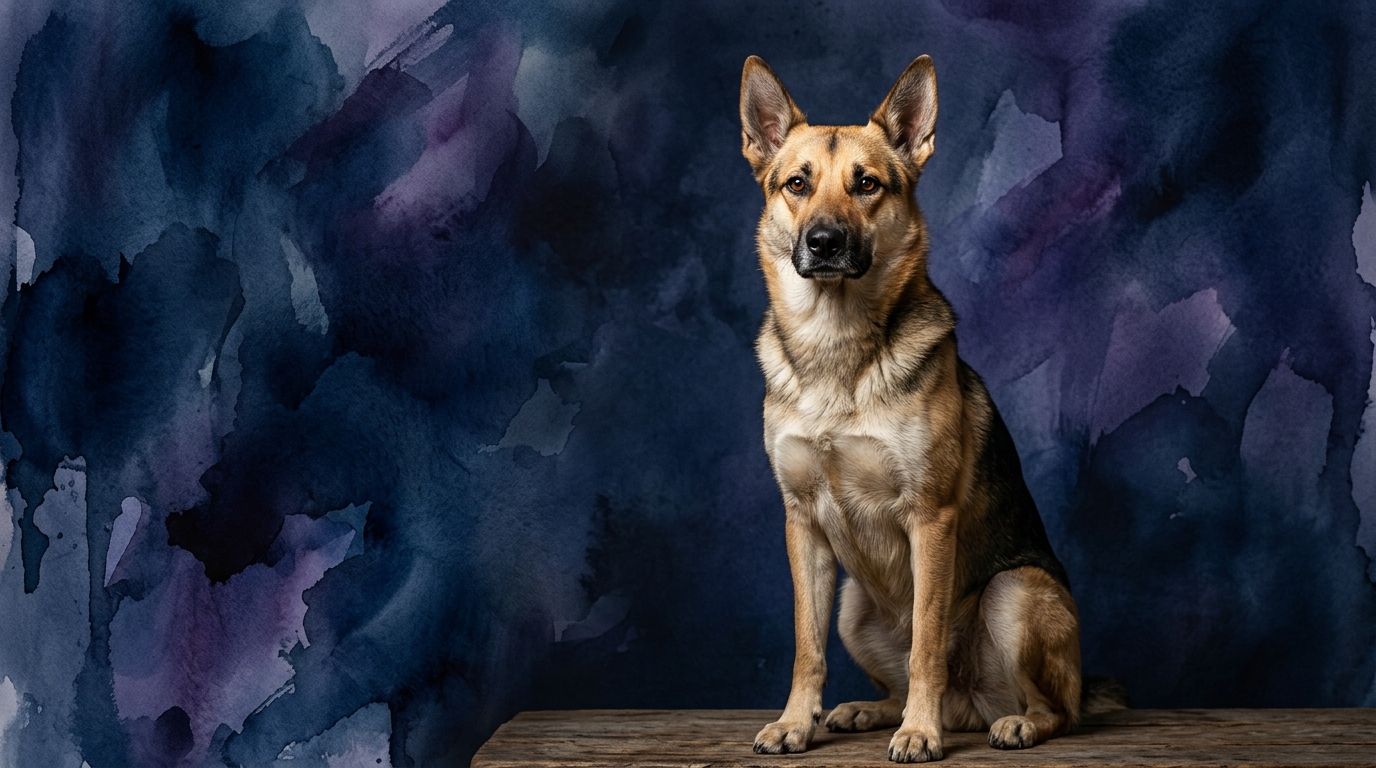
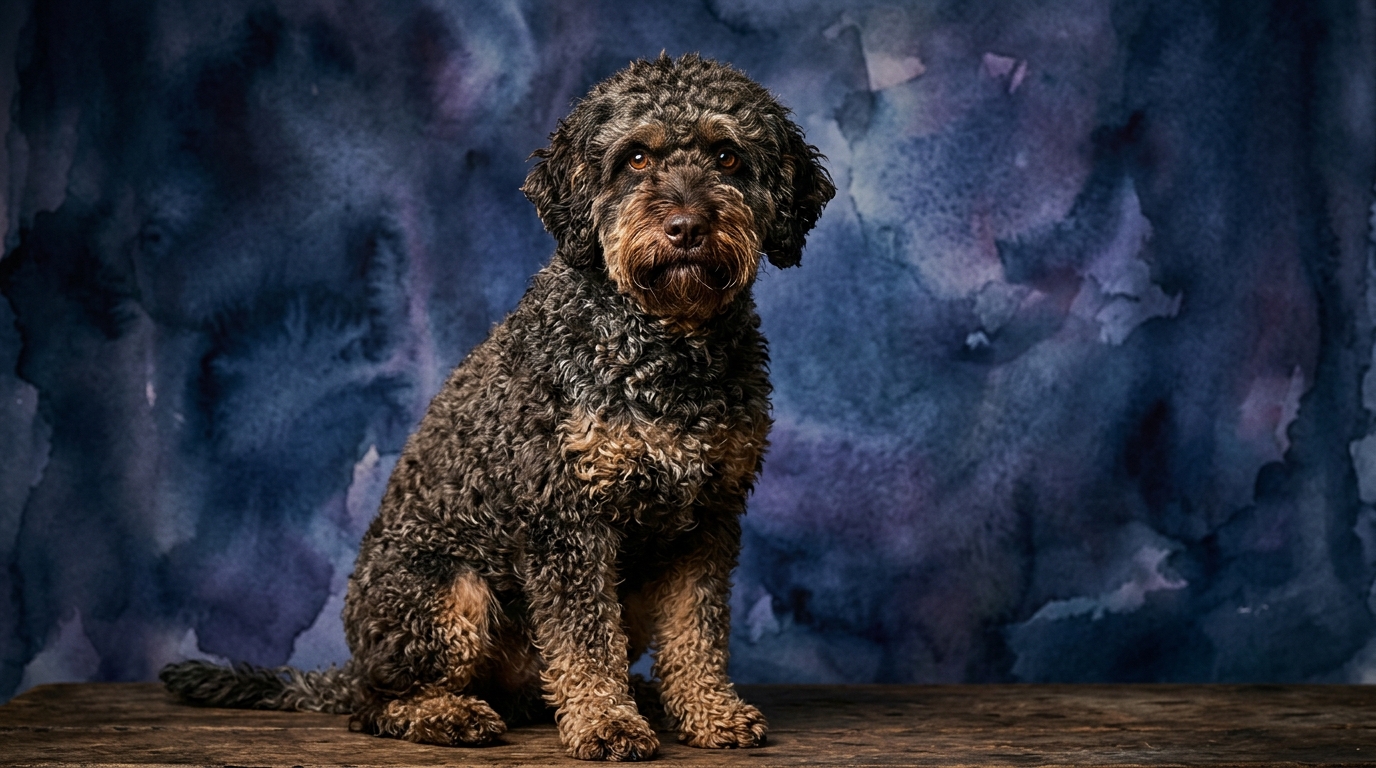
Side-by-Side Cognitive Profiles: Canaan Dog vs. Spanish Water Dog
The Cosmic Pet Pet IQ Lab employs a five-dimensional framework to assess canine intelligence, offering a granular view beyond generic labels. Let's examine how the Canaan Dog and Spanish Water Dog measure up across these specific cognitive traits, considering their backgrounds and inherent drives.
The Canaan Dog, ranked #43 by Coren, is a primitive herding breed with a rich history as a pariah dog in the Middle East. Their scores reflect a self-reliant and observant nature. Their Problem Solving is rated 3/5, indicating a solid capacity for independent thought and finding solutions to novel challenges, often relying on their own judgment rather than immediate human direction. Their desert origins fostered self-reliance, meaning they're adept at navigating complex environments and figuring things out when resources or guidance are scarce. They won't always wait for instructions if a solution is obvious to them. Training Speed for the Canaan Dog is also 3/5, suggesting they learn new commands and behaviors at a moderate, steady pace. This isn't due to a lack of capacity, but often linked to their independent nature; they need to understand the 'why' behind a command and may offer resistance if it doesn't align with their perceived self-interest or logic. Consistency and positive reinforcement are key.
In Social Intelligence, the Canaan Dog scores 3/5, reflecting a balanced ability to read and respond to human and canine social cues. They form deep bonds with their immediate family, exhibiting loyalty and protective instincts. However, their pariah dog heritage often makes them reserved with strangers and other animals, requiring careful socialization to develop appropriate social etiquette beyond their inner circle. They assess situations before engaging fully. Their Instinctive Drive is 3/5, with their herding background evident in this score, indicating a moderate but present drive to work, patrol, and manage resources. This can manifest as a desire to keep their 'flock' (family) together, observe their territory, and sometimes exhibit prey drive. It's not an overwhelming, constant need for intense work, but a consistent underlying motivation that requires appropriate outlets. A standout trait for the Canaan Dog is their Memory at 4/5. This signifies an excellent capacity to recall past experiences, learned behaviors, and even specific locations or people over extended periods. This contributes to their self-sufficiency and their ability to adapt to changing conditions based on prior learning. It also means they remember both good and bad experiences vividly, which can impact future training and interactions.
The Spanish Water Dog, another herding breed, is not Coren-ranked but presents a comparable yet distinct cognitive profile. Their Problem Solving is 3/5, similar to the Canaan Dog. Their historical role involved independent work with livestock and retrieving, often in varied terrains and conditions, demanding quick thinking to overcome obstacles. They are resourceful, capable of devising strategies to achieve goals, whether it's navigating a complex agility course or figuring out how to open a cupboard. Training Speed for the Spanish Water Dog is also 3/5, indicating a moderate learning pace. They are generally eager to please their handlers, which can aid in training, but their energetic and sometimes strong-willed nature means they require patient, consistent, and engaging methods. They can pick up commands effectively, but mastery and reliability often come with repetition and clear structure, especially in distracting environments.
Their Social Intelligence is 3/5. This breed typically shows a good capacity for social interaction, forming strong bonds with their family. They are often described as devoted and attentive to their owners' moods and intentions. However, like many herding breeds, they can be reserved or cautious with strangers, observing before accepting. Early and extensive socialization is crucial to foster appropriate responses and prevent excessive shyness or territoriality. The Spanish Water Dog's Instinctive Drive is 3/5, reflecting their working heritage. This means they possess a moderate but palpable need for mental and physical engagement. This drive manifests in their desire to herd, retrieve, and participate in activities. They thrive when given a 'job' to do, whether it's advanced obedience, dog sports, or assisting with farm tasks. Without sufficient outlets, this drive can lead to boredom and potentially undesirable behaviors. Finally, their Memory is 3/5. The Spanish Water Dog exhibits a solid memory, capable of retaining learned commands, routines, and experiences. A 3/5 score suggests they remember effectively for practical purposes, allowing them to build upon past training and recognize familiar people and places. While reliable, their memory might not be as acutely detailed or long-lasting in every specific instance as a breed scoring higher, meaning occasional refreshers can be beneficial for less frequently practiced skills.
Where the Canaan Dog Wins Cognitively
The Canaan Dog distinctly edges out the Spanish Water Dog in the dimension of memory, scoring a 4/5 compared to the Spanish Water Dog's 3/5. This superior recall capacity means a Canaan Dog is more likely to retain complex sequences of learned behaviors, remember specific environmental cues, and internalize lessons from past experiences with greater longevity and detail. For instance, if taught an intricate multi-step task, a Canaan Dog might require fewer refreshers over time to perform it flawlessly, drawing upon a more robust internal catalog of past successes and failures. This enhanced memory also contributes to their independent problem-solving, as they can more readily access a wider range of past solutions to apply to new challenges without direct human intervention. Their ability to remember detailed past events contributes to their cautious nature and their deep understanding of their environment and the people within it.
Where the Spanish Water Dog Wins Cognitively
While the Spanish Water Dog's individual cognitive scores largely parallel or are slightly below the Canaan Dog's, their combined profile often translates into a unique cognitive advantage in specific contexts. Their problem-solving (3/5) and instinctive drive (3/5), coupled with a temperament often described as more overtly people-focused than the independent Canaan, means they are particularly adept at collaborative problem-solving. They might not possess the Canaan's superior memory for every minute detail, but their focused attention on their handler allows them to excel in dynamic, real-time tasks where quick interpretation of human cues and immediate application of learned skills are paramount. Their moderate memory (3/5) might also allow for a degree of 'forgiveness' for past training missteps, making them potentially more resilient to minor inconsistencies, focusing more on the present interaction rather than dwelling on historical errors. This makes them highly adaptable to varied training styles and environments, as long as they feel connected to their handler.
Which is Easier to Train and Why
Despite both breeds scoring a 3/5 in training speed, the perceived 'ease' of training can differ significantly due to their broader cognitive and temperamental profiles. The Spanish Water Dog, while possessing a moderate learning curve, often approaches training with a pronounced desire to engage with their owner. Their social intelligence (3/5) often manifests as a keen attentiveness to human feedback and a willingness to cooperate, especially when the training is structured, positive, and varied. This eagerness to please can make them feel more responsive and 'easier' for an owner who provides clear direction and consistent motivation, as they are often keen to work alongside their person.
In contrast, the Canaan Dog's training speed of 3/5 is often tempered by their robust memory (4/5) and independent problem-solving (3/5). They are thinking dogs who process information deeply and may question the utility of a command if it doesn't immediately make sense to them. Their independent nature, stemming from their pariah dog history, means they are less inherently driven to simply 'obey' for the sake of it. While they learn and retain information exceptionally well, their training requires an owner who understands their need for clear logic, mutual respect, and patience. They may not be as outwardly 'eager' to perform repetitive tasks, and an owner needs to build a strong bond and demonstrate consistent leadership to earn their full cooperation. Therefore, for an experienced owner who appreciates a dog that thinks for itself, the Canaan Dog can be a rewarding, if challenging, training partner. For a novice owner seeking a dog that leans into collaboration, the Spanish Water Dog might initially feel more tractable.
Which Suits Active Owners vs. Relaxed Owners
Both the Canaan Dog and Spanish Water Dog, with their 3/5 instinctive drive, are inherently suited for active owners. Their herding lineage means they possess a moderate, consistent need for mental stimulation and physical exercise. A relaxed owner who cannot provide daily outlets for this drive will likely find either breed challenging, potentially leading to boredom-driven behaviors such as excessive barking, digging, or destructive chewing.
However, the *nature* of their activity preferences can differ. The Spanish Water Dog often thrives on collaborative activities, such as retrieving games, agility, or herding trials where they work closely with their owner. Their social intelligence (3/5) and desire to engage make them excellent partners for owners who enjoy shared adventures like hiking, running, or dog sports. They are generally adaptable to various forms of exercise as long as it's consistent and engaging, readily participating in whatever their human companion initiates.
The Canaan Dog, while also needing activity, might be more content with independent exploration or tasks that allow them to utilize their impressive memory and problem-solving skills. Long, varied walks where they can investigate scents and observe their surroundings, or puzzle toys that challenge their intellect, can be highly satisfying. While they enjoy activities with their family, their independent streak means they might be less demanding of constant interaction during exercise, appreciating moments of solitary observation. Therefore, an active owner who appreciates a dog that can engage both alongside them and independently might find the Canaan Dog a suitable match, while an owner who desires a constant, enthusiastic partner for shared athletic pursuits might lean towards the Spanish Water Dog.
The Verdict
Choose the Canaan Dog if you value deep memory and independent thought, and are prepared to engage a discerning, self-reliant canine partner with consistent, respectful training. Their capacity for long-term recall makes them fascinating companions for experienced handlers.
Opt for the Spanish Water Dog if you seek an enthusiastic, collaborative companion for shared adventures, appreciating their eagerness to work alongside you with moderate memory and problem-solving skills. They thrive on partnership and shared activities.
🧠 Find Your Pet's IQ Score
Our Pet IQ Lab assessment covers 25+ tests across 5 cognitive dimensions — personalized to your breed.
Take the Full IQ Test →Frequently Asked Questions
Are Canaan Dogs good family pets despite their independence?
Yes, Canaan Dogs are deeply loyal to their immediate family, forming strong bonds and often acting protectively. Their independence means they may not be overtly demonstrative with affection, but they are devoted companions who thrive with consistent socialization and a clear family structure.
Do Spanish Water Dogs require professional grooming?
Spanish Water Dogs have a unique corded or curly coat that is low-shedding but requires specific care to prevent matting. While not requiring brushing, their coat needs regular attention, often involving clipping a few times a year, and can benefit from professional grooming to maintain its health and appearance.
How do their herding instincts manifest in a home environment?
Both breeds may exhibit herding behaviors like nudging, circling, or attempting to 'gather' family members, especially children or other pets. They might also be observant of their surroundings, patrolling the yard or reacting to perceived threats, reflecting their inherent drive to manage and protect their territory and 'flock.'