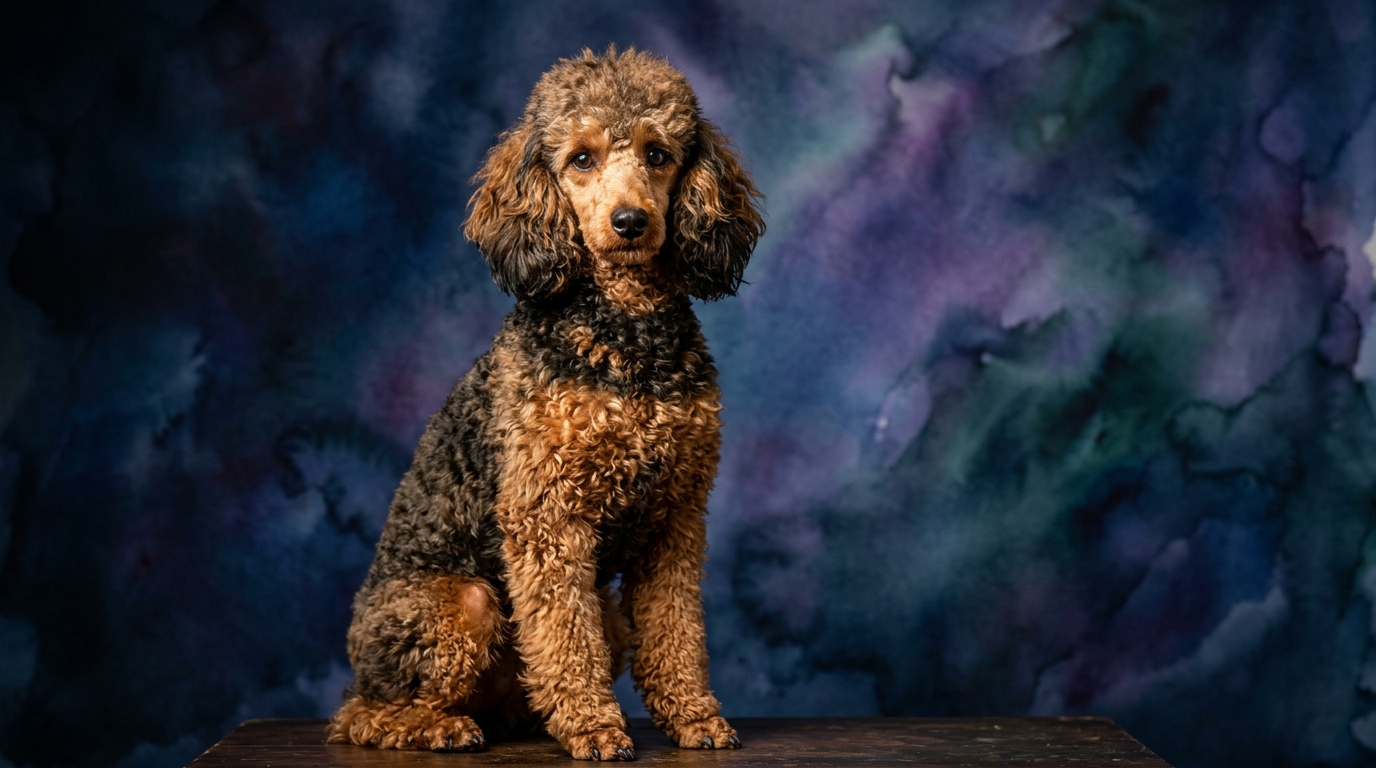
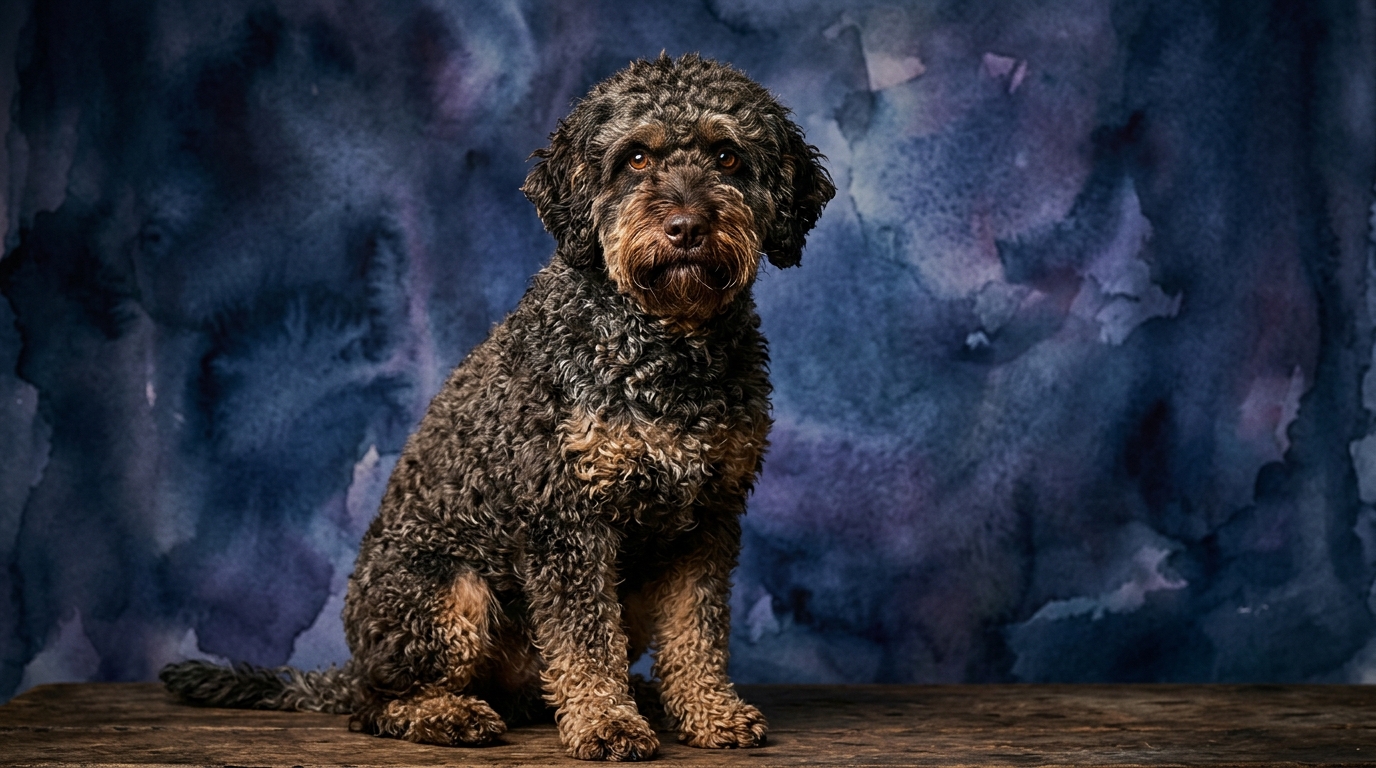
Side-by-Side IQ Profile
The Cosmic Pet Pet IQ Lab employs five key dimensions to evaluate canine intelligence, offering a nuanced understanding of each breed's cognitive strengths and predispositions. Here's how the Poodle (Standard) and the Spanish Water Dog compare:
Poodle (Standard): Non-Sporting Group, Coren Rank #2
Problem Solving (5/5): This breed often approaches novel challenges with methodical curiosity, quickly assessing situations and devising effective strategies, whether manipulating latches or navigating complex obstacle courses.
Training Speed (5/5): Poodles exhibit remarkable alacrity, associating commands with actions quickly, often grasping new concepts in very few repetitions and demonstrating a keen desire to engage in structured learning.
Social Intelligence (5/5): Their capacity to interpret human cues, understand emotional states, and adapt behavior accordingly is pronounced, making them highly attuned companions forming deep, reciprocal bonds.
Instinctive Drive (4/5): While not primarily driven by intense prey or herding, Poodles possess a discernible retrieve drive and a natural inclination for cooperative work, often channeled into activities like agility or scent work.
Memory (5/5): Their ability to retain learned behaviors, recall specific locations, and remember complex sequences of commands over extended periods is exceptional, contributing to consistent performance and adaptability.
Spanish Water Dog: Herding Group, Not Coren-Ranked
Problem Solving (3/5): Spanish Water Dogs tend to approach problems with a practical, sometimes trial-and-error method, capable of figuring out solutions but potentially taking more time or requiring direct guidance.
Training Speed (3/5): While capable of learning, SWDs may require consistent repetition and patience during training, processing new commands at a moderate pace and sometimes needing extra motivation to maintain focus.
Social Intelligence (3/5): They are observant of their human companions but often maintain independence; their social interactions are typically direct and loyal to immediate family, though they might be reserved with strangers.
Instinctive Drive (3/5): As a working breed, SWDs possess a functional herding and retrieving drive, often expressed through a desire to keep their 'flock' together or work alongside their owner, though not overwhelming.
Memory (3/5): They retain learned information adequately for practical purposes, remembering routines and familiar commands, but may not recall complex sequences or less frequently practiced behaviors with the same precision.
Where Poodle (Standard) Wins Cognitively
The Standard Poodle's cognitive strengths are evident across most dimensions, particularly in their advanced problem-solving. Owners frequently observe Poodles independently figuring out how to open gates, retrieve out-of-reach toys by manipulating objects, or navigate complex puzzle toys with minimal frustration. Their training speed is equally impressive; they can pick up intricate multi-step commands or learn new agility sequences in a fraction of the time many other breeds require. This rapid acquisition of knowledge means a Poodle can progress quickly through obedience levels, master sophisticated tricks, or excel in competitive dog sports. Furthermore, their superior social intelligence allows them to finely tune into human emotions and intentions, often anticipating commands or responding empathetically to their owner's mood. Their exceptional memory ensures these learned behaviors and social cues are retained over long periods, making them consistently reliable companions. This holistic cognitive advantage allows the Standard Poodle to thrive in environments demanding adaptability, quick thinking, and a strong partnership.
Where Spanish Water Dog Wins Cognitively
While the Spanish Water Dog's cognitive profile might appear less flashy, their strengths lie in practical intelligence and resilience. Their instinctive drive (3/5) is focused and purposeful, geared towards real-world tasks like herding or retrieving from water. This drive translates into a persistent, hands-on approach to their environment, making them excellent partners for active pursuits that mimic their historical roles, such as dock diving or herding games. Unlike the Poodle's broad adaptability, the SWD's cognitive strengths are often tethered to their work ethic and self-reliance. When faced with a challenging terrain or a task requiring sustained effort, their problem-solving, while not always rapid, is characterized by determined, independent effort. They possess a robust memory for practical routines and environmental layouts, allowing them to navigate familiar territories or remember their 'flock' with quiet efficiency. Their social intelligence, while reserved, fosters deep, unwavering loyalty within their immediate family, building trust through consistent interaction. This breed excels when given a job that taps into their inherent abilities, demonstrating grounded, enduring cognitive fortitude.
Which is Easier to Train and Why
Based on their IQ profiles, the Poodle (Standard) is unequivocally easier to train. Their 5/5 rating in Training Speed indicates an innate eagerness and capacity to absorb new commands and behaviors with remarkable alacrity, often requiring only a few repetitions. This rapid learning curve, combined with their 5/5 Social Intelligence, means Poodles are highly attuned to their handler's cues, making communication during training incredibly fluid. They typically possess a strong desire to please and engage, making them highly motivated participants. In contrast, the Spanish Water Dog, with a 3/5 Training Speed, often requires more patience, consistency, and a varied approach to maintain engagement. Their learning process is steady, and they may need more repetitions to solidify new behaviors. Their 3/5 Social Intelligence means they might be less inclined to interpret subtle human cues and may require clearer, more direct instruction. SWDs can also exhibit independent thought, which, while valuable for certain tasks, can sometimes be perceived as stubbornness in conventional obedience. Successful training with an SWD involves making it highly engaging, relevant to their natural drives, and utilizing positive reinforcement to build a strong working relationship.
Which Suits Active Owners vs. Relaxed Owners
For owners seeking a highly engaged and adaptable canine companion for a wide range of activities, the Poodle (Standard) is an excellent fit. Their exceptional problem-solving, training speed, and social intelligence mean they thrive in environments offering mental stimulation, advanced training, and interactive play. Poodles excel in dog sports like agility, obedience, rally, and even scent work, making them ideal for active owners who enjoy teaching new skills and participating in competitive events. Their cooperative nature and strong memory also make them suitable for therapy work or as service dogs, where consistent performance and social awareness are paramount. The Spanish Water Dog, while also an active breed, suits owners who appreciate a more independent, task-oriented partner with a natural inclination for outdoor pursuits. Their instinctive drive and practical problem-solving make them well-suited for owners who enjoy hiking, swimming, or engaging in activities that allow them to utilize their herding or retrieving instincts. They thrive with owners who provide consistent structure and understand their need for a 'job,' even if it's just regular, vigorous exercise. While they can be affectionate, their social intelligence suggests they might prefer a quieter, more routine home life compared to the Poodle's eagerness for constant interaction and novelty, making them less ideal for owners seeking a purely relaxed, low-engagement companion.
The Verdict
Choose the Standard Poodle if you are seeking a highly adaptable, rapidly learning companion eager for complex training, competitive dog sports, and deep social engagement. Their cognitive prowess makes them ideal for owners who thrive on teaching new skills and fostering a dynamic, interactive partnership.
Opt for the Spanish Water Dog if you prefer an independent, resilient working partner who excels in practical outdoor activities and thrives on consistent routines and purpose-driven engagement. This breed suits owners who appreciate a grounded, loyal companion with a strong, natural work ethic.
🧠 Find Your Pet's IQ Score
Our Pet IQ Lab assessment covers 25+ tests across 5 cognitive dimensions — personalized to your breed.
Take the Full IQ Test →Frequently Asked Questions
Do Standard Poodles get bored easily?
Yes, their high problem-solving and memory scores mean Standard Poodles require consistent mental stimulation; without it, they may become restless or develop their own, sometimes undesirable, 'projects.' Providing puzzle toys, regular training sessions, and varied activities helps keep their minds engaged.
Is the Spanish Water Dog good for first-time dog owners?
Spanish Water Dogs can be challenging for first-time owners due to their independent nature and strong herding instincts, which require consistent, knowledgeable training and socialization. Owners must be prepared to provide clear leadership and meet their significant exercise and mental stimulation needs.
How do their instinctive drives differ in daily life?
The Poodle's instinctive drive (4/5) often manifests as a desire for cooperative play and retrieving, making them keen participants in games like fetch or scent work. The Spanish Water Dog's drive (3/5) is more rooted in herding and guarding, meaning they might try to 'herd' family members or be more watchful of their surroundings, requiring appropriate outlets for these behaviors.