A Side-by-Side Cognitive Blueprint
The Cosmic Pet Pet IQ Lab provides a unique lens through which to examine the distinct cognitive architectures of the Chihuahua and the American Staffordshire Terrier. While one is a diminutive companion and the other a sturdy, athletic breed, both possess specific intellectual strengths that cater to their historical roles and interactions with humans. Our analysis utilizes Coren's ranking for obedience and working intelligence, alongside a granular five-dimensional IQ breakdown: Problem Solving, Training Speed, Social Intelligence, Instinctive Drive, and Memory.
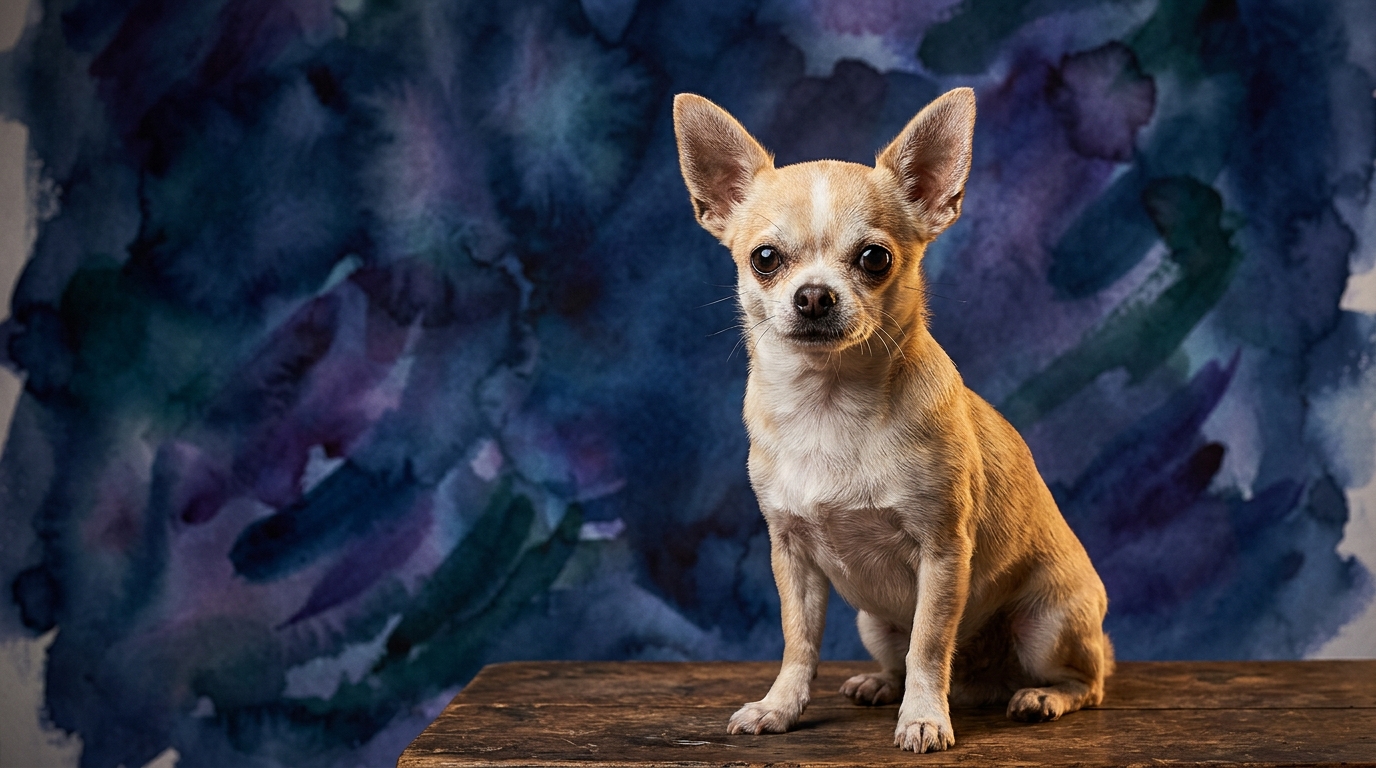
The Chihuahua, a member of the Toy group, holds a Coren rank of #67, placing it in the category of fair working/obedience intelligence, suggesting it may require more repetitions to learn new commands and might be less consistent in executing them. Its IQ profile scores Problem Solving at 3/5, Training Speed at 3/5, Social Intelligence at a notable 4/5, Instinctive Drive at 3/5, and Memory at 4/5. This suggests a dog with moderate learning capabilities but strong relational aptitude and recall.
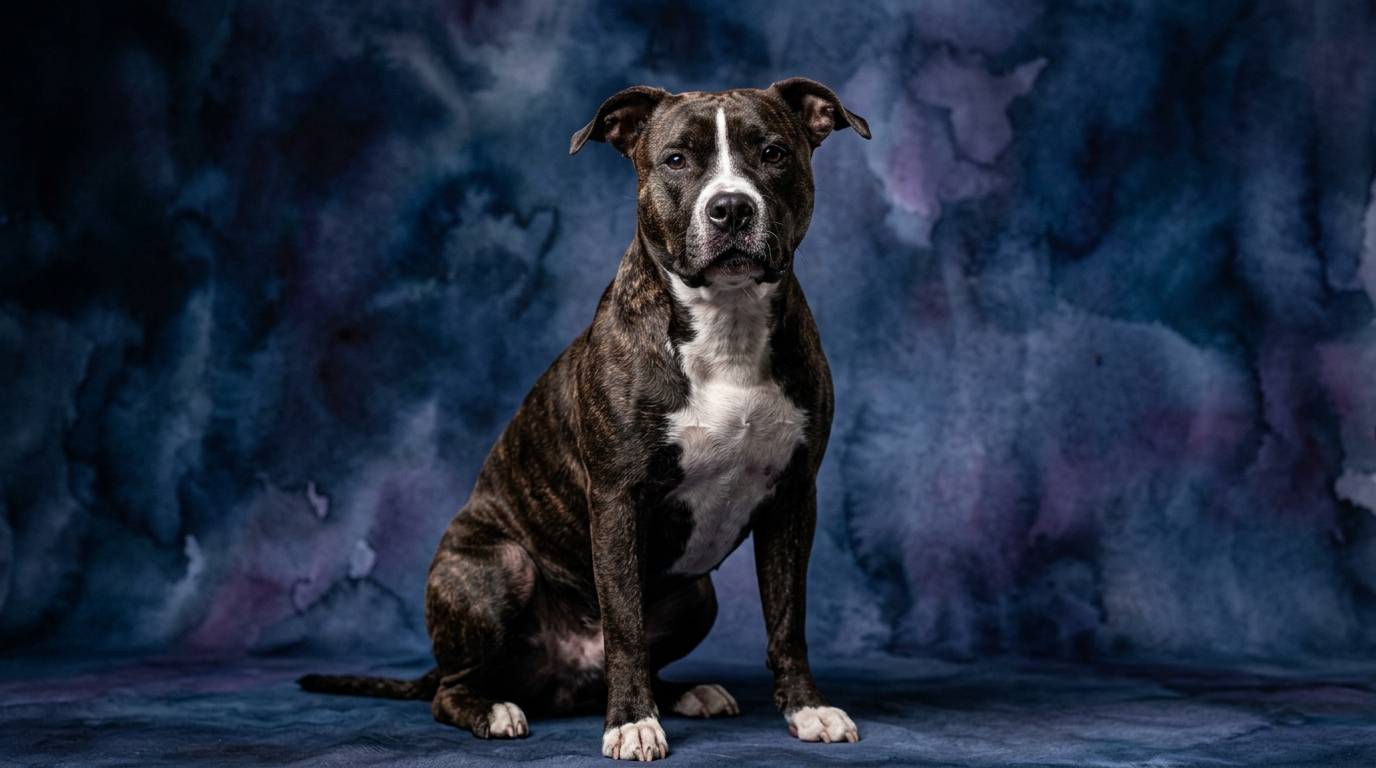
In contrast, the American Staffordshire Terrier, a powerful Terrier breed, boasts a significantly higher Coren rank of #48, indicating above-average working/obedience intelligence. This means they are typically more responsive to training and can learn new commands with fewer repetitions. Its IQ scores align closely with the Chihuahua in several areas: Problem Solving 3/5, Training Speed 3/5, Instinctive Drive 3/5, and Memory 4/5. However, its Social Intelligence is rated at 3/5, one point lower than the Chihuahua's, which hints at a different approach to social dynamics and human interaction.
Where the Chihuahua's Mind Shines
The Chihuahua's cognitive strengths are particularly evident in its exceptional Social Intelligence, scoring 4 out of 5, a point higher than the American Staffordshire Terrier. This superior social acumen means Chihuahuas are often remarkably adept at interpreting human body language, vocal inflections, and emotional states. They possess a keen ability to read the room, understand subtle shifts in mood, and adapt their behavior accordingly, often displaying a profound sensitivity to their owner's feelings. This isn't just about being affectionate; it's a sophisticated understanding of their social environment and the hierarchy within their human family.
This elevated social intelligence allows Chihuahuas to form incredibly strong, nuanced bonds, often anticipating their owner's needs or desires with an almost uncanny precision. They might learn specific routines or signals without explicit training, simply by observing and associating actions with outcomes in a social context. For instance, a Chihuahua might quickly learn the difference between 'going out' for a walk versus 'going out' for a car ride, not just from the words, but from the specific sequence of events, objects involved, and the owner's accompanying demeanor.
Furthermore, while both breeds share a 4/5 Memory score, the Chihuahua's strong recall, coupled with its social intelligence, allows it to remember complex social interactions and individual preferences over long periods. They recall who offers treats, who provides comfort, and who plays specific games, building a detailed mental map of their social world. This combination makes them highly responsive to personalized attention and reinforces their role as deeply integrated family members, making them excellent companions for those seeking a dog that truly 'gets' them on an emotional level.
Where the American Staffordshire Terrier Excels Cognitively
The American Staffordshire Terrier's cognitive prowess is most clearly underscored by its Coren rank of #48, significantly outperforming the Chihuahua at #67. This higher ranking for obedience and working intelligence indicates a greater inherent capacity for understanding and consistently executing commands, especially in structured learning environments. While their individual Problem Solving, Training Speed, Instinctive Drive, and Memory scores are numerically identical to the Chihuahua's (all 3/5 or 4/5), the AmStaff's superior Coren rank suggests a more reliable and focused application of these cognitive traits in a working context.
An AmStaff's 3/5 Problem Solving score, when combined with its Coren rank, often translates to a dog that is more persistent and methodical in tackling tangible challenges, such as figuring out how to open a gate or retrieve a hidden toy in a consistent manner. Their equal 3/5 Training Speed score, in conjunction with their higher Coren rank, implies that while they learn at a similar pace for individual tasks, they tend to retain and generalize those lessons more effectively across various situations and distractions, demonstrating a greater willingness to work alongside their handler.
The AmStaff's Instinctive Drive, also rated at 3/5, is often channeled into purposeful activities, reflecting its Terrier heritage of tenacity and focus. This drive, when guided by consistent training, makes them highly capable in dog sports like agility, obedience, or weight pull, where sustained effort and attention to task are critical. Their strong Memory (4/5) further supports their ability to master complex sequences and commands, allowing them to build a robust repertoire of learned behaviors and respond reliably over time, making them a formidable and rewarding partner for those seeking an engaged and capable working companion.
Training Ease: A Tale of Two Approaches
When evaluating ease of training, the Coren ranks provide a crucial distinction. The American Staffordshire Terrier's #48 rank suggests a dog that is generally more receptive to formal obedience training and capable of learning new commands with fewer repetitions than the Chihuahua, ranked #67. While both breeds share a 3/5 Training Speed, the AmStaff's higher working intelligence means they typically possess a greater intrinsic motivation to please and perform tasks for their handler, making structured training sessions more productive and efficient.
The AmStaff's robust physical and mental constitution often means they can handle more rigorous and consistent training methods, thriving on clear expectations and a consistent routine. Their eagerness to engage and their capacity for focus make them excellent candidates for advanced obedience, trick training, or even service work, provided their training is positive and engaging. Their 3/5 Instinctive Drive can be a powerful asset when channeled appropriately, driving them to succeed in tasks once they understand the objective.
Chihuahuas, despite their 3/5 Training Speed, often require a different training approach. Their strong Social Intelligence (4/5) means they excel at learning through observation and social cues, but their lower Coren rank suggests that formal, repetitive obedience might feel less inherently rewarding for them. They can be trained effectively, but owners may need to be more creative with motivation, utilize positive reinforcement heavily, and make training feel like a game or a social interaction rather than a chore. Their small size and sometimes feisty demeanor can lead owners to inadvertently overlook training, but consistent, gentle guidance is key to harnessing their cognitive potential, especially in areas like house-training and leash manners.
Matching Minds to Lifestyles
For owners seeking an active and engaged canine partner, the American Staffordshire Terrier is often a more natural fit. Their combination of a higher Coren rank, robust physical capabilities, and a 3/5 Instinctive Drive means they thrive in environments where they receive consistent physical exercise and mental challenges. Active owners who enjoy hiking, running, dog sports, or who are committed to daily structured play and training will find the AmStaff a willing and capable companion. They require an outlet for their energy and intelligence, and without it, they can become bored or destructive. Their social intelligence (3/5) ensures they bond deeply, but they need an owner who can lead and engage them actively.
The Chihuahua, with its exceptional 4/5 Social Intelligence and moderate exercise needs, is an ideal match for more relaxed owners who prioritize companionship and indoor activities, but who are still committed to mental stimulation. While capable of enjoying walks and light play, their primary cognitive strength lies in their ability to connect emotionally and socially with their human family. They thrive on lap time, interactive puzzle toys, and being included in daily routines, where their keen observation skills and strong memory (4/5) can be put to good use. Their portability also makes them suitable for owners who wish to bring their companion along to many social outings, where their social intelligence allows them to adapt to new people and environments with appropriate socialization.
The Verdict
Choose a Chihuahua if you seek an intensely social companion adept at understanding subtle human cues, thriving on emotional connection and companionship in a more relaxed home environment.
Opt for an American Staffordshire Terrier if you're an active owner seeking a robust, trainable partner for structured activities, dog sports, and consistent engagement in a dynamic lifestyle.
🧠 Find Your Pet's IQ Score
Our Pet IQ Lab assessment covers 25+ tests across 5 cognitive dimensions — personalized to your breed.
Take the Full IQ Test →Frequently Asked Questions
Do Chihuahuas truly have better social intelligence than American Staffordshire Terriers?
Based on our Pet IQ Lab scores, Chihuahuas rate 4/5 for Social Intelligence compared to the AmStaff's 3/5. This suggests Chihuahuas are generally more attuned to human emotions and social dynamics, making them highly responsive to subtle cues and fostering deep emotional bonds.
Does Coren's rank directly correlate with general intelligence in these breeds?
Coren's rank primarily measures 'working and obedience intelligence,' reflecting a dog's ability to learn and execute human commands. While it's a strong indicator for trainability in structured settings, it doesn't encompass all aspects of canine intelligence, such as problem-solving or social acumen, which are evaluated separately in our IQ profiles.
Can a Chihuahua excel in agility or advanced obedience despite its Coren rank?
Absolutely. While a Chihuahua's Coren rank of #67 suggests more repetitions are generally needed, individual dogs can excel with dedicated, positive, and engaging training. Their strong memory and social intelligence can be leveraged to motivate them, proving that consistent effort can overcome breed averages in specific disciplines.