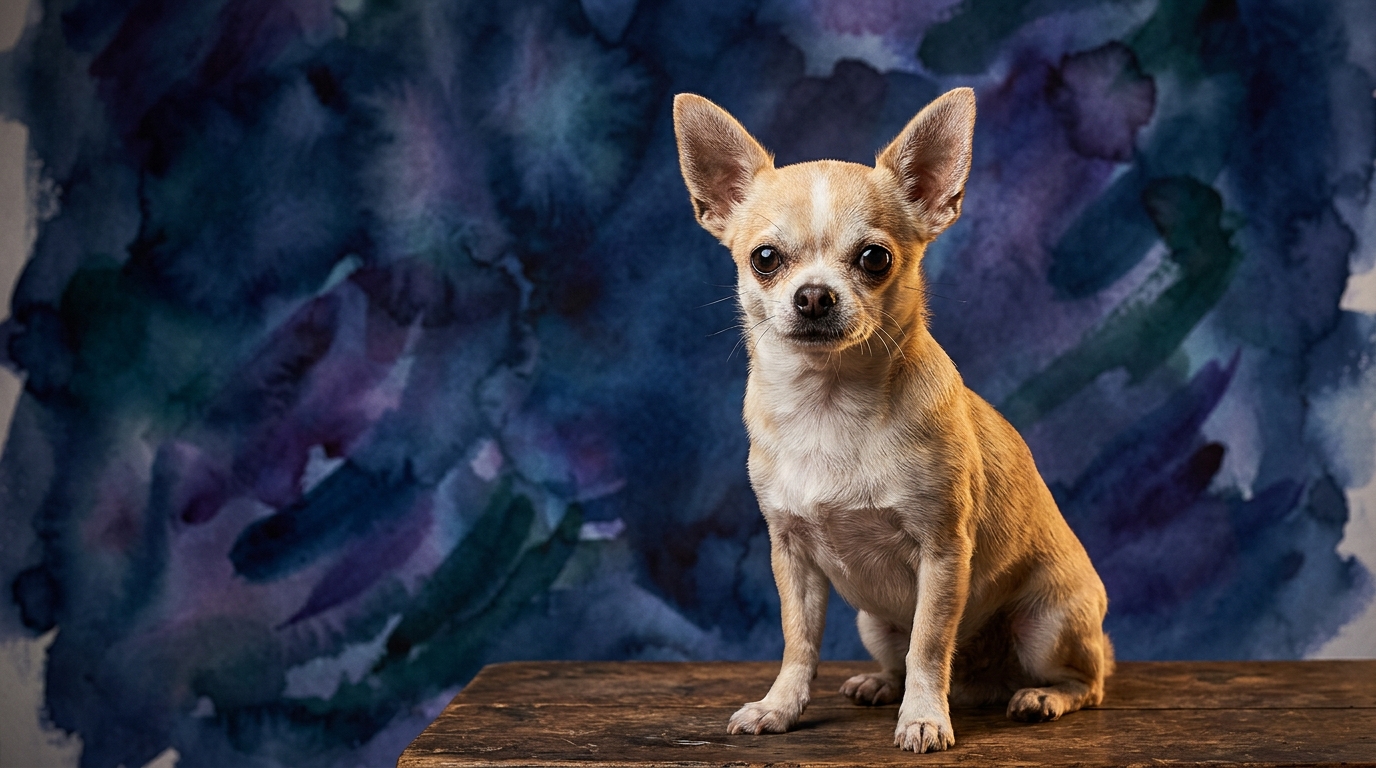
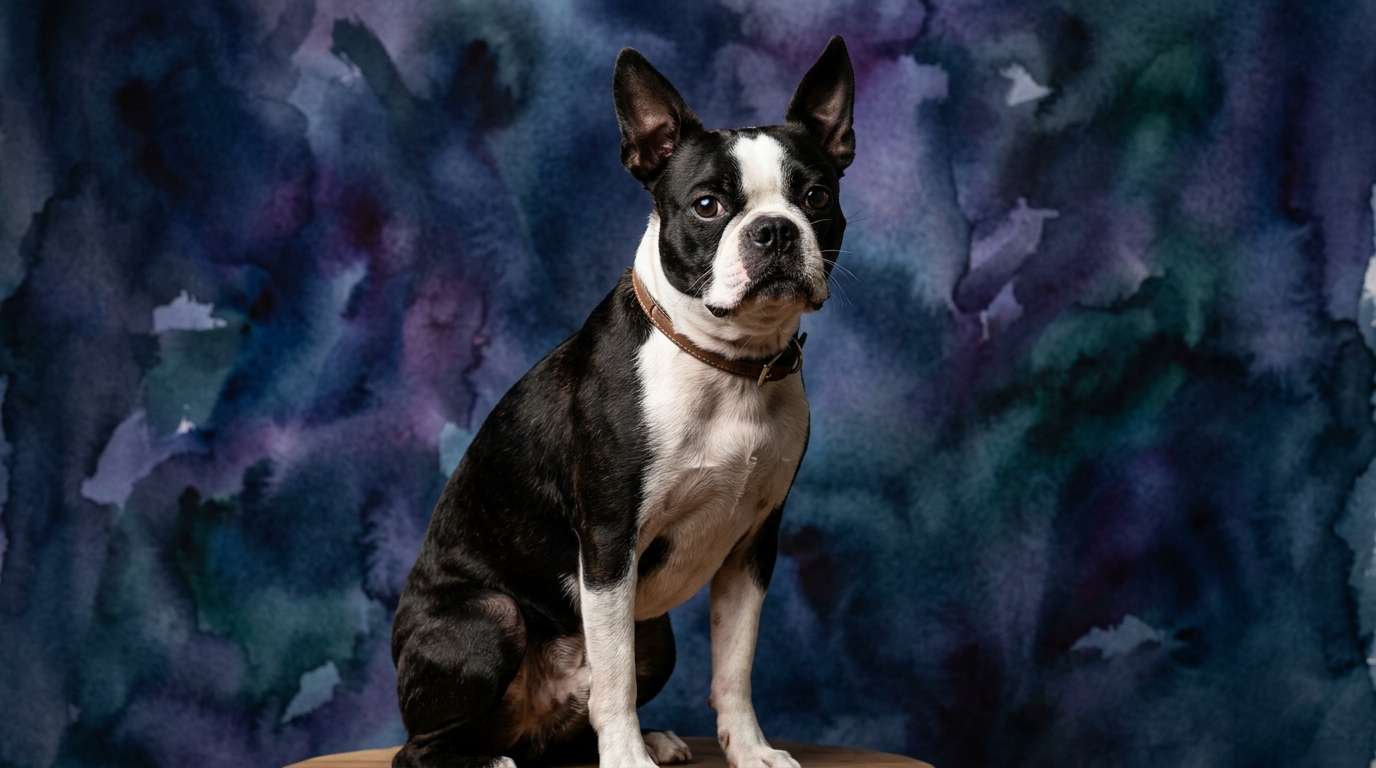
Side-by-Side Cognitive Profile: Chihuahua vs. Boston Terrier
The Cosmic Pet Pet IQ Lab employs a multi-dimensional approach to assess canine cognition, moving beyond simplistic notions of 'smartness.' For the Chihuahua, ranked #67 on the Coren scale, we observe a problem-solving ability of 3/5, indicating a moderate capacity to navigate novel challenges, often with a persistent, trial-and-error approach. Their training speed is also 3/5, suggesting they absorb new commands at an average rate, thriving on consistent, positive reinforcement. A notable 4/5 in social intelligence underscores their exceptional attunement to human emotions and social cues, making them highly perceptive companions. Their instinctive drive sits at 3/5, reflecting a moderate inclination towards breed-specific behaviors like alertness or focused engagement with their environment. Finally, their memory is a strong 4/5, enabling robust retention of learned information and past experiences.
The Boston Terrier, positioned higher at #54 on the Coren scale, shares a 3/5 rating for problem-solving, indicating a similar moderate ability to approach novel situations and figure things out. Their training speed is also 3/5, meaning they learn at an average rate, though their higher Coren rank suggests a greater reliability once commands are thoroughly understood. Like the Chihuahua, they score 4/5 in social intelligence, showcasing a remarkable ability to understand and interact within human social structures, often displaying a keen desire to please. However, their instinctive drive is lower at 2/5, meaning they exhibit less inherent drive for tasks beyond companionship, making them less prone to independent pursuits. Their memory is rated 3/5, providing a solid, though not exceptional, capacity for recall of commands and routines.
Where the Chihuahua Shines Cognitively
The Chihuahua's cognitive profile reveals distinct advantages, particularly in memory, where they score a 4/5 compared to the Boston Terrier’s 3/5. This enhanced recall means Chihuahuas often retain complex routines, remember specific house rules over long periods, and can recognize individuals even after extended absences more readily. This robust memory also underpins their strong social intelligence, allowing them to build a detailed mental map of social interactions and individual preferences, reinforcing their deep bonds. Furthermore, their instinctive drive, at 3/5 versus the Boston Terrier's 2/5, can translate into a more pronounced alertness or a tenacious focus when pursuing a desired object, showcasing a determined spirit that, while sometimes challenging, also speaks to their inherent drive for engagement and interaction.
Where the Boston Terrier Holds a Cognitive Edge
The Boston Terrier distinguishes itself with a significantly higher Coren rank of #54, compared to the Chihuahua’s #67. This indicates a more efficient assimilation of new commands, typically requiring fewer repetitions and resulting in a higher likelihood of obeying a known command on the first try. While both breeds share a 3/5 in problem-solving and training speed, the Boston Terrier's superior Coren placement suggests a greater practical application of these skills in structured learning environments, making the training process feel more fluid and rewarding for many owners. Their lower instinctive drive of 2/5, compared to the Chihuahua’s 3/5, can also be a cognitive advantage for owners seeking a less independently driven companion, as they are generally less prone to strong prey urges or wandering, fostering a more focused engagement during interactions.
Trainability: Which Breed Offers a Smoother Journey?
When it comes to the ease of training, the Boston Terrier generally presents a more straightforward path. Their Coren rank of #54 signifies they typically grasp new commands more quickly and respond with greater reliability than the Chihuahua once those commands are learned. This efficiency is further aided by their lower instinctive drive (2/5), meaning they are less likely to be distracted by external stimuli or follow independent impulses during training sessions, allowing them to maintain focus on their human's cues. While Chihuahuas possess excellent memory (4/5) and strong social intelligence (4/5), their Coren rank of #67 suggests a slower pace of initial learning and less consistent initial responses to new commands. Their slightly higher instinctive drive (3/5) can sometimes manifest as a stubborn streak or a stronger inclination to pursue their own interests, demanding greater patience and consistency from their trainer to achieve reliable results.
Matching Cognitive Profiles to Lifestyles: Active vs. Relaxed Owners
For active owners seeking a canine companion for shared adventures, both breeds offer unique qualities. The Chihuahua, despite its diminutive size, can be surprisingly energetic and thrives on mental stimulation through interactive games and learning new tricks, fitting perfectly into a bag for excursions. Their strong social intelligence ensures they are keen participants in family activities. The Boston Terrier, with its sturdy build and balanced energy, is well-suited for varied outings, possessing enough stamina for walks and park visits without the intense demands of a working breed. Their lower instinctive drive means they are often more focused on their owner during outdoor activities, making them reliable companions for strolls. For relaxed owners, the Chihuahua excels as a quintessential lap dog, content with close physical proximity and indoor living. Their strong social intelligence and adaptability make them ideal companions for quiet evenings, thriving on consistent human interaction. The Boston Terrier also fits well into a relaxed lifestyle, happy to lounge after their moderate exercise needs are met, and their less driven nature means they are generally content without constant, high-intensity engagement, making them a wonderfully adaptable family member.
Ultimately, the choice hinges on how an owner's lifestyle aligns with each breed's cognitive strengths and inclinations. Both breeds offer deep companionship, but their approaches to learning, engagement, and environmental interaction diverge in subtle yet significant ways.
The Verdict
Choose the Chihuahua if you prioritize a deeply bonded, perceptive companion with excellent memory, thriving on close interaction and adaptable to smaller living spaces, even if it means a slightly longer, more patient training journey.
Opt for the Boston Terrier if you seek a more readily trainable companion who grasps concepts quickly and responds reliably, with a balanced energy level and a less independently driven nature, fitting well into a moderately active household.
🧠 Find Your Pet's IQ Score
Our Pet IQ Lab assessment covers 25+ tests across 5 cognitive dimensions — personalized to your breed.
Take the Full IQ Test →Frequently Asked Questions
Are Chihuahuas difficult to train due to their cognitive profile?
Chihuahuas have a training speed of 3/5 and a Coren rank of #67, suggesting they learn at an average pace but may require more repetitions and consistent effort than some other breeds. Their strong memory (4/5) means once learned, commands are retained well, but patience is key during the initial teaching phases.
Do Boston Terriers require a lot of mental stimulation?
Boston Terriers have a problem-solving ability of 3/5 and a strong social intelligence of 4/5, meaning they benefit from regular mental engagement through play, training, and interaction with their human family. While not as intensely driven as some working breeds, they appreciate activities that challenge their minds and foster connection.
Which breed is generally more adaptable to new environments from a cognitive perspective?
Both breeds possess a high social intelligence (4/5), which aids in adapting to new social dynamics. However, the Chihuahua's strong memory (4/5) and the Boston Terrier's higher Coren rank (#54) suggest they can both learn and recall new routines quickly, making both generally adaptable, though the Boston Terrier might acclimate to new structured environments with slightly more ease.