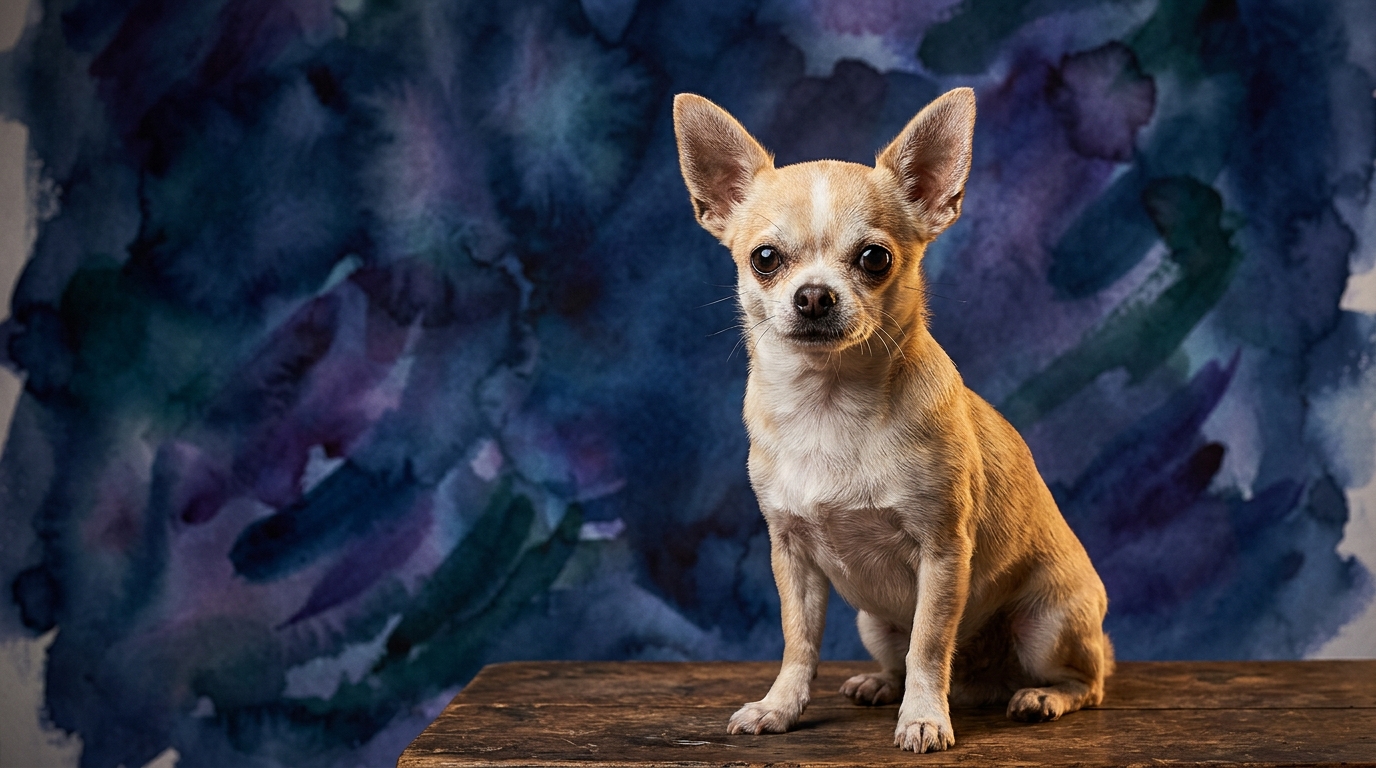

Side-by-Side IQ Profile: Chihuahua vs. Briard
The Chihuahua, ranking #67 on the Coren scale, presents a unique cognitive blueprint. Their Problem Solving is rated 3 out of 5, indicating an ability to navigate everyday puzzles but perhaps not excelling at complex, multi-step tasks without consistent human guidance. Training Speed also sits at 3 out of 5, suggesting a moderate pace for learning new commands, requiring consistency and positive reinforcement to solidify behaviors. A standout trait is their Social Intelligence, scoring 4 out of 5, which reflects a strong capacity to read human emotions, adapt to social cues, and form deep, intuitive bonds, making them highly attuned companions. Instinctive Drive is 3 out of 5, pointing to a moderate level of inherent behaviors, perhaps rooted in their ancestral role as companions, showing less pronounced prey drive or guarding instincts compared to working breeds. Finally, their Memory is a robust 4 out of 5, allowing them to recall learned commands, routines, and even specific people or places over long periods, contributing significantly to their adaptability and consistent behavior in familiar environments.
In contrast, the Briard, with a Coren ranking of #30, showcases a different set of cognitive strengths. Their Problem Solving is a strong 4 out of 5, positioning them as capable and resourceful thinkers adept at figuring out solutions to environmental challenges or complex tasks, often displaying independent thought. Training Speed also scores 4 out of 5, signifying a relatively quick grasp of new commands and concepts, making them responsive to structured learning environments, though their independent nature might sometimes present a challenge. Social Intelligence is rated 3 out of 5, suggesting a moderate ability to interpret social cues; while they form strong bonds, their primary focus might be on their immediate family unit, and they may be more reserved with strangers or less overtly expressive in social interactions than some other breeds. Instinctive Drive is 3 out of 5, reflecting their heritage as herding dogs, indicating a moderate inclination towards guarding, watchful behavior, and perhaps a desire to 'gather' their family, which can be channeled through appropriate training. Their Memory is also a robust 4 out of 5, enabling them to retain extensive knowledge of commands, routines, and experiences, which is crucial for their working roles and contributes to their reliability and consistency.
Where the Chihuahua Wins Cognitively
The Chihuahua, despite its diminutive stature, often shines brightest in the realm of social intelligence and memory. Their exceptional Social Intelligence, rated 4 out of 5, means they possess a remarkable ability to interpret human emotions and behavioral nuances, often anticipating their owner's moods or desires with striking accuracy. This acumen fosters an incredibly deep, almost intuitive bond, making them highly responsive to subtle cues that larger, more independently minded breeds might overlook. They excel at being attuned companions, navigating complex household social dynamics with a sensitivity that belies their size.
Furthermore, their Memory, also rated 4 out of 5, complements their social prowess beautifully. Chihuahuas are adept at recalling specific routines, the preferences of their human family members, and even intricate social interactions. This cognitive strength allows them to consistently remember house rules, the location of favored toys, or the timing of walks, contributing to their consistent and predictable companionship once a routine is established. Their capacity for recall ensures they retain training and social conditioning effectively, making them reliable members of the household over time.
Where the Briard Wins Cognitively
The Briard’s cognitive strengths are particularly evident in their problem-solving capabilities and their training speed. With a Problem Solving rating of 4 out of 5, Briards demonstrate a marked ability to independently assess situations and devise solutions. This trait, honed by generations of herding and guarding, manifests in their capacity to open gates, navigate complex environments, or even figure out how to access a desired item, often without direct instruction. They are thinkers who process their surroundings actively, making them less reliant on constant human direction for navigating daily challenges.
Their Training Speed, also at 4 out of 5, underscores their efficiency in acquiring new skills and commands. Briards tend to pick up new concepts relatively quickly, requiring fewer repetitions than many other breeds to master a task. This responsiveness is a significant advantage in advanced obedience, dog sports, or any scenario requiring a broad repertoire of learned behaviors. While they possess an independent streak, their capacity for rapid learning means that once they understand what is expected, they can integrate it into their behavior with impressive speed, making them highly capable students.
Which is Easier to Train and Why
When evaluating ease of training, the Briard generally holds an advantage due to its superior Training Speed (4/5) and Problem Solving (4/5). Briards process and internalize new commands more quickly, requiring fewer repetitions to achieve mastery. Their problem-solving acumen means they can often generalize learned behaviors to new contexts and even figure out aspects of a task independently, accelerating the training process. While they possess an independent nature stemming from their working heritage, a skilled trainer can channel this into focused learning, creating a highly capable and responsive partner. Their memory (4/5) ensures that once a lesson is learned, it is retained effectively.
The Chihuahua, with a Training Speed of 3/5, requires a more patient and consistent approach. They learn effectively, but typically need more repetitions and a highly rewarding environment to solidify new behaviors. Their strong social intelligence (4/5) means they are keenly aware of their trainer’s mood and can be sensitive to perceived harshness, necessitating gentle and positive reinforcement methods. While their memory (4/5) is excellent for retaining information, their moderate problem-solving (3/5) might mean they rely more on direct instruction rather than figuring out solutions on their own, making training a collaborative process focused on clear communication and positive reinforcement.
Which Suits Active Owners vs. Relaxed Owners
The Briard, a robust herding breed, is unequivocally suited for active owners. Their history dictates a need for substantial physical exercise and mental engagement. An owner who enjoys long hikes, dog sports like agility or obedience, or even has a 'job' for their dog, such as herding or protection work, will find the Briard thrives. Their problem-solving abilities and quick training speed mean they require consistent cognitive stimulation to prevent boredom and potential destructive behaviors. A relaxed owner who cannot provide daily outlets for their energy and intellect might find a Briard a challenging companion.
Conversely, the Chihuahua is generally a better fit for more relaxed owners, though this doesn't imply they are inactive. While they enjoy walks and playtime, their exercise needs are considerably less demanding than a Briard's. Their high social intelligence means they primarily seek companionship and thrive in environments where they can be close to their human family, often content to snuggle on a lap for extended periods. A relaxed owner who values intimate companionship and can offer consistent, gentle interaction will find a Chihuahua a devoted and fulfilling pet. They appreciate mental enrichment through puzzle toys and short training sessions, but their overall lifestyle needs are less strenuous.
The Verdict
Choose a Chihuahua if you seek a highly perceptive, devoted companion who excels at social bonding and has moderate exercise needs, thriving in a relaxed, affectionate home environment.
Opt for a Briard if you are an active owner prepared to engage a highly capable, independent thinker with significant exercise demands, valuing a dog that excels in structured training and problem-solving.
🧠 Find Your Pet's IQ Score
Our Pet IQ Lab assessment covers 25+ tests across 5 cognitive dimensions — personalized to your breed.
Take the Full IQ Test →Frequently Asked Questions
Do Chihuahuas bark a lot due to their intelligence?
Chihuahuas can be vocal, but this is more often linked to their protective instincts and strong social awareness rather than their specific problem-solving or training speed scores. Their inclination to alert their owners to perceived threats or strangers is a characteristic expression of their watchful nature.
Can a Briard live in an apartment despite its size and energy?
While a Briard can adapt to apartment living, it requires an exceptionally dedicated owner committed to providing extensive daily exercise and mental stimulation outside the home. Their significant energy and cognitive needs mean regular, vigorous outdoor activity and structured training are crucial for their well-being.
Is a Chihuahua's memory useful for more than just remembering routines?
Absolutely. A Chihuahua's strong memory allows them to retain complex social cues, remember specific people and their interactions, and even recall the emotional context of past events. This contributes to their consistent behavior and deep, lasting bonds with their human family.