
Side-by-Side IQ Profile
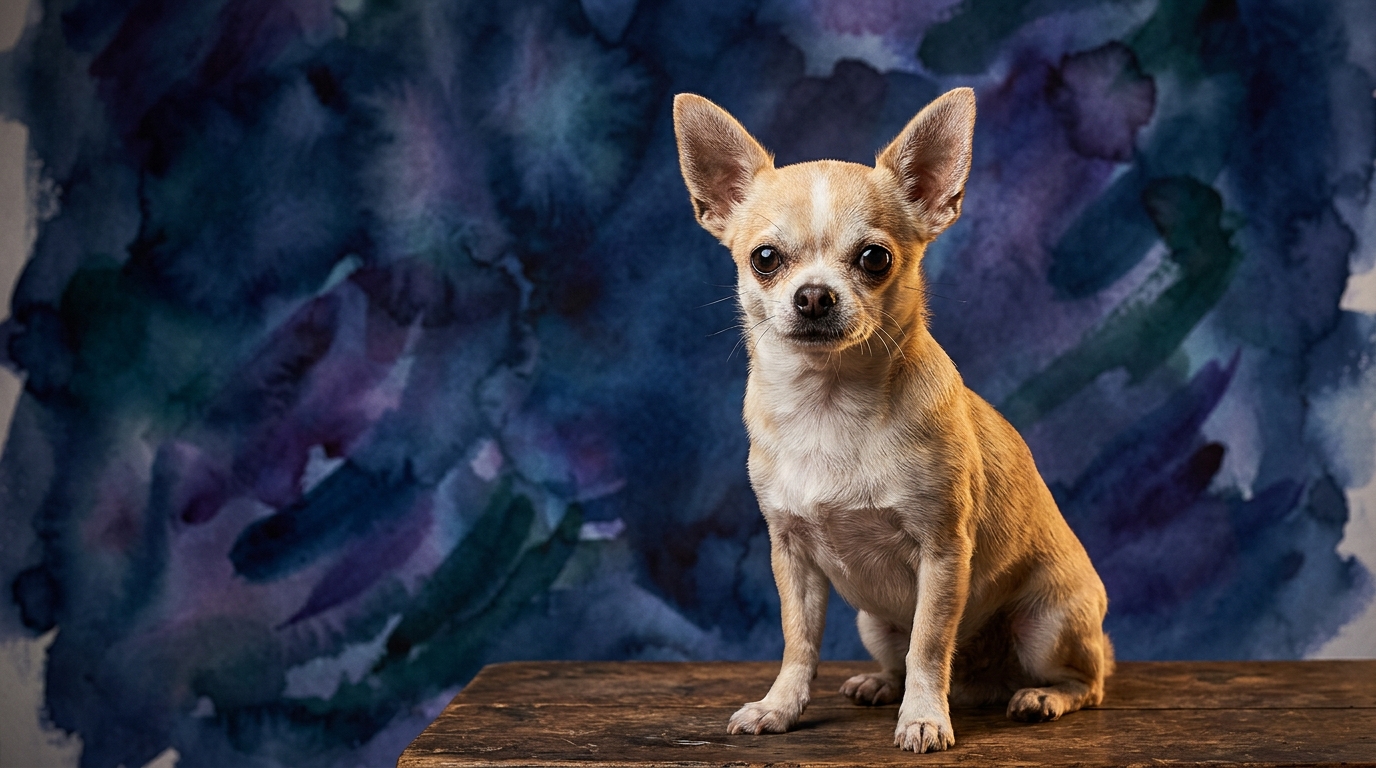
The Cosmic Pet Pet IQ Lab provides a fascinating framework for understanding canine intelligence across five key dimensions. For the Chihuahua, we observe a moderate problem-solving ability at 3/5, matched by a 3/5 training speed. Where they truly shine is in social intelligence, scoring an impressive 4/5, indicating a keen awareness of human cues and interactions. Their memory is also robust at 4/5, suggesting excellent retention of experiences and learned behaviors, while their instinctive drive sits at a balanced 3/5. Notably, the Chihuahua is recognized by Stanley Coren, ranking at #67 among dog breeds for working and obedience intelligence.
In contrast, the Russian Toy presents a remarkably consistent cognitive profile, scoring 3/5 across all five dimensions: problem-solving, training speed, social intelligence, instinctive drive, and memory. This uniformity suggests a balanced and predictable intellectual temperament, without distinct peaks or valleys in their cognitive strengths. Unlike the Chihuahua, the Russian Toy does not currently hold a specific ranking in Coren's intelligence assessment, which often reflects a breed's prevalence in working roles rather than a complete absence of intellectual capacity.
Where Chihuahua Wins Cognitively
The Chihuahua's cognitive profile reveals two significant advantages: superior social intelligence and memory. Scoring 4/5 in social intelligence, Chihuahuas exhibit a more nuanced understanding of human emotional states and communication cues. They are often acutely attuned to their owner’s mood, capable of discerning subtle shifts in tone or body language, and adapting their behavior to seek comfort, attention, or to avoid perceived disapproval. This heightened social awareness contributes to their reputation as highly responsive and emotionally connected companions, making interactions feel deeply reciprocal.
Furthermore, the Chihuahua's 4/5 memory score indicates a stronger capacity for retaining information over time. This translates into better recall of commands, routines, and the association between specific actions and their consequences. An owner might find a Chihuahua remembers complex sequences of tasks or the layout of a familiar environment with greater precision, even after a prolonged absence. This robust memory not only aids in training retention but also strengthens the bond through a shared history of consistent and remembered interactions, making them adept at learning and remembering their place within the family structure.
Where Russian Toy Wins Cognitively
While the Russian Toy doesn't outscore the Chihuahua in any specific cognitive dimension, its consistent 3/5 rating across problem-solving, training speed, social intelligence, instinctive drive, and memory presents a valuable cognitive characteristic: predictability and balance. This uniformity means an owner can expect a reliable, even-keeled intellectual experience, without the higher demands that might come with more specialized cognitive peaks. The Russian Toy offers a steady level of engagement and understanding across various tasks, making their cognitive responses largely consistent and manageable.
This balanced profile also implies a less volatile cognitive landscape. Their moderate instinctive drive (3/5) means they are not overly prone to intense prey drives or territorial behaviors that might require extensive management or specialized outlets. This consistent, moderate drive contributes to a generally adaptable and less cognitively demanding companion in daily life. For owners who prioritize a harmonious and predictable interaction without constant intellectual challenges, the Russian Toy's balanced mental approach can be a significant advantage, fostering a calm and stable home environment.
Which Is Easier to Train and Why
Both the Chihuahua and the Russian Toy share a 3/5 rating for training speed, suggesting they acquire new commands at a similar moderate pace. However, the Chihuahua's superior memory (4/5) and social intelligence (4/5) provide distinct advantages that can make the training process feel more fluid and rewarding in the long term. A Chihuahua is likely to retain learned behaviors and routines more effectively, meaning fewer refreshers are needed once a command is established, and they can build upon previous learning more readily.
Moreover, the Chihuahua's heightened social intelligence means it may be more attuned to its trainer's subtle cues—body language, vocal inflections, and emotional responses. This can lead to a more responsive and cooperative training partnership, as they might pick up on what is desired more quickly and remember the connection between the cue and the action more robustly. The Russian Toy, while certainly capable of learning with its 3/5 in both memory and social intelligence, might require a more consistent, patient, and explicit approach to solidify training, without the same level of nuanced responsiveness or rapid retention that its Chihuahua counterpart might display.
Which Suits Active Owners vs. Relaxed Owners
Given their shared Toy group classification and identical 3/5 instinctive drive, neither breed demands extensive physical exertion, making both suitable for owners who prefer a more relaxed daily pace. However, the nuances in their cognitive profiles suggest slight preferences for engagement. The Chihuahua, with its higher social intelligence and memory, thrives on consistent interaction and mental stimulation. For a Chihuahua, an 'active owner' might not necessarily mean physically active, but rather one who is actively engaged in their dog's mental life—through varied training games, puzzle toys, and consistent, meaningful social interactions and outings.
The Russian Toy, with its consistently moderate scores across all dimensions, including social intelligence, might be more amenable to a truly relaxed owner who appreciates a less demanding intellectual engagement. While they still require attention, basic training, and enrichment, their cognitive needs are less intense in terms of seeking constant social feedback or complex memory challenges. They are generally content with routine and consistent, though not necessarily intricate, interactions. Therefore, an owner seeking a canine companion that integrates smoothly into a calm, predictable home environment without constantly prompting for intellectual challenges might find the Russian Toy a more fitting choice.
The Verdict
Choose the Chihuahua if you value a companion with acute social awareness and a strong memory, capable of forming deep, nuanced bonds and retaining complex learned behaviors.
Opt for the Russian Toy if you prefer a predictable, balanced cognitive profile, seeking a companion whose moderate needs across all intellectual dimensions integrate seamlessly into a steady, consistent lifestyle.
🧠 Find Your Pet's IQ Score
Our Pet IQ Lab assessment covers 25+ tests across 5 cognitive dimensions — personalized to your breed.
Take the Full IQ Test →Frequently Asked Questions
Are Chihuahuas difficult to train?
Chihuahuas possess a moderate training speed (3/5), meaning they learn at an average pace. Their superior memory (4/5) and social intelligence (4/5) actually aid in retention and responsiveness, making them quite trainable with consistent, positive reinforcement methods.
Do Russian Toys bond closely with their owners?
Yes, Russian Toys form strong bonds with their families, rating 3/5 in social intelligence, indicating a good capacity for connection. While perhaps not as overtly expressive of their understanding of human emotion as a Chihuahua, they are loyal and affectionate companions.
What kind of mental stimulation do these breeds need?
Both breeds benefit from regular mental engagement, such as puzzle toys, short training sessions, and varied environments. Chihuahuas, with their higher memory and social intelligence, particularly enjoy activities that involve problem-solving with their human companions and recall tasks.