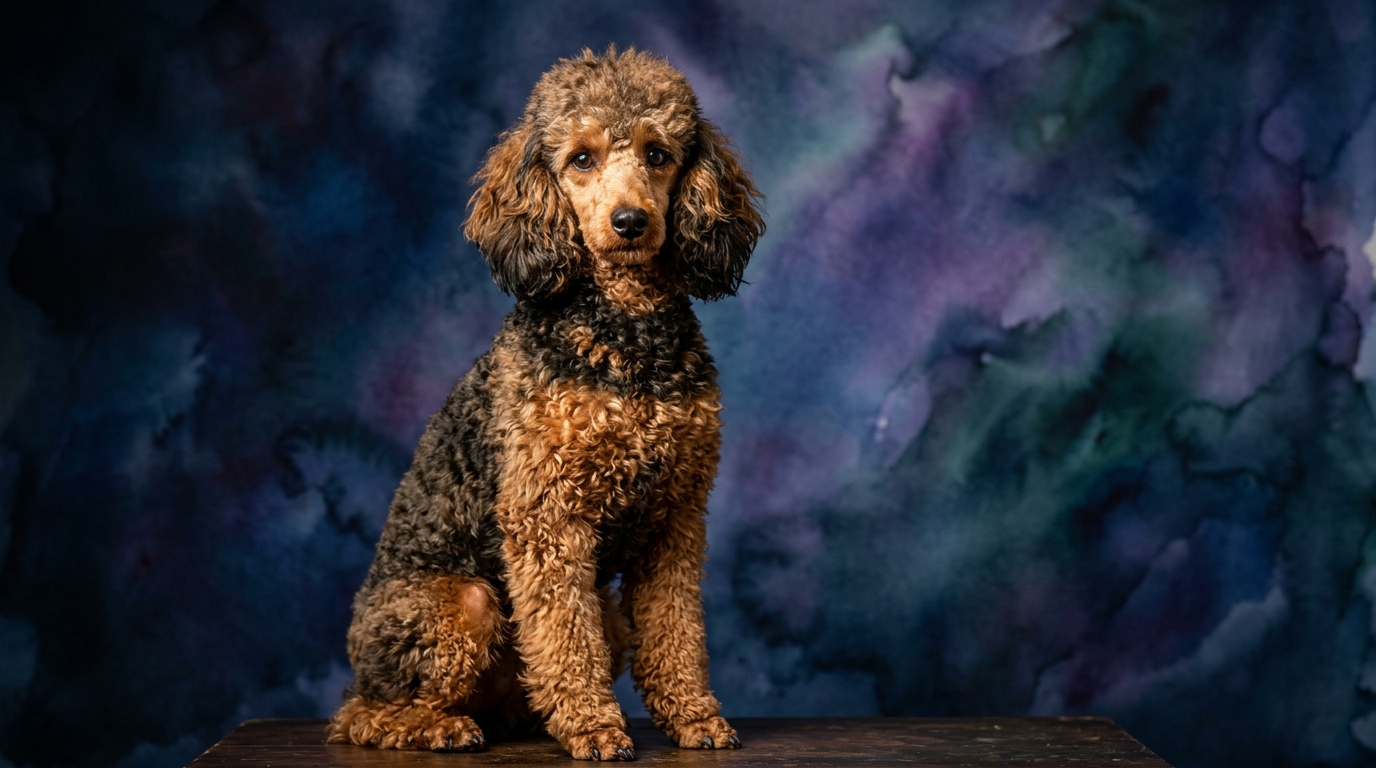

Side-by-Side IQ Profile: Standard Poodle vs. Russian Toy
The Cosmic Pet Pet IQ Lab employs a five-dimensional framework to evaluate canine intelligence, offering a nuanced understanding beyond simple rankings. For the Standard Poodle, a breed renowned for its adaptability and learning capacity, the scores reflect a highly capable and versatile intellect. Their Problem Solving is rated 5/5, indicating an exceptional ability to navigate complex challenges, understand cause-and-effect, and devise strategic solutions to achieve goals, often independently. Training Speed also receives a 5/5, showcasing their remarkable aptitude for acquiring new commands and multi-step routines with minimal repetition and strong retention. Social Intelligence is equally impressive at 5/5, demonstrating a profound capacity to interpret human cues, emotional states, and intentions, fostering deep, reciprocal bonds. Their Instinctive Drive is a robust 4/5, reflecting their original purpose as water retrievers, manifesting as a focused enthusiasm for tasks and physical engagement rather than a diffuse, undirected energy. Finally, Memory is a perfect 5/5, signifying an impressive long-term recall for learned behaviors, commands, and environmental specifics, making their training durable and reliable.
In contrast, the Russian Toy's cognitive profile, while different, is perfectly suited for its role as a charming companion. Their Problem Solving is rated 3/5, indicating a moderate capacity for independent thought in novel situations; they can learn to overcome simple obstacles but may require more guidance for complex puzzles. Training Speed is 3/5, meaning they are capable of learning basic obedience and tricks, but typically require more consistent repetition and patience during training sessions compared to breeds with higher scores. Social Intelligence for the Russian Toy is 3/5, showing they form strong, affectionate attachments to their primary caregivers and respond well to clear communication, though their interpretation of subtle human cues might be less nuanced. Their Instinctive Drive is also 3/5, often expressed as curiosity about their immediate surroundings and a playful engagement with toys, generally manageable and directed towards companionship rather than specific working roles. Lastly, Memory scores 3/5, demonstrating a functional ability to retain established routines, familiar faces, and learned commands for day-to-day interactions, though less robust for intricate sequences or less frequently reinforced information.
Where the Standard Poodle Wins Cognitively
The Standard Poodle's cognitive strengths are evident across virtually all measured dimensions, making it a truly versatile canine intellect. Their unparalleled Problem Solving ability (5/5) means they don't just follow commands; they understand the *why* behind them, often devising their own solutions to environmental puzzles, such as manipulating latches or strategically moving objects to reach a desired item. This depth of understanding extends to their Training Speed (5/5), where they process new information with remarkable efficiency, often mastering complex multi-step commands or agility sequences in just a few repetitions. Their Social Intelligence (5/5) allows them to read subtle human expressions and intentions, adapting their behavior with a nuanced understanding that fosters exceptionally empathetic interactions. Furthermore, their perfect score in Memory (5/5) ensures that once a skill is learned, it's retained with impressive longevity, making their training durable and reliable over time. This combination of rapid acquisition, deep comprehension, and lasting retention positions the Standard Poodle as a top-tier cognitive performer, particularly in tasks requiring strategic thinking and complex learning.
Where the Russian Toy Wins Cognitively
While the Russian Toy's cognitive profile reflects a different set of priorities, their strengths lie in their direct, companion-oriented intelligence. Their moderate Social Intelligence (3/5) is expressed through a focused devotion to their immediate family members, leading to strong, unambiguous bonds where their affection is clearly communicated. They excel at forming clear associations between actions and rewards, making them responsive to consistent, positive reinforcement, particularly when the training goal aligns with their desire for interaction and attention. Their Instinctive Drive (3/5), while not geared towards complex work, manifests as a delightful curiosity about their immediate surroundings and a playful engagement with their environment, which is perfectly suited for a companion animal whose primary role is to enrich the home. This blend of attributes means the Russian Toy “wins” in the realm of uncomplicated companionship, where their cognitive processing is directed towards forming strong personal connections and enjoying predictable, loving interactions without the need for constant intellectual challenges.
Which is Easier to Train and Why
When evaluating ease of training, the Standard Poodle unequivocally stands out due to its superior cognitive scores across the board. Their Training Speed of 5/5 means they grasp new concepts and commands with astonishing rapidity, often requiring only a handful of repetitions to solidify a behavior. This is further amplified by their 5/5 Problem Solving ability; they don't just mimic actions but understand the underlying intent, allowing them to generalize learned behaviors to new contexts without extensive reteaching. For instance, a Standard Poodle taught to retrieve a specific toy will likely apply that understanding to fetching other designated items with minimal additional instruction. Their 5/5 Memory ensures that once a behavior is learned, it is retained long-term, reducing the need for frequent refreshers and making advanced training, like complex obedience routines or service tasks, highly achievable and sustainable. In contrast, the Russian Toy, with a 3/5 Training Speed, requires more patience and consistency. While they are capable of learning basic obedience and house rules, their acquisition of new skills is slower, often needing numerous repetitions and a structured, predictable approach. Their 3/5 Problem Solving capacity means they might struggle more with generalizing learned behaviors or navigating novel training challenges independently, often relying on clearer, more direct cues. For example, teaching a Russian Toy to 'stay' might require more consistent reinforcement in various environments before they reliably perform the command across different settings. Their 3/5 Memory means that while they retain familiar commands, less frequently practiced behaviors might fade without regular reinforcement. Therefore, for owners seeking a dog that absorbs information quickly, excels in diverse training disciplines, and retains complex learning, the Standard Poodle offers a significantly easier and more rewarding training experience.
Which Suits Active Owners vs. Relaxed Owners
The differing cognitive and instinctive profiles of these two breeds naturally align with distinct owner lifestyles. The Standard Poodle, with its 5/5 scores in Problem Solving, Training Speed, and Memory, coupled with a 4/5 Instinctive Drive, thrives with active owners who can provide consistent mental and physical engagement. These dogs require more than just walks; they need structured activities that challenge their intellect, such as advanced obedience, agility, scent work, or puzzle toys that demand strategic thinking. An owner who enjoys teaching new tricks, participating in dog sports, or even involving their dog in daily problem-solving tasks will find the Standard Poodle to be an incredibly responsive and fulfilling partner. Their drive to learn and work means that an under-stimulated Standard Poodle can become bored or engage in self-directed, potentially undesirable behaviors to occupy their keen mind. Conversely, the Russian Toy, with its consistent 3/5 scores across all cognitive dimensions and Instinctive Drive, is an ideal match for more relaxed owners. Their cognitive needs are met through regular companionship, positive reinforcement for basic manners, and playful interaction rather than demanding intellectual tasks. While they enjoy short walks and playtime, they do not possess the same inherent drive for complex work or extensive physical exertion. A Russian Toy is content to be a lap companion, a playful housemate, and a loving presence, thriving in an environment where their primary role is that of an affectionate pet. Owners who appreciate a dog that is engaged in family life without requiring intensive training regimens or constant mental stimulation will find the Russian Toy's temperament and cognitive needs perfectly suited to a calmer, companion-focused lifestyle.
The Verdict
Choose the Standard Poodle if you are an owner seeking a canine partner capable of mastering complex tasks, excelling in dog sports, potentially performing service work, or simply thriving on consistent intellectual challenge and structured learning. Their unparalleled capacity for problem-solving, rapid training acquisition, and enduring memory makes them an ideal match for those who desire a deeply engaged, responsive, and versatile companion ready to tackle almost any mental or physical endeavor.
Opt for the Russian Toy if your lifestyle leans towards a more relaxed pace and you desire a devoted, affectionate companion whose cognitive needs are met through consistent companionship, basic positive reinforcement, and playful interaction rather than intensive intellectual demands. They are perfectly suited for owners who cherish a charming lap dog and a constant, loving presence, without the commitment required for a cognitively high-drive breed.
🧠 Find Your Pet's IQ Score
Our Pet IQ Lab assessment covers 25+ tests across 5 cognitive dimensions — personalized to your breed.
Take the Full IQ Test →Frequently Asked Questions
Does the Russian Toy's lower IQ score mean they are difficult to live with?
Not at all. A 3/5 score indicates a functional intelligence perfectly suited for companionship, not a deficiency. Russian Toys are capable of learning basic obedience and house rules, thriving on consistent, positive reinforcement within a loving home environment. Their cognitive profile simply means they may not excel at complex problem-solving or advanced training tasks.
Can a Standard Poodle be happy in a less active home, or do they always need intense mental stimulation?
While Standard Poodles thrive on mental and physical engagement, a less active home *can* work if their cognitive needs are met through consistent, varied mental stimulation rather than solely physical exertion. This might include daily training sessions, puzzle toys, scent games, or learning new tricks, ensuring their keen minds are regularly challenged even if they aren't participating in competitive sports.
Is the Coren rank relevant for understanding the Russian Toy's intelligence?
The Coren rank primarily assesses "working and obedience intelligence," which focuses on a dog's ability to learn and perform human-directed tasks. Since the Russian Toy was not bred for such specific working roles, its absence from Coren's list doesn't imply a lack of intelligence, but rather that its cognitive strengths lie in areas outside of traditional obedience and task performance, such as companion-oriented social intelligence.