
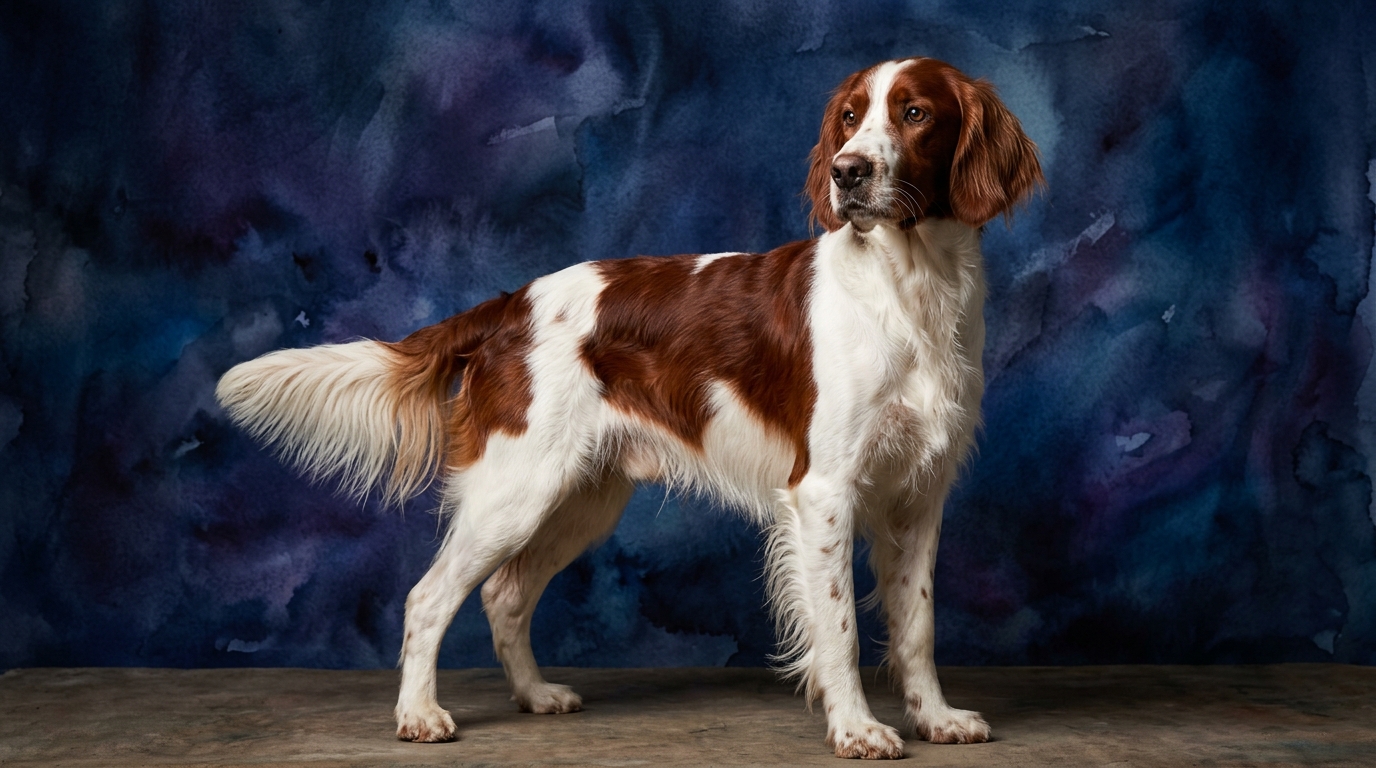
Side-by-Side Cognitive Profiles: Decoding the 3/5 Score
A consistent score of 3 out of 5 across all five cognitive dimensions — Problem Solving, Training Speed, Social Intelligence, Instinctive Drive, and Memory — indicates that both the Chinook and the Irish Red and White Setter possess a solid, functional level of intelligence. This isn't about one being 'smarter' than the other in a general sense, but rather how their inherent capabilities are channeled by their breed-specific inclinations and historical roles. For both breeds, this 3/5 suggests a reliable capacity for learning and adaptation, without the extreme highs or lows often seen in more specialized cognitive profiles.
For Problem Solving (3/5), the Chinook, a working breed, typically exhibits practical, physically oriented problem-solving. This might manifest as efficiently navigating complex terrain during a sledding task or figuring out how to bypass an obstacle on a trail, often preferring robust, straightforward solutions. The Irish Red and White Setter, a sporting breed, applies its 3/5 problem-solving to environmental puzzles, such as pinpointing the precise location of hidden game by interpreting subtle scent cues or strategically maneuvering through cover to flush birds. Their solutions are often sensorially driven and adaptive to changing field conditions.
When it comes to Training Speed (3/5), Chinooks learn at a steady, deliberate pace. They benefit from consistent, clear instructions, especially for multi-step routines, and tend to solidify their understanding through repetition and real-world application. Their learning is often motivated by having a purposeful job. Irish Red and White Setters also absorb new commands efficiently, particularly those relevant to their field work. Their training responsiveness is often fueled by their eagerness to please and participate in engaging activities, making them highly receptive to positive reinforcement.
Social Intelligence (3/5) in the Chinook often translates to a nuanced understanding of their human 'pack' dynamics and handler cues, though they might express their social connections with a degree of independence. Their social cognition supports group cohesion for task accomplishment. The Irish Red and White Setter's social intelligence at 3/5 typically manifests as a strong attunement to individual human companions, allowing them to read subtle body language and vocal tones, which fosters a highly cooperative and affectionate bond, both in the field and at home.
Instinctive Drive (3/5) for the Chinook reflects a moderate but persistent urge for pulling, endurance, and pack-oriented work, deeply rooted in their sled dog lineage. This drive translates into a need for purposeful activity and often a strong desire to contribute. The Irish Red and White Setter's 3/5 instinctive drive is characterized by a moderate yet powerful inclination for hunting, scenting, and pointing game. This inherent motivation makes them keen explorers of the outdoors and highly focused when engaging with their natural predispositions.
Finally, Memory (3/5) for the Chinook enables them to recall routes, established routines, and the specific steps of complex tasks, which is crucial for sustained working efforts over time. They effectively retain lessons from past training sessions and the consequences of actions. The Irish Red and White Setter's memory at 3/5 supports their ability to retain knowledge of game locations, specific field commands, and the layout of hunting grounds, ensuring consistency during retrieves and building a reliable repertoire of learned behaviors.
Where Chinook Cognition Shines
While sharing identical scores, the Chinook's cognitive strengths lean towards resilience and an independent application of their moderate problem-solving skills, particularly in physically demanding contexts. Their 3/5 problem-solving is adept at navigating complex physical environments, such as finding the most efficient path through deep snow or understanding the mechanics of their harness and equipment. This practical intelligence, coupled with their 3/5 memory, allows them to recall intricate routes and multi-stage tasks with impressive consistency, vital for sustained working endeavors. Their social intelligence, while moderate, fosters a stable, task-oriented group dynamic, making them reliable partners in a working team where individual contribution to a shared goal is paramount. They excel in environments where steady effort and a degree of self-sufficiency are valued.
Where the Irish Red and White Setter's Intellect Excels
The Irish Red and White Setter's cognitive profile, though numerically similar, showcases a different emphasis. Their 3/5 problem-solving often involves a more nuanced interpretation of sensory information, particularly scent trails and environmental cues, allowing them to excel at locating hidden game and adapting quickly to changing field conditions. Their moderate social intelligence thrives in a highly cooperative, one-on-one relationship with their handler, making them exceptionally responsive to subtle commands and moods. This strong bond enhances their 3/5 training speed for intricate field work. Their instinctive drive, while moderate, is precisely channeled into focused searching, pointing, and retrieving, demonstrating a keen intellectual engagement with their sporting purpose. They exhibit a quick mental agility when adapting to new hunting scenarios and remembering specific bird locations, which is a testament to their focused memory.
Training Dynamics: Independence vs. Cooperation
Considering both breeds share a 3/5 training speed, the 'ease' of training often comes down to their inherent behavioral inclinations. The Chinook, stemming from a working background, can exhibit a more independent streak. They require clear, consistent, and highly motivating training sessions that appeal to their desire for a 'job.' While they learn steadily, they might take longer to generalize commands to new situations and can be less inclined to perform without a perceived purpose. Their moderate instinctive drive means training needs to be engaging and purposeful to maintain focus, but once a behavior is learned and deemed valuable, their 3/5 memory ensures it's retained.
The Irish Red and White Setter, with its sporting heritage, generally approaches training with a more eager-to-please and cooperative attitude. They respond well to positive reinforcement and engaging, interactive sessions, often finding joy in working alongside their handler. Their strong, yet moderate, instinctive drive for scenting and retrieving needs careful channeling during training, as environmental distractions (like tempting smells) can momentarily divert their attention. However, their moderate social intelligence and desire for companionship mean they are typically more responsive to cues and quicker to pick up new behaviors when the training is fun and collaborative. Consistency is key for both, but the Setter often offers a more overtly enthusiastic participation.
Matching Lifestyles: Active Engagement for Both
Neither the Chinook nor the Irish Red and White Setter are suited for truly relaxed, sedentary owners; both require significant active engagement. However, the *type* of activity they thrive on differs. An active owner for a Chinook is someone who appreciates purposeful, endurance-based activities and can provide a consistent routine. They excel with long hikes, 'backpacking,' or activities that simulate their sledding heritage, offering mental stimulation through tasks and a sense of responsibility. Their moderate instinctive drive needs an outlet that allows for sustained effort and a degree of independent navigation within a structured framework.
An active owner for an Irish Red and White Setter is someone who enjoys dynamic outdoor adventures and can channel their keen scenting and retrieving instincts. They thrive on vigorous exercise in open spaces, opportunities for off-leash exploration (in safe areas), and activities like fetch, agility, or field work. Their moderate instinctive drive means they need outlets that engage their nose and body in exhilarating bursts of activity, coupled with plenty of social interaction and play. While both are active, the Chinook often prefers a steady, task-oriented pace, whereas the Setter revels in energetic, exploratory movement.
The Verdict
Choose a Chinook if you seek a resilient, task-oriented companion who thrives on routine and purposeful, endurance-based activities, offering a steady, independent presence within a family unit. They excel with owners who appreciate a dog with a strong work ethic and enjoy consistent, structured outdoor adventures.
Opt for an Irish Red and White Setter if you enjoy engaging in dynamic outdoor activities, appreciate a highly responsive and affectionate partner, and are prepared to channel their keen hunting instincts into cooperative play and exploration. They are ideal for owners who love energetic companions eager to participate in every adventure.
🧠 Find Your Pet's IQ Score
Our Pet IQ Lab assessment covers 25+ tests across 5 cognitive dimensions — personalized to your breed.
Take the Full IQ Test →Frequently Asked Questions
Are Chinooks vocal dogs?
Chinooks are generally not known for excessive barking, but they will use their voice to alert their owners or express themselves. Their moderate social intelligence means they communicate effectively within their established 'pack' without constant vocalization.
Do Irish Red and White Setters get along with other pets?
With proper socialization, Irish Red and White Setters can coexist peacefully with other pets. Their moderate social intelligence means they are generally friendly, but their instinctive drive may require supervision around smaller, prey-like animals until boundaries are clearly established.
What kind of mental stimulation do these breeds need?
Both breeds require consistent mental stimulation to prevent boredom. Chinooks benefit from learning complex routines, puzzle toys, and 'jobs' that engage their moderate problem-solving and memory. Irish Red and White Setters thrive on scent work, interactive games, and training that taps into their moderate instinctive drive and cooperative nature.