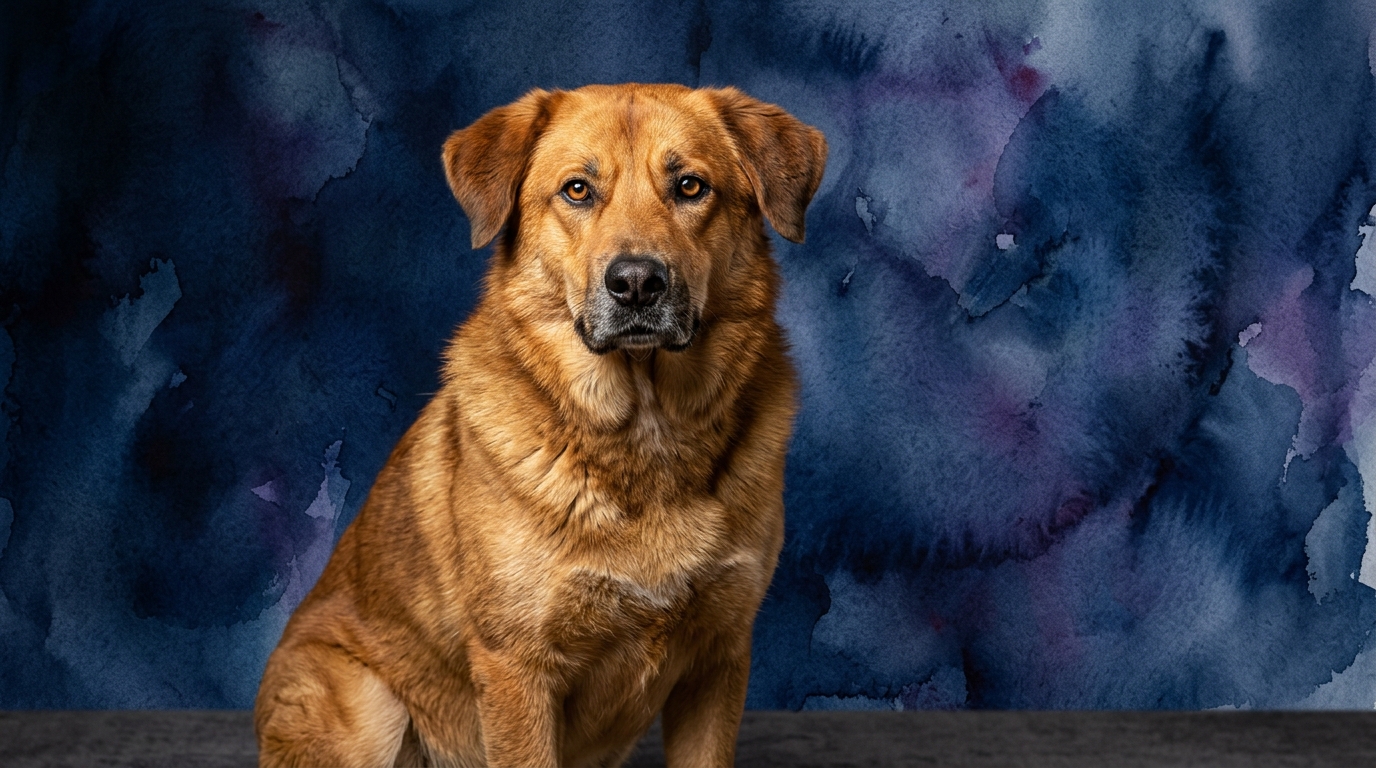

Side-by-Side IQ Profile: Interpreting Identical Scores
At first glance, the Chinook and Redbone Coonhound present an intriguing cognitive puzzle, each scoring a consistent 3/5 across The Cosmic Pet's five IQ dimensions. This numerical parity, however, invites a deeper exploration into how these capacities are expressed through the lens of their distinct breed histories and inherent temperaments.
For the **Chinook**, a dog from the Working Group, a **Problem Solving score of 3/5** often translates into a methodical approach to human-assigned tasks. They are adept at figuring out sequences to achieve a goal, such as opening a latch or retrieving a specific item, demonstrating a practical intelligence geared towards cooperation. Their **Training Speed of 3/5** suggests a solid capacity for learning and retaining commands, responding well to consistent, positive reinforcement that taps into their desire for companionship and purpose. **Social Intelligence at 3/5** indicates a balanced understanding of human cues and family dynamics, making them generally responsive and attuned to their household's emotional landscape. The **Instinctive Drive of 3/5** in a Chinook is typically channeled towards pulling, companionship, and perhaps some protective instincts, often expressed in a cooperative rather than purely independent manner. Their **Memory score of 3/5** supports their ability to recall learned routines, commands, and the specific people and places that are central to their world.
The **Redbone Coonhound**, a member of the Hound Group, interprets these same scores through a different behavioral lens. Their **Problem Solving score of 3/5** is profoundly influenced by their olfactory prowess, manifesting as an exceptional ability to unravel complex scent trails and navigate varied environments to track. This isn't about human-directed tasks, but rather an intricate, self-directed puzzle-solving born of instinct. A **Training Speed of 3/5** for a Redbone often means they are capable of learning, but their strong, independent drive to follow a scent can make consistency a challenge, requiring patient and engaging methods to hold their attention against environmental distractions. Their **Social Intelligence at 3/5** typically portrays a good-natured, amiable companion who interacts well with family and other animals, though their primary focus can quickly shift to an enticing smell. The **Instinctive Drive of 3/5** is overwhelmingly centered on scenting and trailing, a powerful, intrinsic motivation that defines much of their cognitive engagement and purpose. Lastly, their **Memory score of 3/5** is particularly acute for scent patterns, terrain features associated with tracking, and successful hunting grounds, demonstrating a memory highly specialized for their ancestral role.
Where Chinook's Cognition Excels
While their numerical scores are identical, the Chinook's cognitive strengths shine in environments that value cooperative engagement and structured tasks. Their 3/5 problem-solving and training speed, combined with their 3/5 social intelligence, often translates into a more direct and efficient engagement with human-directed tasks. A Chinook is likely to excel at learning complex obedience sequences, participating in pulling sports, or performing service-oriented roles where understanding and responding to human instruction is paramount. Their memory of 3/5 is well-suited for retaining intricate routines and consistently executing multi-step commands, making them a predictable and reliable partner in activities that require a shared goal with their handler. This breed's cognitive profile is geared towards collaboration, finding satisfaction in working alongside their human companion to achieve a common objective.
Where Redbone Coonhound's Cognition Excels
The Redbone Coonhound's cognitive profile, while numerically similar, demonstrates distinct strengths rooted in their hound heritage. Their 3/5 problem-solving and instinctive drive, paired with their 3/5 memory, manifests as an exceptional aptitude for complex environmental navigation and scent interpretation. A Redbone excels in unstructured, scent-rich environments, showcasing remarkable cognitive flexibility in deciphering intricate olfactory puzzles. Their ability to maintain focus on a trail for extended periods, despite numerous distractions, highlights a powerful and sustained cognitive engagement that is self-directed and deeply ingrained. This breed's memory of 3/5 is particularly specialized for recalling scent patterns and geographical cues, allowing them to effectively retrace steps or pursue a lead over challenging terrain. Their intelligence is less about pleasing a handler in a structured setting and more about autonomously processing and acting upon the rich sensory information of their world.
Training Dynamics: Chinook's Cooperation vs. Redbone's Independence
When it comes to ease of training, the identical 3/5 training speed scores belie significant practical differences shaped by their breed groups. The Chinook, from the Working Group, generally presents as more amenable to training due to their inherent desire to please and their cooperative nature, supported by their 3/5 social intelligence. They tend to focus more readily on their handler, finding intrinsic reward in successful task completion and shared activity. This means a Chinook, while not a lightning-fast learner, will typically engage eagerly with training sessions, respond well to clear cues, and retain commands reliably with consistent positive reinforcement. Their memory of 3/5 effectively reinforces learned behaviors, building a solid foundation for obedience and advanced skills.
The Redbone Coonhound, a scent hound, offers a different training experience. While their training speed is also 3/5, their powerful 3/5 instinctive drive for scent often competes fiercely with human directives. A captivating scent can override even well-established commands, leading to what some might perceive as stubbornness, but is in fact a deep-seated cognitive priority. Training a Redbone requires immense patience, creativity, and a profound understanding of their motivations. Handlers must make training incredibly rewarding and engaging to compete with the allure of the environment. Their memory of 3/5 is highly effective for recalling scent information, but this specialized memory can sometimes make generalization of commands in varied contexts more challenging, as their focus is often external. Success with a Redbone depends on harnessing, rather than suppressing, their natural drives, often by integrating scent work into their training.
Lifestyle Match: Purpose-Driven Companionship
Choosing between a Chinook and a Redbone Coonhound also means aligning with their distinct activity requirements and owner lifestyles. The Chinook is an excellent fit for active owners who thrive on structured engagement and shared adventures. With their working dog background, they require consistent mental and physical stimulation, flourishing when given a purpose or task. Owners who enjoy hiking, dog sports like obedience or agility, or even skijoring will find a Chinook a willing and capable partner. They are not content to be mere decorative companions; their cognitive and physical well-being depends on regular, purposeful activity that strengthens their bond with their human. A Chinook will appreciate a home where they are integral to daily activities and receive consistent attention.
The Redbone Coonhound, while also requiring an active lifestyle, appeals to a different kind of owner. Their potent 3/5 instinctive drive for scenting means they need extensive opportunities to use their nose. This makes them ideal for owners who enjoy long, investigative walks, participate in tracking or hunting sports, or can provide a secure, expansive area for them to explore independently through scent. While they can be calm indoors after sufficient exercise, their mental engagement is often tied to the olfactory world. Relaxed owners who prefer minimal interaction or short, leash-only walks may find a Redbone's unfulfilled drives lead to frustration for both dog and human. Their ideal owner understands their independent, scent-driven nature and is prepared to channel it productively, celebrating their dog's unique way of experiencing the world.
The Verdict
Choose the Chinook if you seek a cooperative partner for structured activities, enjoy engaging in task-oriented training, and value a dog whose cognitive strengths align with direct human collaboration and companionship.
Choose the Redbone Coonhound if you appreciate an independent, scent-driven companion, are prepared to channel their powerful natural instincts, and enjoy observing a dog's cognitive prowess unfold in the pursuit of a trail.
🧠 Find Your Pet's IQ Score
Our Pet IQ Lab assessment covers 25+ tests across 5 cognitive dimensions — personalized to your breed.
Take the Full IQ Test →Frequently Asked Questions
Do Chinooks make good family dogs?
Chinooks, with their 3/5 social intelligence, are generally devoted to their families and can be good with children, especially when raised with them. Their working background means they appreciate being part of family activities and thrive on companionship, often forming strong bonds.
Are Redbone Coonhounds easy to live with in an apartment?
Redbone Coonhounds, despite their 3/5 instinctive drive for scenting, can adapt to apartment living if their significant exercise and mental stimulation needs are met daily. This includes long, engaging walks where they can explore scents and dedicated playtime, ensuring their cognitive needs are satisfied.
How do their memory scores of 3/5 impact training retention?
Both breeds, with a 3/5 memory, are capable of retaining commands and routines with consistent reinforcement. For the Chinook, this often means remembering sequences of tasks, while for the Redbone, it primarily involves recalling scent patterns and associated environmental experiences, which can sometimes override human-directed commands if the scent is compelling.