
Side-by-Side IQ Profile: Unpacking Canine Cognition
The Cosmic Pet Pet IQ Lab employs five crucial dimensions to assess a dog's cognitive makeup: problem-solving, training speed, social intelligence, instinctive drive, and memory. These scores offer a nuanced glimpse into how different breeds perceive and interact with their world, far beyond simple notions of 'cleverness.'
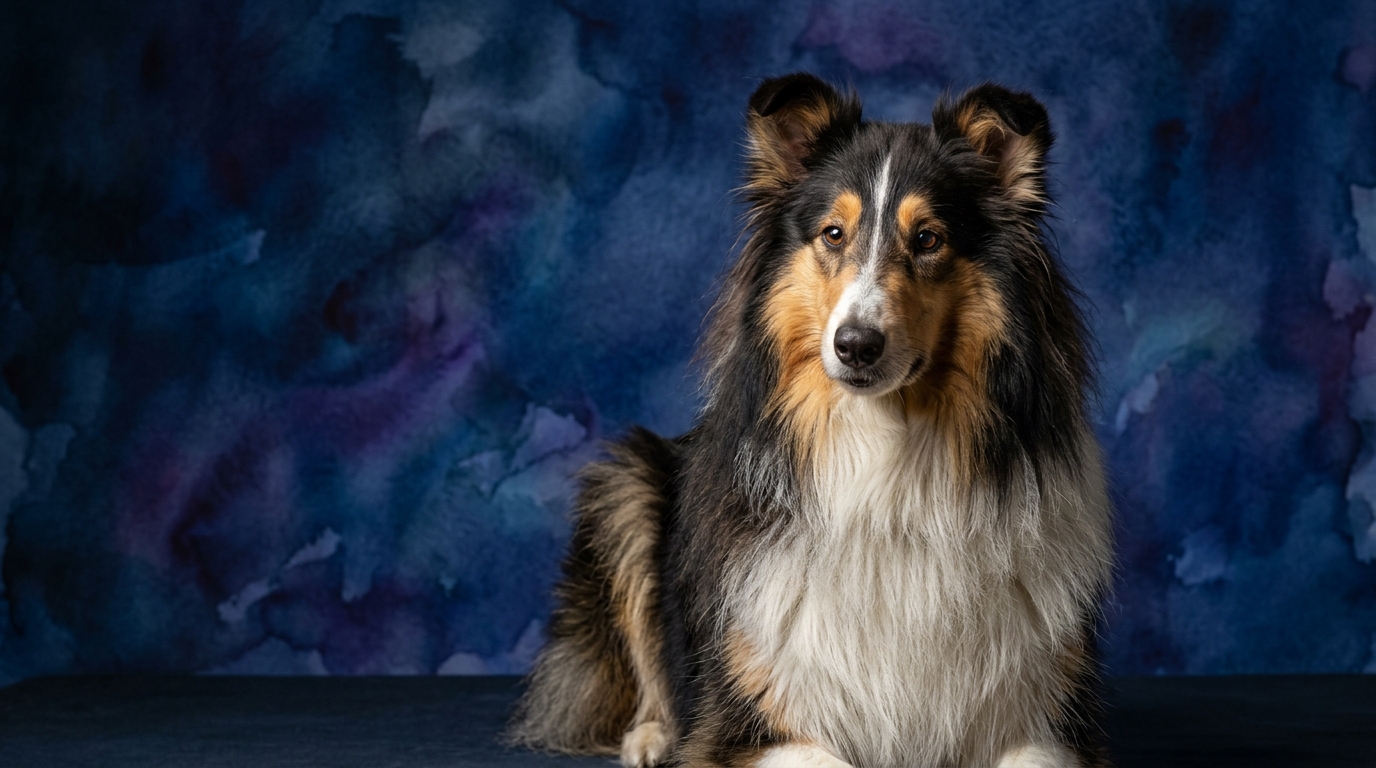
For the Collie (Rough), a breed historically tasked with complex herding duties, the scores paint a picture of a capable and observant mind. Their problem-solving ability rates at 4/5, indicating a strong capacity to analyze situations and devise solutions, whether it's navigating a tricky obstacle course or figuring out how to retrieve a dropped toy. Training speed, also at 4/5, suggests they pick up new commands and routines with efficiency, often requiring fewer repetitions than many other breeds. Social intelligence stands at 3/5, meaning they possess a solid understanding of human cues and emotional states, allowing for effective communication. Their instinctive drive is 3/5, reflecting a moderate but present inclination towards their ancestral herding behaviors. Finally, their memory is exceptional, scoring a perfect 5/5, allowing them to retain vast amounts of information, from complex command sequences to the faces of numerous acquaintances.
In contrast, the Brussels Griffon, a charming toy breed bred primarily for companionship, exhibits a cognitive profile well-suited to its role. Their problem-solving ability scores 3/5, indicating they can handle straightforward challenges and adapt to new situations within their home environment. Training speed is also 3/5, meaning they learn at an average pace, requiring consistent and patient instruction to master new skills. Social intelligence matches the Collie at 3/5, demonstrating an adequate capacity to interpret human moods and intentions, fostering a strong bond with their people. Instinctive drive is rated 3/5, suggesting a moderate internal motivation that might manifest as playful antics or a keen watchfulness. Their memory scores 3/5, allowing them to recall familiar routines, people, and basic commands, but perhaps not with the extensive recall of a working breed.
Where the Collie (Rough) Shows Cognitive Strengths
The Collie (Rough) truly distinguishes itself in several cognitive areas, primarily driven by its history as a working partner. Their superior memory (5/5) is a significant advantage, enabling them to recall intricate sequences of commands, the layout of vast properties, or the specific habits of individual sheep. This robust recall capacity means less retraining over time and a greater ability to build upon previously learned concepts, making them excellent candidates for advanced obedience, agility, or service work where remembering complex protocols is essential. An owner might observe a Collie flawlessly executing a multi-step fetch command, retrieving specific items from different rooms, a testament to their retentive mind.
Furthermore, their elevated problem-solving (4/5) and training speed (4/5) work synergistically. A Collie processes new information quickly and applies it to novel situations with a degree of independent thought. This isn't just about rote memorization; it's about understanding the 'why' behind a task and adapting their approach. For instance, if a gate is unexpectedly closed, a Collie might quickly assess alternative routes or attempt to manipulate the latch, rather than simply waiting for assistance. This cognitive flexibility makes them adept at tasks requiring initiative and allows them to excel in dynamic environments where quick, adaptive thinking is valued.
Cognitive Advantages of the Brussels Griffon
While the Brussels Griffon's numerical scores might appear lower in certain dimensions compared to the Collie, their cognitive profile presents distinct advantages perfectly aligned with their role as a devoted companion. Their moderate instinctive drive (3/5) means they are generally less prone to intense, hard-wired behaviors that require extensive management, such as the strong herding impulses seen in some working breeds. This translates to a more adaptable presence within a household, often content with less structured 'work' and more focused on interaction with their family. An owner benefits from a dog whose internal motivations are primarily centered around companionship rather than a need to fulfill complex, instinctual tasks.
The Brussels Griffon's problem-solving (3/5), training speed (3/5), and memory (3/5) are precisely what's needed for navigating a human-centric home life. They possess sufficient cognitive ability to learn household rules, understand routines, and engage in playful interactions without becoming overwhelmed or requiring constant, high-level mental stimulation. Their social intelligence (3/5) is also a strong point for a companion breed; it allows them to form deep, empathetic bonds with their owners, picking up on subtle emotional cues without necessarily needing to process complex social hierarchies or manage large groups, as a herding dog might. This blend of cognitive traits makes them wonderfully present and emotionally attuned companions, thriving on close personal connection rather than demanding extensive intellectual challenges.
Training Dynamics: Which Breed is Easier to Shape?
When it comes to the ease of training, the Collie (Rough) generally holds an advantage due to its higher scores in training speed (4/5) and memory (5/5). Their history of working in close cooperation with humans demanded a breed capable of processing and retaining many commands, often in dynamic, high-stakes situations. This background has instilled in them a readiness to learn and a capacity for rapid skill acquisition. A Collie will often grasp a new command after just a few repetitions, and once learned, they are likely to retain it for a long time, making advanced training relatively straightforward. Owners frequently report their Collies excelling in competitive obedience, rally, and even complex trick training, testament to their cognitive aptitude for learning and recall.
The Brussels Griffon, with scores of 3/5 for both training speed and memory, requires a more patient and consistent approach. While certainly trainable for basic obedience and house manners, they may take more repetitions to solidify new behaviors and might not retain them as flawlessly over long periods without reinforcement. Their motivation often stems from their desire for attention and treats, making positive reinforcement methods particularly effective. Owners can expect to invest more time in initial training phases and ongoing refreshers, but the effort yields a well-behaved companion. For instance, teaching a Brussels Griffon a 'stay' command might involve shorter sessions and more frequent rewards than with a Collie, but with consistency, they absolutely can master it.
Matching Cognition to Lifestyle: Active vs. Relaxed Owners
The distinct cognitive profiles of the Collie (Rough) and Brussels Griffon naturally align with different owner lifestyles. The Collie (Rough), with its strong problem-solving abilities (4/5), rapid training speed (4/5), and exceptional memory (5/5), thrives with active owners who can provide consistent mental engagement. These dogs need more than just physical exercise; their minds require tasks, learning opportunities, and opportunities to apply their cognitive skills. Owners who enjoy dog sports like agility, herding trials, advanced obedience, or even just teaching complex tricks will find the Collie a willing and capable partner. A Collie that is not sufficiently mentally stimulated might become bored, leading to less desirable behaviors as they seek outlets for their active minds.
Conversely, the Brussels Griffon, with its more moderate scores across the board (3/5 for problem-solving, training speed, memory, social intelligence, and instinctive drive), is often a better fit for relaxed owners. This isn't to say they don't benefit from mental enrichment, but their needs are typically met with less intensity and complexity. Daily walks, interactive toys, basic obedience training, and plenty of social interaction with their family usually suffice to keep their minds content. Their cognitive makeup is well-suited to a life of companionship, where their primary 'job' is to be a loving presence. Owners who prefer a less demanding intellectual partner, but still value a responsive and affectionate dog, will find the Brussels Griffon a delightful match.
The Verdict
Choose the Collie (Rough) if you seek a highly capable canine partner for advanced training, dog sports, or tasks requiring extensive memory and problem-solving, and you are prepared to provide consistent mental stimulation.
Opt for the Brussels Griffon if you desire a devoted, adaptable companion whose cognitive needs align perfectly with a relaxed home environment, thriving on affection and moderate mental engagement.
🧠 Find Your Pet's IQ Score
Our Pet IQ Lab assessment covers 25+ tests across 5 cognitive dimensions — personalized to your breed.
Take the Full IQ Test →Frequently Asked Questions
How do their social intelligence scores compare?
Both breeds score 3/5 in social intelligence, indicating they share a similar capacity to understand human cues and emotions. This means both can form strong bonds and interact effectively with their families, adapting well to social dynamics within a household.
Does a lower problem-solving score mean a dog cannot be trained?
Absolutely not. A lower problem-solving score, like the Brussels Griffon's 3/5, simply means they might require more structured guidance and repetition for complex tasks. They are perfectly capable of learning and adapting to daily routines and basic commands, just perhaps with less independent initiative in novel situations.
What kind of mental enrichment is best for each breed?
For the Collie (Rough), enrichment should involve complex tasks, puzzle toys, and learning new multi-step commands or dog sports like agility. For the Brussels Griffon, interactive play, scent games, short training sessions for tricks, and puzzle feeders that aren't overly complicated will provide sufficient mental engagement.