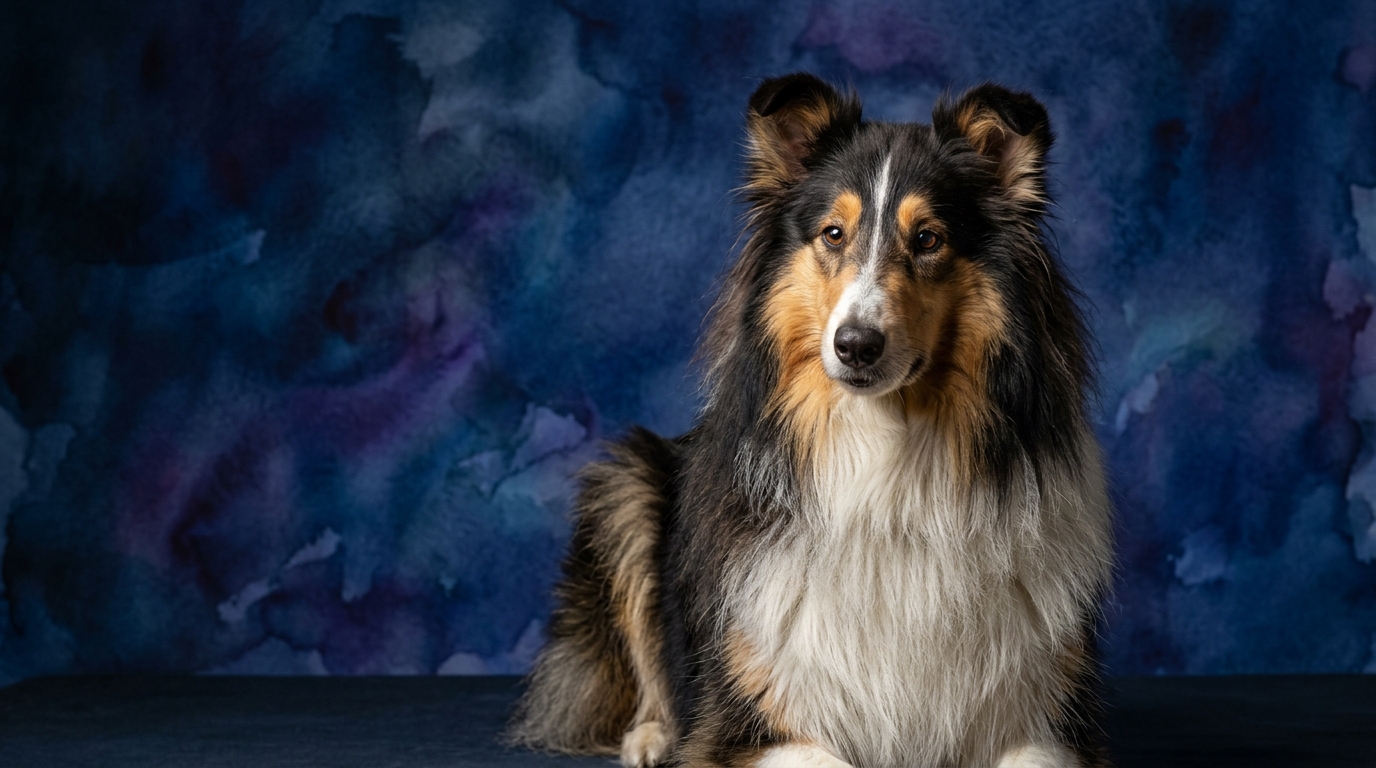
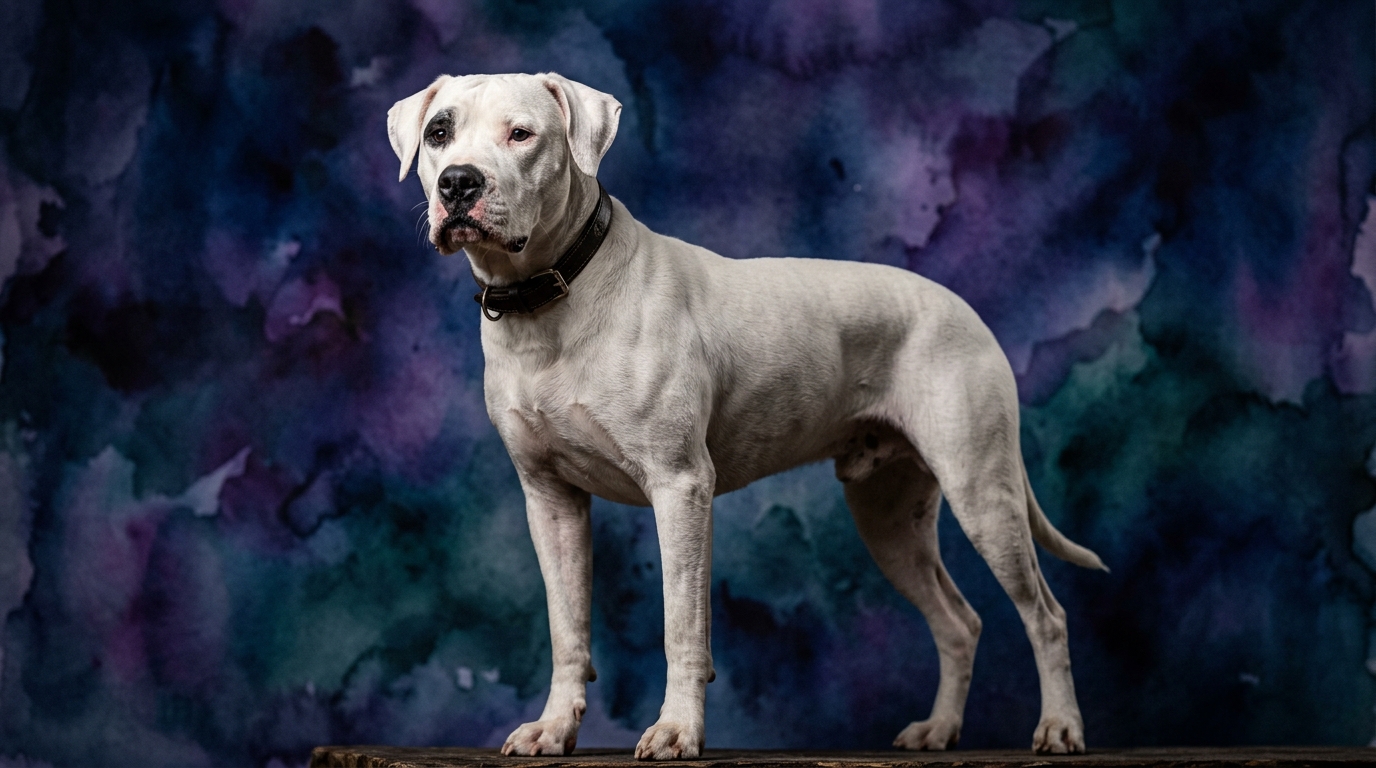
Side-by-Side IQ Profile: Collie (Rough) vs. Dogo Argentino
To understand the cognitive landscape of these two breeds, The Cosmic Pet Pet IQ Lab employs five key dimensions. Let's break down how the Collie (Rough) and Dogo Argentino measure up in each area, revealing their inherent aptitudes and tendencies.
**Collie (Rough) IQ Profile:** This Herding group member, ranked #16 by Coren, demonstrates a nuanced and responsive mind.
**Problem Solving (4/5):** The Collie excels at tasks requiring observation and strategic action, such as guiding livestock or navigating complex environments. This isn't just about figuring out puzzles; it involves understanding spatial relationships, predicting movement, and adapting to changing scenarios with a thoughtful approach.
**Training Speed (4/5):** Collies are known for picking up new commands quickly, often requiring fewer repetitions than many other breeds. Their eagerness to cooperate and inherent biddability stem from a history of working closely with humans and responding to subtle cues, making them highly receptive learners.
**Social Intelligence (3/5):** They possess good social understanding within their immediate family unit, often attuned to human emotions and intentions. Collies thrive on companionship and can interpret moods, though their social interactions might be more focused on their primary human connections rather than broad, independent social negotiation with strangers.
**Instinctive Drive (3/5):** Their herding drive is prominent, manifesting as a desire to gather, control, and protect their 'flock'—which often extends to family members. This translates into a strong work ethic and focus when given a task, but can also mean a tendency to gently 'herd' people or other pets.
**Memory (5/5):** Collies exhibit exceptional recall for commands, routines, and experiences. They form strong associations and rarely forget a lesson, whether positive or negative, which is crucial for mastering complex herding patterns and maintaining long-term cooperative behaviors.
**Dogo Argentino IQ Profile:** This powerful Working group member, currently not Coren-ranked, presents a different set of cognitive strengths forged for demanding physical tasks.
**Problem Solving (3/5):** The Dogo Argentino is capable of solving practical problems, especially those related to their working tasks like tracking prey or protecting territory. Their approach is often direct and physical, less about intricate strategic planning and more about determined, focused execution to achieve a clear objective.
**Training Speed (3/5):** Dogos learn at a moderate pace, typically requiring consistent, clear instruction and more repetitions than a Collie. While certainly capable of learning, their independent nature means they might need stronger motivation and a more structured training environment to solidify new commands.
**Social Intelligence (3/5):** They demonstrate profound loyalty and protective instincts towards their family. Dogo Argentinos are perceptive of potential threats and can distinguish between perceived friend and foe, but their social interactions are often underpinned by their guardian role rather than pure, universally cooperative enthusiasm.
**Instinctive Drive (3/5):** Possessing a strong prey drive and guardian instinct, the Dogo Argentino was bred for hunting large game and protecting property. This drive is powerful and focused, demanding careful management and appropriate outlets to ensure it is channeled constructively.
**Memory (3/5):** Dogo Argentinos retain information adequately, particularly regarding routines, boundaries, and established commands. While not as photographically precise as the Collie, they remember lessons and experiences, contributing to their reliability in established roles and their ability to follow household rules.
Where the Collie (Rough) Excels Cognitively
The Collie (Rough)'s cognitive advantages are rooted in its herding lineage, which required a breed capable of independent thought within a cooperative framework. Their superior **problem-solving** often manifests as strategic thinking, allowing them to anticipate and react to dynamic situations, whether it's managing a flock or navigating an agility course with precision. This isn't brute force problem-solving; it's about observation, planning, and executing a sequence of actions.
Their exceptional **training speed** means they grasp new concepts and commands rapidly, making them highly adaptable to various dog sports and complex obedience routines. This swift learning curve reduces training time and frustration for both dog and owner. Furthermore, the Collie's top-tier **memory** ensures that once a lesson is learned, it's rarely forgotten, allowing for the building of an extensive repertoire of behaviors and commands over time. They internalize routines and expectations, leading to consistent performance. Finally, their ability to interpret **subtle human cues**—a slight shift in body language, a change in tone—demonstrates a refined social intelligence that facilitates deep partnership.
Where the Dogo Argentino Demonstrates Unique Cognitive Strengths
The Dogo Argentino's cognitive strengths are deeply intertwined with its history as a big-game hunter and protector, demanding a different kind of mental fortitude. Their **problem-solving**, while perhaps less strategic in a nuanced sense, is highly effective in practical, real-world scenarios. When faced with a task like tracking a scent or assessing a potential threat, the Dogo exhibits decisive, focused action, often relying on powerful instincts and physical prowess to overcome obstacles directly.
This breed excels in **focused drive**, demonstrating an unwavering concentration on specific tasks related to their instincts. Once engaged in scent work, protection exercises, or a hunt, they are less prone to distraction by extraneous environmental stimuli, maintaining a singular focus until the objective is met. This intense concentration is a hallmark of their working ability. Their acute **situational awareness** is another cognitive win; they possess a keen perception of their surroundings for potential threats or changes, a critical aspect of their guardian role. This constant vigilance allows them to react appropriately and protect their family or territory. Moreover, the Dogo exhibits remarkable **mental resilience**, displaying toughness and endurance in challenging physical or high-pressure situations, often requiring sustained effort and an unwavering commitment to their task.
Which is Easier to Train and Why
When considering ease of training, the Collie (Rough) generally holds the advantage. Their higher training speed, coupled with an eagerness to please and superior memory, makes them exceptionally receptive students. Collies are sensitive to handler feedback and respond very well to positive reinforcement, quickly forming associations between actions and rewards. Their historical role required them to work in close partnership with humans, making them naturally biddable and keen to cooperate. A Collie thrives on learning and mental engagement, often viewing training as a fulfilling activity.
The Dogo Argentino, on the other hand, presents a more significant training challenge. Their moderate training speed and independent nature mean they require a very consistent, firm, and patient approach. A Dogo needs to understand the 'why' behind a command and, crucially, respect the trainer's leadership; they are not inherently driven by a desire to simply please. Their powerful prey and guardian drives need careful channeling and management from an early age, as these instincts can easily override training if not addressed. Early and extensive socialization, combined with consistent boundary setting and a confident handler, are critical for successful Dogo Argentino training.
Which Suits Active Owners vs. Relaxed Owners
The choice between these two breeds also hinges significantly on an owner's lifestyle and activity level. The Collie (Rough) is an excellent fit for active owners who enjoy engaging in mentally stimulating activities like obedience, agility, rally, or even recreational herding. While they appreciate a comfortable home life, their cognitive needs demand regular interaction, training sessions, and purposeful tasks to feel truly fulfilled. They thrive with owners who can provide consistent mental challenge and enjoy a canine partner keen to participate in various activities. A Collie needs its mind exercised as much as its body.
Conversely, the Dogo Argentino is best suited for very active, experienced, and assertive owners who can provide ample physical exercise *and* structured mental engagement that taps into their working drives. This is not a breed for the relaxed, casual owner. Dogos need a clear purpose, whether it's protection training, tracking, intense hiking, or other demanding physical activities. Their powerful instincts and physical capabilities require consistent leadership and an owner committed to extensive socialization, daily vigorous exercise, and ongoing training to prevent boredom or destructive behaviors. A Dogo Argentino is not a 'lounge around' dog without significant prior physical and mental exertion.
The Verdict
Opt for the Collie (Rough) if you seek a highly responsive partner for complex training, enjoy engaging in dog sports, and appreciate a breed that remembers lessons quickly and thrives on cooperative tasks. They are ideal for owners who can provide consistent mental stimulation and value a keen, perceptive companion.
Select the Dogo Argentino if you are an experienced, assertive owner prepared for consistent, disciplined training and can provide a structured outlet for their powerful working drives and protective instincts. They are best suited for those who appreciate a loyal, resilient guardian and are committed to extensive socialization and physical activity.
🧠 Find Your Pet's IQ Score
Our Pet IQ Lab assessment covers 25+ tests across 5 cognitive dimensions — personalized to your breed.
Take the Full IQ Test →Frequently Asked Questions
Does the Coren ranking accurately reflect a dog's overall intelligence?
Coren's ranking primarily assesses 'working and obedience intelligence,' focusing on how quickly a breed learns new commands and obeys them on the first attempt. It doesn't fully capture problem-solving, social understanding, or instinctive drives, which are equally important facets of canine cognition and vary widely among breeds.
Can a Dogo Argentino excel in obedience despite a lower training speed rating?
Absolutely. While they may take more repetitions to master commands, a Dogo Argentino, with consistent, patient, and highly motivating training from an experienced handler, can achieve high levels of obedience. Their determination, once engaged and properly channeled, is a significant asset in achieving training goals.
Are these breeds good with children?
A well-socialized Collie (Rough) is generally gentle and patient with children, often displaying a soft, watchful herding instinct. A Dogo Argentino, with proper training, early socialization, and consistent supervision, can be a devoted family protector, but their size and powerful nature mean interactions with children should always be carefully managed and supervised to ensure safety.